
Heat Pump Repair in Louisiana
Electricity costs homes less in Louisiana than in 46 of the other 49 states.
Tell us about the job
Takes about a minute. No obligation.
- 43°Fwinter overnight low where people live
- 5 monthsof heat, November through March
- 91°Fsummer afternoon high where people live
- 7 monthsof cooling, April through October
Your heat pump barely gets a break here Seven months of cooling, most years
- Northern counties need about 36% more heat than southern ones
- Winter nights average 43°F where people live
- Summer afternoons average 91°F where people live
- Heat runs November through March
- Cooling runs April through October
- 155 winter storms from 2015 to 2024

Half of Louisiana's homes were built in 1983 or earlier
Cooling starts in April and heat starts in November, with March and October as the lead-up months.
A heat pump that struggles when one of those months turns, right after cooling or heat first kicks on, is showing a problem worth calling in now.
Getting it fixed right, the first time
This isn't a harder climate for a heat pump. It's the same machine, the same wear, and it deserves the same careful repair.
Louisiana gets its share of hard weather, but the counties where most people live actually see less of it than in most other states. The power goes out more than almost anywhere else, which is its own problem for a heat pump after the fact. What usually brings one down isn't the storms. It's age, a low charge, a failing capacitor, the same things that wear out a heat pump anywhere else. If yours is struggling when the weather turns, that's worth a look now rather than later.
Louisiana asks more of a heat pump in some parishes than others, and that changes where trouble tends to start. In Claiborne Parish, winter nights average 36°F, and homes there need about twice the heat over a year that homes in Plaquemines Parish do. That's a heat pump leaning on its compressor and its reversing valve for months at a stretch, and those are the parts worth checking first if yours is up north.
Head south and the load shifts. Terrebonne Parish needs about 40% more cooling over a year than Claiborne Parish, which sees the least in the state. A unit running cooling that hard is leaning on its capacitor and its refrigerant charge. A weak capacitor or a system low on refrigerant shows up as a heat pump that runs long and still doesn't keep up.
Across the state, cooling runs more months of the year than heating does, and Louisiana sees more months of cooling than most other states get. That split means the cooling side of the system takes more wear here than the heating side, before you even factor in which parish you're in.
The north and south halves of the state don't need the same thing from a heat pump. Northern counties need about 36% more heat over a year than southern counties do. Southern counties need about 14% more cooling over a year than northern counties do. If your system is struggling, where you are in the state points to which side of it is working hardest, and that's where a failing part is most likely to be.
What does a heat pump in Louisiana face?
How hot do summer afternoons get?
91°Faverage afternoon high where people live
Alaska66°F
Arizona101°F
How cold do winter nights get?
43°Faverage overnight low where people live
North Dakota4°F
Hawaii65°F
How many months does the heat run?
5 monthsof heating a year
Hawaii0 months
Alaska12 months
What does electricity cost?
11.73¢per kWh (kilowatt hours, the unit on an electric bill), what homes paid in 2024
North Dakota11.51¢
Hawaii42.86¢
How often do storms hit?
109severe weather events per county from 2015 to 2024
Alaska5
Wyoming1,057
How many homes lost power for a day or more?
49%of homes in 2024
Arizona7%
Maine54%
What a diagnostic visit actually covers
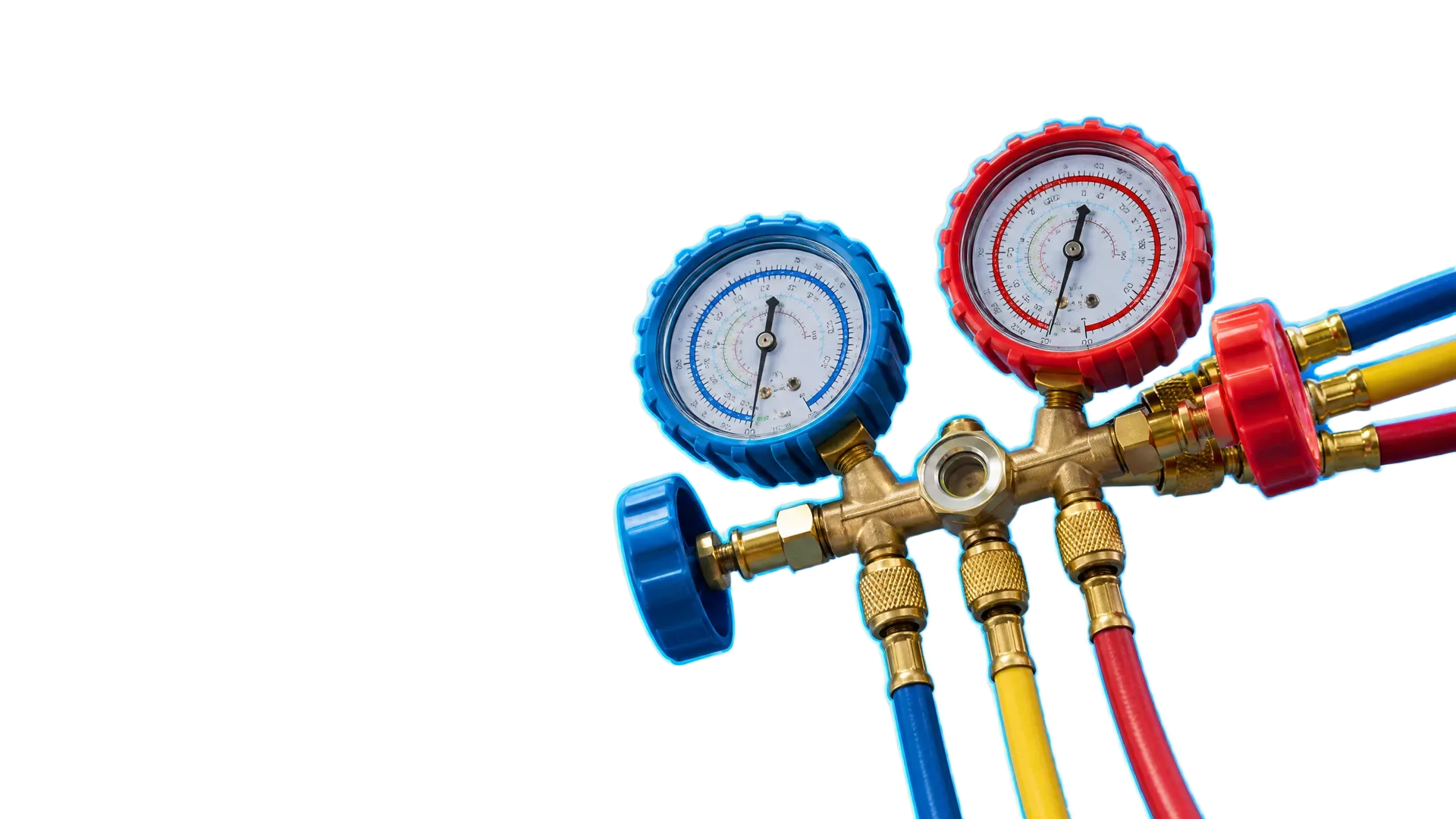
A diagnostic call starts with the complaint. Not cooling, not heating, running nonstop, tripping a breaker, blowing warm air when it should be blowing cold. From there a tech checks refrigerant pressures at the service ports. A system low on charge or overcharged shows up fast on the gauges. The capacitor gets tested under load, not just looked at. A weak one can still look fine sitting still. The reversing valve gets checked too. That part decides whether the system is heating or cooling, and a stuck valve can leave you with the wrong one. Electrical connections get checked for corrosion and loose wiring, especially at the contactor and the board. Airflow gets checked at the coil and the vents. A heat pump starved for airflow will struggle no matter what shape the rest of it is in. By the end of the visit you should know which part is failing, not just that something is wrong.
Why a struggling heat pump needs attention before it gets worse
A heat pump that's struggling doesn't fail all at once. If it's low on refrigerant, the compressor still runs, pulling harder to move less heat, and that extra strain is what wears a compressor out early. A weak capacitor makes the motor it starts draw more current than it should on every attempt, until the motor overheats or the capacitor gives out completely. A coil that's iced over blocks its own airflow, so the system runs longer to do less, and that extra runtime is what pushes a failing part the rest of the way. None of this gets better by letting the system keep cycling. The longer it runs in that state, the more it's asking of the one part already struggling.
What you can check yourself first
Before anyone comes out, there are a few things worth checking. Start outside. If the outdoor unit is packed with leaves or grass clippings, airflow is choking right there, and clearing it off can bring a struggling system back on its own. Nothing should be stacked against it either. A heat pump needs open air on all sides to move heat. Inside, pull the filter. A filter clogged with dust or pet hair starves the whole system, and it is the easiest thing on this list to fix. Check that vents in each room are open and not blocked by furniture or rugs. Look at the thermostat too. Make sure it is set to the right mode and the batteries are not dying, since a thermostat with no power leaves a system doing nothing at all. If the outdoor unit will not run, check the breaker. A tripped breaker is sometimes just a tripped breaker, worth resetting once. If it trips again right away, stop there and leave it alone. That is an electrical fault, not something to keep resetting. And if there is ice on the coil or the lines, shut the system off and let it thaw before anyone tries to figure out what is wrong underneath it.
A heat pump working this hard in Louisiana doesn't stay broken quietly for long.
Tell us about the job
Takes about a minute. No obligation.
Fill out the form once and a licensed local contractor calls to schedule the diagnostic.