Single-story buildings with pale siding and one brick section with a covered porch stand behind a trimmed hedge and lawn, under a large moss-draped oak branch.

Heat Pump Repair in Breaux Bridge, LA

Tell us about the job

Takes about a minute. No obligation.

RepairHeat PumpSt. Martin Parish, LA
Step 1 of 2

What ZIP code is the job in?

Short cycles or the wrong air coming out

A heat pump that shuts off soon after starting, or blows cool air when it should be heating, usually points to a failing reversing valve or a refrigerant charge that's off. Ice on the outdoor unit that doesn't clear during the defrost cycle is another sign the system can't get through its normal cycle.

Worth a look before the compressor gets involved

A heat pump running on low charge or a stuck valve has to work harder to move the same amount of heat, and the compressor is the part that absorbs that extra work. Getting the valve or the charge checked early keeps the problem at the smaller part instead of the compressor.

5 months
November through March, your system heats
7 months
April through October, it cools
44°F
the average winter night it heats against
91°F
the average summer afternoon it cools against
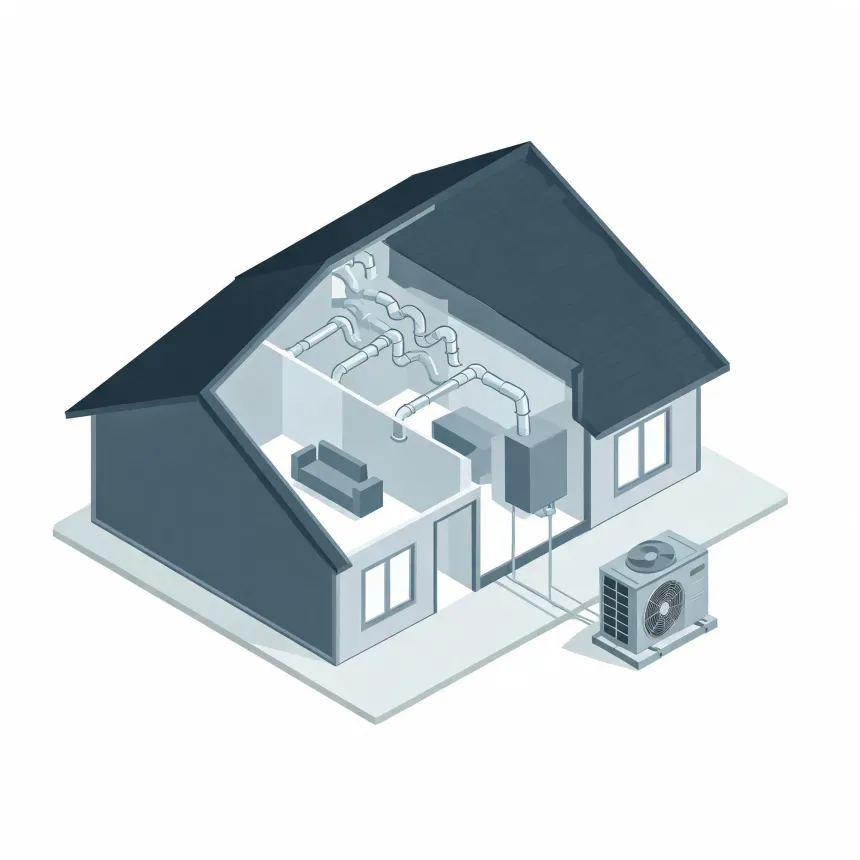
Isometric cutaway illustration of a house showing interior ductwork, an indoor air handler unit, and an outdoor condenser unit beside the building.
Your system heats November through March and cools April through October.

NOAA nClimDiv, 1991–2020 normals

Heat pumps in Breaux Bridge switch from cooling to heat in November.

A reversing valve or sensor that was already weak often gives out in that first cold snap.

Half these homes were built by 1986. That's not why your heat pump needs a repair.

Half the homes here were built by 1986
Power costs 11.73 cents a kWh statewide
Climate zone 2A

A tech starts outside, checking what the outdoor unit is doing against what the thermostat is asking for. If it's blowing cold when the house is calling for heat, that points to the reversing valve, and the tech will check the valve itself along with the solenoid that switches it. Gauges go on next to check the refrigerant charge, since low charge makes the system work harder and shows up as weak heat or short cycling. If there's ice built up that isn't clearing, the tech checks the defrost control and the sensor that tells the system when to start that cycle. Electrical readings on the compressor come last, because that's the part that pays for every other problem left unfixed.

Get it looked at early

Problems tend to show up in the first weeks of the season, when the load hits a part that was already weak.

Find a contractor
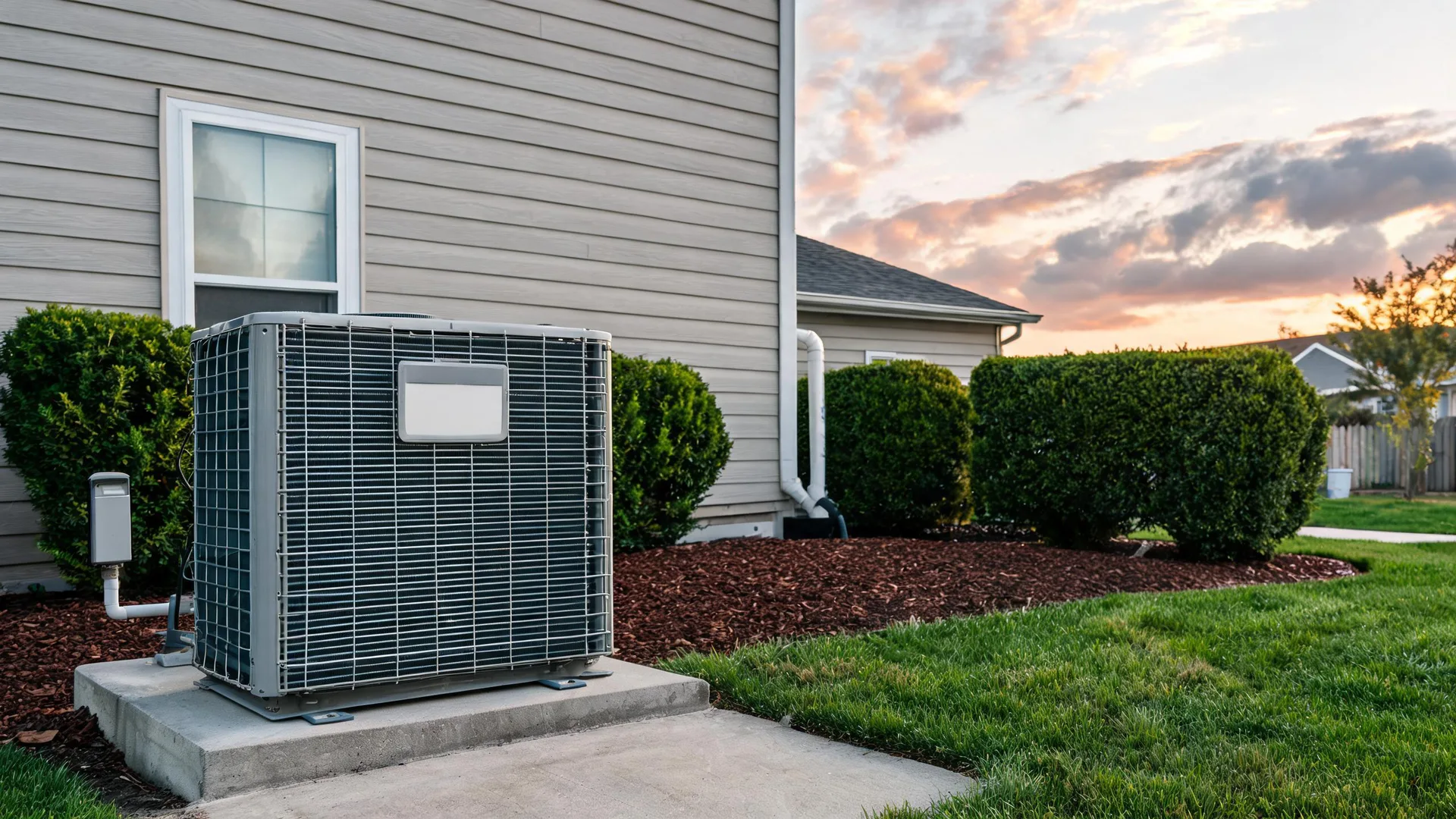
A gray heat pump condenser unit mounted on a concrete pad against the gray lap-siding exterior wall of a house.

What to check before the tech shows up

Before anyone comes out, check the thermostat batteries and make sure it's set to heat, not cool or auto. Look at the outdoor unit and clear away any leaves, mulch or ice blocking the coil, since restricted airflow there makes the system work harder no matter what else is wrong. Check the air filter and swap it if it's gray or clogged. Walk the vents inside and make sure none are closed or blocked by furniture. If the outdoor unit is caked in ice and it's not melting off on its own within a reasonable stretch, that's not something to chip at or hose down. Flip the breaker off and back on once, since a tripped breaker sometimes looks like a dead system. None of this fixes a bad reversing valve or a low charge, but it rules out the simple stuff before anyone starts pulling the unit apart.

Most failures start with wear, not a broken part

A capacitor loses its charge over years of starting the compressor and fan motor. Contactor points pit and burn from the arcing of normal switching. Bearings in the outdoor fan motor dry out and the motor starts running hot or seizing. None of these fail all at once. They weaken for a while first, and the system runs worse before it stops running at all.

The reversing valve fails in one position

The valve can stick in cooling, heating, or partway between, and a solenoid problem can cause the same symptoms as a worn valve body. Either way, the system keeps running, just not doing what the thermostat is asking for. A valve that's stuck is a mechanical repair. A solenoid that's failed electrically is usually a simpler fix, so a tech checks both before deciding which one is the actual cause.

A heat pump that's low on charge or stuck partway through the reversing valve doesn't stop working. It keeps running, just worse. The compressor is built to move refrigerant at a certain pressure, and when the charge is wrong or the valve won't seat fully, it has to push harder to move the same amount of heat. That extra strain shows up as heat in the motor windings that has nowhere to go. Run it long enough in that state and the windings break down, or bearings that were already drying out seize under the added load. A valve replacement or a refrigerant top-off is a smaller job than a compressor, and the compressor is what pays for every hour it ran while something else was wrong.

A heat pump that's needed a couple of different repairs over a short stretch is telling you something different than one that's run fine and suddenly had a single part fail. The second case is usually worth fixing outright. The first is worth a harder look, because it points to a system wearing out all over, not just unlucky. The compressor is what usually settles it. If the compressor has failed, putting a new one into an old system rarely makes sense, since everything else attached to it has logged the same years of wear and tends to follow. Refrigerant type is worth asking about too. An older system built around a refrigerant that's being phased out can be harder to get parts and fluid for, and that shortage can tip the decision even when the broken part itself is a small one.