




Heat pump making a loud noise in Lake Charles, LA

RepairHeat PumpCalcasieu Parish, LA
Step 1 of 2

What ZIP code is the job in?

A loud noise from your heat pump usually points to one of a few things. Rattling often means a loose panel or screws worked free from the unit running day after day. Buzzing can mean an electrical issue, like a failing contactor or a capacitor on its way out. Grinding or screeching points to the fan motor or a bearing that's worn down. A loud bang when the system starts or stops is sometimes the ductwork expanding, but it can also mean a part inside the compressor has broken loose. With winters this mild in Lake Charles, your heat pump runs for cooling most of the year, which puts more hours on the fan motor and compressor than homes that split the load between a heat pump and a furnace. That wear adds up, and a new noise is usually the first sign something has changed inside the unit. Worth having someone look at it before it turns into a bigger repair.

Why does your heat pump work so hard here

  • Winter nights average 44°F

    Winter nights average 44°F, so your heat pump rarely gets a true rest even in January. It keeps cycling, and loose parts or worn ones tend to show up as noise.

  • Heat runs November through March

    Heat runs November through March, about five months of the year. That's five months of a system switching modes and parts expanding and contracting.

  • Cooling runs April through October

    Cooling runs April through October, about seven months. That's the bulk of the year on your heat pump, and the long stretch is where wear turns into noise.

NOAA nClimDiv 1991-2020

A noise you can leave for now

A faint rattle that only shows up at startup, a light tapping that stops once the unit gets going, or a hum you only notice standing right next to the outdoor unit isn't usually urgent. These sounds often come from a panel screw that's worked loose or debris like a leaf or twig caught against the fan. You can check the outdoor unit for anything loose or anything resting against it, and tighten what you can reach safely. If the noise stays faint and doesn't change in pitch or get louder over a few days, it's reasonable to keep an eye on it before calling anyone out.

A noise that needs a call now

A grinding, screeching, or banging noise means something is wrong with a moving part, usually the fan motor or the compressor, and running the unit longer can turn a repair into a replacement. The same goes for any noise that comes with the heat pump blowing warm air when it should be cooling, or cold air when it should be heating. With winter nights here averaging 44°F, a compressor problem can leave you without reliable heat on the colder nights. A contractor who works on heat pumps in Calcasieu Parish year-round can tell you quickly whether it's a part wearing out or something more serious.

A woman in a cream cowl-neck sweater stands in a lamp-lit room looking out a window at a snow-covered yard with shrubs and bare trees at dusk.
A woman in a gray turtleneck sweater stands near a large window in a lamp-lit living room, looking out at falling snow and snow-covered conifers.
A woman in a chunky knit sweater stands by a large window looking out at snow-covered ground, with a dimly lit living room containing a gray sofa, framed artwork, shelves and table lamps behind her.
A woman in a gray turtleneck sweater stands in a dimly lit living room with a lamp and bookshelves, looking out a multi-pane window at falling snow.

What the noise tells a tech

A tech who works on heat pumps around Lake Charles every week can often narrow down the cause before opening the panel, just from where the sound comes from and when it happens. A rattle at startup points somewhere different than a grinding noise that builds while the unit runs. That kind of read comes from working on this same equipment all year, not guessing. Since your heat pump runs most months here with mild winters and long summers, the parts inside see more cycles than they would somewhere with a shorter season, and a local tech knows which ones tend to loosen or wear first.


Why one contractor beats several

When you ask for help with a noise like this, you get matched with one licensed contractor local to Lake Charles, not a list of companies competing for the job. That means one person looking at your system, not three or four calls to sort through and compare. A contractor who works in Calcasieu Parish knows what the mild winters and muggy summers do to a heat pump over time, and shows up already familiar with the kind of wear that's common here, instead of starting from zero.

An outdoor air conditioner condenser unit on a concrete pad beside a house with horizontal vinyl siding, with refrigerant lines and an electrical disconnect box on the wall and dry leaves on the ground.
Before you get your heat pump repair
An outdoor condenser unit on a concrete pad beside a gray lap-sided house, with an electrical disconnect box and conduit on the wall and shrubs with mulch to the right.
After you get your heat pump repair

Every sound your heat pump makes traces back to a specific part doing a specific job. The reversing valve is what lets the same unit heat your home in January and cool it in July, and when it's wearing out, switching between the two can produce a hiss or a hard clunk. Outside, the fan motor sits above the compressor, so a grinding noise is coming from one of those, not from anywhere in your ductwork. If the compressor just hums without starting, it's likely pushing against a bad start capacitor, drawing power but never turning over. Not every sound means trouble. When ice builds on the outdoor coil during a cold snap, the unit runs a defrost cycle, and the reversing valve shifting for that often makes a short whoosh that's just the system doing its job. A fan blade that's bent or caked with debris can tick against its cage with every turn, and that ticking speeds up as the fan does. Even a loose line set vibrating against the wall can throw a buzz somewhere else in the house entirely.

What's actually making that sound

  • A heat pump runs a reversing valve to switch between heating and cooling, and a failing one can make a loud hiss or a sharp clunk when it shifts.
  • The outdoor unit holds a fan motor on top and a compressor below, so a grinding sound usually comes from one of those two, not the ductwork.
  • A compressor that hums but won't start can be trying to run against a bad start capacitor, and that hum means it's drawing power without turning.
  • Ice on the outdoor coil in winter forces the defrost cycle to kick in, and the reversing valve switching for defrost often makes a brief whooshing sound that's normal.
  • A bent or dirty outdoor fan blade can hit the cage around it with every rotation, producing a steady clicking that speeds up as the fan spins faster.
  • Loose refrigerant line sets vibrating against the cabinet or wall studs carry a buzz through the house that sounds like it's coming from somewhere else entirely.
A bearded man in a plaid flannel shirt stands indoors looking out a frost-covered window, with a steaming dark blue mug on the wooden sill and snow-covered trees outside.
A smiling man in a dark blue T-shirt sits on a light gray sofa in a living room with a wooden shelf and window behind him, with a laptop edge visible in the foreground.

Get matched with a heat pump pro in Calcasieu Parish

A heat pump that's grinding or clunking instead of just humming isn't something to sit on, especially with your unit running most months of the year here. The same unit handles your heat in winter and your cooling all summer, so when something's wearing out, you lose that trade off, not just one or the other. A local contractor who works on heat pumps around Lake Charles knows which sounds come from a worn fan motor, a failing reversing valve, or a compressor that's further gone than it sounds from outside. Getting matched with one contractor means the person who calls you back is already thinking about your unit, not working from a script. Send the request and let someone who actually does this work tell you what's making that noise and what it takes to quiet it down.

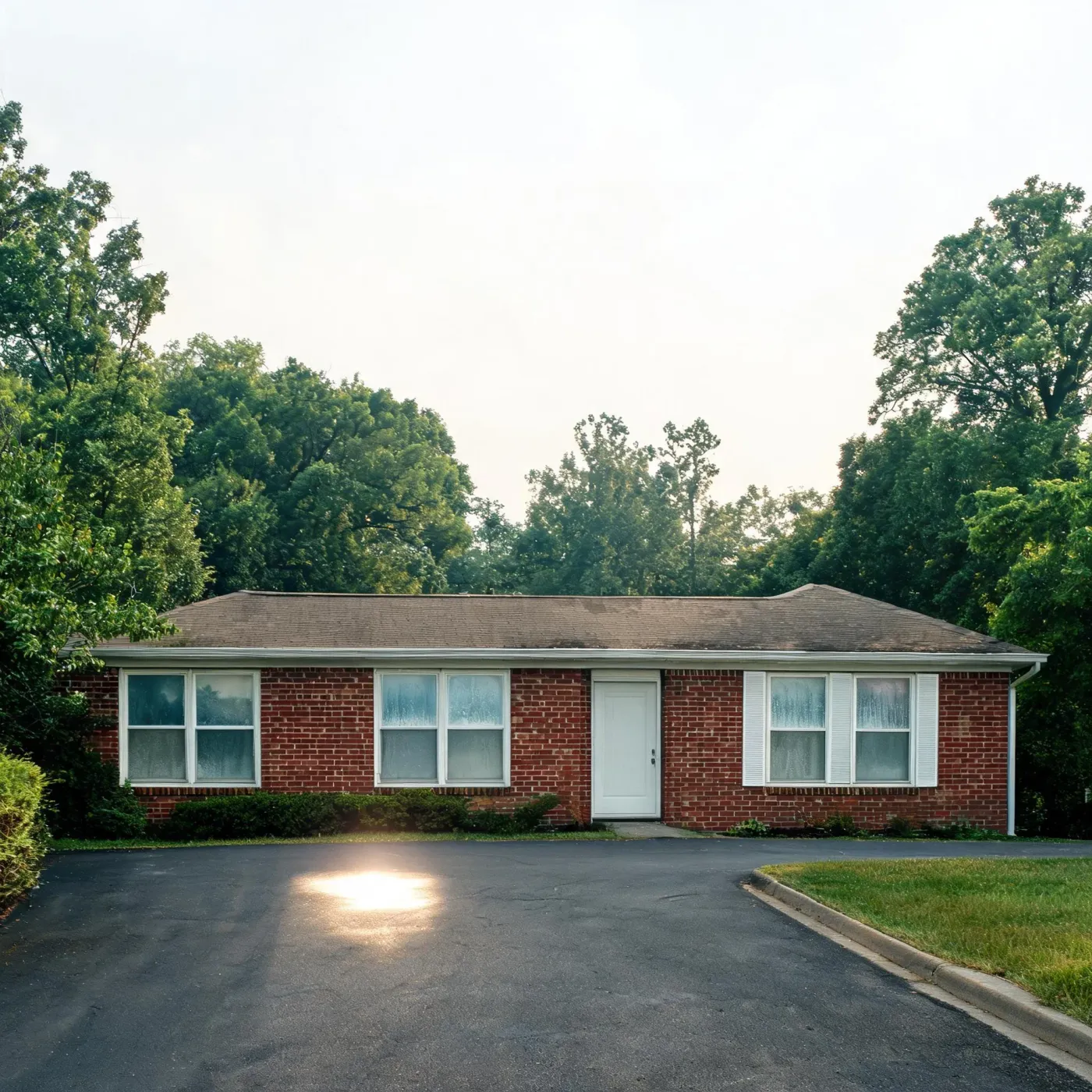
A single-story red brick ranch house with a white door, white-trimmed windows and a shingled hip roof, fronted by a wide asphalt driveway with sunlight glare, surrounded by green deciduous trees under a pale sky.

Summer air in Calcasieu Parish holds a dew point around 74°F, according to NOAA climate data. That's heavy, damp air, the kind that makes your heat pump run long stretches instead of short cycles, since it has to pull that extra moisture out along with the heat. The outdoor unit ends up working longer hours during those months, and parts that are already loose or worn get more time to rattle or buzz. If a noise you noticed in spring gets louder once the humidity sets in, that's often why. The unit isn't doing anything new, it's just running more to keep up.

NASA POWER T2MDEW

A gray outdoor condenser unit on a concrete pad beside a light-green sided house, surrounded by mulch, ornamental grasses and a shrub, with mowed lawn in the foreground.
A unit like this one running quiet, panel screws tight and the pad clear, is doing what it's built to do without calling attention to itself.
An outdoor condenser unit on a concrete pad beside a horizontal-sided house, with insulated refrigerant lines running to a wall-mounted box, surrounded by bare dirt.
A weathered unit like this, with years of cycling on it, is more likely to have a worn mount or a failing part behind a new noise.

Call Now or Keep Watching

Call now

  • A grinding or clunking noise points to a worn bearing or a compressor losing its cushioning, and both get worse fast once they start.
  • Waiting lets a small part failure turn into a compressor replacement, which costs far more than catching it early.
  • Your heat pump runs most months of the year here, so a part already struggling doesn't get a break to recover on its own.
  • A screeching or metal-on-metal sound usually means something is about to seize, not something that's going to work itself loose and quiet down.
  • If the noise comes with the unit short cycling or tripping a breaker, that's a sign the electrical side is failing along with it.

Keep an eye on it

  • A single rattle at startup that goes away once the unit is running often just means a panel screw worked loose.
  • A light hum from the outdoor unit while it's running is normal and doesn't by itself mean a part is failing.
  • If the sound only happens once in a while and the unit still heats and cools the way it should, it's worth noting the pattern before calling anyone.
  • Check that nothing like a branch or loose debris is hitting the unit, since that can sound like a mechanical problem and isn't one.
  • A noise that shows up once after a storm or heavy wind and doesn't come back usually isn't worth an urgent call.
A gray outdoor air conditioner condenser unit on a concrete pad beside a house with horizontal siding and an electrical disconnect box, surrounded by grass.

What a loud unit costs you

A heat pump that's grinding or buzzing is pulling harder than it should to keep your house heated or cooled, and that shows up on your bill before it shows up as a breakdown. Since your unit here runs heat for months and cooling for months more, there's not much downtime for a worn part to sit unnoticed. Left alone, a loose panel or a failing capacitor doesn't fix itself. It wears on whatever's near it, and the noise usually gets worse, not better.

A white outdoor heat pump unit on a concrete pad beside a house with horizontal lap siding, with a plain light wall and grass lawn to the left.

What happens if it quits

If your heat pump stops working during a cold snap or a stretch of hot, humid days, you're without heat or cooling until it's fixed, and summers here don't leave much room for that. A compressor that fails completely costs far more to replace than catching a bearing or a part going bad early. The noise is often the only warning you get before a unit that's limping along stops running altogether.

A woman stands in the open doorway of a white stucco house holding the dark door, facing a man in a black cap and shirt seen from behind in the blurred foreground, with a potted flowering plant beside the entry.

A loud heat pump is telling you something specific

A rattle, a buzz, a grinding sound. each one points somewhere different, and now you know where to start looking. Some of what you heard can wait a little. Grinding and clunking can't, not on a unit that's going to run heat again by November and cooling again by April.

A local contractor who services heat pumps around Lake Charles all year has likely heard your exact noise before, on a unit that's logged the same kind of hours yours has. Get matched with one contractor who works on this equipment year round, not a handful of companies competing for the job, and they'll reach out to look at what's actually making the sound before it turns into something bigger.

A wooden table holding a stone vase with a bare branch, two stacked books and a small dark bowl, beside a window with green foliage outside and a sofa in the dim background.
A house roofline with a stone chimney rises above trees, with a tall pine, Spanish-moss-draped oak branches, and misty hills in the background.

Find a heat pump repair pro in Calcasieu Parish

Find a licensed heat pump pro

Sending the form costs nothing.

A heat pump that runs this many months a year doesn't get much downtime to show you what's wrong. Getting a noise checked while the unit still runs at all beats waiting until it stops heating or cooling your house on a day you need it.