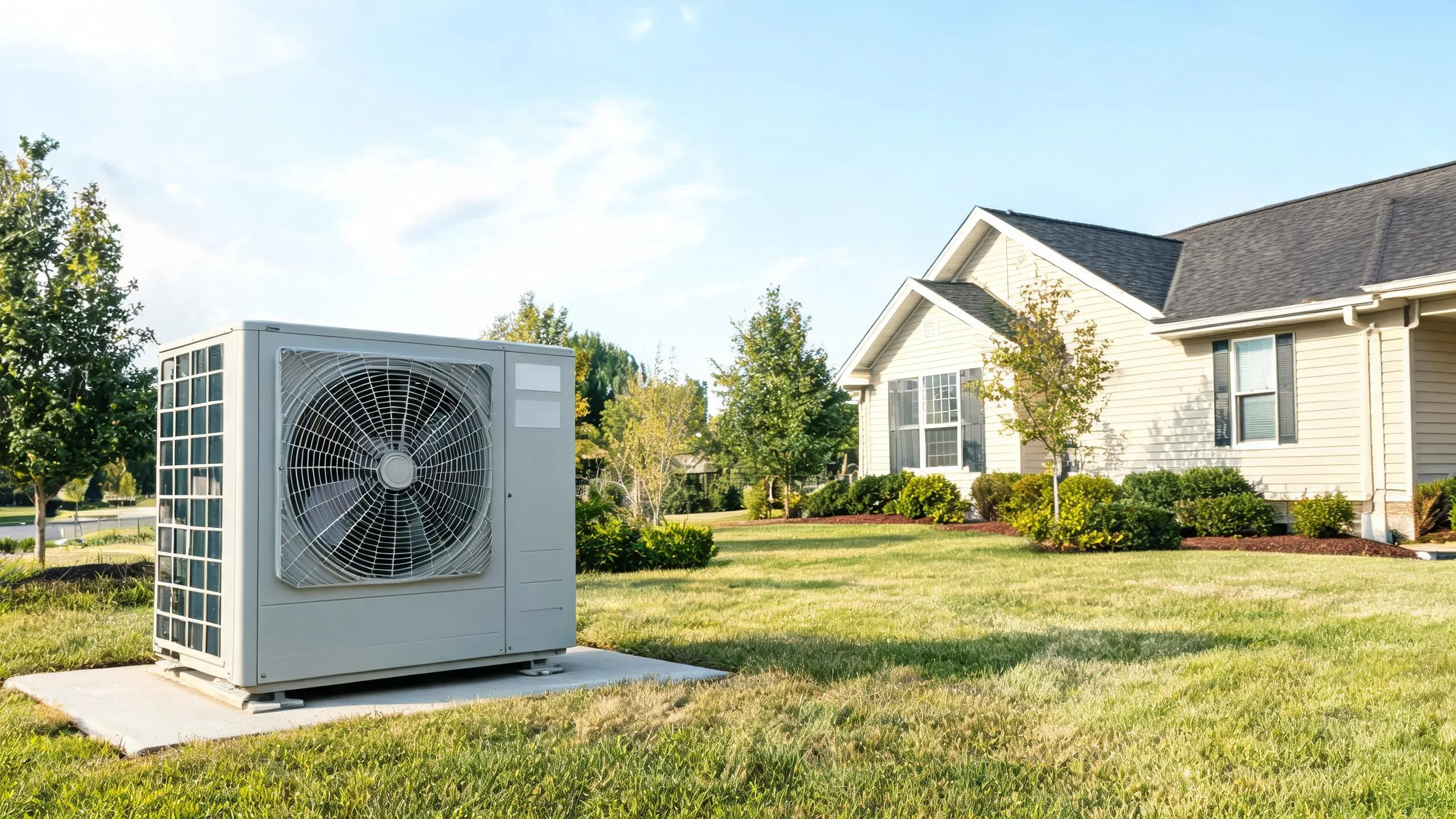





A grey heat pump outdoor unit mounted on a concrete pad in a suburban backyard, with a single-storey house visible behind it.

Heat Pump Repair in Gonzales, LA

Tell us about the job

Takes about a minute. No obligation.

RepairHeat PumpAscension Parish, LA
Step 1 of 2

What ZIP code is the job in?

A heat pump in Gonzales switches modes instead of shutting off for the season. It runs cooling April through October, then flips to heat in November, and goes right back to cooling in April. That changeover is when a weak part fails. A contactor or capacitor that barely got through summer gets asked to start the system again in November, this time pushing heat. If yours has been off for a stretch, October is worth a call before the switch, not after it struggles through one.

5 months
November through March, your system heats
7 months
April through October, it cools
44°F
the average winter night it heats against
91°F
the average summer afternoon it cools against
Isometric cutaway illustration of a single-story house showing interior rooms with furniture, an attic duct system connected to an indoor air handler, and an outdoor condenser unit linked by lines along the exterior wall.
Your system heats November through March and cools April through October.

NOAA nClimDiv, 1991–2020 normals

Half the homes in Ascension Parish were built in 2002 or later.

A heat pump that age still has years left in it, so a repair call makes more sense than a replacement quote.

Ascension Parish gets hit with severe weather often, and the outdoor unit sits right in its path

54 severe weather events from 2015 to 2024
49% of homes statewide lost power a day or more in 2024
30 damaging wind events from 2015 to 2024

A heat pump that's old enough to need frequent repairs usually tells you with a pattern, not one bad day. If the same part has already been replaced once, or if the contractor is fixing a different piece every year, the compressor is the one that decides what happens next. The compressor is sealed and expensive to replace on its own, so a failing compressor is usually where a tech starts talking about replacement instead of repair. Short cycling, ice that builds up on the outdoor coil in defrost mode and won't clear, or a system that runs constantly without getting the house to temperature all point to the compressor working harder than it should. A cracked contactor or a failed capacitor, on the other hand, is a straightforward swap and doesn't say anything about the rest of the system. Ask what part failed and whether it's one that tends to take others down with it.

A newer system is usually worth repairing

If your heat pump came with the house, start with a repair call, not a replacement quote. Tell the contractor what it's doing and let them tell you what part is behind it.

Find a contractor
A white mini-split heat pump outdoor unit mounted on a concrete pad beside a gray-sided house, surrounded by gravel and green shrubs.

This system never really stops

A heat pump does not get a season off. It switches jobs instead, and the motors and bearings inside keep turning either way. The outdoor fan motor runs in both modes and wears the same bearings down whether it is pushing heat out or pulling it in. The reversing valve is the part unique to a heat pump, and it only earns its keep by switching cleanly between modes. A valve that sticks partway, instead of failing outright, leaves the system blowing air that is not quite hot enough or not quite cold enough, and that kind of wear shows up as a complaint rather than a breakdown. Refrigerant lines and the coils on both ends spend the whole year under pressure, so a slow leak started by vibration or a rubbed-through spot keeps getting worse in every mode, not just one. None of this is tied to a single season. It is tied to how many hours the system has logged and how many times it has had to switch.

What you'll actually notice first

A heat pump rarely quits outright. It blows air that feels wrong for the setting, runs long stretches without the house reaching the thermostat number, or clicks on and off in quick bursts. Outside, the fan might turn but the unit never seems to catch up, or you hear it cycling into defrost over and over. These are the signs worth calling in, before the day it doesn't start at all.
Noise and smell tell you where to start

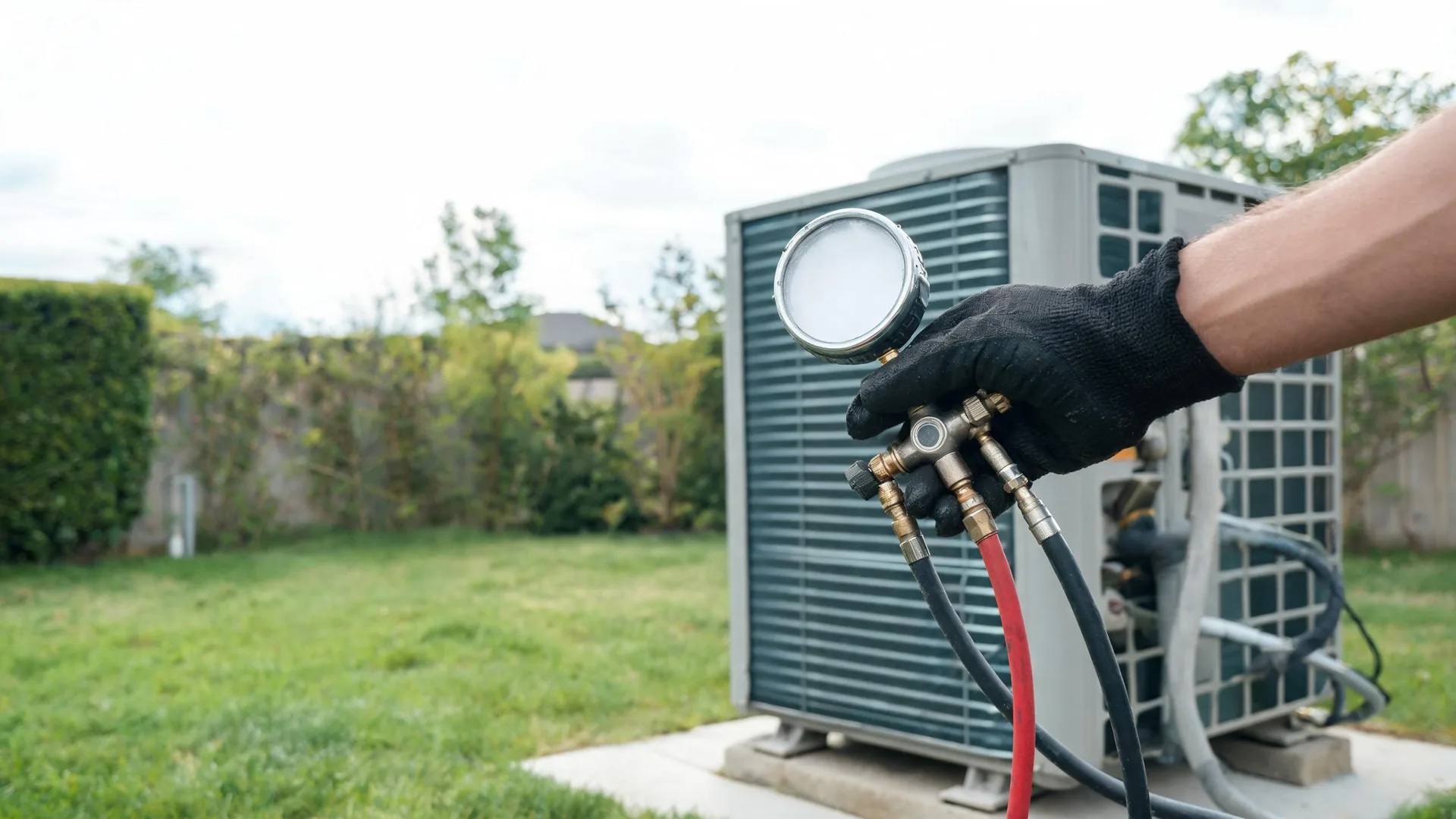
A grinding or screeching from the outdoor unit usually points to the fan motor bearings. A clicking that repeats without the system starting is often the contactor or capacitor failing to engage. A burning smell on startup means a contractor should look at it before it runs again. None of these need a diagnosis over the phone. They need someone there with gauges and a meter.

Running a heat pump through a problem instead of calling tends to turn a small repair into a bigger one. A refrigerant leak is the clearest case. Low charge makes the compressor work harder to move the same heat. It also runs hotter than it should, and that shortens its life every hour it keeps going. A failing fan motor is another. If the bearings are going, the motor strains to keep the blade turning, and that strain is what burns a motor out rather than just wearing it slowly. Ice on the outdoor coil behaves the same way. Once it builds past what the defrost cycle can clear, the system is heating that ice instead of the house, and it keeps running anyway because the thermostat is still calling for heat. The machine does not know it is hurting itself. It just keeps trying to do the job, and the part under strain is what gives out.

A few things are worth checking before anyone comes out. Look at the thermostat first. Make sure it is set to heat or cool as intended and the temperature is actually set past the room's current temperature, since a setting bumped by accident looks exactly like a broken system. Check the outdoor unit for anything blocking it, leaves, a fallen branch, anything pressed against the fan. Go to the breaker panel and see if the breaker for the system has tripped. Check the air filter too, since a filter clogged with dust chokes off airflow and can make the whole system struggle or ice up. None of this takes tools or know-how, and ruling it out first means that when a contractor does come, the call is about the part actually failing.