





An outdoor heat pump unit mounted on a concrete pad in front of a two-story suburban house.

Heat Pump Repair in Kenner, LA

Tell us about the job

Takes about a minute. No obligation.

RepairHeat PumpJefferson Parish, LA
Step 1 of 2

What ZIP code is the job in?

Heat pumps in Kenner switch over to heat in November, so October is when a weak part tends to show up before it fails outright. A capacitor that is losing its charge or a refrigerant level that has dropped a little can get through a mild stretch of weather without any trouble. Ask that same unit to heat the house on the first cold morning and it may not start at all. The part that fails in November was usually already weak back in October, just not under enough load to show it. Having it looked at before the switch catches that kind of problem while it is still small.

4 months
November through February, your system heats
7 months
April through October, it cools
47°F
the average winter night it heats against
90°F
the average summer afternoon it cools against
Isometric illustration of a cutaway house showing interior rooms, ceiling ductwork and an air handler, connected by lines to an outdoor condenser unit on a pad beside the building.
Your system heats November through February and cools April through October.

NOAA nClimDiv, 1991–2020 normals

Check the outdoor unit for a fan that spins freely and isn't blocked by leaves or a fence.

If the fan is clear and still won't turn, that's a motor or capacitor problem, not a cleaning job.

A heat pump here needs the same repairs as one anywhere else

Half the homes here were built by 1975
Power costs 11.73 cents a kWh statewide
Climate zone 2A

Age matters more than any single symptom. A compressor or control board failing on an older unit is usually the start of a pattern, not a one-off. Replacing that part buys some time, but the next failure tends to follow, and each repair is money that doesn't count toward a new system. On a younger unit, the same failure is just a failure. A weak capacitor or a bad contactor doesn't mean the compressor is going next. The other thing worth asking is how the unit has been running leading up to the breakdown. A heat pump that's been short cycling, struggling to hit the set temperature, or running longer than it used to is often telling you the compressor is wearing out before it quits outright.

Get it looked at early

Problems tend to show up in the first weeks of the season, when the load hits a part that was already weak.

Find a contractor
A gray outdoor HVAC unit mounted on a concrete pad beside a house with gray lap siding and a stone foundation.

A machine that works every season, not just one

A heat pump doesn't get downtime the way a furnace or an air conditioner does. It switches between cooling and heating as the seasons turn, and that switch is where trouble tends to show up first. The reversing valve is what sends refrigerant one direction for cooling and the other for heating. A valve that's sticking will often work fine in one mode and fail in the other, so a unit can cool the house all summer without complaint and then blow room-temperature air the first time it's asked to heat. The defrost cycle only runs in heating mode. The outdoor coil frosts over, the system senses it, clears the ice, then goes back to heating. A bad sensor or control board can let frost build up past what that cycle can clear, so ice sitting on the outdoor unit means the cycle isn't doing its job. Run time matters as well. A compressor taking longer each cycle to hit the same set temperature is working harder for the same result, and that strain is usually what pushes a weak capacitor past the point of starting the compressor at all.

A struggling compressor loses its protection

Every compressor has an overload switch that shuts it down if it runs too hot. A compressor that's low on refrigerant or straining against a bad capacitor runs hotter than it should, and the first few times, the overload trips and resets. Keep running the unit in that state and the windings themselves can take the damage instead, turning a repair into a compressor replacement.
A frozen coil chokes off its own airflow

An outdoor coil that isn't defrosting right builds a thin layer of frost, then a thicker one. Ice blocks airflow across the coil, so the system has to work harder to move the same heat, which drives temperatures and pressures further from normal. Left alone, that ice can keep building until airflow stops almost entirely, and what started as a sensor or control board issue ends up straining the compressor too.

A few things cause most heat pump breakdowns, and they're worth knowing apart from each other. A dirty outdoor coil makes the whole system work harder, since it can't give up or pull in heat the way it should, and that strain shows up elsewhere first. A failing capacitor stops the compressor or fan motor from starting, even though the rest of the unit still has power. Low refrigerant, usually from a slow leak rather than normal use, drops heating and cooling capacity and can let the compressor run hotter than it's built for. A reversing valve that sticks will often leave the system stuck in one mode no matter what the thermostat asks for. None of these announce themselves the same way, which is why the same unit can fail from entirely different causes and feel the same to the person standing in the house.

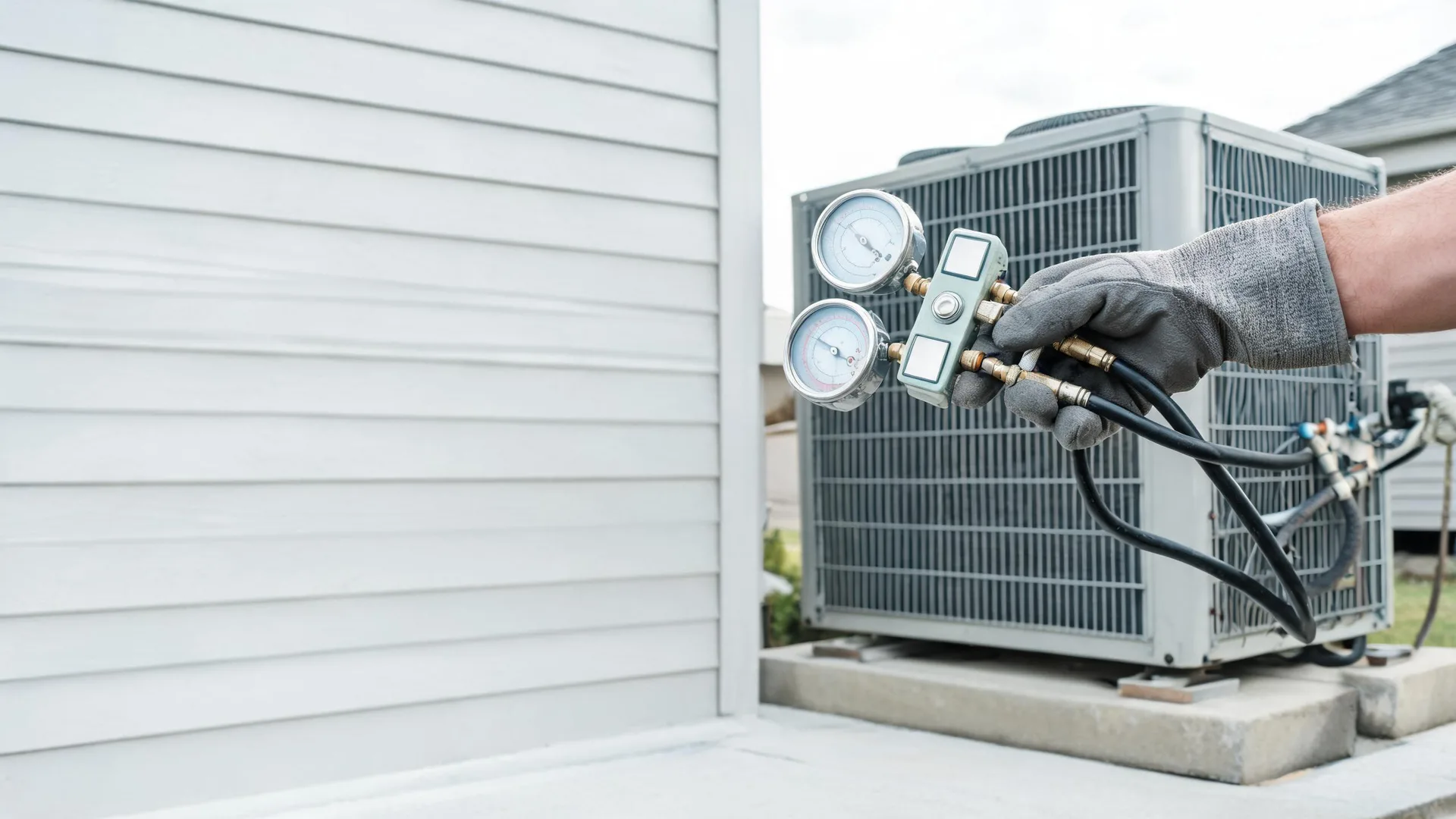
A diagnostic visit starts outside, at the unit itself. A tech will check refrigerant pressures, since too little or too much tells a different story about what's wrong. The capacitor gets tested under load, not just looked at, because a capacitor can look fine and still be too weak to start the compressor. Electrical readings at the contactor and the compressor windings show whether power is actually reaching the parts that need it. Indoors, the tech checks the air coming out of the vents against what the thermostat is asking for, and pulls the system's fault codes if the control board keeps a history. Most of this happens before any panel comes off, because the readings usually point to the problem before anything gets taken apart.