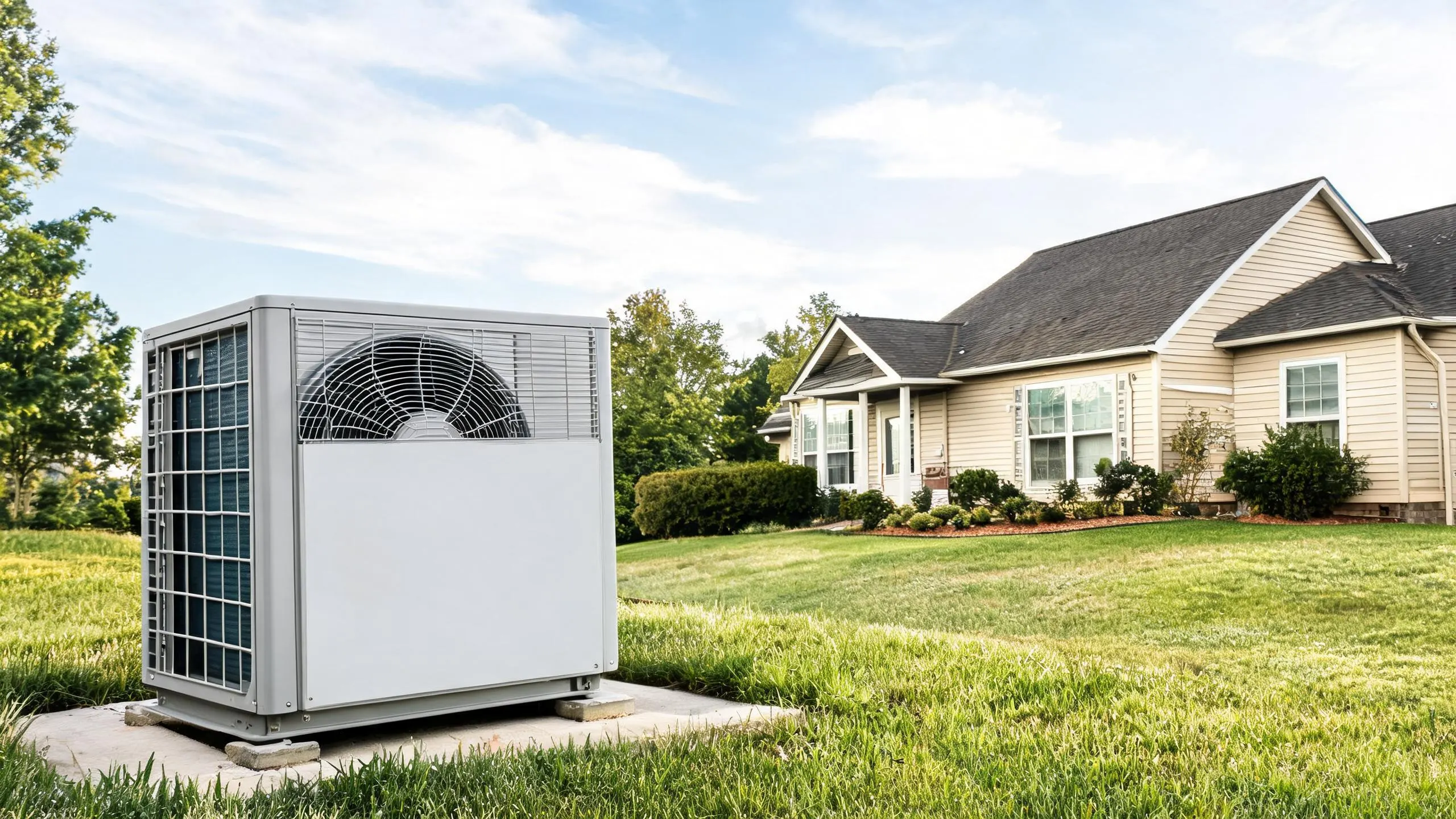
An outdoor heat pump unit mounted on a concrete pad in front of a single-story suburban house with beige siding.

Heat Pump Repair in Addis, LA

Tell us about the job

Takes about a minute. No obligation.

RepairHeat PumpWest Baton Rouge Parish, LA
Step 1 of 2

What ZIP code is the job in?

The age of the unit shapes the decision

A heat pump still within its expected working life is usually worth repairing, even for something major like a compressor or reversing valve. An old unit facing that same repair is a different question, because the next part to fail is probably close behind, and it may not be the part that just got fixed.


Repeated breakdowns say more than one big one

A single repair just means one part failed. A heat pump that keeps needing a tech out, for different problems each time, is wearing out as a whole system, not failing in one spot. Once that pattern shows up, replacing it tends to cost less in the long run than keeping up with each new failure as it comes.

5 months
November through March, your system heats
7 months
April through October, it cools
43°F
the average winter night it heats against
91°F
the average summer afternoon it cools against
Isometric cutaway illustration of a small house showing interior rooms with furniture, an indoor air handler with ductwork, and lines running to an outdoor condenser unit beside the building.
Your system heats November through March and cools April through October.

NOAA nClimDiv, 1991–2020 normals

Half the homes in West Baton Rouge Parish were built in 1993 or later.

A heat pump that came with a newer house still has years left in it, and that's usually worth repairing.

West Baton Rouge Parish sees normal wear, not extreme weather

25 severe weather events from 2015 to 2024
49% of homes statewide lost power a day or more in 2024
11 damaging wind events from 2015 to 2024

If your heat pump came with the house, finding the install date is worth the few minutes it takes. Check the nameplate on the unit or any paperwork from the sale. A compressor or reversing valve failure is a real repair, not a small one, and knowing the unit still has years ahead of it makes that an easy call. Mobile homes make up a fifth of the housing here, and those units see the same wear as any other. Either way, the nameplate tells you more than a guess would.

Repair it

If your system came with a newer house, it likely has plenty of life left. Repair is usually the right call.

Find a contractor
A man in a gray shirt and tan pants carries a worn canvas tool bag up porch steps toward a dark blue paneled front door, with a potted shrub beside the entry.
A gray heat pump outdoor unit mounted on a concrete pad next to a residential house with lap siding and stone accents.

It runs every day of the year, so trouble doesn't wait for a season

A heat pump runs in both directions all year, so it never gets a season off the way a furnace or an AC does. That constant duty cycle means trouble shows up as changes you can feel or hear, not warning lights. Short cycling is one of the first signs, where it kicks on and off every few minutes instead of running a full cycle. Ice building up on the outdoor coil that doesn't clear during the defrost cycle is another. Air coming out of the vents that's barely warm in heating mode, or barely cool in cooling mode, is worth paying attention to as well, especially if the system sounds like it's running fine. A reversing valve starting to fail might make the system blow cold air when it should be heating, or get stuck in one mode entirely. Listen for anything new too. A hard clunk when it switches between heating and cooling, a hum that doesn't settle into normal operation, a grinding or squealing from the outdoor unit. Any one of these is reason enough to have someone look before the part that's struggling takes another part down with it.

The compressor is usually what ends it

A heat pump's compressor does the work of moving refrigerant through the system in both directions, all year, and most of what fails around it is something that let it run under stress for too long. Low refrigerant from a slow leak, a weak capacitor that makes the compressor struggle to start, dirty coils that make it work harder to move heat. By the time the compressor itself gives out, something else usually caused it.

The reversing valve fails on its own

Unlike the compressor, the reversing valve doesn't usually fail because something else wore it down. It's the part that switches the system between heating and cooling, and the seals inside it wear out from being thrown back and forth over years of use. When it sticks, the system can get stuck in one mode or blow the wrong temperature air, and that's a problem specific to heat pumps since a furnace or straight AC doesn't have one at all.

A heat pump that's struggling doesn't fix itself by staying on. A capacitor that's starting to go makes the compressor draw more current to start up each time, and that extra strain wears it down faster than if it got replaced early. Low refrigerant means the compressor runs hotter than it should, and running hot shortens its life every cycle it operates under that condition. Ice on the outdoor coil blocks airflow, so the system works harder to move the same amount of heat, which strains the compressor further. Left alone, a small problem in one part tends to drag another part down with it, and the repair gets bigger the longer it waits.

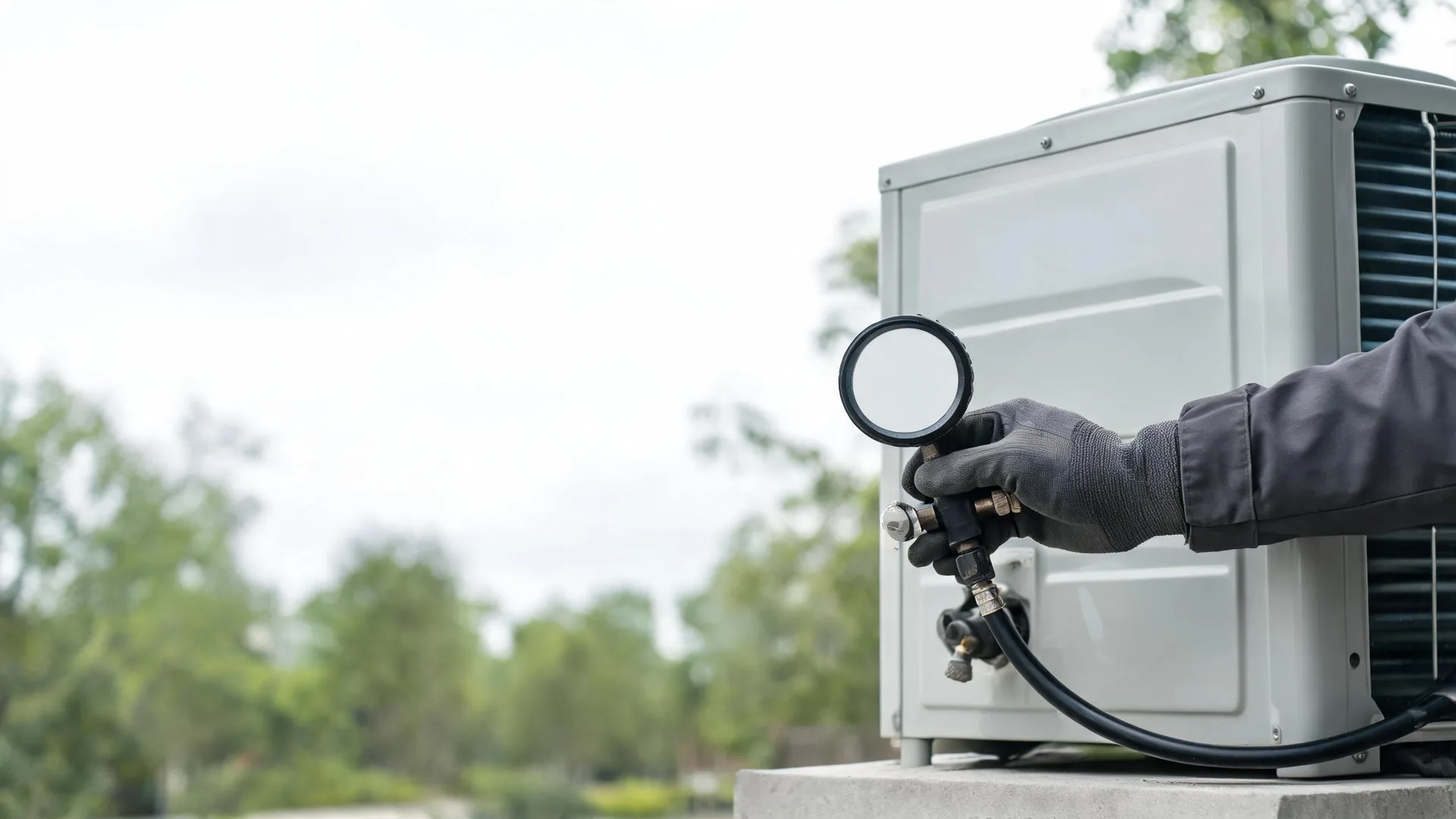
A diagnostic visit starts outside, at the unit itself. A tech hooks up gauges to check refrigerant pressure, tests the capacitor and contactor, and watches how the system behaves when it switches between heating and cooling. That switch matters more for a heat pump than for a furnace or straight AC, since it's the one thing that can fail in a way those systems never have to deal with. Airflow gets checked too, at the outdoor coil and at the vents, since weak airflow on either end can look like several different problems at once. Most of this is done with gauges and a multimeter, not guesswork. By the end, the tech should be able to point to the part that's failing and explain what it would take to put it right, rather than just saying the system needs work.