Rapides Parish sees serious weather
124 severe weather events hit this parish between 2015 and 2024, including damaging wind, hail, and tornadoes touching down. A heat pump's outdoor unit sits right in the path of all of it.
Takes about a minute. No obligation.
124 severe weather events hit this parish between 2015 and 2024, including damaging wind, hail, and tornadoes touching down. A heat pump's outdoor unit sits right in the path of all of it.
A bent fin or a cracked line on the outdoor unit does not always stop a heat pump from running. It can still turn on, still blow air, and still be damaged. If a storm has come through, worth having the unit looked at even if nothing seems wrong yet.

NOAA nClimDiv, 1991–2020 normals
A heat pump fails most often at the reversing valve, the part that switches it between heat and cool.
When that valve sticks, the system keeps running but stops doing the one job it was told to do.




A heat pump that keeps needing the same kind of repair is telling you something about everything else inside it. The compressor, the fan motor and the coils all wear on a similar timeline, so a system old enough for a second reversing valve or a second capacitor is usually old enough for the rest to start going too. A straight repair makes sense when one part failed and the rest of the system is sound, the kind of fix that's done once and holds. It's a different story when a unit can't hold the house at a steady temperature anymore, or when the outdoor coil keeps icing over no matter what gets fixed. That's not one part failing, that's a system struggling to do its job. When a contractor is being called back to the same unit for a string of unrelated problems, replacement is usually the more honest answer, even if the part in front of them right now is fixable.
Storms hit hard here. If the outdoor unit took hail or debris, have it checked even if it still runs.
Find a contractorBefore anyone comes out, check the thermostat is set to the mode you want and the batteries aren't dead. Look at the indoor air filter. A filter clogged with dust chokes airflow across the coil and can make the whole system work harder without actually heating or cooling the house. Walk outside and look at the outdoor unit. Clear away leaves, grass clippings or anything stacked against it, since it needs open air on all sides to move heat in or out. Check that the outdoor fan is spinning when the system is running. If it's iced over and it isn't defrost season behavior, that's worth noting for the tech. Check your breaker panel for a tripped breaker before assuming the worst. None of this fixes a bad reversing valve or a failing compressor, but it rules out the simple stuff first and gives the tech a clearer picture of what's actually wrong.
A heat pump stuck in one mode, blowing cool air when it's set to heat or the reverse, usually points to the reversing valve. The system still runs, the fan still turns, so it's easy to mistake for a thermostat problem. It's worth telling the tech exactly what you asked the system to do and what it did instead.
A heat pump works hard by nature, but if it's running longer than it used to and the house still isn't reaching the set temperature, something is making the system work harder to do the same job. Low refrigerant charge or a coil that can't give up or pull in heat properly are common causes. The longer that goes on, the harder the compressor works, so it's worth a call sooner rather than later.
A heat pump that's struggling doesn't fail all at once. It fails a little more every hour it keeps running. Low refrigerant charge is a good example. The compressor still turns, still tries to move heat, but it's working against a system that can't carry enough of it. That extra strain shows up as heat, and heat is what burns a compressor out early. A coil icing over is another one. Ice blocks airflow, so the system runs longer to do less, and that longer runtime is what turns a bad defrost cycle into a seized outdoor fan motor. The part that's actually wrong is rarely what breaks next. It's whatever was already weakest, pushed past its limit by a system that kept going instead of stopping.
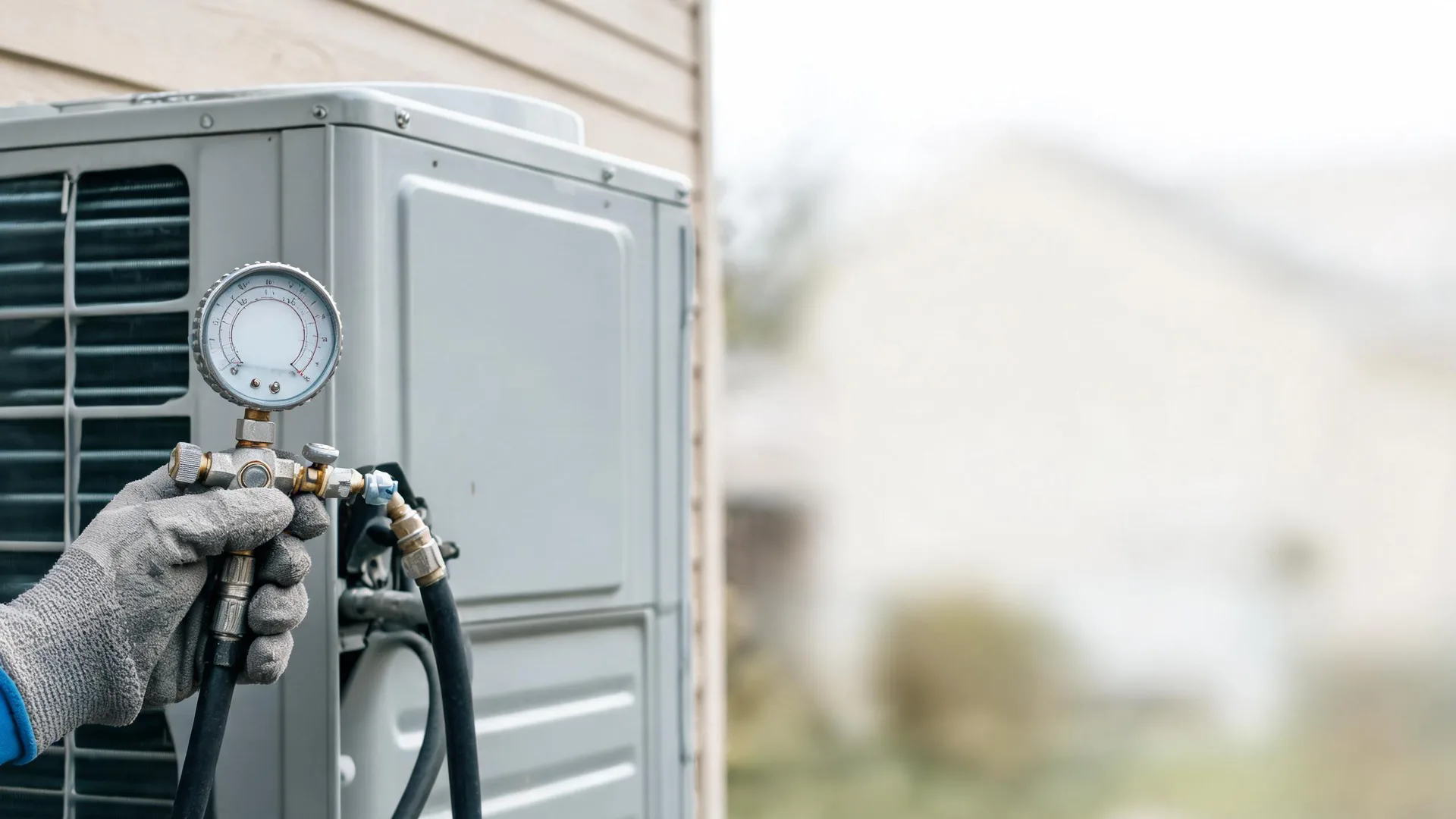
A diagnostic visit usually starts outside at the unit itself. A tech will hook up gauges and check the refrigerant pressures on both the high side and the low side, because that reading alone rules in or out a whole set of problems. They'll check the temperature of the air going into the system against the air coming out, since that gap says a lot about whether the coils are actually moving heat the way they should. The capacitor gets tested under load, not just looked at, because a weak one can look fine sitting still and fail the moment it has to do real work. The reversing valve gets checked by watching how the system actually responds when it's told to switch between heat and cool, not by listening for a click and assuming it worked. None of this is guesswork. A heat pump either holds pressure or it doesn't. It either switches modes cleanly or it doesn't. The readings either match what a healthy system should show, or they point straight at what's failing.