






Two illuminated white Southern-style houses with wraparound porches and staircases, framed by a Spanish moss-draped tree on a quiet street at night.

Heat Pump Repair in Denham Springs, LA

Tell us about the job

Takes about a minute. No obligation.

RepairHeat PumpLivingston Parish, LA
Step 1 of 2

What ZIP code is the job in?

A heat pump that's getting old and needs a major part like the compressor or reversing valve is usually a better candidate for replacement than repair. Those parts sit at the center of how the system works, and the labor to replace either one is involved. Smaller failures are a different story. A capacitor, a contactor, or a fan motor can be swapped out and the unit runs like normal again for years. Age matters too. A heat pump that's been through many years of summers and winters has likely got other parts wearing out close behind whatever just failed. If the system is still fairly young and otherwise reliable, fixing the one thing that broke makes sense. If it's older and this isn't the first repair, put the money toward a new one instead of patching the old.

5 months
November through March, your system heats
7 months
April through October, it cools
42°F
the average winter night it heats against
91°F
the average summer afternoon it cools against
Isometric cutaway illustration of a gray house showing interior rooms, a central air handler with ducts in the attic, and refrigerant lines running to an outdoor condenser unit beside the building.
Your system heats November through March and cools April through October.

NOAA nClimDiv, 1991–2020 normals

Half the homes in Livingston Parish were built in 2002 or later.

A heat pump installed with a newer home usually still has years left in it, which makes repair the right call.

November is when a heat pump here finds out what didn't survive summer

Cooling runs April through October
Heat runs November through March
Climate zone 2A
Denham Springs heat pump repairHalf the homes in Livingston Parish were built in 2002 or later

A heat pump that needs attention usually tells you before it quits outright. Heating that runs but never feels warm at the vents is one of the first signs, especially if the system seems to run constantly trying to catch up. Short cycling is another sign worth noting. The unit kicks on, runs a few minutes, shuts off, then starts again soon after, instead of running a full steady cycle. Listen for noise too. A grinding or screeching sound usually means a motor bearing is wearing out, and a hard bang at startup or shutdown can point to the compressor itself. If you notice ice building up on the outdoor unit outside of a normal defrost cycle, or the system blowing cold air when it should be heating, those are both worth a call rather than a wait.

Repair it

If your system came with a newer house, it likely has plenty of life left. Repair is usually the right call.

Find a contractor
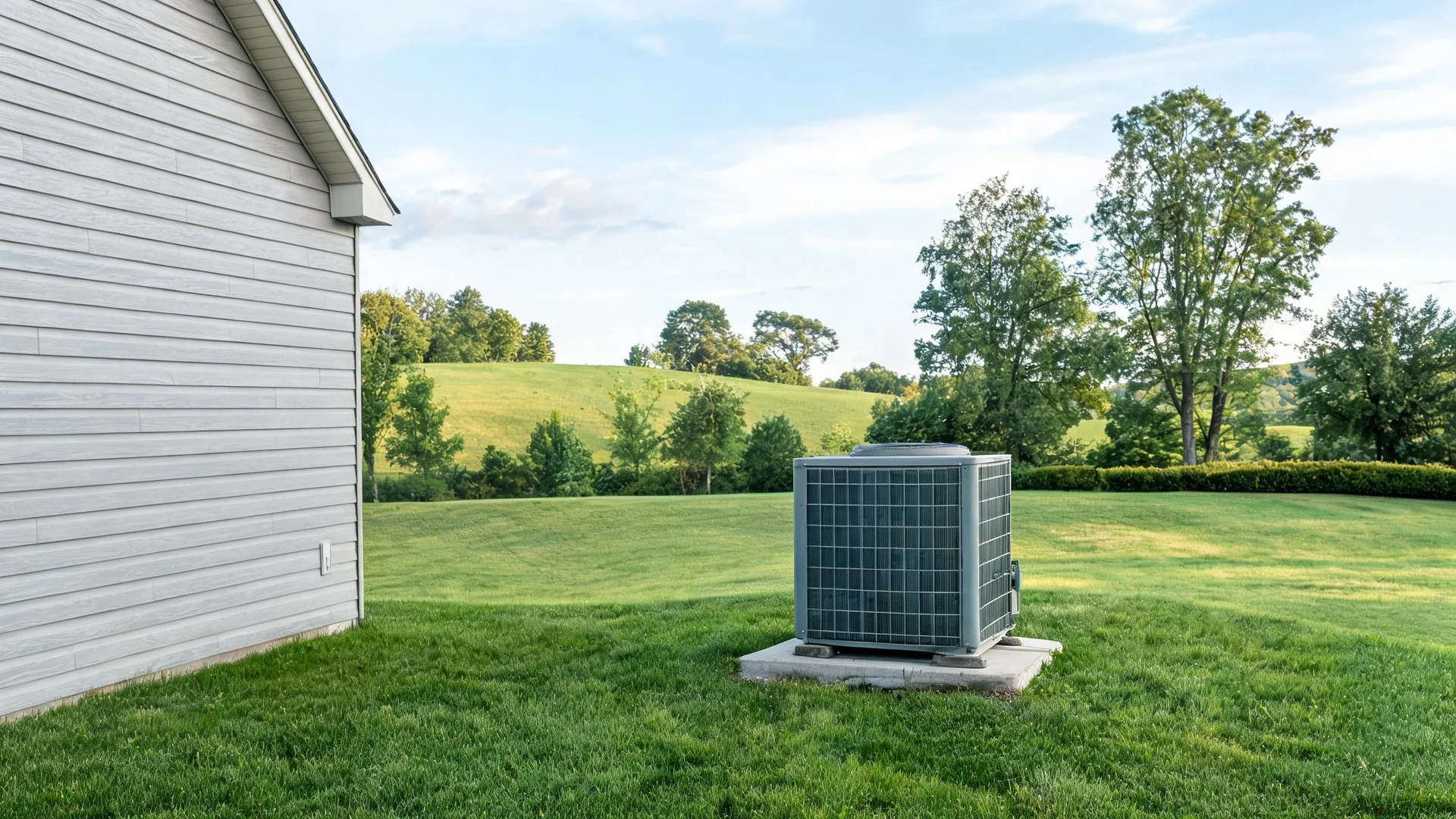
A dark gray heat pump unit mounted on a concrete pad next to a house with gray siding and a stone veneer wall.

What you can rule out yourself

Before anyone comes out, there are a few things you can check yourself. Look at the thermostat first. Make sure it's set to heat and the set point is actually above room temperature, since a setting bumped by accident can look exactly like a dead system. Check the breaker panel for the heat pump and the air handler. A tripped breaker will shut the whole thing down with no warning at all. Go outside and look at the outdoor unit. If ice is covering the coil instead of a thin normal frost, or if leaves and debris are packed against the fins, that's worth noting before the tech arrives. Pull the air filter and hold it up to a light. If you can't see light through it, it's choking off airflow and that alone can cause a lot of the symptoms that feel like a bigger failure. Walk through the house and feel the air coming out of the vents. Cold air coming out during heating mode usually means the system has gone into a defrost cycle or backup heat isn't kicking in, and that detail helps whoever you call narrow things down before they even get there.

The reversing valve sticks instead of quitting

The reversing valve is what switches a heat pump between heating and cooling. When it fails, it usually sticks halfway rather than cutting out, so the system keeps running but blows cold air when it should be heating. Sometimes the valve can be freed. If the coil inside it has worn down, the whole valve needs replacing.
A dirty outdoor coil wears out the compressor

The outdoor coil sits exposed year round, and dirt, grass clippings, and bent fins choke off the airflow it needs. Once airflow is restricted long enough, the compressor has to run hotter and harder to make up for it. The coil was the original problem, but the compressor is what ends up shortened.

A system that's lost refrigerant will keep running, just with less heat coming out of the vents, and that's the problem. The compressor doesn't know the charge is low. It keeps pulling in refrigerant and compressing it the same as always, and without enough of it, that work turns into heat that has nowhere to go. Run it long enough in that state and the compressor overheats from the inside, every cycle, until it fails for good. Ice buildup works the same way. A thin frost on the outdoor coil in cold weather is normal, but once it thickens into solid ice, the coil can't pull in air anymore, and the system starts working to heat air it isn't getting. The fix for either one is usually simple if it's caught early. Left running, what started as a slow leak or a stuck defrost cycle ends up taking the compressor with it.

A diagnostic visit starts outside at the unit itself, before any panels come off. The tech checks that the outdoor fan spins freely and the coil is clear, then moves to the electrical side, testing the capacitor and contactor since those fail often and cheaply. Gauges go on next to check refrigerant pressure, which tells them whether the charge is correct and whether the reversing valve is switching the way it should. Inside, they'll check the air handler, the filter, and the temperature split between the air going in and the air coming out. That split is what separates a system that's low on refrigerant from one that's just dirty or short on airflow. Most of the time, the cause shows up in that first hour of testing, before anything gets replaced.