




Two single-story houses, one brick with a covered porch and one with pale siding, seen across a mown lawn and a trimmed hedge, beneath large oak branches draped with Spanish moss.

Heat Pump Repair in Bossier City, LA

Tell us about the job

Takes about a minute. No obligation.

RepairHeat PumpBossier Parish, LA
Step 1 of 2

What ZIP code is the job in?

Bossier Parish saw 217 severe weather events between 2015 and 2024. A lot of that was wind and hail, with tornadoes touching down too. A heat pump's outdoor unit sits right in the path of all of it. The coil fins and the fan are exposed to whatever comes through. Hail can bend those fins and the unit will often keep running anyway, just running worse. If yours has been through a storm, even one it seemed to shake off, have a contractor look at the coil and the fan before the next heat wave or cold snap puts real load on it.

5 months
November through March, your system heats
5 months
May through September, it cools
38°F
the average winter night it heats against
92°F
the average summer afternoon it cools against
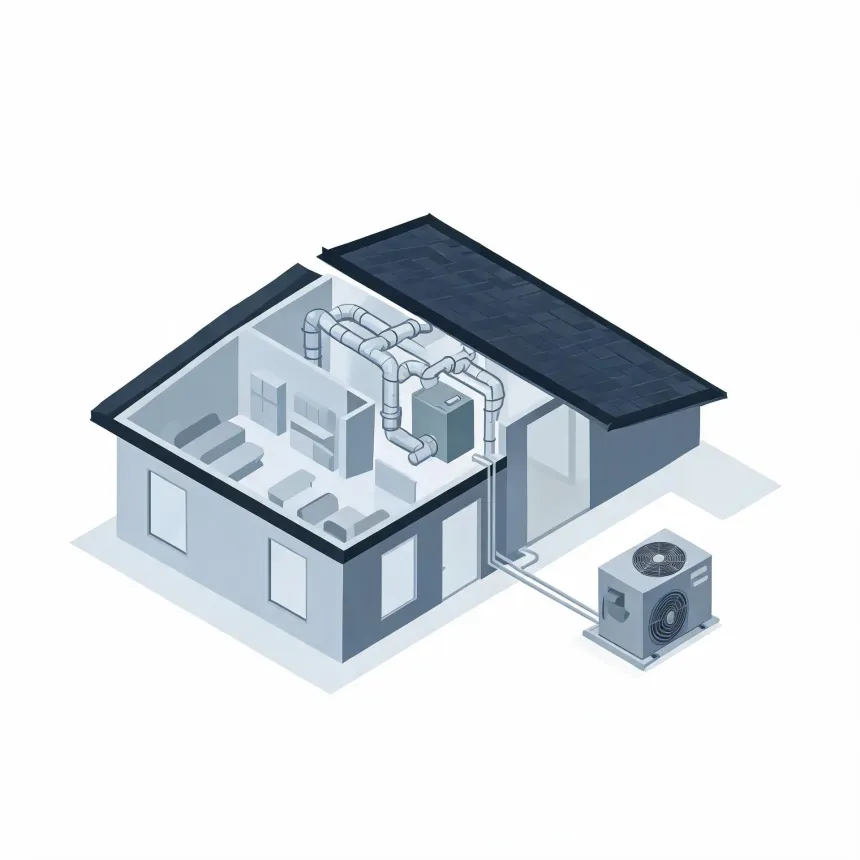
Isometric illustration of a cutaway single-story house showing interior ductwork and an air handler connected by lines to an outdoor condenser unit on a pad beside the building.
Your system heats November through March and cools May through September.

NOAA nClimDiv, 1991–2020 normals

A heat pump about to fail rarely just stops. It gives warning first, like short cycling, a hissing sound, or ice building up on the outdoor coil when it shouldn't.

Short cycling or a hissing noise caught early is usually a single part repair. Let the unit quit outright and the compressor is more likely the problem.

Heat runs November through March here, and a heat pump already weak from storm damage tends to show it in those first cold weeks

Cooling runs May through September
Heat runs November through March
70 hail events from 2015 to 2024

Half the homes in Bossier Parish were built in 1991 or later, so a lot of heat pumps here are still well inside their working life. If yours came with a newer house, the age of the unit isn't working against you, and a repair is usually the more sensible call than replacing it outright. That changes if the system has been through hail or wind damage on top of normal wear, since storm damage can shorten what's left of a unit regardless of how new it is. Worth knowing either way before you decide what to do next.

Get the outdoor unit checked before it has to work hard again

If your outdoor unit has been through hail or wind and never had a look afterward, get it checked now, before the next cold snap puts load on it.

Find a contractor
A man in a cap, gray long-sleeve shirt and tan work pants carries a worn canvas tool bag up porch steps toward a dark gray front door beside a potted shrub.
A gray outdoor HVAC unit mounted on a concrete pad beside a house with gray lap siding and a stone foundation.

A newer unit has more years ahead of it than behind

A heat pump that came with a newer house hasn't logged the years that wear a system down. If yours is one of them, call a repair out first and let the contractor look at what's actually wrong before anyone talks about replacing it. The unit's age isn't the thing to worry about here.

A struggling heat pump doesn't fix itself

A heat pump low on refrigerant or running on a weak capacitor will still move some heat, so it keeps cycling instead of shutting down. Each cycle it runs that way, the compressor works harder to do the same job, and that strain adds up the longer it goes unchecked.
Small problems tend to drag the rest of the system with them

A bent fin or a dirty coil makes the unit run longer to reach the same temperature. That longer runtime puts more hours on the compressor and the fan motor than they were built to carry, so one weak part ends up wearing down the parts around it.

A heat pump fails for a handful of reasons that have nothing to do with storms. The reversing valve sticks, and the unit gets stuck heating when it should cool or the other way around. A contactor wears out from the arcing every time it cycles on, and eventually it won't pull in at all. Refrigerant leaks out slowly at a fitting or a coil joint, and the system keeps running but moves less heat each week until it's barely working. The defrost control can fail too, so the outdoor coil ices over in cold weather and never gets the signal to clear itself. None of that shows up from looking at the unit. It shows up as a system that runs longer, sounds different, or stops keeping up, and a contractor has to open it up to say which one it is.

Whether a repair makes sense comes down to what broke and what it takes to fix it. A single worn part, a capacitor, a contactor, a blower motor, is a straightforward swap and the system runs like it should afterward. A refrigerant leak is different. It can be found and sealed, but if the coil itself is corroded through, the leak will just show up somewhere else next season. A compressor failure is the one that makes people stop and think, since it's the most expensive part in the system and replacing it alone can run close to the cost of swapping the whole outdoor unit. None of this depends on how old the system is. A compressor can fail early on a unit that's otherwise fine, and an old unit can keep running for years on nothing but a new capacitor. What failed and what it takes to put right matters more than how long the unit has been out there.