





A lit antebellum-style two-story house with white columns and a wraparound porch at night, framed by live oak trees draped in Spanish moss.

Heat Pump Repair in Hammond, LA

Tell us about the job

Takes about a minute. No obligation.

RepairHeat PumpTangipahoa Parish, LA
Step 1 of 2

What ZIP code is the job in?

Half the homes in Tangipahoa Parish were built in 1993 or later. That's a lot of newer housing stock, and a lot of heat pumps that still have years of work left in them. If yours came with a newer house, a breakdown now is more likely a part worth fixing than a system worth replacing. The compressor and coils are usually built to last well past the point where one bad capacitor or a refrigerant leak shows up. Age alone isn't a reason to write off a system that's otherwise sound.

5 months
November through March, your system heats
7 months
April through October, it cools
42°F
the average winter night it heats against
91°F
the average summer afternoon it cools against
Isometric line illustration of a cutaway house showing interior rooms with furniture, a furnace or air handler with overhead ductwork, and an outdoor condenser unit connected by lines outside the wall.
Your system heats November through March and cools April through October.

NOAA nClimDiv, 1991–2020 normals

A heat pump in Hammond switches over to heat in November.

October is when a weak part gives out, right before the load hits it.

Tangipahoa Parish gets hit with severe weather more than most places, and the outdoor unit sits outside for all of it.

86 severe weather events from 2015 to 2024
49% of homes statewide lost power a day or more in 2024
48 damaging wind events from 2015 to 2024

If your heat pump came with the house, ask the contractor to look at what actually failed before talking replacement. A bad capacitor or a refrigerant leak is a repair, not a reason to pull the whole system. Mobile homes make up about a fifth of the housing in the parish, and those units see more wear from being closer to the outside air, so a straight nameplate check is worth doing either way. Either way, the question for the contractor is the failed part, not the unit's birth year.

Get the outdoor unit checked for storm damage

If your heat pump is acting up after a storm, that's worth ruling out before anything else. Hail and wind-blown debris hit the outdoor unit directly, and a bent coil or a cracked fan blade can cause the same symptoms as a worn-out part. Have the contractor check the outdoor unit for storm damage while they're diagnosing the repair.

Find a contractor
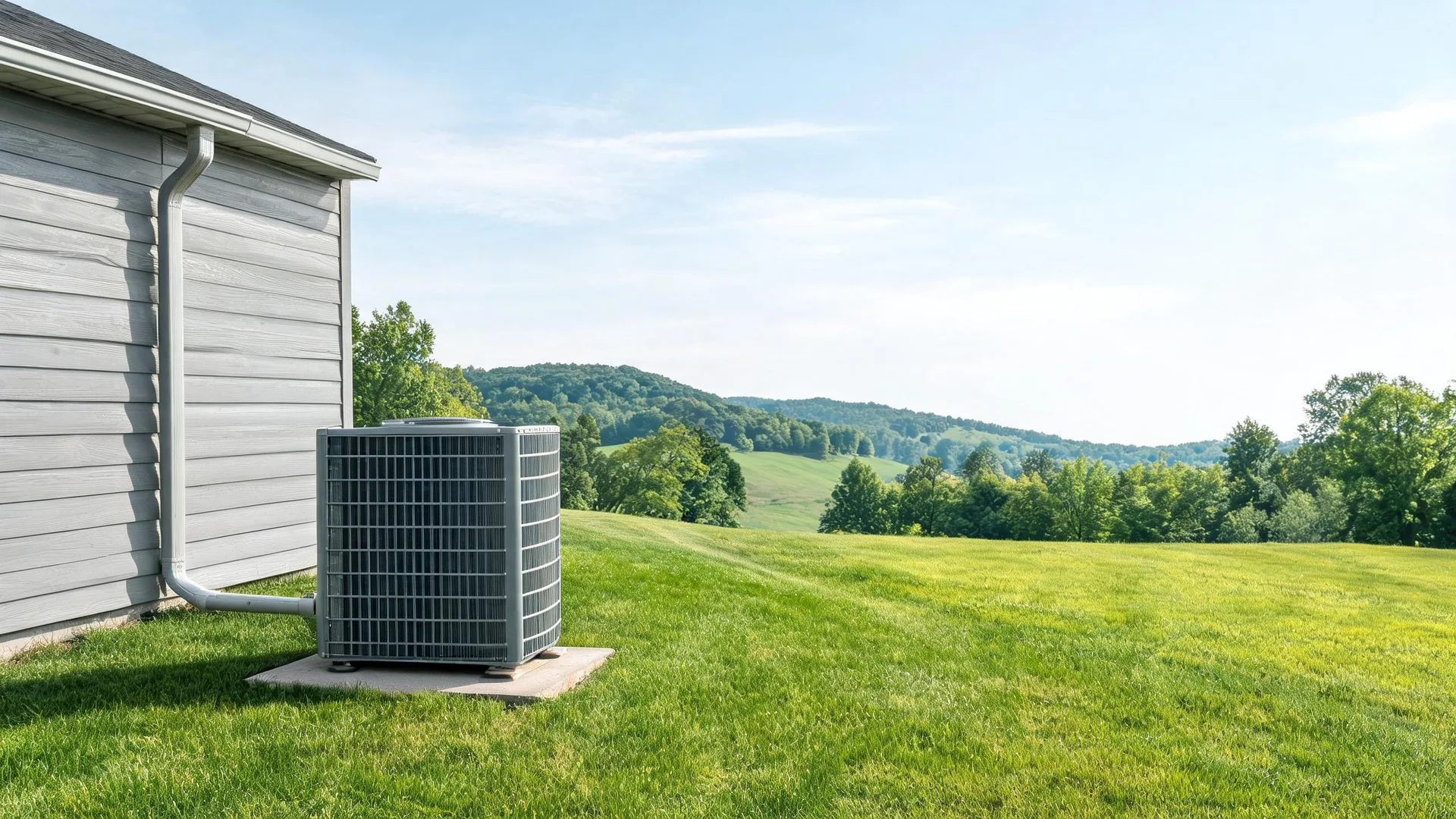
A gray air-source heat pump mounted on a concrete pad next to a house with gray vinyl siding, surrounded by gravel and flanked by green shrubs and white hydrangea flowers.

Running it while it's failing is what turns a repair into a replacement

A heat pump that's struggling doesn't fail all at once. It gives a sign first, usually a sound or a change in how it runs, and if that sign gets ignored the machine keeps working at whatever is wrong with it until something breaks outright. A refrigerant leak is the clearest case. A system low on charge still runs, but the compressor works harder to move what's left and runs hotter than it should the whole time. Keep running it that way and the leak stops being the problem. The compressor is. A failing capacitor tells the same story. It'll still kick the motor on for a while, slower and rougher each time, until one start it doesn't. The motor pulling extra current on a weak capacitor wears down faster than it would with a good one feeding it. None of this is the machine being fragile. It's a part built for one job getting asked to keep doing that job without the help it needs. Shutting it down and getting someone out to look at it stops a small failure from taking a bigger part down with it.

What you can check yourself

Look at the thermostat first. Make sure it's set to heat and the set point is actually above room temperature. Check the breaker panel for a tripped breaker on either the indoor or outdoor unit. Pull the air filter and hold it up to light. If you can't see through it, swap it or clean it. Walk outside and look at the outdoor unit. Clear away leaves, mulch or anything stacked against it, and make sure the fan on top isn't blocked or iced over.
What to leave alone

Don't take the access panels off the indoor or outdoor unit. Don't try to clear ice by chipping at the coil or pouring water on it. Don't add refrigerant or touch the lines, even if you know what the gauges mean. If a breaker trips again after you reset it, stop resetting it and call someone instead. A breaker that keeps tripping is telling you something downstream is pulling too much current, and forcing it back on risks the part behind it.

A heat pump in trouble usually tells you before it quits outright. Short cycling is one of the clearest signs. It kicks on, runs for a bit, then shuts off again before the house actually warms up. Ice building up on the outdoor coil when it shouldn't be there is another. Some frost during a defrost cycle is normal, but a coil caked in ice means something's off with the defrost cycle or the refrigerant charge. Pay attention to the air coming out of the vents too. Air that feels cool when it should feel warm often means the system is losing its fight to keep up. A hissing or bubbling sound near the outdoor unit points to a refrigerant leak. A hard clank or grinding when it starts up usually means a motor or fan blade is wearing out. Any of these is worth a call before the part that's struggling takes something else down with it.

A diagnostic visit starts outside at the unit itself, not with a guess. The contractor checks the refrigerant charge and pressures, since low charge points straight at a leak and tells them where to start looking. They'll pull the electrical panel and test the capacitor and contactor under load, because a part can look fine sitting still and still be the one failing when it's asked to start a motor. Airflow gets checked on both ends, the filter and the coil, since a coil losing its fight with ice usually traces back to something restricting airflow rather than the coil itself. The reversing valve gets tested too, since a heat pump stuck in the wrong mode often isn't broken, it's just not switching. By the end, the contractor can point to the one part actually causing the problem instead of swapping parts and hoping.