





A single-story brick house with a dark hipped roof and covered porch, seen from a low angle across a lawn with blurred grass in the foreground, framed by pine trees and a large spreading oak on the right.

Heat Pump Repair in Abbeville, LA

Tell us about the job

Takes about a minute. No obligation.

RepairHeat PumpVermilion Parish, LA
Step 1 of 2

What ZIP code is the job in?

A diagnostic visit starts with the tech asking what the heat pump is doing wrong and when it started, then checking the thermostat settings before anything gets opened up. Outside, they check the refrigerant pressures and look at the compressor and the outdoor fan motor. Inside, they check airflow at the vents and look at the indoor coil for ice or dirt buildup. They'll also check the reversing valve, since that's the part that lets a heat pump switch between heating and cooling, and a stuck valve is a common reason a system blows the wrong temperature air. If the system is short cycling or not turning on at all, they'll test the capacitor and the contactor, since a weak capacitor can stop the compressor or fan from starting even when power is reaching the unit. Once they find the failed part, they should be able to tell you what it will take to fix it and whether anything else is close to failing too.

5 months
November through March, your system heats
7 months
April through October, it cools
46°F
the average winter night it heats against
90°F
the average summer afternoon it cools against
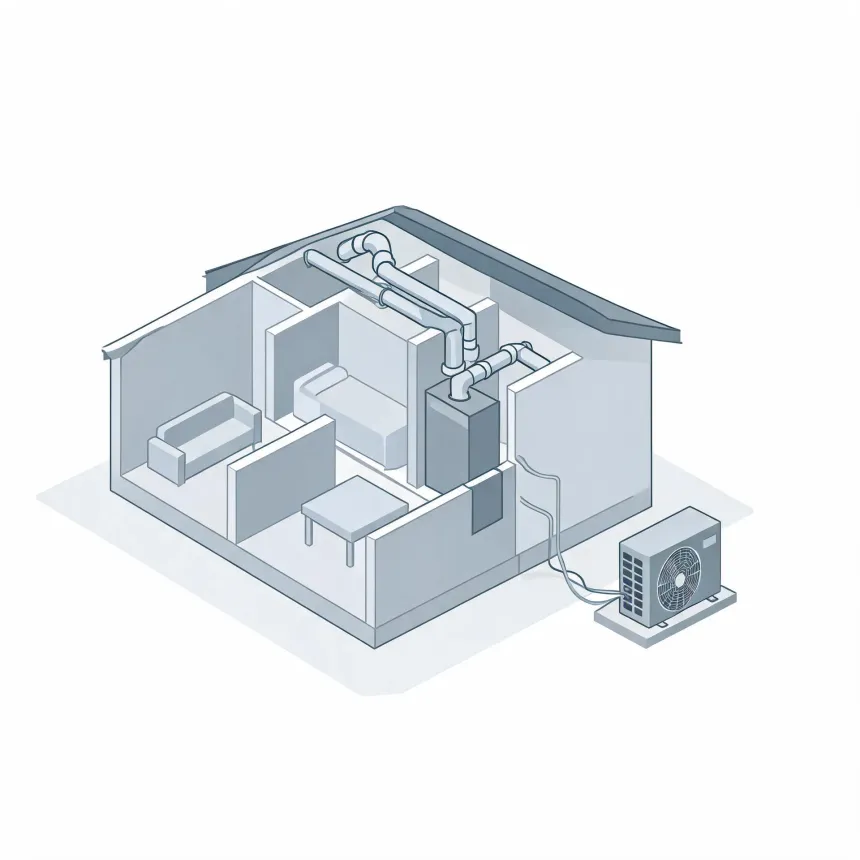
Isometric line illustration of a cutaway house showing interior rooms with furniture, ceiling ductwork connected to an indoor air handler, and a line running outside to an outdoor condenser unit.
Your system heats November through March and cools April through October.

NOAA nClimDiv, 1991–2020 normals

A heat pump that won't switch between heating and cooling usually has a stuck reversing valve.

The reversing valve fails from ordinary wear, so a well kept system can still need one.

Vermilion Parish wears on a heat pump the normal way

36 severe weather events from 2015 to 2024
49% of homes statewide lost power a day or more in 2024
22 damaging wind events from 2015 to 2024

Half the homes in Vermilion Parish were built in 1983 or later, and half in 1983 or earlier. That split doesn't point to any particular wear on a heat pump either way. Mobile homes make up about a fifth of the housing here, and those usually run a heat pump sized for that specific unit, which is worth telling the tech if that's your setup. Past that, there's nothing about this parish that pushes a heat pump to fail in some different way. It still comes down to a capacitor, a contactor, a reversing valve. Whichever one has failed, the fix is the same fix it would be anywhere else.

Get the usual fix

Nothing about this area is especially hard on it. It's most likely the usual problem with the usual fix.

Find a contractor
A man in a dark long-sleeved shirt and olive work pants carries a canvas tool bag up steps toward a blue-gray front door of a shingled house, with a potted shrub beside the entry.
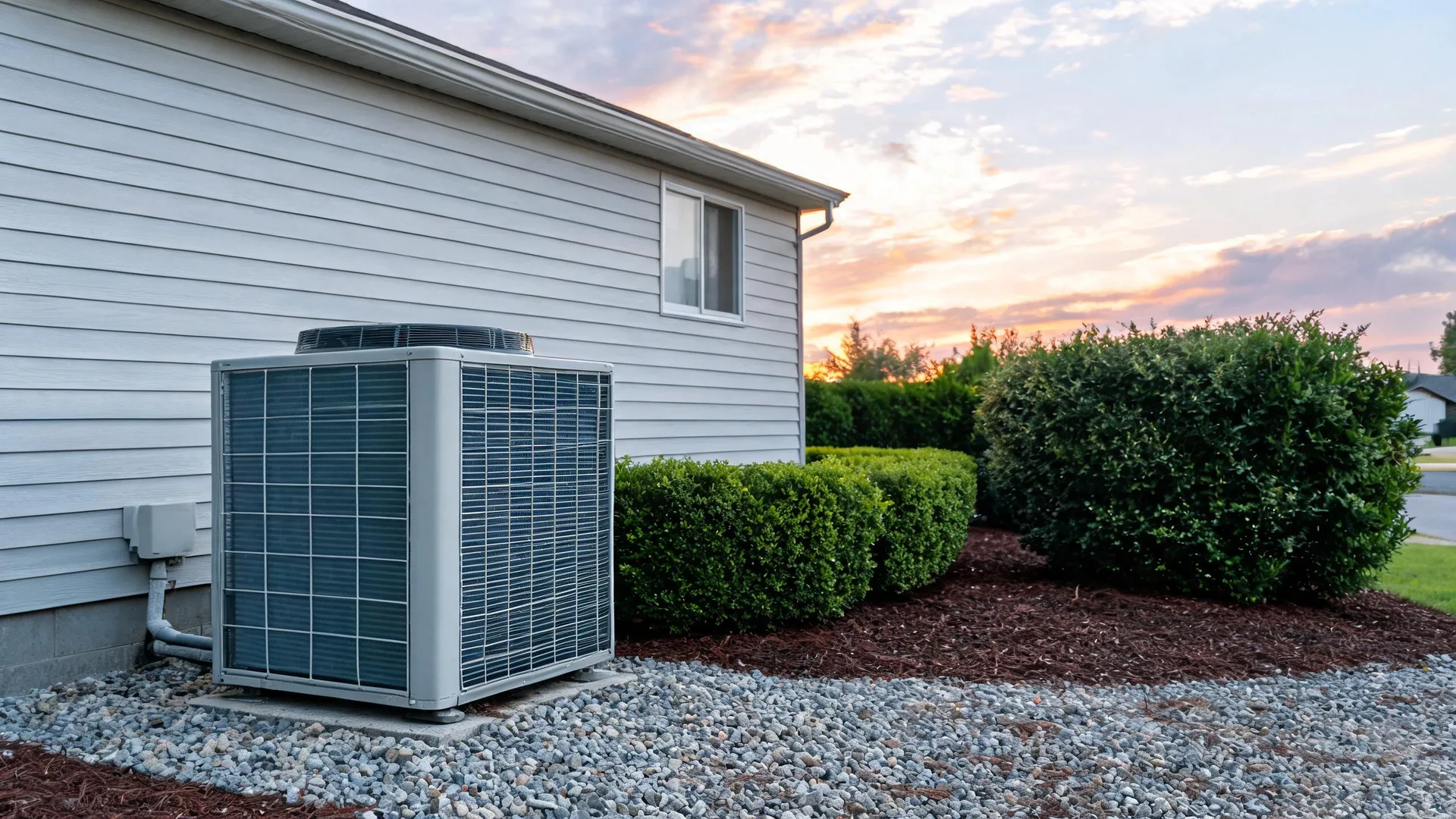
A gray heat pump condenser unit mounted on a concrete pad against the gray lap-siding exterior wall of a house.

A heat pump wears before it breaks

A heat pump does not give out all at once. It runs constantly, switching between heating and cooling as the thermostat calls for it, and the parts inside wear a little every time they cycle. That wear shows up as a change you notice rather than a part breaking outright. Air coming out lukewarm, the system running long stretches without shutting off, or ice building up on the outdoor coil all point to something that has started to give out. A heat pump that blows one temperature no matter the setting is usually stuck on a reversing valve that used to switch fine. None of this means the system was run harder than it should have been. A compressor or a valve that cycles for years eventually wears to the point it needs replacing, in any system, anywhere it runs.

A weak capacitor turns into a dead compressor

A capacitor that's starting to fail still gets the compressor running, just with a hard jolt instead of a clean start. Each one of those rough starts heats the motor windings more than a normal start would. Keep running it that way and the compressor itself can burn out, which is a far bigger job than swapping a capacitor.
Ice on the coil chokes off the whole system

A little frost on the outdoor coil is normal in some conditions, but ice that's building up and staying is usually blocked airflow or a refrigerant problem underneath it. Running the system with that ice in place makes the coil work harder to move heat, which pulls more refrigerant pressure and strains the compressor behind it. Left alone, a problem that started at the coil ends up taking the compressor down with it.

Before you call anyone, check the thermostat. Make sure it's set to heat or cool as needed and the temperature is actually set past the room temperature, not sitting right at it. Go to the breaker panel and check that nothing's tripped, both for the indoor air handler and the outdoor unit. Look at the air filter. A filter clogged with dirt chokes off airflow and can make the system struggle or ice up. Walk outside and look at the unit itself. If the outdoor coil is caked in leaves or buried against a wall or hedge, clear away anything blocking it. If you see ice covering the outdoor coil, switch the system off and let it thaw before anyone touches it further. None of this fixes a bad capacitor or a stuck reversing valve, but it rules out the simple stuff first.

March is worth paying attention to, since cooling starts in April here. A capacitor or reversing valve that's been weak all winter often doesn't show it until the system is asked to run cooling for the first time. The same thing happens in reverse come October, the month before heat starts in November. A heat pump that ran fine all summer can fail to switch over on that first cold morning, simply because the reversing valve hadn't been asked to move in months. Getting a system looked at the month before its season starts is when a tech can catch a part that's close to failing, before it fails on the day you actually need it.