White two-story houses with wraparound porches and Spanish moss-draped oak trees photographed along a residential street at night.

Heat Pump Repair in Marksville, LA

Tell us about the job

Takes about a minute. No obligation.

RepairHeat PumpAvoyelles Parish, LA
Step 1 of 2

What ZIP code is the job in?

March is when a weak heat pump shows itself

Your heat pump sits idle most of March, then gets asked to cool the house as soon as it warms up. A capacitor or contactor that barely made it through last October often fails in that first run, not months into the season.

October through March works the same way

Heat here starts in November, so a heat pump that struggled to cool the house in October gets asked to warm it a few weeks later. If it was already weak in the fall, don't wait for a cold morning to find out.

5 months
November through March, your system heats
7 months
April through October, it cools
41°F
the average winter night it heats against
92°F
the average summer afternoon it cools against
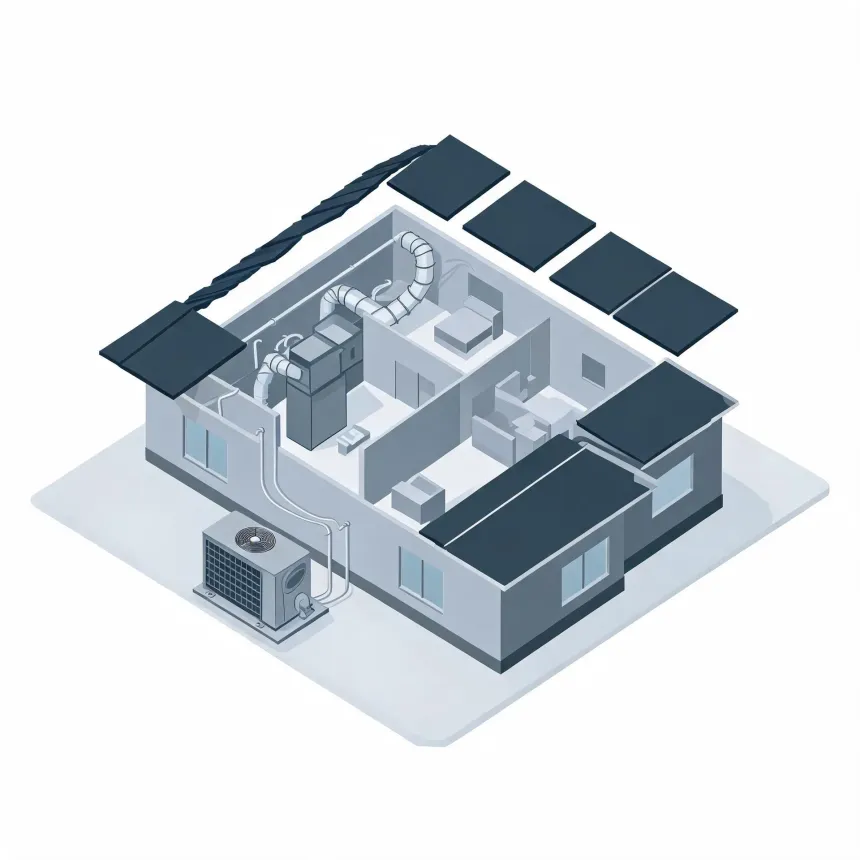
Isometric grayscale illustration of a cutaway single-story house showing interior rooms, ductwork and an air handler, an exterior condenser unit connected by lines, and dark solar panels on the roof.
Your system heats November through March and cools April through October.

NOAA nClimDiv, 1991–2020 normals

A heat pump low on refrigerant keeps running anyway, and the compressor can't move heat right without enough charge in the line.

Keep running it short on charge and the compressor itself can go, which turns a refrigerant leak into a full system replacement.

Older homes, and a lot of mobile homesHalf the homes in Avoyelles Parish were built in 1980 or earlier, and 18.1% of homes here are mobile homes.

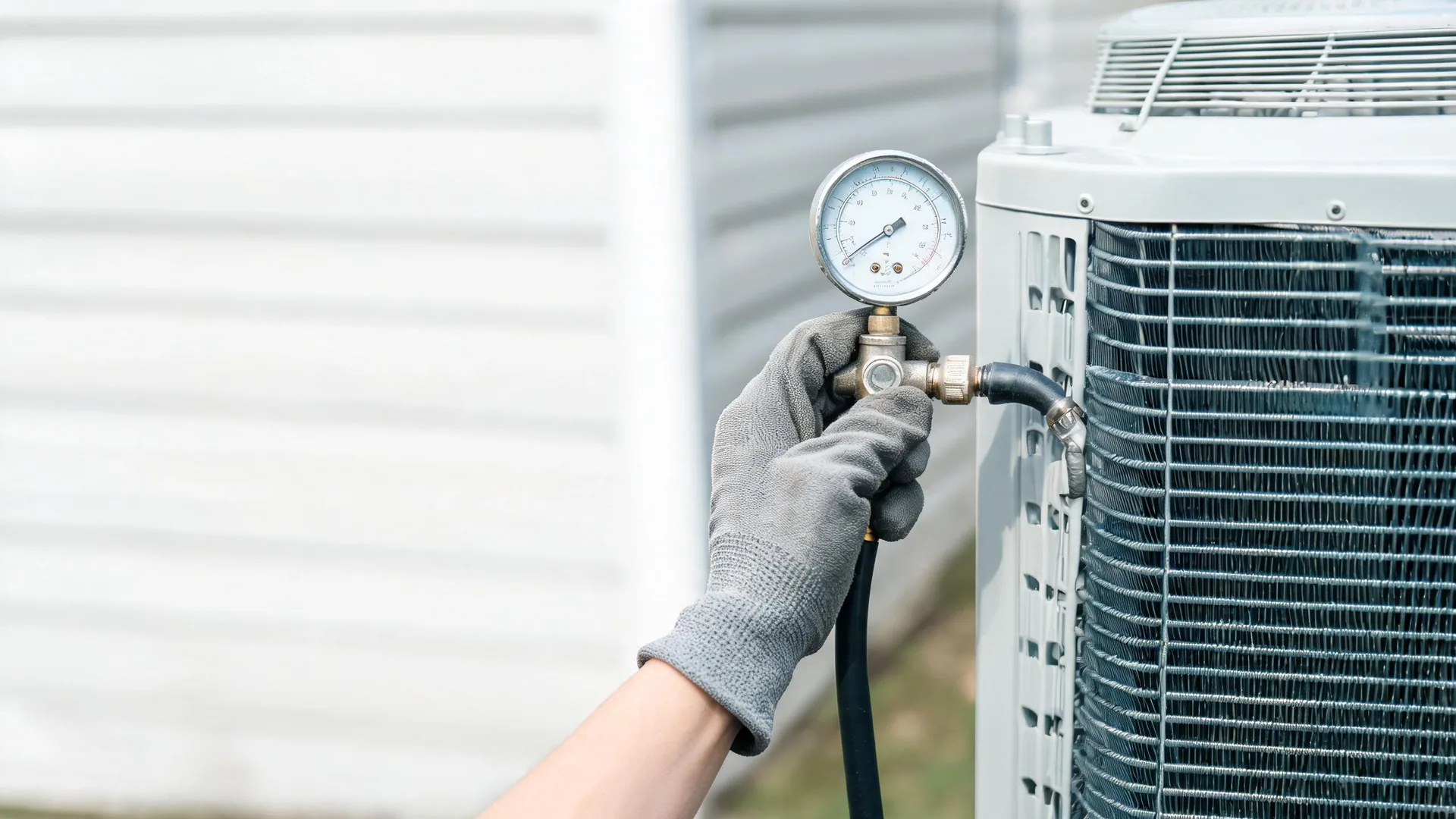
A technician starts outside at the outdoor unit, checking the reversing valve and the compressor before going anywhere near the thermostat. They'll check refrigerant pressure with gauges, since too little charge or too much both point to a leak or a bad charge from the start. Inside, they check the air handler for a dirty coil or a failing blower motor, either of which makes the system run longer than it should to reach the set temperature. They'll also test the defrost board and sensor, since a heat pump that can't sense frost on the outdoor coil will either defrost when it doesn't need to or ice over when it does. Most of this gets done with the system running, because a problem that only shows up under load won't show up with the power off.

Get it looked at early

Problems tend to show up in the first weeks of the season, when the load hits a part that was already weak.

Find a contractor
A dark gray heat pump unit mounted on a concrete pad next to a house with gray siding and a stone veneer wall.

The parts that do double duty

The reversing valve is the part that makes a heat pump different from a straight AC system, and it's usually the first thing to cause trouble. It switches every time the system changes between heating and cooling, and after enough of those switches it can stick in one position or stop sealing all the way. When that happens the system may blow cool air when it should be heating, or run constantly without catching up. The defrost board and sensor are the other common failure point. They watch for frost building on the outdoor coil and trigger a defrost cycle to clear it. If the sensor reads wrong or the board fails, the coil either ices over because defrost never kicks in, or the system defrosts when it doesn't need to and struggles to keep up with the thermostat. A compressor usually fails because of something else going wrong first, not from wear alone. Low refrigerant is the most common cause, since it forces the compressor to run without enough gas to carry heat properly, and that kind of strain adds up fast.

Air that isn't quite the right temperature

A heat pump blowing air that feels cool in heating mode, or not cold enough in cooling mode, is usually still running fine as far as the thermostat can tell. The system keeps calling for the set temperature and keeps running, just longer than it should. That extra runtime is often the first thing anyone notices, long before the unit stops working.

Noise at the outdoor unit

A clicking sound when the system switches between heating and cooling points to the reversing valve, and a valve that doesn't fully seat can leave the system stuck trying to heat and cool at the same time. A grinding or humming from the compressor itself is worth calling in right away, since a compressor that keeps running under strain can fail completely.

A few checks before anyone comes out. Look at the thermostat first and make sure it's set to the mode you think it's in, since a system set to cool on a warm day can feel like it's not heating at all. Check the air filter next and hold it up to the light. If you can't see through it, the system is working harder than it should just to move air. Walk outside and look at the unit itself. It needs clear space on all sides, so leaves, pine straw or anything stacked against it can choke the airflow it needs to work. If the outdoor coil is caked in ice outside of a normal defrost cycle, or the unit is dead quiet with no fan movement at all, those are worth mentioning when you call, since they point to where the problem likely is.

A repair is usually worth it when the part that failed is one of the common ones, a capacitor, a contactor, a defrost sensor, and the rest of the system has been running fine. Those parts fail on their own and don't say anything about the compressor or the coil. The harder case is when the compressor itself is the problem, since that's the part that does the actual work of moving heat, and replacing it costs close to what the rest of the system is worth. A system that's needed a few of these small repairs over the years isn't necessarily in trouble. One that's lost its charge more than once, or is now showing a compressor problem on top of that history, is telling you something different. A tech who's actually run the diagnostics can tell you which kind of problem you have, which beats guessing from how old the unit looks or how it sounds.