Low-angle view across a lawn and pine-needle mulch toward a single-story brick house with a dark hipped roof and covered porch, framed by pines and a moss-draped oak branch.

Heat Pump Repair in Bastrop, LA

Tell us about the job

Takes about a minute. No obligation.

RepairHeat PumpMorehouse Parish, LA
Step 1 of 2

What ZIP code is the job in?

The tech checks the whole system, not just the symptom

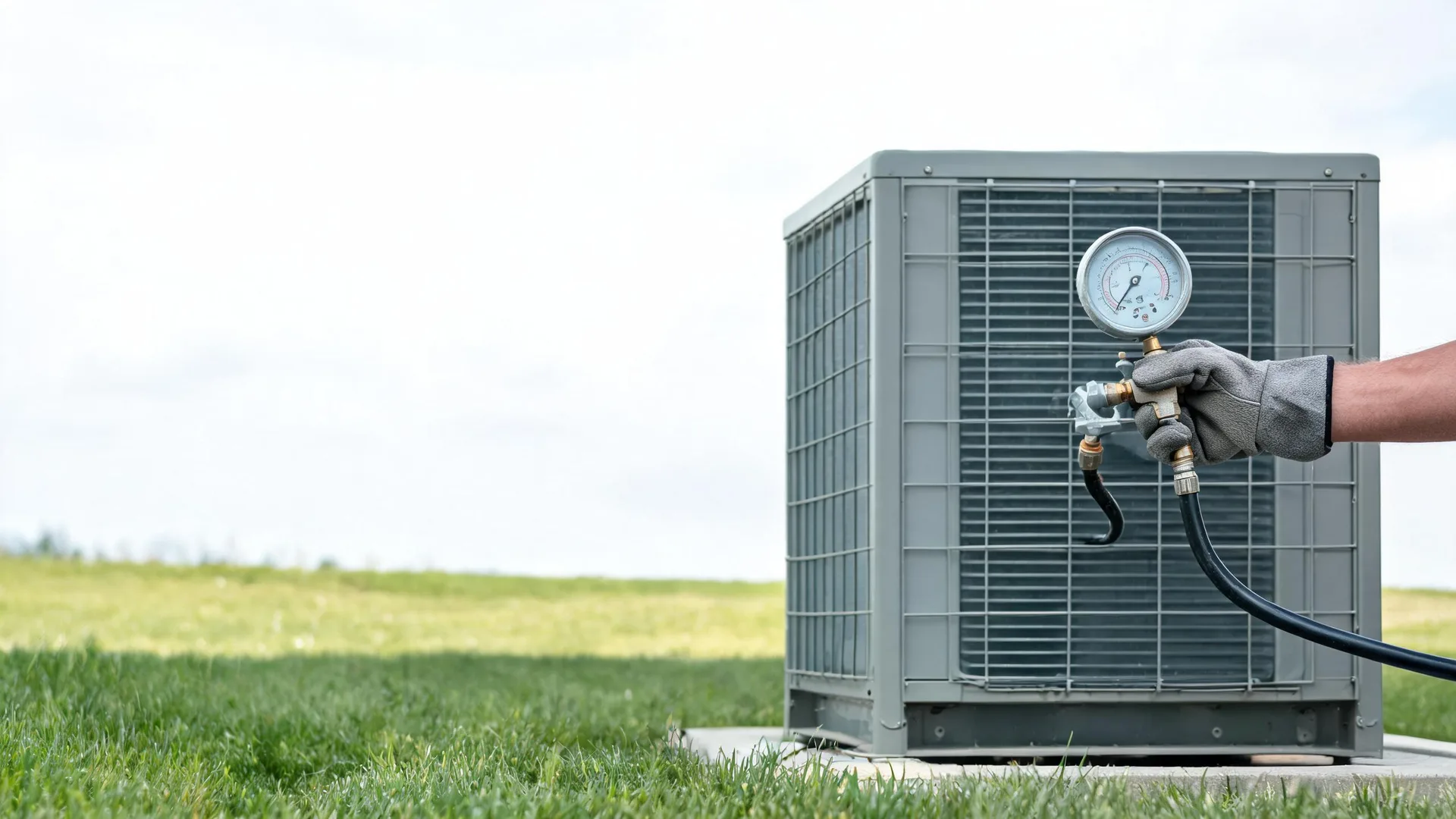
A heat pump that won't heat might have a problem in the outdoor unit, the indoor coil, the refrigerant charge, or the control board that switches it between heating and cooling. The tech checks refrigerant pressure, looks at the reversing valve, tests the capacitor and contactor, and reads any fault codes the board has stored. The thermostat gets checked too, since a bad setting or a miswired stat can look exactly like a failing unit.


What the visit tells you is whether it's worth fixing

Once the tech finds the actual cause, you get a straight answer. A failed capacitor or a low-level refrigerant leak is usually a straightforward fix. A compressor on its way out, or a coil that's corroded through, changes the math. Knowing which one you're dealing with is the whole point of having someone look at it before deciding anything.

5 months
November through March, your system heats
5 months
May through September, it cools
37°F
the average winter night it heats against
92°F
the average summer afternoon it cools against
Isometric illustration of a cutaway single-family house showing interior ductwork and an air handler, with an outdoor condenser unit connected by lines along the exterior wall.
Your system heats November through March and cools May through September.

NOAA nClimDiv, 1991–2020 normals

The reversing valve is what lets a heat pump switch between heating and cooling, and it's one of the first things that sticks or fails.

A stuck reversing valve can leave you with a system that blows cold air all winter or warm air all summer.

November is when a weak heat pump gets found out

Cooling runs May through September
Heat runs November through March
Power costs 11.73 cents a kWh statewide
Bastrop homes, old and new, get the same heat pump problemsHalf the homes in Morehouse Parish were built in 1977 or earlier. Almost one in five is a mobile home. Neither one causes heat pump trouble on its own.

Morehouse Parish logged 113 severe weather events between 2015 and 2024, and most of those were damaging wind. The outdoor unit sits outside with no cover from any of that. Wind-driven debris bends fins and can crack a fan blade, and hail hits the same coil just as hard. A heat pump can take a hit like that and keep running, worse off than before, since bent fins restrict airflow over the coil and a chipped blade throws the fan off balance. Tornadoes have touched down here too, and when the power goes out across this many homes in a storm, a unit that was already struggling is the one that won't come back right. None of that tells you what hit your unit or when. If it sat through a storm this year, it's worth having someone look before you trust it to get you through the next one.

Get it looked at early

Problems tend to show up in the first weeks of the season, when the load hits a part that was already weak.

Find a contractor
A man in a dark cap, gray T-shirt and brown work pants walks up porch steps toward a dark front door, carrying a canvas tool bag filled with tools, with a potted shrub beside the entry.
A gray air-source heat pump mounted on a concrete pad next to a house with gray vinyl siding, surrounded by gravel and flanked by green shrubs and white hydrangea flowers.

What to check before you call anyone

Start with the thermostat. Make sure it's set to heat, not cool or auto, and the temperature is set above room temperature. A dead battery can shut the whole system down and look exactly like a failed unit. Check the filter next. A clogged filter starves the system of airflow, and a heat pump that isn't getting enough air will ice up or trip a safety switch. Walk outside and look at the outdoor unit. Clear away leaves or anything piled against it, since it needs open air on all sides. Some frost on the coil in cold weather is normal, but a thick sheet of ice covering it is not. Check the breaker panel too. A tripped breaker stops the unit cold, and if it trips again right after you reset it, leave it off and don't keep trying. Last, pay attention to what the system is doing. Air that blows but never warms up, a unit that cycles on and off every few minutes, or a compressor that hums without starting are all worth mentioning to whoever comes out. None of this fixes a bad part, but it rules out the simple stuff first.

A small fault turns into a bigger one

A heat pump low on refrigerant will keep trying to hit the set temperature, and the compressor has to work past what it's built for to do it. Run it like that for days and a slow leak turns into a failed compressor. The same goes for a coil that's icing up. One cycle of frost is normal, but if the system keeps running instead of defrosting properly, the ice builds layer on layer and blocks airflow completely.

The unit can't always tell you to stop

Some problems trip a safety switch right away and shut the system down before real damage happens. Others don't. A failing capacitor can let the compressor keep limping along, straining every time it starts, until it finally seizes. A dirty coil cuts efficiency slowly enough that nothing shuts off, it just wears the compressor down faster. The longer either one goes unnoticed, the fewer options are left by the time someone looks at it.

A heat pump in trouble usually tells you in ways you can feel before anyone inspects it. The air coming out of the vents feels lukewarm or barely different from room air, especially in heating mode, because a heat pump moves heat rather than generating it and a struggling system moves less of it. You might notice the outdoor unit running constantly, never cycling off, or doing the opposite and short cycling every few minutes. Listen for a hum with no startup, a click that doesn't catch, or a new rattle that wasn't there before. Ice building up on the outdoor coil beyond what a normal defrost cycle clears is another sign, as is a system that blows the wrong temperature entirely, cold air in winter or warm air in summer. Any of these is worth mentioning to a tech, since the symptom you notice often points straight at the part that's failing.

A compressor failure and a bad capacitor are not the same decision. The capacitor is a small, cheap part that fails on its own fairly often, and swapping it brings the system right back to normal. The compressor is sealed, expensive, and not something anyone swaps out on its own, since replacing it alone on an old system rarely makes sense next to putting that money toward a new unit. Age matters less than what's actually failed and what else is starting to go with it. A system that's needed a few small repairs over the years and just lost a run capacitor is still worth fixing. One where the compressor is failing, the coil is corroded, and the refrigerant is low all at once is telling you something different. The tech can only give you that answer after looking at what's actually wrong, not before.