Two single-story houses, one of red brick with a white-columned porch and one with pale siding, sit behind a mown lawn and a trimmed hedge, beneath large moss-draped oak trees.

Heat Pump Repair in Laplace, LA

Tell us about the job

Takes about a minute. No obligation.

RepairHeat PumpSt. John the Baptist Parish, LA
Step 1 of 2

What ZIP code is the job in?

What the repair history tells you

A heat pump that keeps calling for the same fix is telling you something the next repair won't solve. Compressor trouble, a refrigerant leak that keeps coming back, or a reversing valve that's starting to stick are signs of a system wearing out as a whole, not failing in one spot. A single breakdown on a unit that's otherwise run fine is a different problem, and usually a cleaner fix.

What replacement buys you

A new heat pump is built to a different efficiency standard than the one it replaces. As components wear, the old system loses capacity and has to run longer to hold the same temperature, so comfort and the utility bill both suffer even when nothing has technically failed yet. Replacing makes the most sense when the outdoor unit and the indoor coil are aging together, since matched equipment runs better than new gear paired with a tired partner.

5 months
November through March, your system heats
7 months
April through October, it cools
44°F
the average winter night it heats against
91°F
the average summer afternoon it cools against
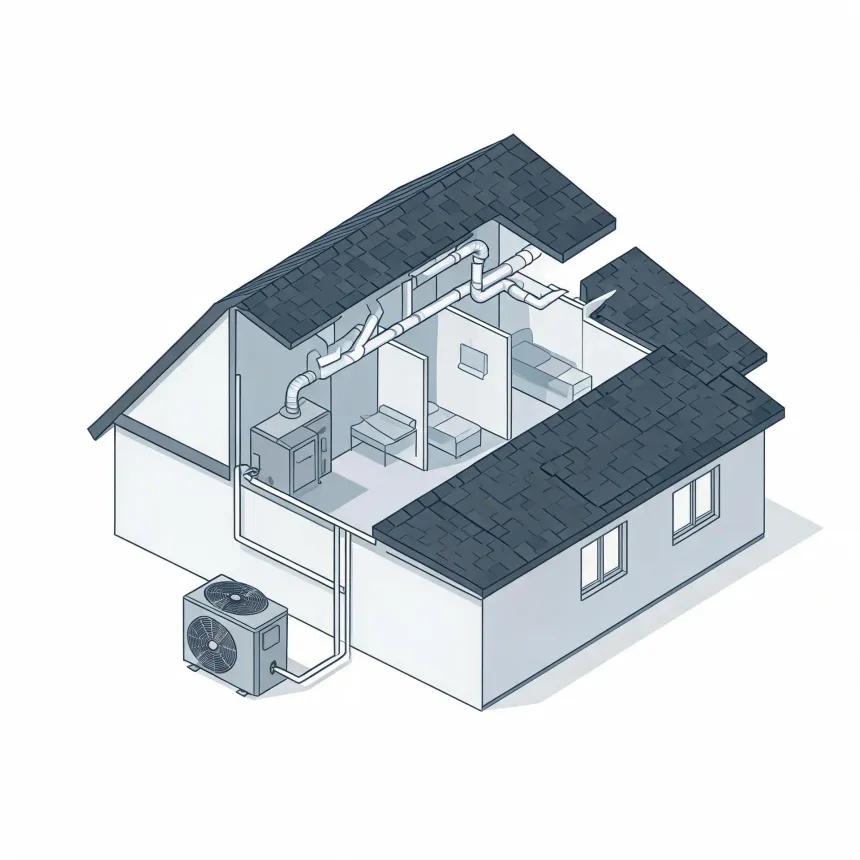
Isometric line illustration of a cutaway single-story house showing interior ductwork, an indoor air handler unit, and an outdoor condenser connected by refrigerant lines, with a dark shingled roof.
Your system heats November through March and cools April through October.

NOAA nClimDiv, 1991–2020 normals

A heat pump fails most often at the reversing valve, the part that switches it between heating and cooling.

Once that valve starts sticking, the system can get stuck in one mode or stop switching at all.

Half the homes here were built in 1984 or later, so most heat pumps still have years of life in them

Half the homes here were built by 1984
Power costs 11.73 cents a kWh statewide
Climate zone 2A

If your heat pump came with a house built in the last few decades, call a repair company before you start pricing a new system. A stuck reversing valve or a failed capacitor is a part problem, not a sign the equipment is done. Tell whoever comes out how old the unit is if you know it. That helps them tell a one-time fix from the start of a pattern, and on newer equipment the odds favor the one-time fix.

Repair it

If your system came with a newer house, it likely has plenty of life left. Repair is usually the right call.

Find a contractor
A gray air-source heat pump mounted on a concrete pad next to a house with gray vinyl siding, surrounded by gravel and flanked by green shrubs and white hydrangea flowers.

It runs both directions, all year, on parts that never get to rest

A heat pump runs in both directions, all year, so it wears differently than a furnace or an AC that rests through the off season. The outdoor fan and compressor cycle on through mild stretches when a straight AC system would stay off, and the reversing valve gets thrown every time the system switches between heating and cooling. Watch for a system that runs long stretches without shutting off, air coming out barely warm or barely cool, or a unit stuck heating when you asked for cooling, or the other way around. Some frost on the outdoor coil during cold weather is normal, but a coil that stays frozen means the defrost cycle isn't doing its job. A compressor that hums but doesn't start, or shuts off and trips back on repeatedly, is working against a problem instead of running through one. None of these fix themselves by waiting.

What you can check at the thermostat

Make sure it's set to the mode you want and the temperature is actually past what the room is reading. Change the batteries if it uses them. Check the breaker for the indoor air handler and the one for the outdoor unit, since a tripped breaker on either side can leave the system partly dead or stuck in one mode.

What you can check at the units themselves

Pull the filter and hold it up to light. If you can't see through it, replace it, since a blocked filter starves the system of airflow and can freeze the indoor coil. Walk outside and look at the outdoor unit. Clear leaves, grass clippings or anything piled against the sides so air can pass through the coil. If the outdoor coil is caked in ice outside of normal cold weather, switch the system off and let it thaw before anyone works on it.

A reversing valve that's starting to stick will keep sticking under load. Running the system while it struggles pushes refrigerant through a valve that isn't seating right, and that wears the valve faster than sitting idle ever would. A compressor that's low on charge behaves the same way. It runs hotter than it should to make up for the missing refrigerant, and heat is what kills compressor windings over time. Frost on the outdoor coil is similar. Left alone it just builds, and a coil fully iced over blocks the airflow the system needs to run at all, so a small problem turns into a stuck unit. Shutting the system off when something looks wrong doesn't fix it, but it stops a bad part from taking the rest of the system down with it.

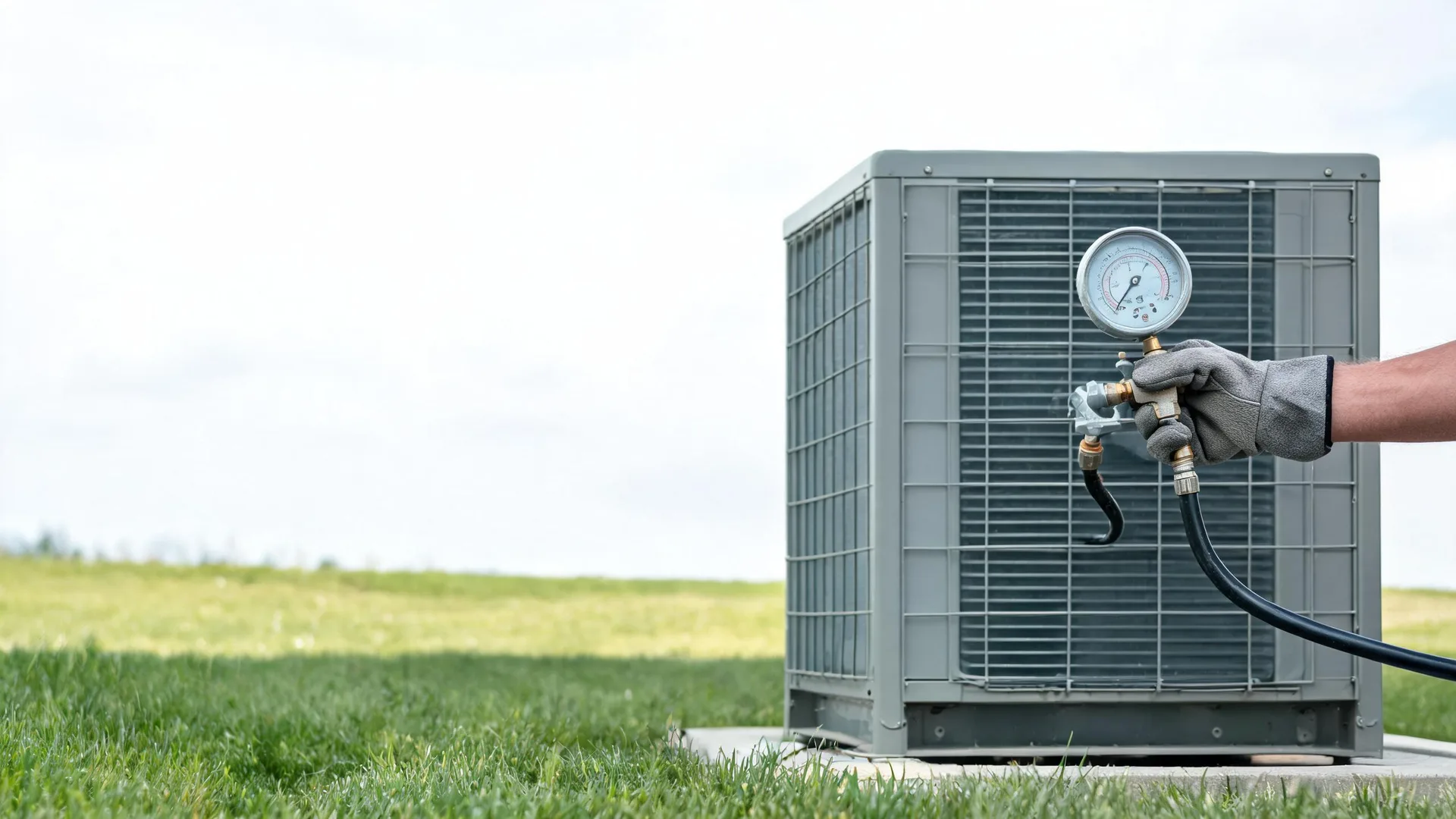
A diagnostic call starts with questions, not tools. What were you noticing, and when. Heating or cooling, one mode or both, all day or just at startup. Then the tech checks the thermostat call against what the system is actually doing, because that tells them whether the problem is in the controls or in the equipment itself. Gauges go on next to read refrigerant pressure, and a meter checks the capacitor and the windings in the compressor. Outside, they'll watch a full cycle if they can, since a reversing valve that's sticking often shows itself when the system switches between heating and cooling rather than while it's just running. The goal is to find the one part actually causing the symptom, not to guess and start swapping things.