





White two-story houses with wraparound porches and Spanish moss-draped oak trees photographed along a residential street at night.

Heat Pump Repair in Monroe, LA

Tell us about the job

Takes about a minute. No obligation.

RepairHeat PumpOuachita Parish, LA
Step 1 of 2

What ZIP code is the job in?

Ouachita Parish saw 140 severe weather events between 2015 and 2024, and most of that was wind. Hail showed up too, dozens of times over those years. Hail dents coils and bends fins on the outdoor unit, and debris thrown by hard wind can do the same damage. A heat pump can take that kind of hit and keep running for weeks before it shows up as a bigger failure. If a storm came through hard enough to strip branches or dent a gutter, it was hard enough to reach the unit sitting outside.

5 months
November through March, your system heats
6 months
May through October, it cools
37°F
the average winter night it heats against
92°F
the average summer afternoon it cools against
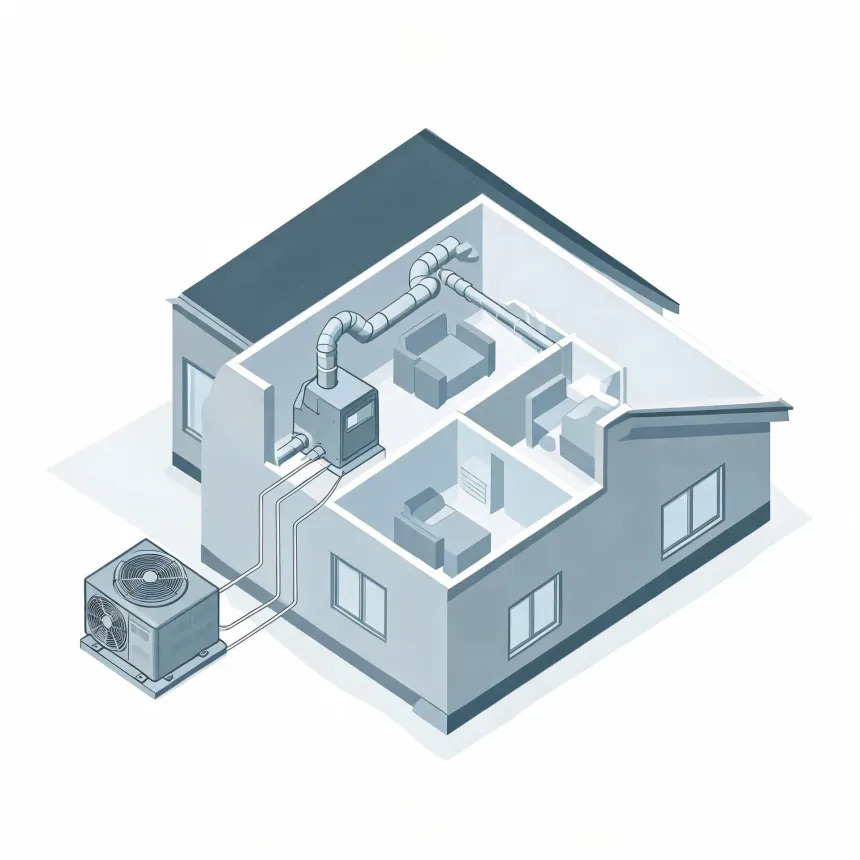
Isometric cutaway illustration of a two-room house showing an indoor air handler with ductwork connected by lines to an outdoor condenser unit on a pad.
Your system heats November through March and cools May through October.

NOAA nClimDiv, 1991–2020 normals

Half the homes in Ouachita Parish were built in 1983 or later.

A heat pump in a house that age usually still has a case for repair instead of replacement.

November and May are when a weak heat pump quits

Cooling runs May through October
Heat runs November through March
Power costs 11.73 cents a kWh statewide

Get it checked after a storm

Storms hit hard here. If the outdoor unit took hail or debris, have it checked even if it still runs.

Find a contractor
A man in a cap, dark shirt and tan work pants walks up porch steps toward a dark blue paneled front door, carrying a canvas tool bag, with a potted shrub beside the entry.
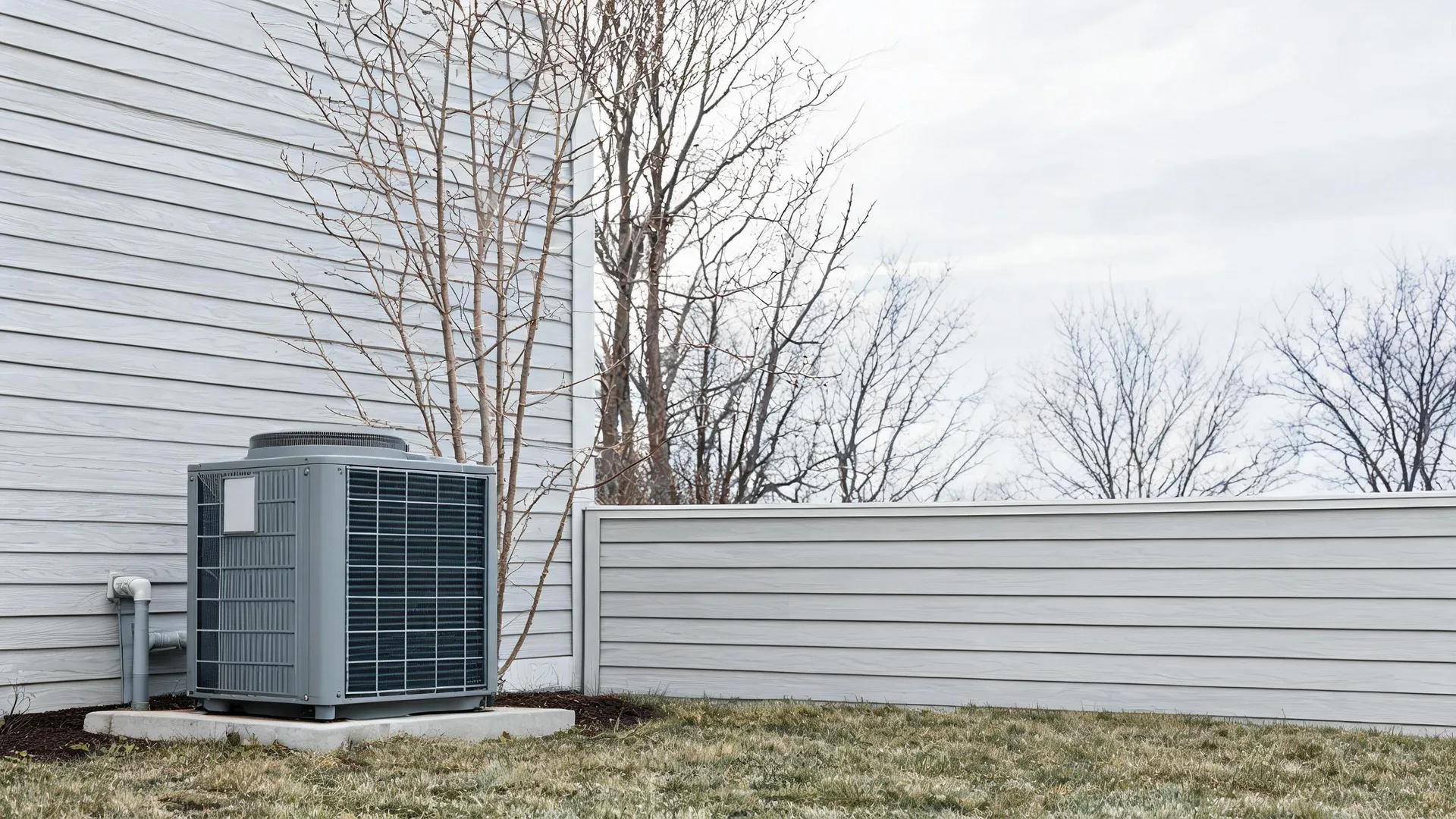
A gray air-source heat pump mounted on a concrete pad next to a house with gray vinyl siding, surrounded by gravel and flanked by green shrubs and white hydrangea flowers.

What to check before you call

Before anyone comes out, walk outside and look at the outdoor unit. Check that nothing is pressed up against it. Leaves, a fallen branch, siding debris, anything blocking the sides will choke the airflow it needs to work. Look at the fan through the top grille and see if it spins freely or looks bent or struck. Check the coil, the fins around the outside of the unit, for dents or a crushed section. Inside, check the thermostat has power and is actually set to heat or cool, not sitting on the wrong mode. Check your breaker panel for a tripped switch. If the indoor air feels weak, pull the filter and hold it up to light. If you can't see light through it, that alone can drag the whole system down. None of this tells you what's broken inside the unit, but it rules out the simple stuff before anyone charges a truck for it.

It blows air that isn't the right temperature

A heat pump in heating mode should feel warm at the vent, not room temperature or cool. Air that feels barely warm, or blows cold when you expect heat, usually points to a refrigerant problem or a failing reversing valve, the part that switches the system between heating and cooling. A filter change won't fix this. It needs a tech with gauges to find out what's actually wrong.
It short cycles or won't stop running

A heat pump that kicks on and off every few minutes, or one that runs nonstop and never satisfies the thermostat, is telling you something is off. The cause could be a low refrigerant charge, a failing sensor, or a compressor on its way out. Either pattern puts extra wear on the compressor every time it happens, so it's worth getting looked at rather than letting it run that way.

A heat pump that's struggling doesn't fail all at once. A compressor working against a low refrigerant charge runs hotter than it should, every cycle, and that heat breaks down the oil that's supposed to protect it. Keep running it in that state and a repair turns into a compressor replacement, sometimes the whole outdoor unit. A reversing valve stuck halfway does something similar to itself, arcing and wearing at the point it's stuck instead of seating fully one way or the other. Ice on the outdoor coil works the same way. A little frost during a defrost cycle is normal, but a coil that stays iced over blocks airflow, and the system keeps trying to pull heat through ice that isn't there. None of this gets better by waiting it out.

Repair makes sense when the problem is one part acting up and the rest of the system is sound. A bad capacitor, a failed contactor, a sensor out of calibration, these are quick fixes on a machine that still has years in it. Replacement starts to make more sense when the compressor itself is failing, since that's the heart of the unit and the most expensive thing in it by far. It also makes sense when the same system keeps coming back for different reasons each time, a sign the whole unit is wearing out at once rather than one part giving up early. Age matters too, but less than condition. A heat pump that's been maintained and sheltered from hard weather can outlast one that's been neglected, even if the second one is younger on paper. The honest answer usually comes from a tech who can check the compressor, the refrigerant charge and the coil condition before saying which way to go.