





A white Southern-style house with a wraparound porch photographed at night, surrounded by Spanish moss-draped oak trees lit by landscape lights.

Heat Pump Repair in Luling, LA

Tell us about the job

Takes about a minute. No obligation.

RepairHeat PumpSt. Charles Parish, LA
Step 1 of 2

What ZIP code is the job in?

A heat pump in Luling runs cooling April through October, then switches to heat for November through February. Each switch is where trouble tends to show up. A weak capacitor or a failing contactor that made it through a mild March often gives out once the cooling load hits in April. A reversing valve or defrost control that sat unused since February can stick when heat is called for in November. If your system has been idle for a few months, a strange noise or a unit that won't switch modes on the first cold morning usually isn't bad luck. It's a part that was already going and just got asked to work again.

4 months
November through February, your system heats
7 months
April through October, it cools
46°F
the average winter night it heats against
91°F
the average summer afternoon it cools against
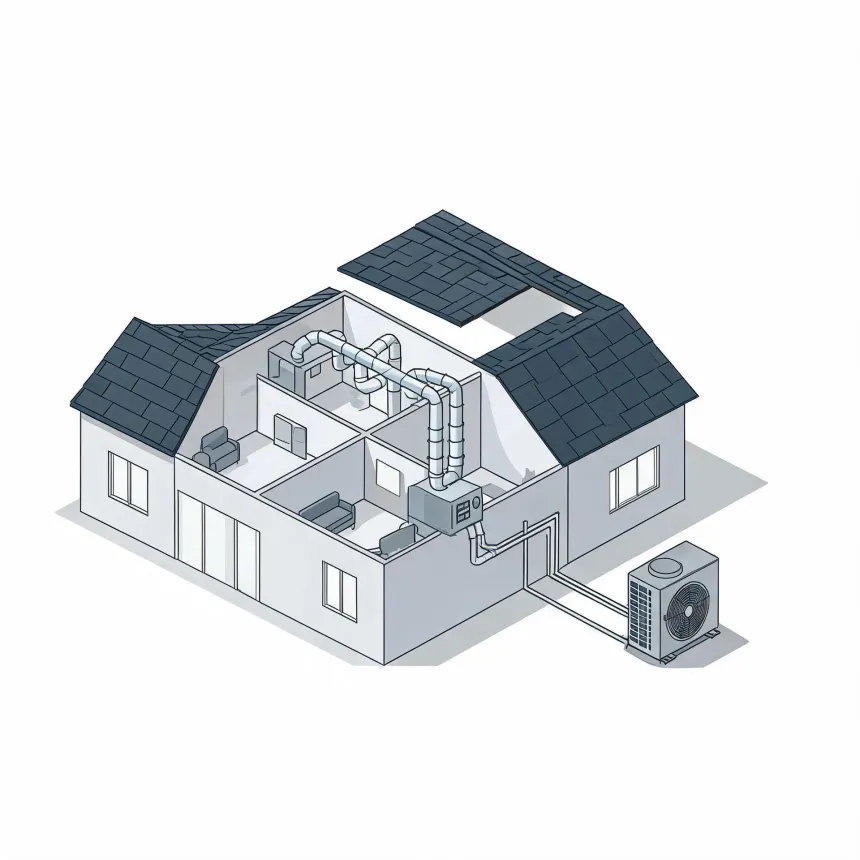
Isometric line illustration of a cutaway single-story house showing interior rooms, ceiling ductwork connected to an indoor air handler, and refrigerant lines running to an outdoor condenser unit on a pad.
Your system heats November through February and cools April through October.

NOAA nClimDiv, 1991–2020 normals

St. Charles Parish logged 45 severe weather events between 2015 and 2024, wind, hail, tornadoes, tropical storms.

Your outdoor unit sits through all of it, so hail dents or wind-blown debris can hurt a heat pump that still runs fine today.

Half the homes here were built in 1986 or later, so a lot of heat pumps still have years left in them

Half the homes here were built by 1986
Power costs 11.73 cents a kWh statewide
Climate zone 2A

If your heat pump has been through a storm this year, look at the outdoor unit before you rule anything out. Hail can dent the fins without stopping the fan, and bent fins choke airflow over the coil even though the unit still starts up fine. Wind-blown debris does the same thing if it gets pulled against the coil or caught in the fan blades. None of that shows up as a dead system right away. It shows up months later as weak cooling or a compressor working harder than it should. Worth a look any time the yard took a hit, even if the unit kicked on afterward like nothing happened.

Your heat pump is probably worth fixing

A unit that came with a house built in 1986 or later still has working years ahead of it. When something goes wrong, a repair is the more likely outcome than a full replacement. Worth getting it looked at rather than written off.

Find a contractor
A man in a dark shirt and tan pants carries a canvas tool bag up stone steps toward a dark blue front door, with a potted shrub beside the entry.
A gray heat pump condenser unit mounted on a concrete pad against the gray lap-siding exterior wall of a house.

Left alone, a small problem becomes the compressor's problem

A heat pump that's struggling doesn't fix itself by staying on. Weak airflow across the coil makes the compressor work harder to move the same amount of heat, and a compressor under that kind of strain runs hotter than it should for the rest of its life. A failing capacitor makes the fan motor or compressor draw more current every time it starts, and that extra draw is what finally burns the motor windings out. Low refrigerant charge means the compressor pumps a thinner mix of gas and oil, and the oil is what keeps it lubricated. Run it low long enough and the compressor wears from the inside before it ever trips a breaker. None of these show up as a dead unit at first. The system keeps running, just worse, until the part carrying the extra load finally gives out.

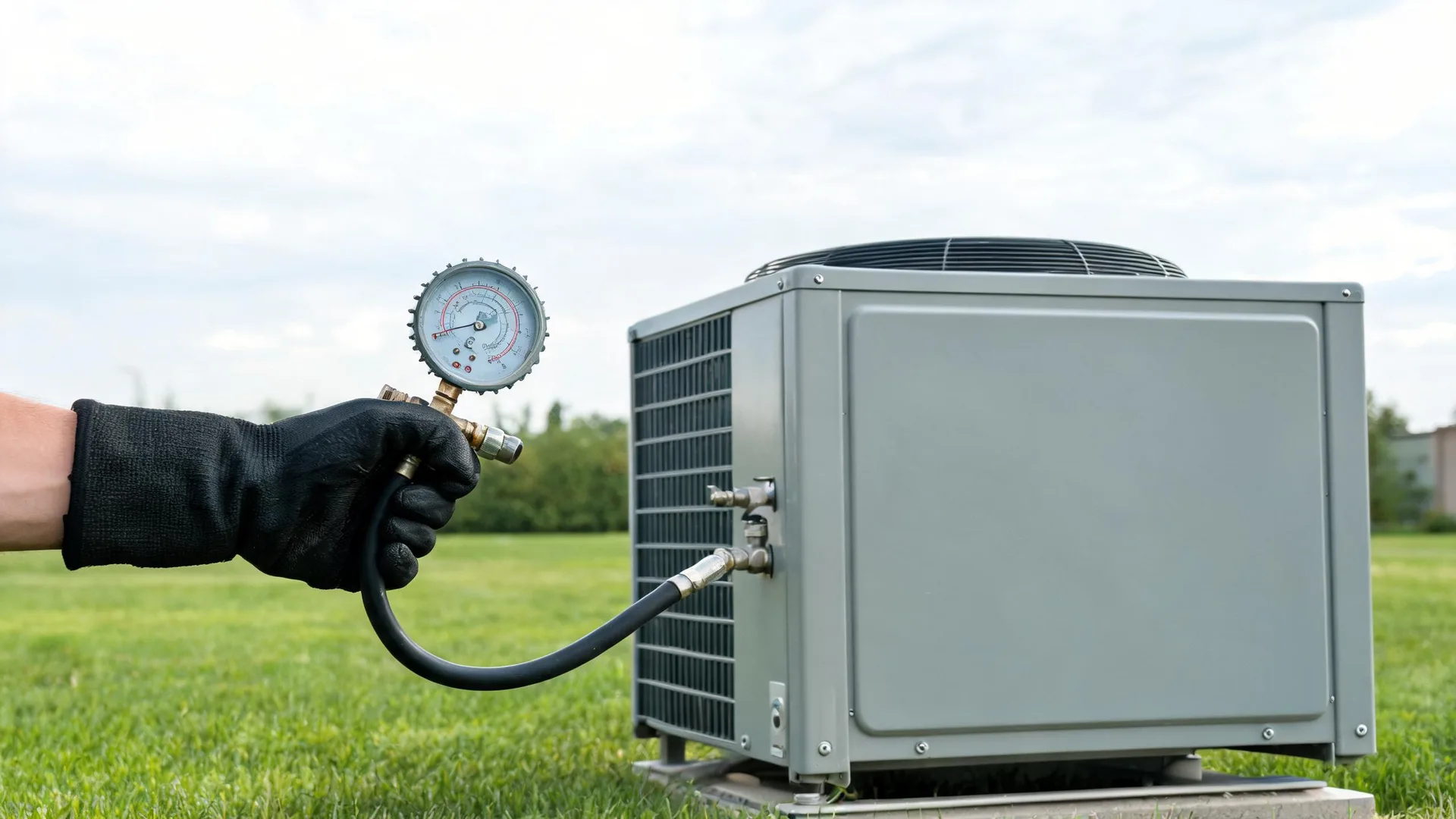
A dirty outdoor coil is the quiet cause behind a lot of service calls

Grass clippings, cottonwood seed and plain dust build up on the outdoor coil over time and nobody notices because the unit still runs. The coil needs open airflow to move heat in both directions, cooling or heat. Once it's caked over, the system works harder for less output, and that extra strain is what shows up later as a bad capacitor or a tired compressor.
A clogged filter does damage somewhere else entirely

The filter sits in the return air path, not at the outdoor unit, and a dirty one chokes the whole system from the inside. Airflow drops across the indoor coil, the coil runs colder than it should, and in cooling mode that's how ice forms on the line set. A filter is a small part to overlook and the one most likely to drag a bigger part down with it.

A heat pump that needs a service call usually tells you before it quits outright. Short cycling is one of the clearest signs, the unit kicks on, runs a few minutes, shuts off, then starts again before the house has caught up. That's often a thermostat sensor gone bad or a refrigerant charge that's off. Ice on the outdoor unit during a cold snap is normal for a few minutes during defrost, but ice that stays or builds up means the defrost control isn't switching the cycle when it should. A hissing sound near the lines usually means refrigerant escaping somewhere it shouldn't be, and that's not something that gets better on its own. Warm air blowing when the thermostat is set to heat often means the reversing valve isn't shifting the way it's supposed to. Any of these are worth a call before the part under the most strain decides the rest of the question for you.

A repair decision usually comes down to what failed, not just that something did. A capacitor, a contactor, a blower motor, these are parts a tech replaces on their own, and the rest of the system doesn't know the difference afterward. The compressor is different. It's sealed, it's the most expensive part in the unit by a wide margin, and a tech can't just swap a piece of it. If the compressor itself has failed, replacing the whole unit is usually the more sensible path, since a compressor swap can cost close to what a new system runs. Everything else, the fan motor, the reversing valve, the defrost board, the refrigerant charge, gets fixed in place and the unit goes back to work like nothing happened. So the real question isn't the age of the unit or how long it's been acting up. It's which part gave out, and whether that part is one a tech replaces or one that takes the rest of the system down with it.