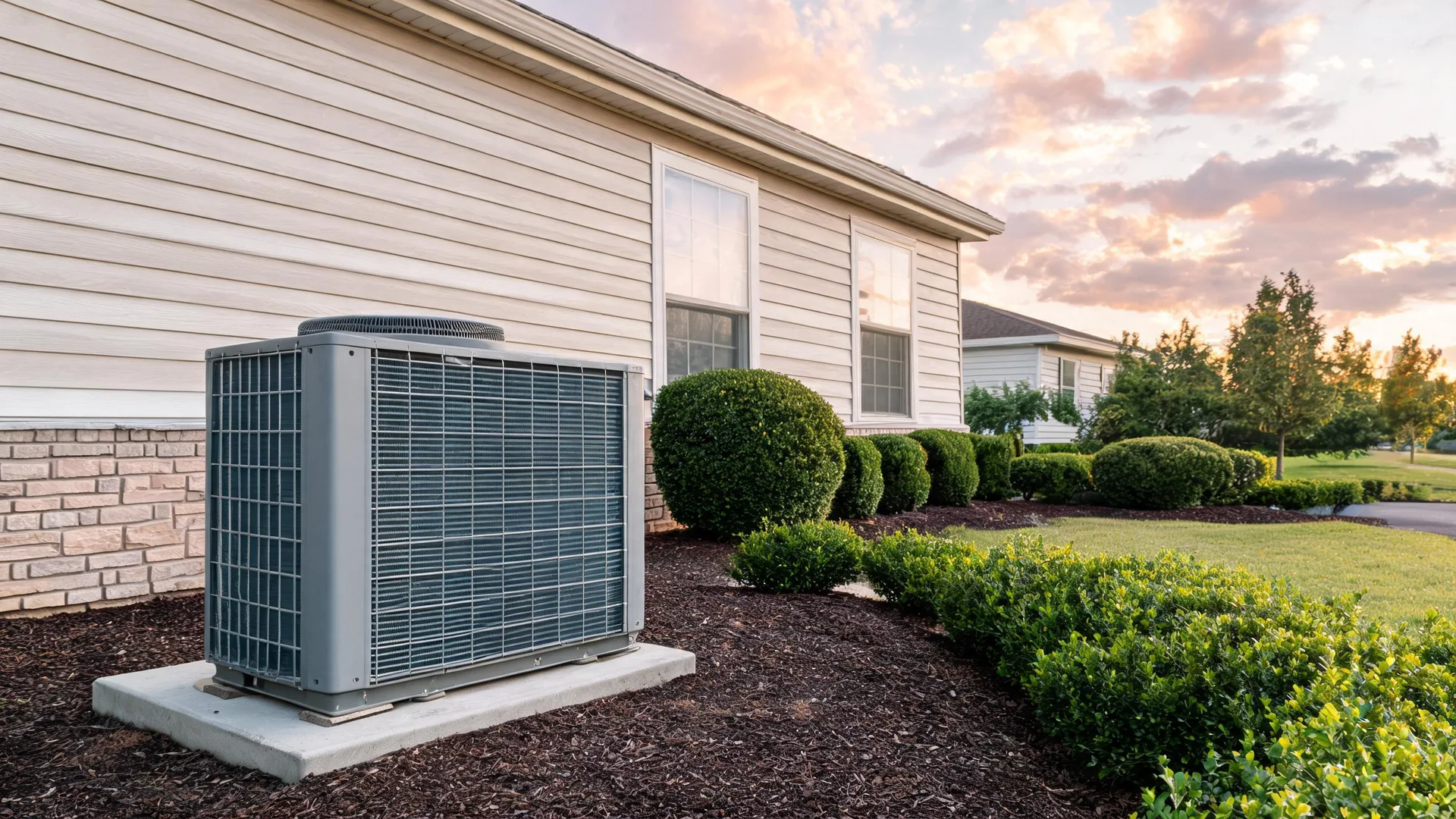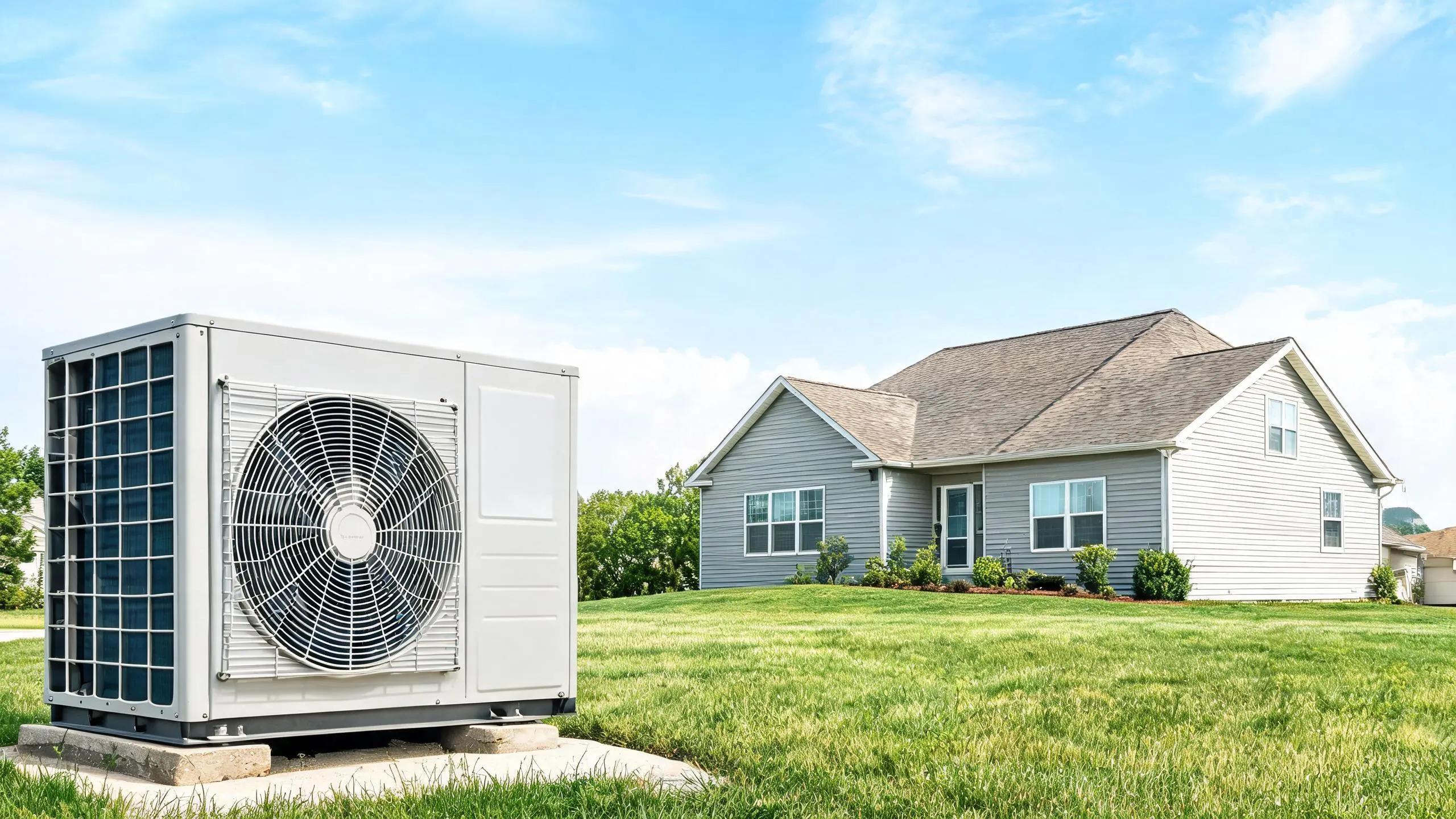
An outdoor HVAC condenser unit on a concrete pad in front of a single-story house with gray siding and a shingle roof.

Heat Pump Repair in Jennings, LA

Tell us about the job

Takes about a minute. No obligation.

RepairHeat PumpJefferson Davis Parish, LA
Step 1 of 2

What ZIP code is the job in?

The age of the house doesn't tell you about the heat pump

Half the homes in Jefferson Davis Parish were built in 1980 or earlier, half later. Either way, that doesn't say anything about the unit outside. A heat pump is only as old as whoever last installed it, and it fails for the same reasons in a new house or an old one.


Where the outdoor unit sits is worth checking first

Mobile homes make up close to one in five homes in the parish, and a heat pump serving a mobile home is often mounted on a small pad close to the structure. Tight clearance around that outdoor unit restricts airflow, and restricted airflow makes the system work harder than it should.

5 months
November through March, your system heats
7 months
April through October, it cools
44°F
the average winter night it heats against
91°F
the average summer afternoon it cools against
Isometric grayscale illustration of a cutaway house showing interior rooms, ducted air handler and duct runs, connected by pipes to an outdoor condenser unit beside the building.
Your system heats November through March and cools April through October.

NOAA nClimDiv, 1991–2020 normals

A heat pump that won't switch between heating and cooling usually has a stuck reversing valve, not a dead system.

Before calling anyone, check the thermostat batteries, the breaker, and the outdoor unit for ice or debris blocking it.

November is when a weak heat pump finally gives out

Cooling runs April through October
Heat runs November through March
Power costs 11.73 cents a kWh statewide

Jefferson Davis Parish saw 41 severe weather events between 2015 and 2024. That's not unusual for this part of Louisiana. Damaging wind and hail show up in a lot of those events, and an outdoor heat pump unit takes the brunt of it. A bent fin or a dented cabinet from a storm a couple years back can still be the reason it's struggling now. If a heat pump started acting up after a bad storm rolled through, that's worth mentioning to whoever comes out to look at it. Otherwise this parish isn't any harder on a heat pump than the rest of the region, and the usual wear is still the most likely cause.

Get the usual fix

Nothing about this area is especially hard on it. It's most likely the usual problem with the usual fix.

Find a contractor
A man in a gray t-shirt, tan work pants and brown boots, seen from behind, climbs steps toward a dark front door while carrying a canvas tool bag holding a tape measure and screwdrivers, with a potted flowering shrub beside the entry.
A white mini-split heat pump outdoor unit mounted on a concrete pad beside a gray-sided house, surrounded by gravel and green shrubs.

What constant cycling does to a heat pump over time

A heat pump works year round, switching between heating and cooling instead of sitting idle for part of the year like a furnace does. That reversing valve is the part most unique to a heat pump, and it wears with use. A valve that's stuck means the system blows the wrong temperature air, or won't switch modes at all. The outdoor fan motor and compressor run on the same logic. Short cycling, where the system turns on and off more than it should, wears those parts out faster than long steady runs do. Dirty coils make the compressor work harder to move the same amount of heat, so a unit that's gone a long time without a coil cleaning is already asking more of its compressor than it needs to. Capacitors weaken gradually and tend to fail without warning, often on the first really demanding day after a long stretch of mild weather.

Warm air when it should be cold, or the reverse

If a heat pump is blowing air that doesn't match the mode it's set to, that's the reversing valve stuck in one position. The system is still running, still using power, just not doing the job. This is one of the more common reasons someone calls for repair, and it almost always points straight at that one part.

Ice on the outdoor unit in mild weather

Some frost on the outdoor coil during a cold snap is normal, and the system clears it on its own. Ice that builds up and stays, especially when it isn't that cold out, usually means the refrigerant charge is low or airflow across that coil is blocked. Either way the unit is struggling to move heat the way it should, and left alone it puts more strain on the compressor.

A heat pump that's struggling doesn't fail all at once. A reversing valve that's partly stuck still moves some refrigerant, just not the way it should, and the compressor keeps working against it trying to hit the set temperature. That's strain on a part that isn't simple to replace. Low refrigerant works the same way. The system doesn't shut off because the charge is low, it just runs longer to move less heat, and a compressor that runs longer than it needs to wears out sooner than it should. Ice on the coil is the clearest version of this. Left alone, that ice blocks more airflow, which makes the system run longer to do less, which grows the ice. None of these get better by waiting. The part doesn't heal itself, and the compressor doesn't get a break until the actual problem is fixed.

A diagnostic visit starts outside at the unit itself. A tech checks refrigerant pressure, looks at the coil for ice or dirt, and listens to how the compressor and fan sound running. Inside, they'll check the air coming out of the vents against what the thermostat is calling for, since that mismatch is what usually brings someone to this point. Electrical readings on the capacitor and the contactor come next, since those parts fail quietly and a reading tells you what a visual check can't. The reversing valve gets tested directly, usually by forcing the system to switch modes and watching whether it actually does. None of this takes guesswork. Each check rules something in or out, and by the end there's a specific part named, not just a general sense that something's wrong.