Three white clapboard houses with wraparound porches glow with warm interior and landscape lighting beneath Spanish moss-draped oak trees at dusk.

Heat Pump Repair in DeRidder, LA

Tell us about the job

Takes about a minute. No obligation.

RepairHeat PumpBeauregard Parish, LA
Step 1 of 2

What ZIP code is the job in?

The tech checks the whole system, not just the symptom

A heat pump that won't heat might have a problem on the outdoor unit, the indoor coil, the refrigerant charge, or the reversing valve that switches it between heating and cooling. The tech will check pressures, measure temperature split across the coil, and look at the electrical components like the contactor and capacitor before saying what's wrong. Guessing from one symptom leads to the wrong repair.


What they find decides what happens next

Some problems get fixed on the spot, like a failed capacitor or a dirty outdoor coil. Others, like a bad compressor or a slow refrigerant leak, take more time to track down and may mean a bigger repair decision. The diagnosis tells you which kind of problem you have before any work goes further.

5 months
November through March, your system heats
7 months
April through October, it cools
42°F
the average winter night it heats against
92°F
the average summer afternoon it cools against
Isometric line illustration of a cutaway house showing interior rooms, an air handler with ductwork in the attic space, and an outdoor condenser unit beside the exterior wall.
Your system heats November through March and cools April through October.

NOAA nClimDiv, 1991–2020 normals

Half the houses in Beauregard Parish were built in 1992 or later.

A heat pump that came with a newer house has likely got years left in it, and that's worth repairing.

November is the first real test for a heat pump that limped through March

Cooling runs April through October
Heat runs November through March
Power costs 11.73 cents a kWh statewide

Before you call anyone, check the outdoor unit. If it's caked in ice beyond a light morning frost, or if leaves and debris are packed against the coil, that alone can stop a heat pump from heating right. Go inside and check the filter. A clogged filter starves the system of airflow and can make it run constantly without catching up. Check the thermostat is set to heat, not auto in a way that's confusing it, and that the batteries aren't dying if it uses them. Walk around the house and see if every vent is open and unblocked by furniture or rugs. None of this fixes a bad reversing valve or a low refrigerant charge, but it rules out the simple stuff first.

Your heat pump is probably young enough to fix

That same newer system is still worth getting repaired instead of replaced outright. Get the tech out to look at it before deciding it's done.

Find a contractor
A man in a cap, long-sleeved shirt and work pants walks up porch steps toward a dark gray paneled front door, carrying a canvas tool bag, with a potted shrub to the right.
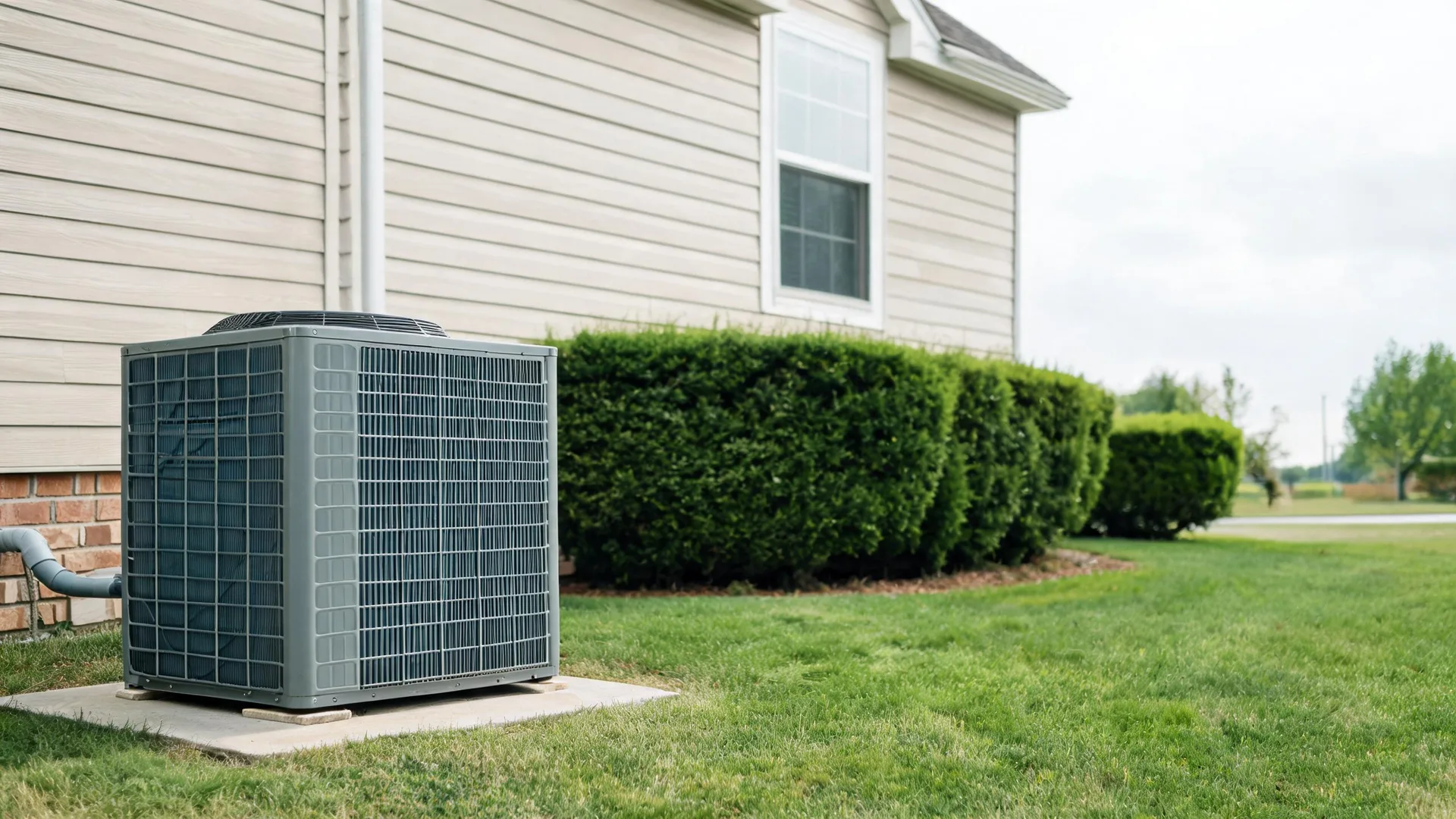
A gray heat pump outdoor unit mounted on a concrete pad next to a residential house with lap siding and stone accents.

More run time means more wear on the same parts

A heat pump runs more hours than most other equipment in the house because it works both sides, heating through the cold months and cooling through the warm ones. That run time falls on a handful of parts. The outdoor fan motor and compressor log hours every time the system cycles, and the reversing valve that switches between heating and cooling gets worked every time the season turns. A unit that is starting to struggle usually shows it before it quits outright. It runs longer than it used to without the house feeling any warmer. It short cycles, kicking on and off in quick bursts instead of settling into a steady run. The outdoor unit makes a clicking, buzzing or grinding sound that wasn't there before. Ice builds up on the outdoor coil and doesn't clear on its own. Air from the vents feels barely warm instead of properly heated. Any one of these alone might be nothing. A few together are worth having a tech look at, especially since catching the problem early is usually what keeps a repair a repair instead of turning into a replacement.

The reversing valve sticks instead of breaking clean

The reversing valve is the part that switches a heat pump between heating and cooling. It fails more often by sticking halfway than by quitting outright. A stuck valve can leave the system blowing cold air when it should be heating, or running both modes at once. The valve has a solenoid coil and a valve body, and either one can be the cause.

Refrigerant leaks rarely announce themselves

A heat pump does not use up refrigerant over time. If the charge is low, it is leaking somewhere in the lines or the coil. A small leak can run for a long stretch before it turns into a real problem. The signs build slowly, weaker heat, longer run times, ice on the outdoor coil. By the time any of that is obvious, the compressor has often been running harder than it should for a while.

Repair makes sense when the problem is one part failing inside a system that's otherwise sound. A capacitor, a contactor, a fan motor, a reversing valve, these get replaced on their own and the rest of the system keeps going. Replacement starts to make more sense when the compressor is the problem. It's the most expensive part in the system and it sits sealed inside the outdoor unit, so swapping it costs more and buys less than almost any other repair. The other thing worth weighing is how many separate problems have shown up. One failed part is a repair. A system that's had several different parts fail over a short stretch is telling you it's worn out generally, not just unlucky in one spot. A good tech will tell you which kind of situation you're in once they've actually looked at it, rather than guessing from the symptom alone.