Heat pump vs furnace in Beauregard Parish, Louisiana

Find an Installer

Quotes from pros near you

A person's hand adjusts a round thermostat on a blue-gray interior wall, with a tool bag on the floor below and a living room visible through a doorway.

Tell us about the job

Takes about a minute. No obligation.

New system or replacementBeauregard Parish, LA
Step 1 of 3

What kind of equipment?

Which costs less to run in Beauregard Parish?

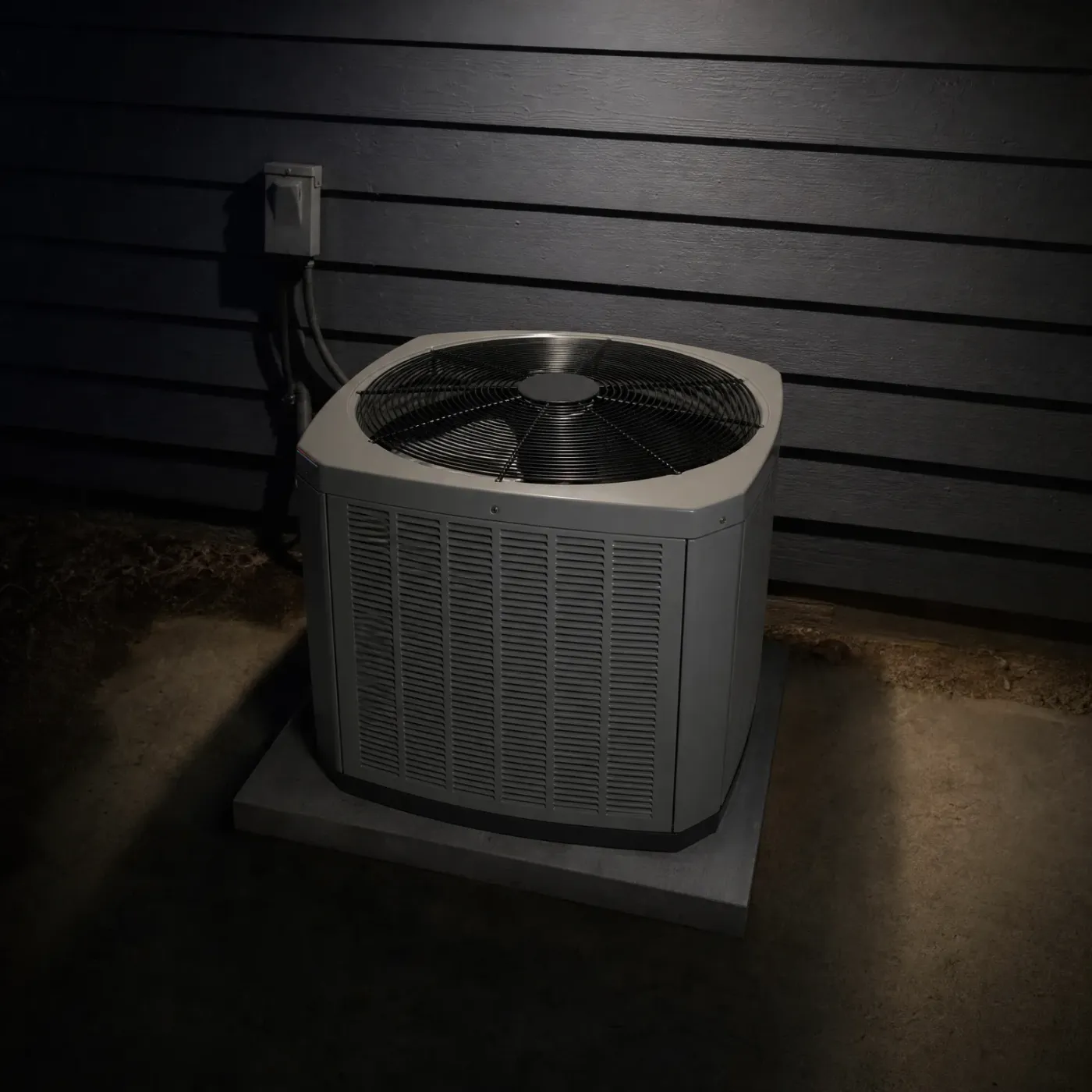
A gray outdoor condenser unit with a top-mounted fan grille sits on a concrete pad beside a dark horizontal lap-sided wall, with a small electrical disconnect box and conduit on the wall behind it.

Heat pump

To heat your home here$1.56per 100,000 Btu

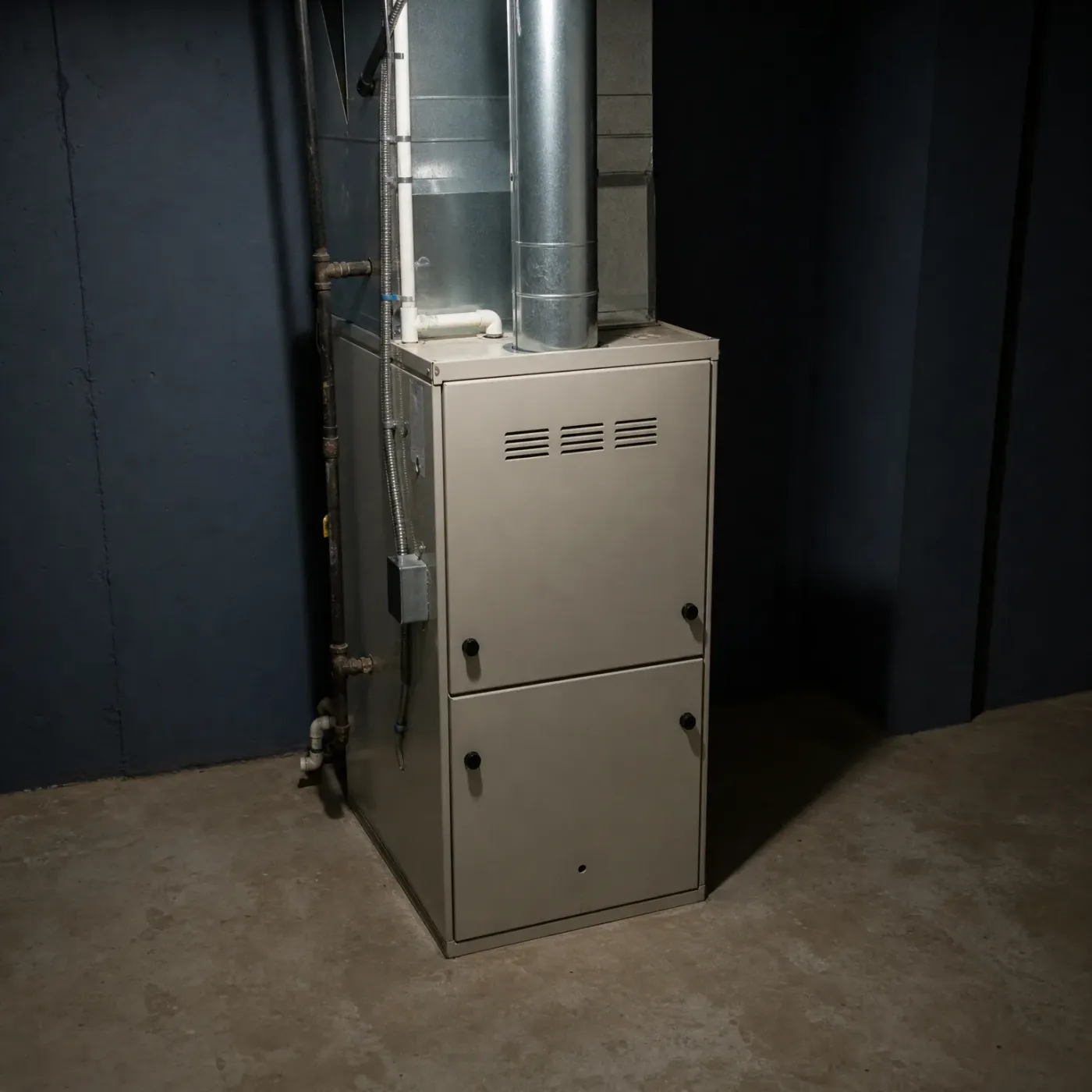
A beige residential furnace stands in a basement corner against dark painted walls, with a metal flue pipe, rectangular ductwork, PVC piping and copper pipes running above and beside it on a bare concrete floor.

Furnace

To heat your home here$2.00per 100,000 Btu

At Louisiana's gas and electricity prices, a heat pump makes the same heat as a gas furnace for about 22% less.

Btu stands for British thermal unit, the standard measure of heat energy.

Where does a heat pump shine?

  • Made for mild winters

    Winter nights here average 42°F, and a heat pump doesn't struggle until temperatures drop well below that. It can keep pulling heat from the outside air all season without working too hard to do it.

    Covered front porch of a blue-gray clapboard house with white columns and trim, a paneled front door with sidelights, a wicker chair with a blue blanket and mug, boots by the door, and frost on the surrounding lawn.
  • Covers a long cooling season

    Cooling runs April through October here, so whatever system you pick will spend most of the year on that job. A heat pump is built to carry cooling for that whole stretch.

    A covered porch with a wood-plank ceiling and ceiling fan, blue-gray lap siding, cushioned seating and potted plants, with a glass of iced tea on a woven coaster on a dark slatted table in the foreground and green trees beyond.
  • Steady, even comfort

    Instead of short bursts of heat, it keeps a gentle, steady output going. The house stays at one comfortable temperature.

    A golden retriever sleeps on a woven rug in a living room with a lit stone fireplace, a gray armchair holding an open book and plaid blanket, a lamp and mug on a side table, and a snow-covered view through a large window.

Where does a furnace shine?

  • Fast, strong heat on demand

    A furnace pushes out hot air within minutes of switching on. A cold house warms up fast.

    Entryway with a dark blue paneled door with glass panes showing snow and conifers outside, a sheer white curtain by a window, a wooden bench with pillows and a steaming mug, a floor vent, a jute rug on slate tile, and boots lined up along the wall.
  • Pairs with any central AC

    A furnace's blower and ducts carry cooled air too. Adding central AC uses the same system.

    Sunlit living room corner with wood flooring, a floor air vent near a glass door with white sheer curtains, a wooden dresser, a potted plant in a woven basket, a gray armchair, a patterned fringed rug, and a dark mug and book on a wooden table.
  • Proven, simple, easy to get serviced

    Parts are easy to find and most repairs are routine. Getting one fixed rarely means waiting on a specialist.

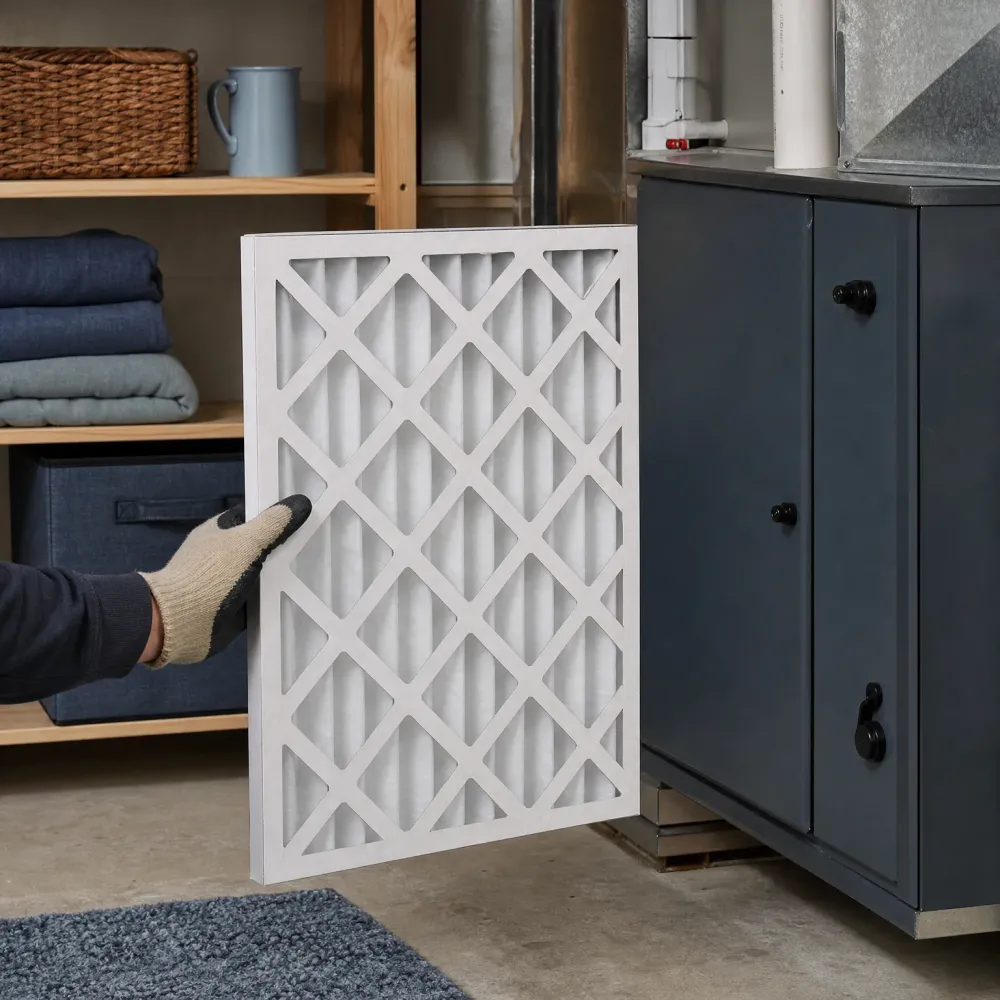
    A gloved hand holds a large pleated air filter in front of a dark gray furnace unit in a basement utility area with shelving and folded textiles nearby.

Winters here are mild enough for a heat pump to handle

Winter here is short and not very cold. Heat runs about five months, November through March, and the overnight low averages 42°F across December, January and February. A heat pump does its best work in exactly that range, so most nights here it's barely working hard to keep up.

The question is what happens on the coldest nights, and the answer is that there aren't many of them. The temperature drops to freezing or below about 30 nights a year, under a quarter of the nights in heating season. A heat pump built to the federal minimum still makes heat at 32°F. It's on nights well below freezing that a heat pump has to lean on backup heat, and those nights are rare here.

Cooling is the longer job in this parish, seven months against five for heat, and the afternoon hits 90°F or higher about 90 days a year. A heat pump is also the air conditioner, so it's already sized for that long cooling season. A furnace does none of that. It heats, and for the seven months a year it isn't doing that, it has nothing to do.
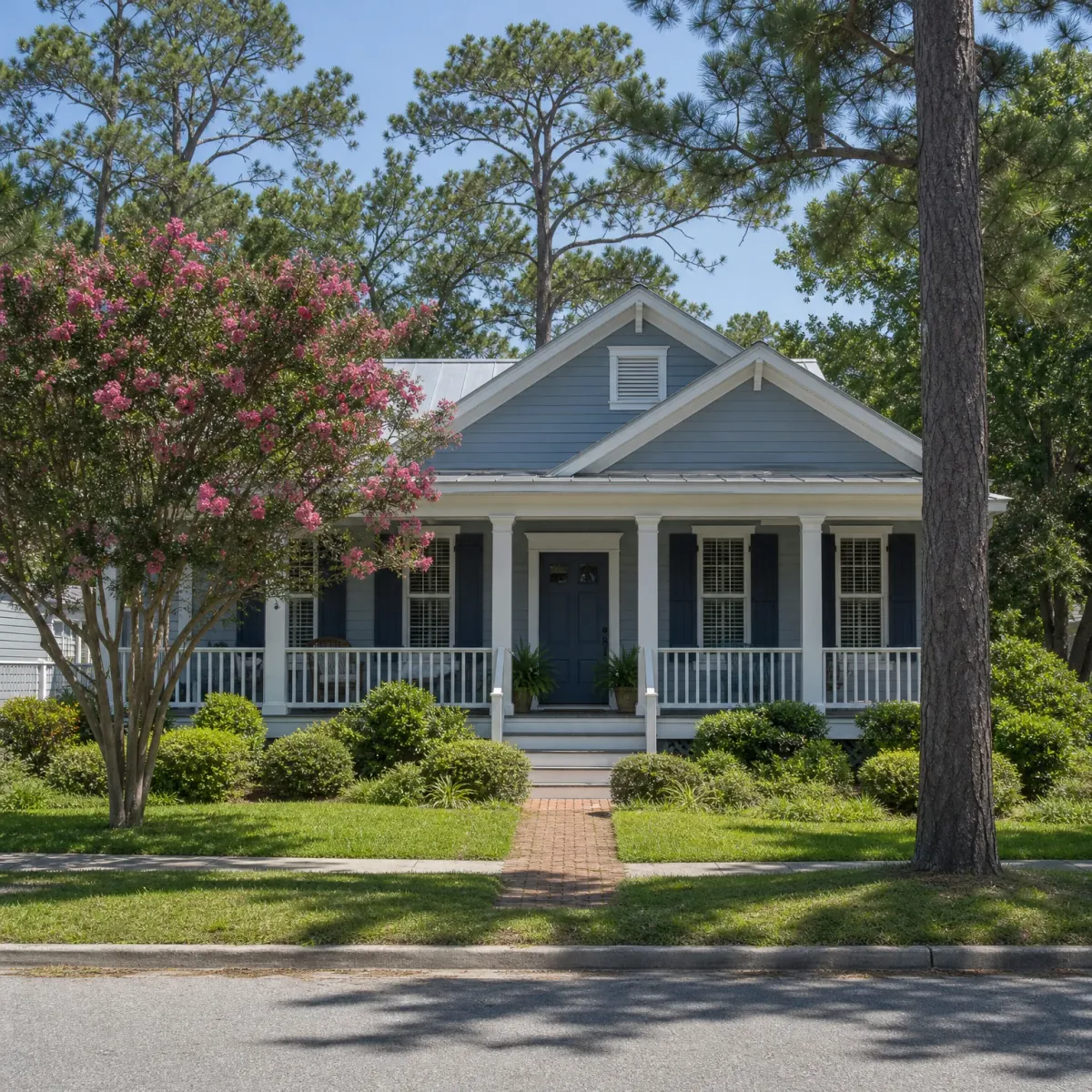
A single-story blue cottage with a white-columned front porch, gabled roof and dark blue door, set behind a lawn with trimmed shrubs, a flowering pink crape myrtle, tall pines, and a brick walkway leading to the street.

What that means for the electric bill

A heat pump runs on electricity, which is what three in four homes here already use to heat. A furnace runs on gas, which under one in five homes here have. That alone makes a heat pump the easier fit for most houses in Beauregard Parish.

Run the two side by side at Louisiana's own prices and the heat pump costs $1.56 to make 100,000 Btu of heat, the furnace $2.00. That's a furnace costing about 22% more to run for the same heat, because electricity here is priced to make a heat pump's efficiency pay off, while gas has to be burned at only 80 percent efficiency to make that heat.

A furnace still has a case. It heats strong on the coldest morning without pulling from backup, and if a gas line already runs to the house, it's a simple, proven machine to keep serviced. But in a parish with a mild winter, a long cooling season, and electricity already in most homes, a heat pump is the one built for the climate here.

Sources: NOAA nClimDiv · NOAA 1991–2020 seasonal normals · Census ACS 2020–2024 · EIA SEDS 2024 · 10 CFR 430.32

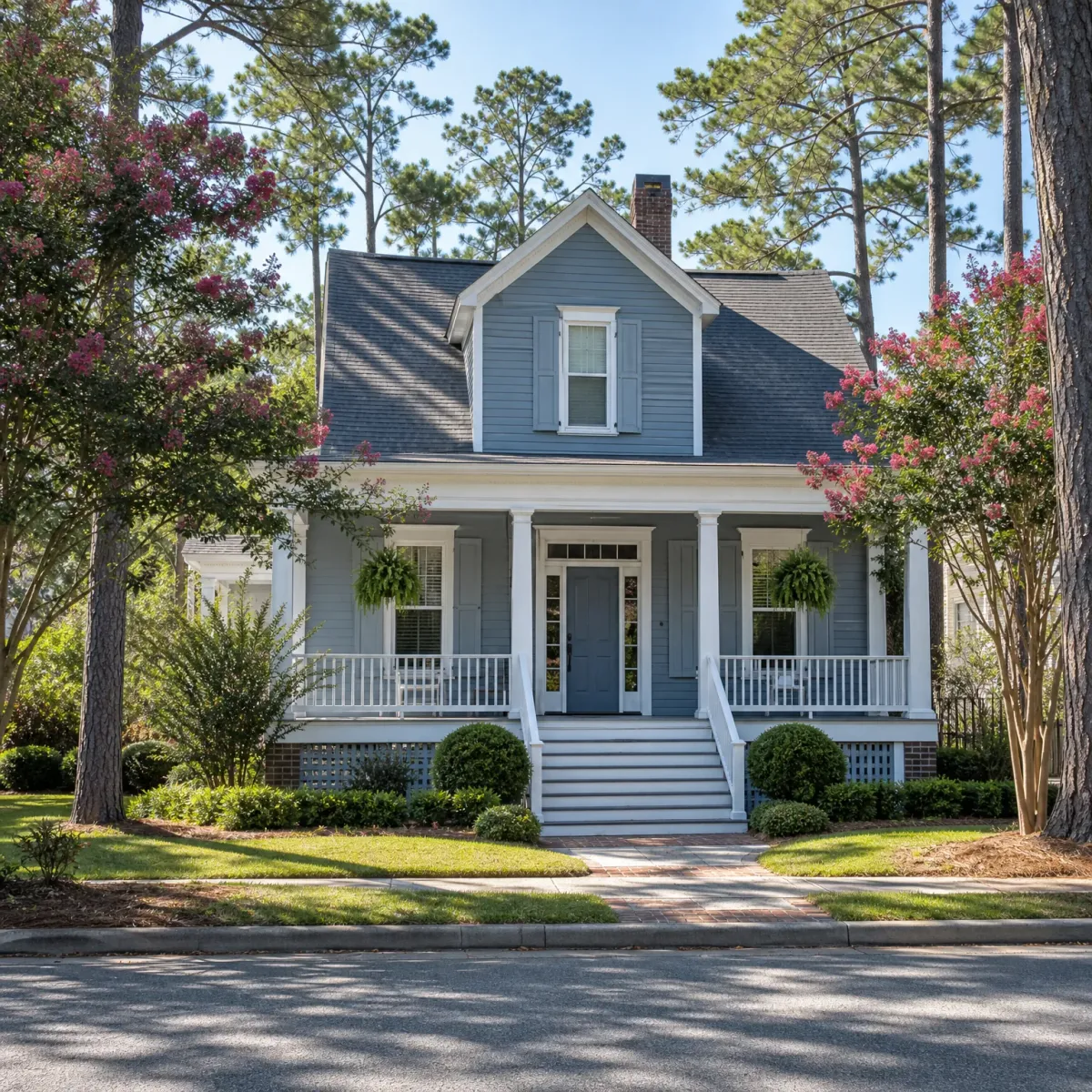
A two-story blue-gray clapboard house with white trim, a covered front porch with columns and railings, a central staircase, a front dormer gable with a shuttered window, and a brick chimney, framed by pine trees and flowering pink crape myrtles, with a lawn, sidewalk and paved street in the foreground.

Common questions about heat pumps and furnaces

  • Will a heat pump keep my house cool enough here?

    Yes. A heat pump is a central air conditioner for the seven months a year you need cooling here, same as any AC, and it just reverses itself to make heat in winter. The afternoon only hits 90°F or above on about 90 days a year, well under a quarter of the year.

  • Can I keep my furnace and add a heat pump?

    Yes, that pairing is called a dual fuel system. The heat pump handles the five months of heating here down to some set temperature, then the furnace takes over on the roughly 30 nights a year it drops to 32°F or below, so you get the heat pump's lower running cost most of the winter and the furnace's strong heat on the coldest nights.

  • What if my house doesn't have a gas line?

    A heat pump is the straightforward choice. It handles both heating and cooling from the one outdoor unit, so you are not paying to run a propane or oil tank through five months of mild winter, and electricity already heats three out of four homes in Beauregard Parish.

  • Is a heat pump cheaper to run than a furnace in Beauregard Parish?

    Yes. A heat pump runs about $1.56 per 100,000 Btu of heat here against $2.00 for a gas furnace, both at federal minimum efficiency and Louisiana's average fuel prices. Winters are mild enough, with overnight lows averaging 42°F, that the heat pump does not need much help from backup heat to earn that edge.