Two illuminated white Southern-style houses with wraparound porches and staircases, framed by a Spanish moss-draped tree on a quiet street at night.

Heat Pump Maintenance in DeRidder, LA

Tell us about the job

Takes about a minute. No obligation.

Tune-up, service, or cleaningHeat PumpBeauregard Parish, LA
Step 1 of 2

What ZIP code is the job in?

Keep the filter clean

A dirty filter chokes airflow across the indoor coil, and a heat pump that can't move enough air has to run longer to keep the house comfortable. Check the filter every month and swap or wash it whenever it looks gray or matted. This is the one thing an owner can do that actually affects how hard the system works.


Clear the outdoor unit

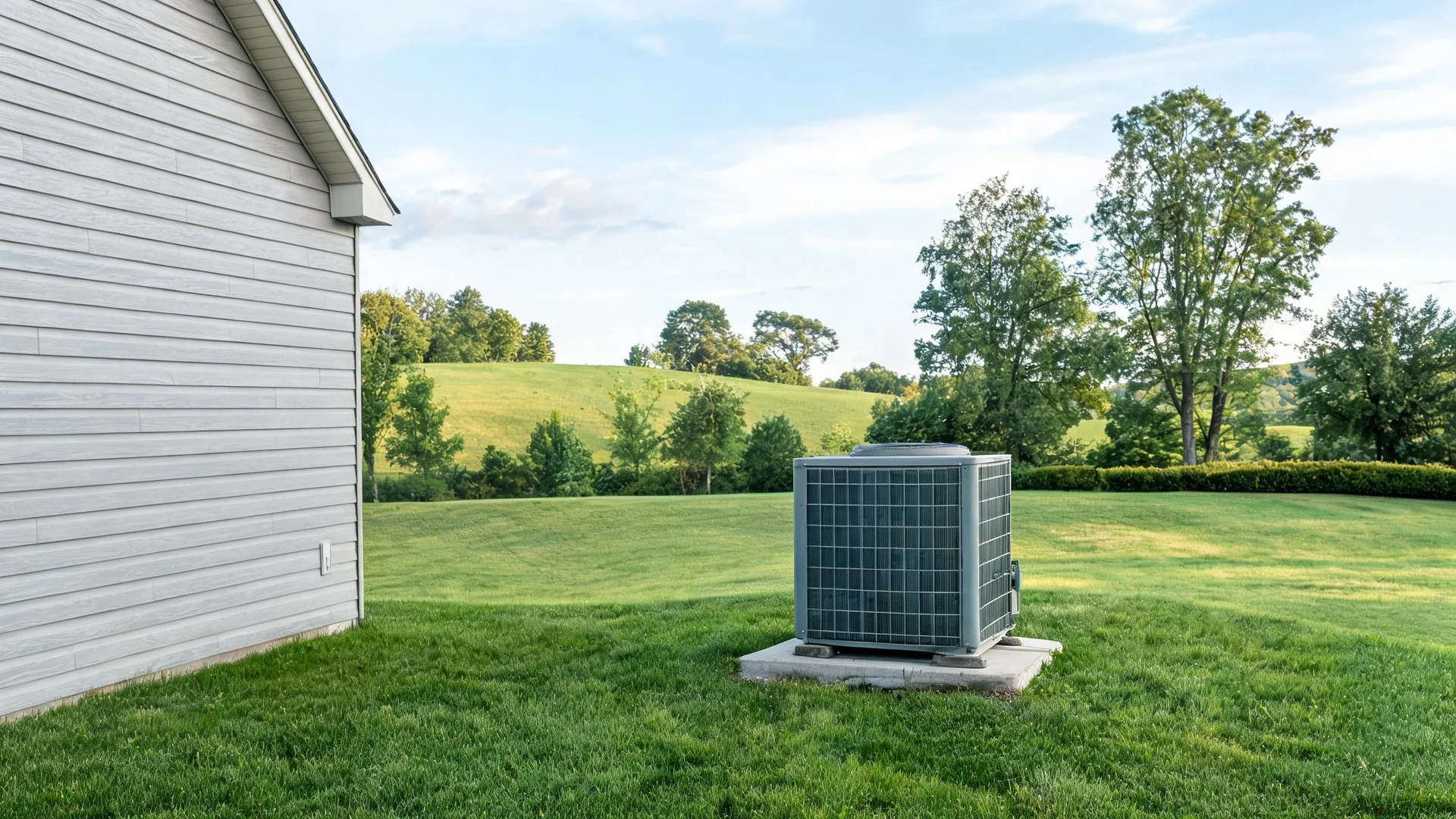
The outdoor unit pulls in air through its sides and pushes it out the top, and anything leaning against it or growing up through it blocks that exchange. Keep grass clippings, leaves, and plants back from the cabinet, and brush off any debris sitting on top. A blocked outdoor coil makes the compressor work harder whether the system is heating or cooling.

Half the homes in Beauregard Parish were built in 1992 or later.

A heat pump that age still has years ahead of it, and a yearly check is what keeps it getting there.

A heat pump in DeRidder works both sides of the year. Have it checked in March and October.

Cooling runs April through October
Heat runs November through March
Power costs 11.73 cents a kWh statewide

A heat pump that never gets looked at doesn't fail all at once. The refrigerant charge drifts low and nobody notices because the system still blows air, just not quite as cold or quite as warm as it should. The contactor pits a little more every cycle until one day it doesn't close. Dust builds on the coil, layer by layer, and the system answers by running longer, which wears the compressor faster than the actual load ever would. None of this announces itself. It just shortens the life of parts that would have lasted a lot longer with someone checking them on a regular schedule.

Keep it in good shape

If your system is fairly new, a yearly check keeps it in good shape for longer.

Find a contractor
A man in a dark long-sleeve shirt and tan work pants carries a waxed canvas tool bag up concrete steps toward a blue front door of a gray-sided house, with potted shrubs nearby.
A dark gray heat pump unit mounted on a concrete pad next to a house with gray siding and a stone veneer wall.

A quick visit checks less than it looks like

A thorough tune-up means the panels come off. The technician checks refrigerant pressure against what the system calls for, tests the capacitor under load, and clears the condensate drain so it doesn't back up later. They check the reversing valve, since that's the part that lets a heat pump switch between heating and cooling, and it's the part a quick visit tends to skip. They'll pull the blower wheel if it's dirty and check amp draw on the motor against what it should be. A quick visit is a visual check and a filter swap, done in the time it takes to walk around the unit once. Both get called a tune-up. Only one tells you what's actually going on inside the system before it fails.

It's not keeping up the way it used to

A heat pump that used to bring the house to temperature without much notice now runs longer to get there, or doesn't quite get there at all. That change rarely shows up overnight. It creeps in over a season, which is why it's easy to blame on the weather instead of the system.

It's making a sound it didn't make before

A clicking at startup, a hum that wasn't there, a rattle from the outdoor unit. These are worth a call on their own, not something to fold into the next scheduled visit. A new sound usually means something inside has started to wear or work loose, and that's easier to deal with before it affects the rest of the system.

The indoor coil and the condensate drain work as a pair. Air gives up moisture when it crosses the coil, and that water has to go somewhere, so it drips into a pan and runs out through the drain line. If the filter upstream is clogged, dust gets past it and settles on the coil face, and that same coil can't pull heat out of the air as well, in either direction. A coil caked with dust or a drain line clogged with algae both lead to the same kind of trouble, water backing up where it shouldn't, or a system that runs long and still can't keep up. The drain line is easy to miss because none of it shows from outside the unit, which is exactly why it's worth asking a technician to check and clear it at every visit.

A full tune-up also covers things that don't fail often but cause real trouble when they do. The technician checks the contactor for pitting, since that's the switch that sends power to the compressor, and a worn one can fail to make contact at all. They'll check the refrigerant line insulation for gaps, since bare line loses efficiency and can sweat enough to drip where it shouldn't. Electrical connections get tightened, because a loose connection generates heat on its own, and that heat degrades the wire over time. None of this shows up on a walk-around. It shows up when the cabinet is open and someone is testing each part on purpose.