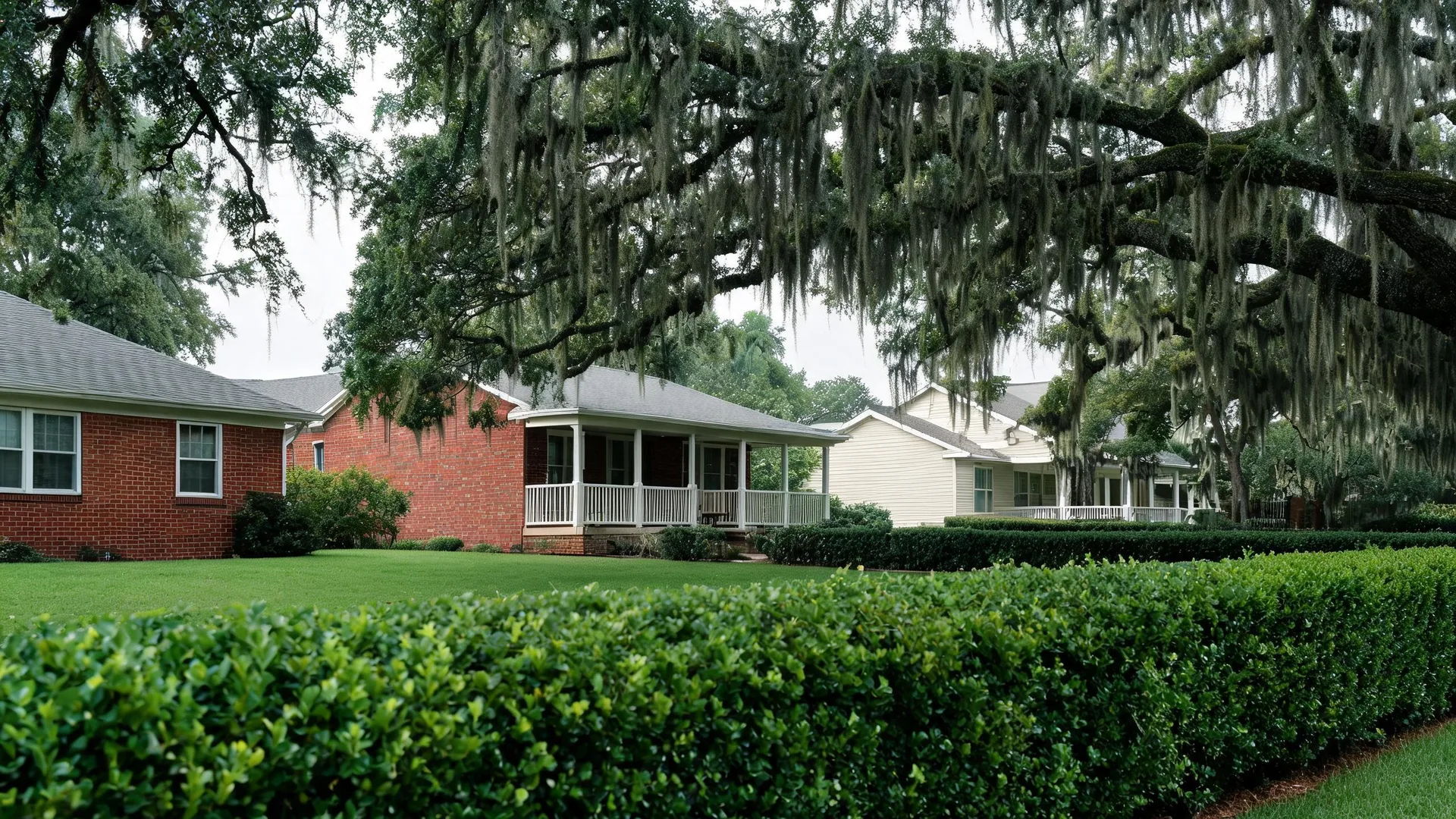




A row of single-story houses, one of red brick and others with light siding and a covered porch, behind a mown lawn and a trimmed hedge, under large moss-draped tree branches and an overcast sky.

Furnace Repair in DeRidder, LA

Tell us about the job

Takes about a minute. No obligation.

RepairFurnace or heatingBeauregard Parish, LA
Step 1 of 2

What ZIP code is the job in?

Before you call anyone, check the thermostat first. Make sure it's set to heat and the temperature is set above room temperature, not just displaying the room temperature back at you. Next, go look at the filter. A filter clogged with dust will choke off airflow and can cause the furnace to shut itself down as a safety measure. If you have a standing pilot light, check that it's still lit, and if it's gone out, the pilot assembly or thermocouple may need attention rather than the furnace itself. Check your breaker panel too. A furnace that won't start at all sometimes just needs a tripped breaker reset, not a repair.

5 months
November through March, your furnace is on duty
42°F
the average winter night it heats against
2 winter storms
in ten years, the nights a failure hurts most
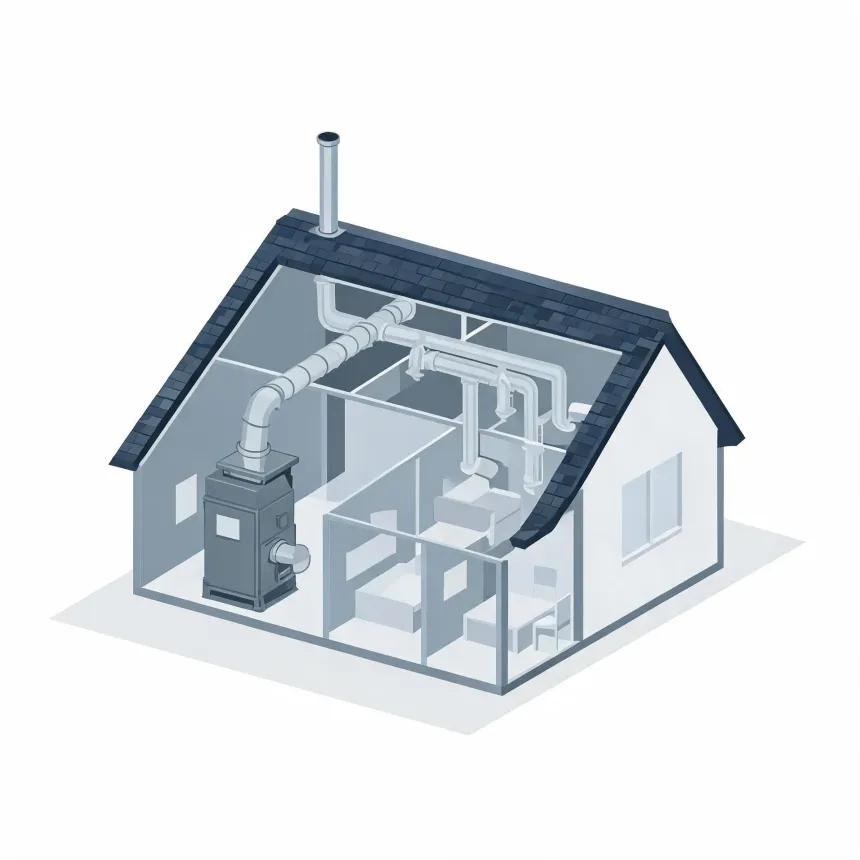
Isometric cutaway illustration of a small house showing a gray furnace unit with a flue pipe through the roof and branching ductwork running to rooms with simple furniture.
Your furnace works hardest from December through February.

NOAA nClimDiv, 1991–2020 normals

Furnaces here start running in November, after sitting since October.

A weak part can sit quiet that whole time and fail in the first cold week.

Half the homes in Beauregard Parish date to 1992 or later

Half the homes here were built by 1992
Heat runs November through March
Winter nights average 42°F

Furnaces here only run about five months, November through March. That's a short work year compared to a lot of the country, and it matters for repair. A furnace that isn't running most of the year wears slower, so if yours is acting up, age alone is less likely to be the reason. Overnight lows average 42 degrees across December, January and February, which is cold enough to need heat but not the kind of extreme that pushes a furnace hard night after night. A furnace with that kind of easy life is usually still in decent shape underneath whatever's gone wrong, which is a good reason to get the actual problem fixed rather than written off.

Get it looked at early

Problems tend to show up in the first weeks of the season, when the load hits a part that was already weak.

Find a contractor
A man in a dark long-sleeved shirt, cap, and worn tan work pants climbs porch steps toward a dark blue front door, carrying a canvas tool bag.
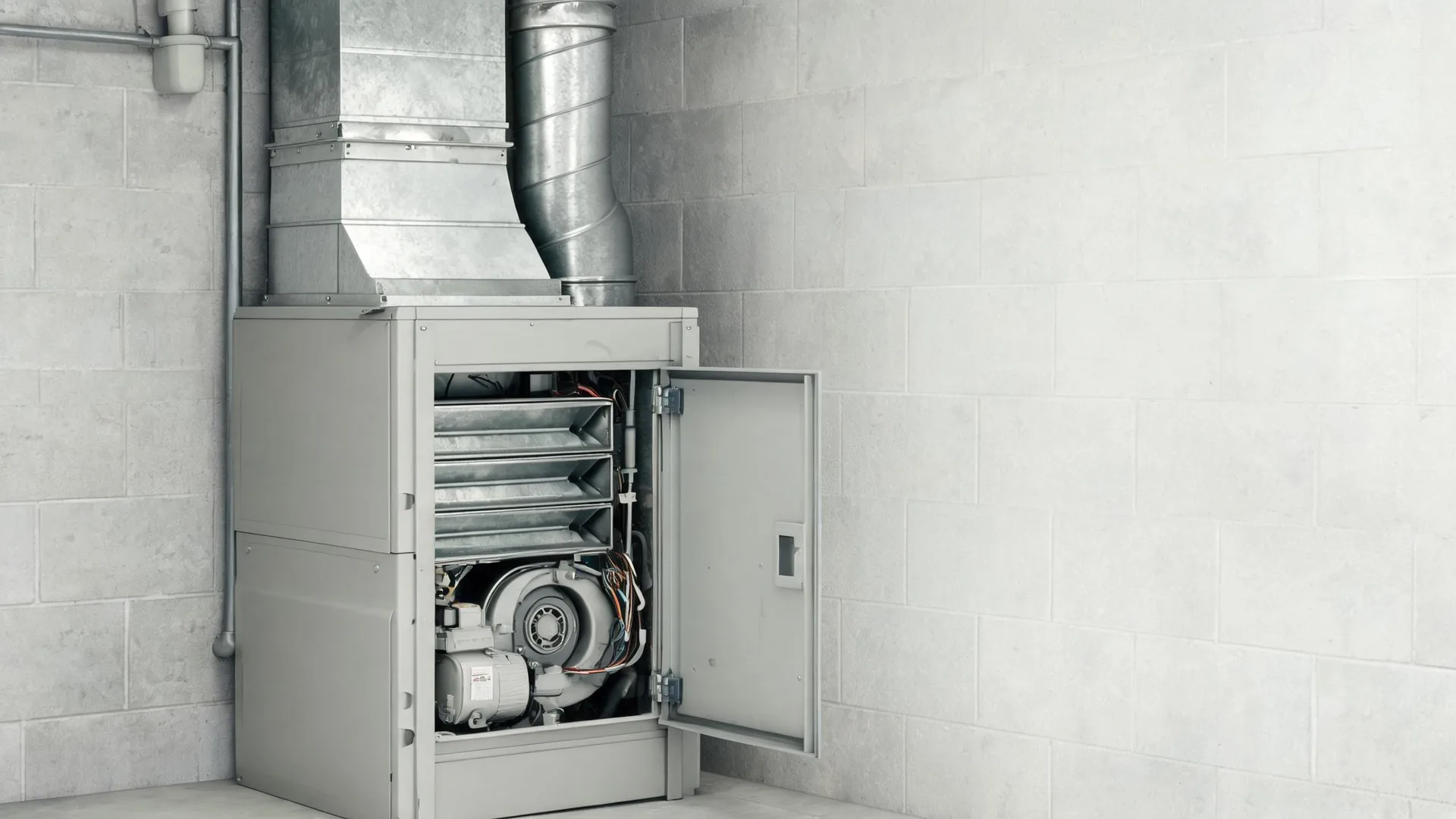
A gray residential gas furnace installed in an unfinished basement, connected to sheet-metal ductwork and PVC pipes.

A newer furnace, still with years in it

If your furnace came in with the house, there's a decent chance that house was built in 1992 or later. A furnace that young still has most of its working life ahead of it. That's worth knowing before you decide between a repair and a replacement. Fixing the part that failed makes sense when nothing points to the rest of the unit being close to done.

A cracked heat exchanger gets worse with every cycle

Running a furnace with a cracked heat exchanger lets combustion gases mix into the air it pushes through the house, and the crack doesn't seal itself back up. Each time the burner fires, the metal heats and expands around that same weak spot, so the opening tends to widen rather than hold steady.
A small airflow problem can take out a bigger part

When airflow is restricted, whether from a dirty filter or a blocked return, the heat exchanger runs hotter than it's built for. Keep that up and the exchanger or the blower motor can fail outright, a bigger repair than whatever was blocking the air in the first place.

A furnace that needs attention usually tells you in one of a few ways. It blows air that never gets warm, or the air coming out is only lukewarm, which often points to the burners or the igniter rather than anything electrical. It short cycles, meaning it fires up, runs a couple minutes, and shuts off before the house warms at all. It makes a noise it didn't used to make. A bang when it starts. A squeal while it runs. A rattle from inside the cabinet. Some furnaces click and try to start but never catch, which usually means the igniter or the flame sensor isn't doing its job. If the burner flame looks yellow instead of blue, that's worth getting looked at, since it can mean the gas isn't burning clean. None of these mean the furnace is done. They mean a specific part failed, and that part can usually be replaced.

A tech starts by asking what the furnace is doing and when it started acting up. That conversation usually narrows things down before any tool comes out. Next comes the thermostat wiring and the power to the unit, since there's no sense chasing a bad igniter if the problem is a loose wire. With the cover off, they'll watch the furnace run through a full cycle, start to shutoff, rather than just look at it sitting cold. They'll check gas pressure, measure the temperature rise across the heat exchanger, and read the amp draw on the blower motor. Each of those readings points toward one part rather than another. By the time the panel goes back on, the tech should be able to name the part that failed and say why that part caused what you've been noticing.