Send the request today and stop worrying about who to call.
A furnace doesn't run long here. Most homes heat with electricity, and plenty of winters pass without the furnace working hard at all. That's exactly why a cracked heat exchanger is easy to miss. You're not listening for trouble every day the way someone in a colder state might, because the thing barely turns on.
But when it does run, a crack in that metal matters. It's the part that keeps combustion gases separate from the air moving through your ducts and into your rooms. Once it splits, that separation isn't reliable anymore. This isn't something to wait on until next winter to check.
A furnace that age, or one that's been making a new sound, or a carbon monoxide alarm that's gone off even once, deserves a look from someone who knows what a cracked exchanger looks like and where it tends to start. Not every furnace tech in a bigger heating market sees many of these. Someone local who works on Louisiana furnaces does, because the ones that fail here tend to fail for the same handful of reasons, and a local contractor who's licensed and been through that diagnosis before knows which ones to check first.
Send the request and that search becomes someone else's job instead of yours. You won't end up with a handful of companies calling about the same furnace. It goes to one contractor, local to you, who takes it from there. You don't have to figure out who's reputable or chase down a second opinion. That part is done once you send it.
What's below walks through the actual signs to check for, the ones worth taking seriously and the ones that don't mean much on their own.
What are the signs of a cracked heat exchanger?
A furnace that barely runs still has to be checked, because the signs of a cracked heat exchanger don't show up as often here as they would somewhere colder. You might notice a smell, a strange sound, or nothing at all until a carbon monoxide detector goes off. Since the furnace only runs a handful of days most winters, you're relying on brief windows to catch a problem that's otherwise silent.
A cracked heat exchanger shows up as a odd smell, soot, or a carbon monoxide alarm going off
Watch for a sharp smell like formaldehyde when the furnace is running, soot around the burner compartment, a flame that flickers or changes color when the blower kicks on, or a carbon monoxide detector sounding. The crack forms from metal expanding and contracting as the burner heats and cools it, and over enough cycles it weakens and splits. Because furnaces here run so few days a year, those cycles add up slowly, which means the crack can sit for years before any sign appears. When a sign does show, it means combustion gas is getting into the air the blower pushes through the house, and the furnace needs to come off until someone qualified looks at it.
A furnace running clean has even heat coming through the vents and no smell when it kicks on.
A furnace with a cracked heat exchanger on a unit this age is worth having checked before the next cold snap.
1
Metal in the heat exchanger expands and contracts every time the furnace cycles.
2
Repeated cycling stresses the metal until a crack starts.
3
The crack opens a path between the combustion gas and the air you breathe.
4
Blower pressure forces exhaust gas through the crack into the ductwork.
Only one pro gets your request, so you hear from one company.
Asking costs nothing, and the choice to hire stays yours.
A furnace cycling on and off fast wears the heat exchanger harder than one that runs in long, steady stretches, and short cycling is common on mild Louisiana days.
That's why a furnace used lightly isn't automatically a safer bet. Short, frequent cycles can crack metal just as surely as a hard-working winter can, only quieter.
Before you get your furnace repairAfter you get your furnace repair
Furnace running clean
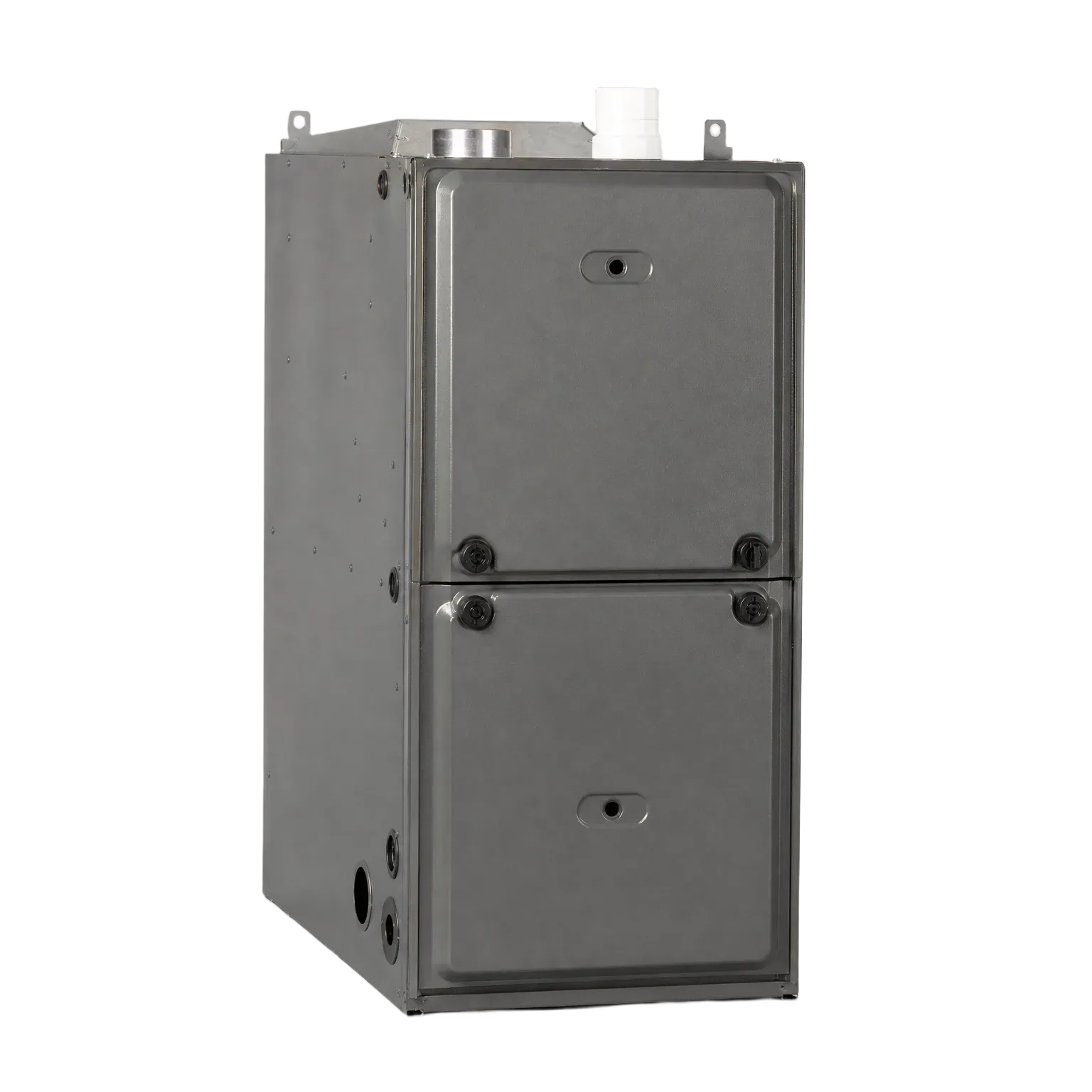
This is what a healthy furnace looks like underneath. The heat exchanger stays sealed, so combustion gas goes out through the flue and only warmed air reaches the ductwork. No odor, no soot, no rust trail down the cabinet. On a furnace that sees light duty most winters, this is what you want to confirm before the cold snaps hit.
Furnace with a cracked exchanger
This older upflow furnace shows what happens once a crack opens in the metal. You might see a hairline fracture near a weld, rust stains inside the burner compartment, or soot around the access panel. A furnace in this shape needs a trained eye on it, because the crack won't close on its own and it only gets worse with each cycle.
Winter nights average 43°F statewide
Nights here only average 43°F in the dead of winter, so your furnace isn't working against real cold most of the time it runs. Short, mild cycles like that still stress the heat exchanger. A crack can sit there quietly for years before anyone notices.
NOAA nClimDiv 1991-2020 county normals weighted by homes
What a cracked exchanger risks in your house
Carbon monoxide has no smell on its own, so the only warning you get is what the furnace does around it: a strange odor near the vents, a headache that eases when you leave the house, soot around the cabinet. With most homes here running the furnace only on the coldest nights, those signs can show up once or twice a winter and then go unnoticed for weeks before anyone runs the furnace again.
Why this isn't a wait and see repair
A cracked heat exchanger doesn't heal itself, and running the furnace again next cold snap pushes exhaust gas through that same crack. Since electricity is cheap here and the furnace already runs light, there's no cost reason to keep using it while it's cracked. Having it checked before the next cold night means it gets looked at while you can still shut it off and switch to another way to stay warm.
A cracked heat exchanger comes down to a short list: a strange smell when the furnace kicks on, soot around the cabinet, a flame that looks wrong, headaches that ease once you leave the house. A furnace this lightly used can still have one, which is exactly why it's worth a look rather than a guess. Someone who services furnaces in Louisiana all year sees far more mild-weather short cycling than hard winter strain, and knows that's its own kind of wear on the metal. That's the kind of thing to check for first, not the usual suspects from somewhere colder. A licensed local contractor can get into the cabinet, inspect the exchanger directly, and tell you plainly whether it's sound or needs replacing. You'll be matched with one contractor for this, not a handful of companies competing for the job, so there's one clear answer coming back to you instead of a pile of calls to sort through on your own.
Furnace Repair
Send one request and you're done looking
Tell a local repair pro what your furnace is doing.
A local pro who knows furnaces gets your details and gets in touch.
One request and the search for a pro is handled.
Send it once and finding someone is no longer on you.
Skip searching for a furnace pro and answer a few questions instead.
One form replaces the calls you'd make to find a furnace pro.
Your request goes to one pro, not a list of companies.