
Running the way it should
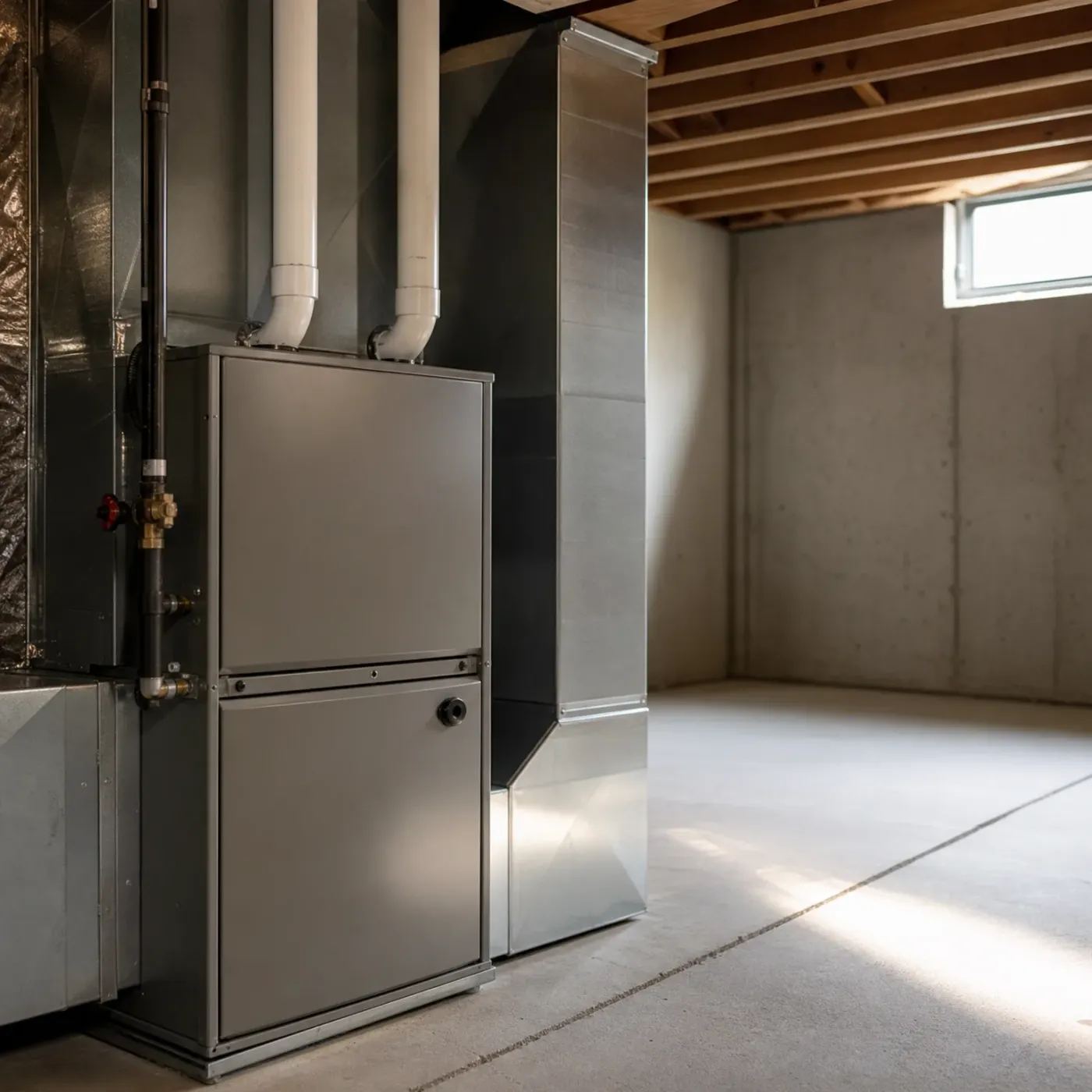
A furnace like this starts without hesitation and settles into a steady, even heat. The flue and condensate lines stay clear, the cabinet is dry, and the gas line sits tight. Nothing about it demands attention.
A local installer who puts in furnaces gets your project.
A furnace in Louisiana usually lasts 15 to 20 years. Most homes here heat with electricity, so that furnace runs far less than it would somewhere with a long, hard winter. It sits idle most of the year and only has to work on the handful of genuinely cold nights, so the wear that shortens a furnace elsewhere barely touches it here. What kills one early is usually not age but neglect: a cracked heat exchanger, a clogged filter that strains the blower, or a unit nobody looked at in years. If yours is pushing 20 and you've noticed it cycling oddly or struggling to keep up on the cold nights, that's the sign to start thinking about what replaces it rather than waiting for it to fail outright.

A furnace like this starts without hesitation and settles into a steady, even heat. The flue and condensate lines stay clear, the cabinet is dry, and the gas line sits tight. Nothing about it demands attention.

An older furnace like this often takes a few tries to light, or runs loud when it does. Rust on the cabinet, a soft smell near the gas line, or a furnace that cycles on and off too often all mean it's closer to the end than the middle.




That's the typical run for a furnace here, since Louisiana winters only ask it to work a few weeks a year instead of a whole season.
A furnace that only kicks on for occasional cold snaps wears a lot slower than one running daily through a hard winter up north.


You'd probably notice it first on a cold morning when the heat takes longer to come up, or the furnace clicks and tries a few times before it lights. Maybe there's a burnt smell the first time it runs after sitting all year, or the air coming out feels weaker than it used to in one room. A yellow flame instead of blue, soot near the burner, or rust flaking off the cabinet are worth paying attention to, since those point to a heat exchanger or venting problem rather than just a tired part. Left alone, a cracked heat exchanger can let exhaust mix with the air moving through your house, which is the one risk here worth taking seriously.
Thermostat calls for heat and sends power to the control board.
Inducer motor spins up to clear the heat exchanger of gas.
Igniter glows hot enough to light the burners.
Gas valve opens and burners ignite in sequence.


A furnace that's pushing 20 years, or one that's already showing the signs, doesn't get easier to live with by waiting. A cracked heat exchanger or a blower motor on its way out won't announce itself clearly until a cold snap, and that's a bad night to find out. Louisiana winters are short, but they're real, and a furnace that fails in January doesn't wait for a convenient week. Getting a straight read on whether yours is worth repairing or ready for replacement means having someone who installs these systems look at the actual unit, not guess from its age alone. Once you send the request, that part stops being on you. You don't have to track down a contractor yourself or sort through who's available. Someone who installs furnaces in your area gets your information and reaches out, and from there the decision about repair or replacement is one you make with real numbers in front of you instead of a guess made in the cold.

A furnace like this starts right up and heats evenly without any hesitation. The gas lines sit tight, the PVC vent and condensate pipes stay clear, and the cabinet shows no rust or soot. On a system like this, a repair makes more sense than walking away from it.

Metal ductwork and gas lines wear differently once a furnace gets old, and this one shows it. A shutoff valve that's hard to turn, condensate lines that back up, or a cabinet holding moisture against the ducts all point to a system closer to its last winter than its first.


A 43°F night isn't hard freeze weather. Your furnace lights, brings the house up to temperature, and shuts back off, often before the night's over. That stop-start pattern is easy duty, which is a big part of why these units run as long as they do here.
NOAA nClimDiv 1991-2020 county normals weighted by homes
Fifteen to twenty years is the range for a furnace in Louisiana, and the reason comes down to how little this one works. Electric heat covers most homes here, and the furnace itself only answers to the cold snaps, not a full winter of steady demand. That light schedule is what stretches its life out this far. None of that means a furnace past year 15 should be left alone until it fails. The signs are easy to check for: rust building up on the flue, soot collecting around the base, a longer pause before heat comes through. If the heat exchanger and burner assembly are still sound, those issues are usually something a repair can fix, and the furnace keeps going. If the exchanger is cracked or the cabinet is rusting through, that's a different conversation. Either way, the answer comes from what's actually happening with the unit, not just the number of years on it. A cold night is a bad time to find out which situation you're in. Sending the form now means someone else is doing the work of figuring that out, matching you with a contractor who'll look at the actual unit and lay out what makes sense, repair or replacement. From there it's off your plate. You're not the one tracking down a contractor in the middle of a cold snap because the furnace waited until then to show what it had been hiding.
One request ends the search for a furnace installer.
No fee to send it, and nothing to sign.