Repair or replace an aging furnace in Louisiana

Skip collecting and comparing quotes for the new furnace.

Start one form

Most homes in Louisiana heat with electricity, so an aging furnace here usually means an electric furnace or the heating side of a heat pump, not a gas unit. Repair makes sense if the problem is one part, like a blower motor or a bad heating element, and the furnace is still running fine otherwise. Replacement starts to make more sense once it needs repeated repairs, or once it's old enough that parts are getting hard to find for it. Because winters here are short, a furnace in Louisiana doesn't run as hard or as long each year as it would further north, so some last a long time without trouble. But heat pumps and electric furnaces carry a backup heating element that can fail quietly and spike the power bill before you notice the heat isn't working the way it should. A furnace that's struggling to keep up on the coldest nights, or that's tripping its breaker, is telling you it's past the point repair solves for long.

  1. A contractor checks the heating elements and the blower motor first.

  2. Electric furnaces trip a limit switch when airflow drops too low.

  3. A failing element draws power but puts out weak, uneven heat.

  4. Replacement makes sense once elements fail one after another, not just once.

A basement utility area with a gray furnace, sheet-metal ductwork, pipes, plastic-covered walls, a concrete floor, and a black shelving unit holding storage bins.
Heat spreads evenly and the furnace cycles on and off without strain.
A gray metal furnace with louvered vent panels stands on a concrete basement floor beside galvanized ductwork, gas and plastic pipes, and foil-faced insulation along the ceiling and wall.
Rust on the cabinet and louvers like this often means the heat exchanger isn't far behind.
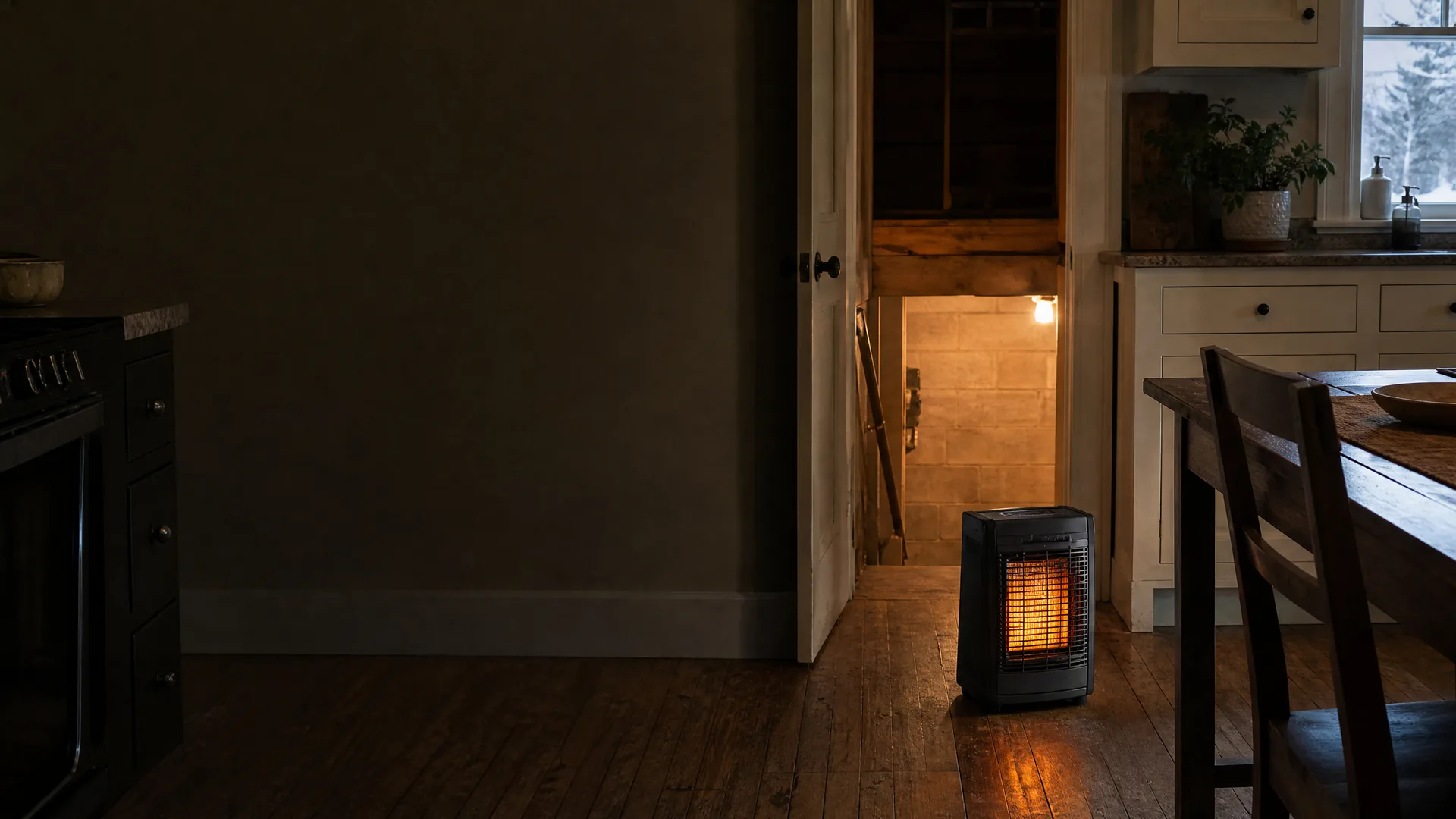
A dimly lit interior with wood plank flooring where a small portable heater with a glowing orange element sits near an open doorway, with a stove at left, kitchen cabinets and a potted plant at right, and a wooden table and chair in the foreground.

You're up before the rest of the house, coffee going, and the kitchen still has a chill in it. The space heater is pulled out from the closet and sitting by the table, its coil glowing orange, because the furnace vents in the back rooms have been breathing out air that never gets past lukewarm. The basement door behind it stands open where you went down to check the unit again, same as last week. Louisiana mornings like this don't last long, maybe a couple more weeks of it, but the extra heater running all day adds up on the bill, and you're wondering if it's worth paying for one more winter out of this furnace.


Why is one room always colder than the rest?

You notice it in the room furthest from the furnace first, the air coming out of the vent barely warm while the thermostat says the house has hit temperature. The blower might run longer than it used to, or cycle on and off every few minutes instead of holding a steady stretch. Some mornings you hear a click and then nothing, a limit switch tripping before the elements even get warm. The breaker for the furnace may trip on the coldest nights, when every element is trying to draw at once. None of this means the furnace is finished, but a heating element that's failed partway puts more load on the ones still working, and that's how one bad part turns into several.

A beige residential gas furnace with white PVC vent pipes, copper and yellow gas lines, and adjacent sheet-metal ductwork stands on a concrete floor beside a plain white wall.

Why elements fail one at a time

An electric furnace usually has three or four heating elements stacked in sequence, each with its own limit switch. They don't all go at once. One burns out while the others still heat fine, so the air coming out feels weaker but not cold. A contractor can test each element with a multimeter and replace just the one that's failed, as long as the cabinet and blower are still sound.

A gray high-efficiency furnace with white PVC vent pipes and metal ductwork stands on a concrete floor beside a plain off-white wall in a basement.

What cheap power means for this

Electric rates in Louisiana run low enough that running a full set of heating elements doesn't hit the bill the way it might elsewhere. That changes the math on repair versus replacement. A furnace with one bad element and a working blower is often worth fixing here, since the operating cost isn't the problem pushing you toward a new unit. The condition of the cabinet and the blower motor matters more than the power bill does.

Winter nights average 43°F statewide

Winter nights here average 43°F, not the hard freezes you'd get further north. Your furnace or heat pump still needs to come on most nights from December through February. It just isn't working against the kind of cold that pushes an aging unit to its limit.

NOAA nClimDiv 1991-2020 county normals weighted by homes

A beige furnace with two access panels stands against a concrete basement wall, with galvanized sheet-metal ductwork, a white PVC pipe, flexible conduit and insulated ducting around it.
Before you get your furnace installation
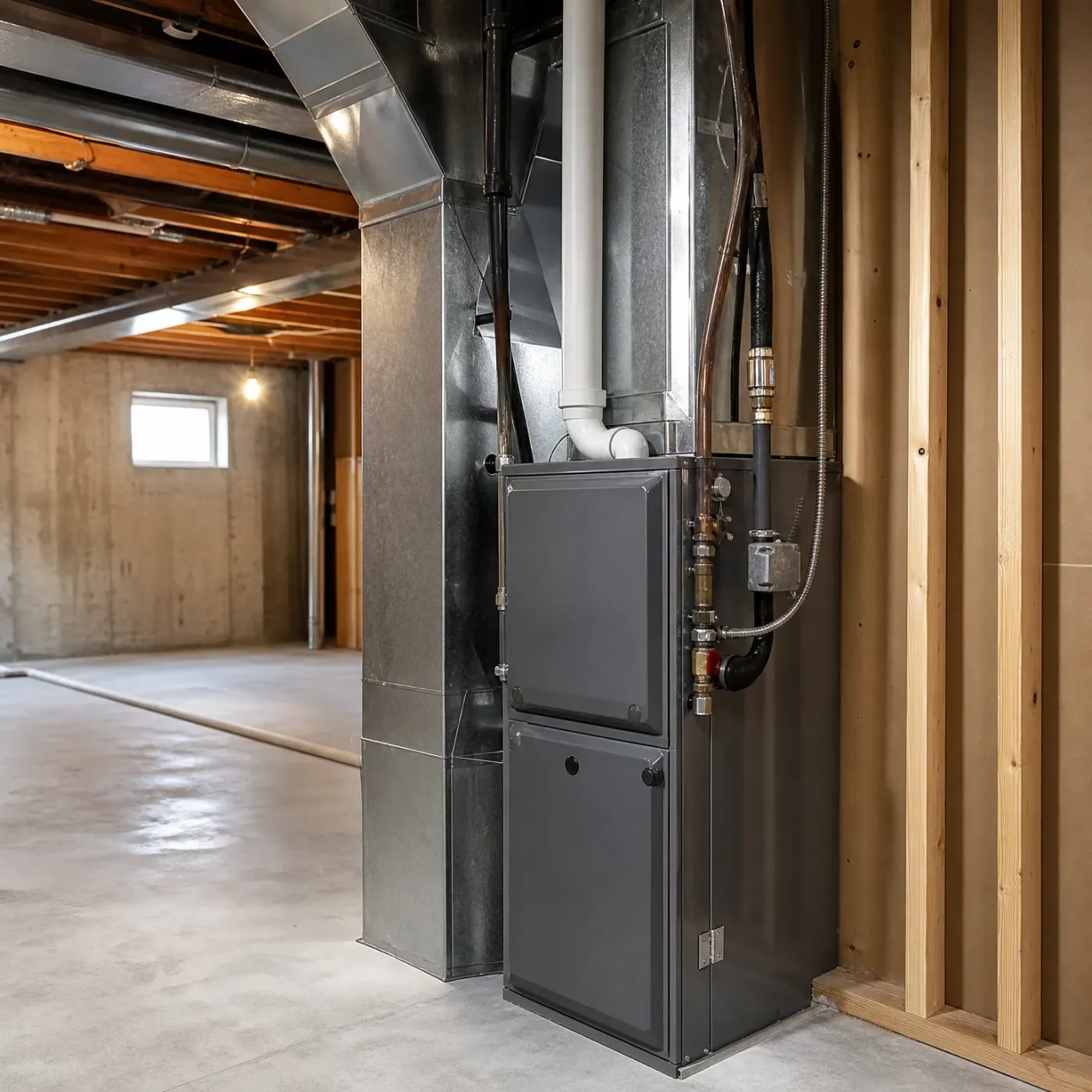
A gray furnace with white PVC vent pipes stands beside sheet-metal ductwork in a basement with a smooth concrete floor, exposed wood framing, and plastic sheeting on the walls.
After you get your furnace installation
A gray furnace with copper and flexible piping stands against a wood-framed wall in an unfinished basement, connected to galvanized sheet-metal ductwork and PVC venting, with a concrete floor and exposed joists.

No phone calls to make

One installer gets your project, so there's no bidding war over it.

Skip the round of in-home estimates for a new furnace.

Skip calling around

Sending the form costs nothing.

Fix the Furnace or Replace It

Repair

  • A single failed heating element or blower motor costs less to replace than the whole furnace and takes the unit back to normal output.
  • If the elements are failing one at a time and the cabinet is still solid, repair buys years before the next one goes.
  • A contractor already on site for a repair can tell you how the rest of the elements look, not just the one that quit.
  • Worth doing if the limit switch trips were caused by a dirty filter or blocked vent rather than the furnace itself.
  • Keeps you on the same thermostat and ductwork setup, so there's nothing else in the system to relearn.

Replace

  • Once elements have failed one after another over a couple of years, you're paying for repairs on a furnace that's already most of the way to needing full replacement.
  • Rust working through the cabinet or louvers often means the heat exchanger is going the same way, and that's not a part worth repairing alone.
  • A new furnace sized correctly stops the uneven heat and the short cycling that came from a unit running on fewer working elements than it needs.
  • If your winters are mild here, the bigger gain shows up in how evenly the house heats, not just whether it heats at all.
  • A new installation comes with a warranty on the parts most likely to fail next, which an aging unit patched together does not.
A dark high-efficiency furnace on a concrete pad in a basement, connected to galvanized ductwork, white PVC vent pipes, and copper and black gas piping, with concrete walls and wood framing nearby.

Running the way it should

A furnace like this heats evenly, cycles on and off without strain, and keeps its connections tight and dry. The ductwork, gas lines and exhaust pipes all stay sound, so the cabinet does its job without extra strain on any one part.

A gas furnace with a louvered upper panel stands on a concrete pad in a basement, flanked by sheet-metal ductwork, white PVC and metal pipes, and insulated columns.

Showing its age

This one still runs, but the signs are there. Check the cabinet for rust, listen for a louder cycle, and look at the drain line for buildup. A contractor who works on these year-round can tell you if it's one part or the whole unit.

A closed silver laptop and a ceramic mug of dark coffee sit on a wooden table in front of two chair backs, with a kitchen counter, tiled backsplash, wooden cutting boards, a vase of greenery and a potted plant by a window behind.

Where that leaves you

A furnace that's down to one bad element or a blower motor is worth fixing. A furnace with a rusted cabinet, elements failing in sequence, or a limit switch that keeps tripping is telling you it's near the end. Louisiana winters are mild enough that this furnace or heat pump has had an easy run compared to colder states, so if it's already struggling at 43 degrees, that's worth paying attention to.

Either way, the next step is getting a contractor who works on electric furnaces to look at yours and tell you which one you're dealing with. That beats spending an evening searching for someone local, calling a few companies, explaining the rusted cabinet and the cold back room over and over, then sitting with quotes that don't quite match what each contractor actually saw. One licensed local contractor, familiar with the furnaces and heat pumps common here, can look at yours and tell you straight whether it's a repair or time to replace it.

A gray upholstered sofa with a matching cushion sits beside a potted plant and a wooden table holding a small green plant in a stone pot, near a curtained window.
A smiling woman with dark shoulder-length hair in a cream V-neck sweater sits at a marble counter with a glass of red wine, with a kitchen and softly lit living room behind her.
A woman in a dark green sweater laughs while seated at a marble kitchen island with a glass of red wine, with open shelving, cabinets and a living room visible behind her.
A woman with long dark hair in a cream knit sweater laughs while looking off to the side, seated at a counter with a glass of red wine, in a dimly lit living room with a sofa, lamp, framed pictures and houseplant behind her.
A smiling woman with long dark hair in a beige sweater sits at a marble kitchen counter with a glass of red wine, with a dimly lit living room behind her.

Furnace Installation

One form, no calling around

The pro who reaches out is licensed in Louisiana.

A black-framed smartphone standing upright against a plain white background, its screen filled with solid green.
New system or replacementFurnace or heatingLouisiana
Step 1 of 2

What ZIP code is the job in?