
Furnace pilot light keeps going out in Louisiana

RepairFurnace or heatingLouisiana
Step 1 of 2

What ZIP code is the job in?

Why does my furnace pilot light keep going out?

A furnace with a standing pilot that won't stay lit is frustrating, especially when it only runs a few months a year here and you want it working the next time a cold snap comes through. You've probably already tried relighting it once or twice and watched it die again within minutes. That usually points to one of a small number of causes, not a mystery.

Usually a dirty or failing thermocouple

The thermocouple is the small metal rod that sits in the pilot flame and tells the gas valve the flame is lit. When it gets coated with soot or starts to wear out, it stops sending a strong enough signal, and the valve shuts off the gas as a safety measure. Since furnaces here mostly sit unused for long stretches outside the coldest months, that part can sit idle and corrode or just age out between uses. A draft from a vent or a cracked heat exchanger can also blow the pilot out, though that's less common. Either way, a pilot that won't hold is worth having looked at before the next cold spell, since a full shutdown leaves you without heat when you need it.

A gray high-efficiency furnace in a basement, connected to sheet-metal ductwork on the left and white PVC vent pipes above, with black gas and drain piping and an exposed wood-stud wall with OSB sheathing on the right.

Pilot lit, burner steady

This is what a working pilot looks like: a small steady blue flame wrapped around the thermocouple, holding without flickering. The burner fires when the thermostat calls and shuts off clean. No clicking, no smell of gas, no repeat relights. If yours still looks like this most days, you're catching the problem early.


An older gas furnace with two louvered front panels stands on a concrete basement floor beside galvanized sheet-metal ductwork, pipes, and a weathered concrete wall.

Pilot out again

Here the pilot won't hold. You relight it, it catches, and within minutes or hours it's out again. That points to a weak thermocouple, a draft in the gas line, or buildup around the pilot orifice. On an older furnace like this one, with moisture visible on the walls around it, corrosion can be part of the problem too.

A man seen from behind raises his hand to wave at a woman standing in the open front doorway of a single-story house with gray shingle siding, white columns and a gabled porch entry.

A furnace you rarely use is the one you notice least

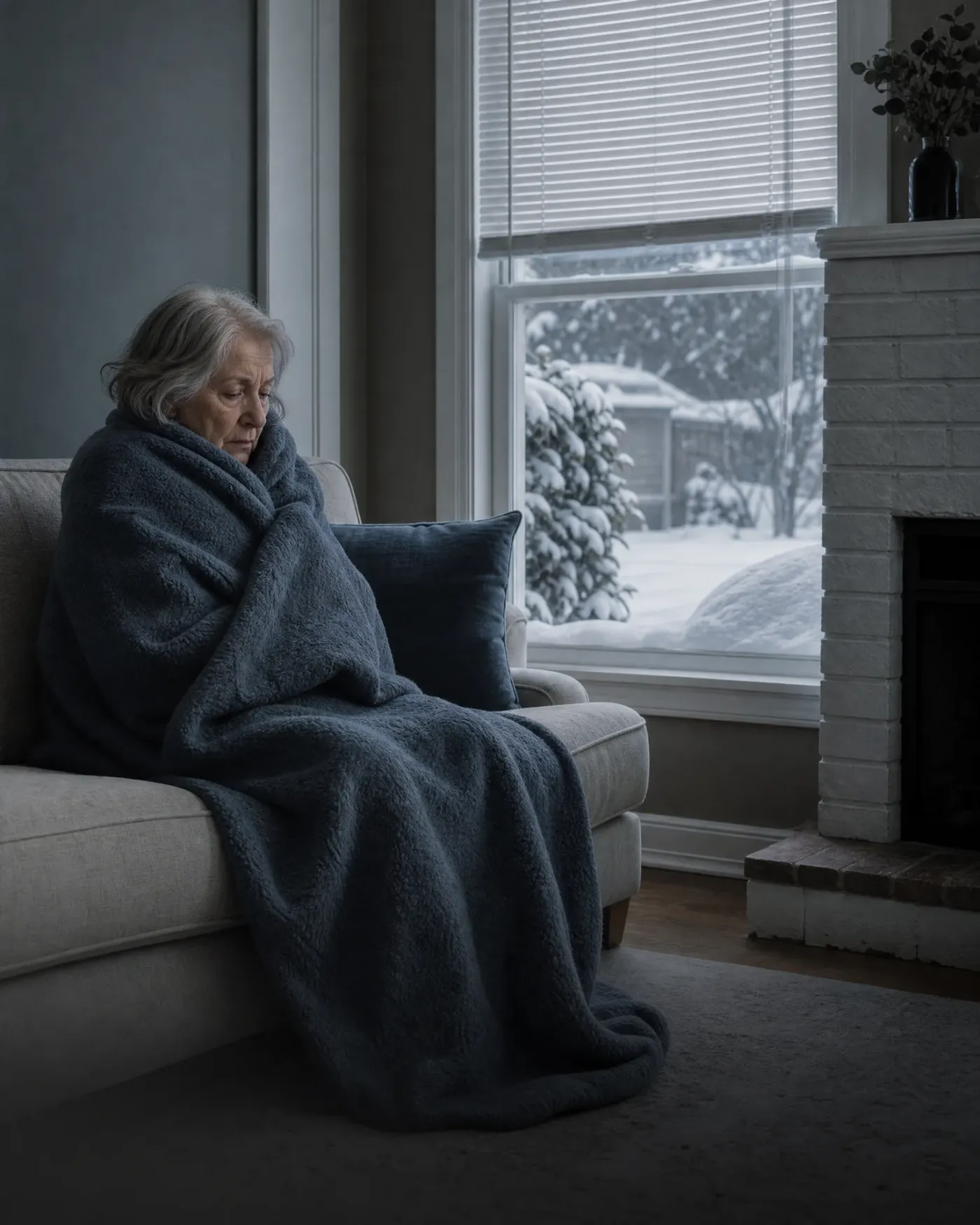
Since most homes here run on electric heat, a gas furnace with a standing pilot might only get called on for a handful of cold mornings a year. That's exactly why a pilot that won't hold stays unnoticed until the night you actually need the heat on. You go to light it and it won't take, or it lights and dies again an hour later, and now you're troubleshooting in the cold instead of catching it in October.

A pilot that keeps going out usually points to something specific, a thermocouple that's worn out or sitting slightly out of position, a draft finding its way to the flame, or dirt in the orifice. None of those get better by relighting it again and again. A local contractor who works on these furnaces each winter has likely seen the same failure in other houses nearby and can tell you which one yours is before pulling anything apart.

A living room corner with a beige upholstered armchair holding navy and striped cushions, a small round wooden side table with a carved bowl and a potted green plant, a framed landscape picture on a pale wall, built-in shelving, and a curtained window.
A gray high-efficiency furnace with white PVC vent pipes stands against a concrete basement wall beside sheet-metal ductwork, a small condensate pump on the floor, and exposed wood framing at left.

Steady flame, clean start

A high-efficiency furnace like this one vents through PVC pipe, and the condensate pump at its base clears the water it produces as it runs. When the pilot holds, the burner lights the moment the thermostat calls and shuts off just as clean.

A gray sheet-metal furnace with flue pipe and adjacent ductwork stands against a stone basement wall on a concrete floor, with white PVC and metal pipes running nearby.

A pilot that won't cooperate

This furnace vents through corrugated flue tubing instead of PVC, with gas lines and condensate pipes running alongside. A pilot that keeps dying here can point to a draft in the room, a dirty thermocouple, or a part worn from age.

What are you noticing when you check on it

You go out to light it and the flame won't take, or it takes and dies a few seconds after you let go of the knob. Sometimes you catch a faint gas smell near the unit before it relights. Sometimes you hear a soft click or pop at the burner that wasn't there before. If a cold snap is coming and the pilot won't hold, the furnace won't fire when the thermostat calls, and you're stuck with whatever space heater or electric backup you have until someone looks at it. Left alone through a few of these cold snaps, a pilot that keeps failing usually means a part has worn out, not that you're doing something wrong lighting it.

A gray gas furnace stands on a concrete basement floor, connected to sheet-metal ductwork, white PVC vent pipes, and a yellow gas line, with plastic sheeting covering the walls.
New ductwork, clean lines, a furnace put in right and venting the way it's supposed to.
A metal furnace with louvered panels stands against a concrete basement wall, connected to sheet-metal ductwork and a round flue pipe, with wooden framing posts and a pipe nearby.
Dust on an old unit like this builds up on the thermocouple and pilot assembly over years of use.
A woman in a gray turtleneck sweater stands by a window looking outside at snowy ground, with a dimly lit living room containing a sofa, shelves, lamp and a lit candle behind her.
A woman in a cream cable-knit turtleneck sweater stands in a warmly lit living room with a fireplace and shelves behind her, looking out a window toward snow-covered trees and a railed deck.
A woman in a cream knit turtleneck sweater stands by a window looking out at snow, with a lit fireplace, sofa and lamp in the room behind her.
A woman in a gray knit sweater sits by a window looking out at falling snow, with a dimly lit living room containing a sectional sofa, pillows, a lamp and houseplants behind her.

A pro who works on furnaces

A thermocouple that won't hold a flame doesn't get better with another relight. It's either worn out from years of use or sitting too far from the pilot flame to sense it's lit, and both of those are a five minute fix for someone who works on standing pilot furnaces regularly, and a frustrating guessing game for anyone else. That gap matters more here, where a gas furnace might only run a handful of mornings each winter, because a problem that would get caught fast in a house running heat all season can sit for months before you ever notice it's not holding. You don't want to find that out during a cold snap with no heat and no quick fix. A local contractor who services this kind of furnace every winter knows what to check first and won't need to guess. Getting matched with one now means it's handled before the next cold morning asks something of it.

How the pilot circuit works

  • The pilot assembly works through three parts in sequence: the thermocouple, the gas valve, and the pilot orifice itself.
  • A thermocouple sits in the pilot flame and makes a tiny electric current that tells the gas valve to stay open.
  • If that flame doesn't touch the thermocouple squarely, the current drops and the valve reads it as no flame at all.
  • Soot or dust on the pilot orifice narrows the opening and starves the flame down to a weak, easily blown-out point.
  • A draft from a vent, a cracked heat exchanger seam, or even a door closing hard can snuff a marginal pilot flame.
  • The gas valve itself can fail stuck, holding the pilot circuit open or closed regardless of what the thermocouple is reading.

A standing pilot stays lit through a safety circuit, not just a flame sitting there burning. The thermocouple is a thin metal rod that sits right in the pilot flame. Heat from that flame makes a small electric current, and that current is what holds the gas valve open. No current, no gas, even if you can see a flame burning next to it. That's why relighting the pilot only works for so long if the thermocouple itself is the problem. It takes a few seconds of holding the knob down after lighting because the thermocouple needs that time to heat up and start generating current on its own.

Gas gets to the pilot through a small orifice, barely wider than a pin. It doesn't take much to narrow that opening. Dust settles on it over the months the furnace sits idle, and soot builds up if the flame has been burning uneven for a while. A narrowed orifice means less gas, which means a smaller flame, which means it takes less to blow out. A draft from a nearby vent or even the furnace closet door swinging shut can do it. And if the gas valve itself has gone bad, none of this matters. A stuck valve ignores what the thermocouple is telling it, either holding gas open when it shouldn't or cutting it when the pilot is burning fine.

Winter nights average 43°F statewide

Nights here only average 43°F in December and January, so your furnace isn't fighting hard cold. A pilot that won't hold is more likely dirty or worn than overworked by the weather. Either way, the next cold night is when you'll want it lit.

NOAA nClimDiv 1991-2020 county normals weighted by homes

A pilot that won't hold is almost always the thermocouple, worn out or sitting out of place, and that's a small job for someone who knows standing pilot systems. Since this furnace only runs a handful of nights a year here, it's easy to let a flickering pilot slide until the next cold snap catches you off guard. Getting it looked at now means it's ready when you need it, not something you're fighting with at ten at night in January. You'll be matched with one licensed contractor local to your area, someone who works on these pilot assemblies all the time and knows what to check first. Just one contractor reaching out, not a handful of companies competing for your callback. That's worth something when all you want is the pilot lit and the furnace left alone until next winter.

Interior room corner with sunlight from a window, showing peeling paint and damaged plaster on the wall above a white baseboard, a wooden cabinet with a pale bowl on top, hardwood floor and a patterned rug.
Interior corner of a room with tan walls, white profiled baseboard and window trim, a wood-plank floor in sunlight, and green foliage visible through the window.
An empty room corner with cream walls, white baseboard, two windows with deep sills showing green foliage outside, and a wood plank floor lit by sunlight.
Empty room corner with beige walls, white beadboard wainscoting, chair rail and baseboard, a window with green foliage outside, and sunlight casting leaf shadows on the wall above a wood floor.
Sunlit room corner with a multi-pane window, beige walls, white baseboard, wood floor with a woven rug, and a dark wooden cabinet holding a ceramic table lamp below a framed picture.

Get your furnace to the right pro

The pro who reaches out is licensed in Louisiana.

Get a furnace pro

No charge to send it. You decide if you hire them.













