A nighttime street scene featuring a row of lit white colonial-style houses with wrap-around porches, flanked by oak trees draped in Spanish moss.

Heat Pump Installation in DeRidder, LA

Tell us about the job

Takes about a minute. No obligation.

New system or replacementHeat PumpBeauregard Parish, LA
Step 1 of 2

What ZIP code is the job in?

The rating is a ceiling, not a guarantee

The efficiency number on a heat pump's label comes from a lab test, with everything sized and installed just right. Your system only hits that number if the ductwork is sized for it, the refrigerant charge is correct, and the outdoor unit is matched to the indoor coil. A high rating on a poorly installed system will run worse than a modest rating on one put in correctly.

It tells you about electricity, not comfort

The rating is a fair way to compare how much electricity a heat pump uses to move heat. It does not tell you how the unit performs when the outdoor temperature drops hard, which is what actually decides how warm your home stays on the coldest nights.

5 months
November through March, your system heats
7 months
April through October, it cools
42°F
the average winter night it heats against
92°F
the average summer afternoon it cools against
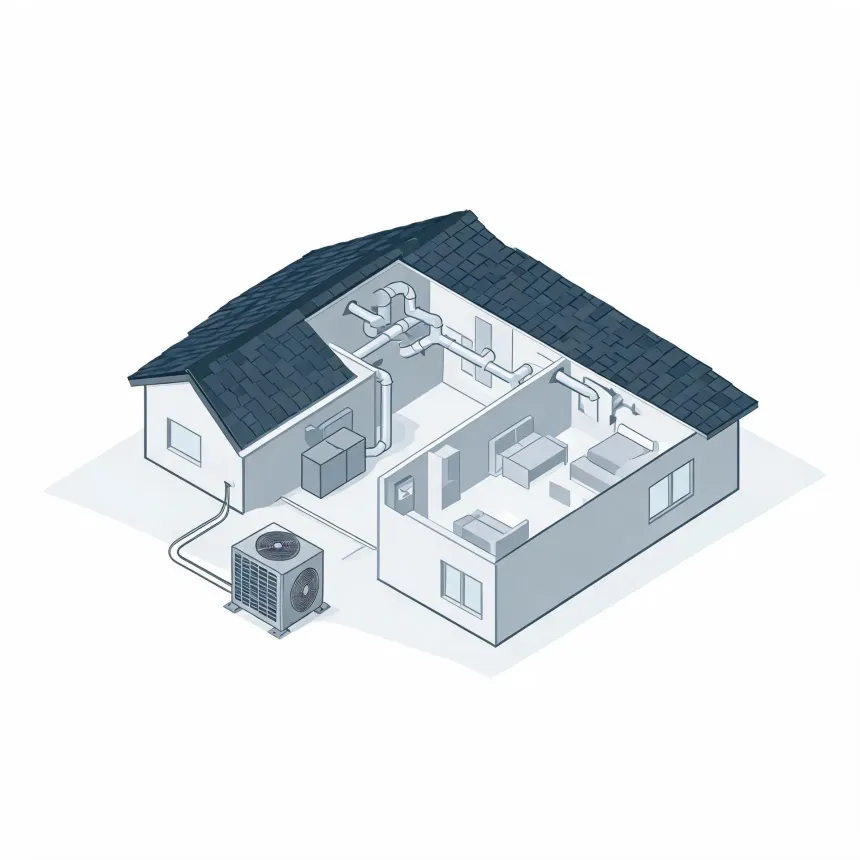
Isometric cutaway illustration of a single-story house showing interior rooms, ceiling ductwork, an indoor air handler, and an outdoor condenser unit connected by lines on the ground.
Your system heats November through March and cools April through October.

NOAA nClimDiv, 1991–2020 normals

Electricity heats 75.4% of homes in Beauregard Parish.

A heat pump going into a home like that is replacing like with like, not asking the wiring to do something new.

October is one month before heat pump season starts here

Cooling runs April through October
Heat runs November through March
Power costs 11.73 cents a kWh statewide
Cheap power changes the math hereLouisiana electricity ran 11.73 cents a kilowatt-hour in 2024, so payback matters less than fit

DeRidder is in climate zone 2A, hot and humid, where cooling drives most of the year's energy use. A split-system heat pump installed here has to meet 14.3 SEER2 for cooling and 7.5 HSPF2 for heating. That cooling number is the same standard the whole Southeast builds to, higher than what manufacturers have to meet nationally. A contractor quoting a system below that rating isn't quoting something that can legally go into your home. The federal tax credit for a qualifying heat pump is worth looking at alongside these minimums, since the systems that meet them are often the ones that qualify.

Like for like is simple here

Most homes here already use this type of system, so like for like is the simple path.

Find a contractor
A person in a dark long-sleeve shirt and tan work pants, seen from behind, carries a canvas tool bag while stepping up porch stairs toward a dark blue front door.
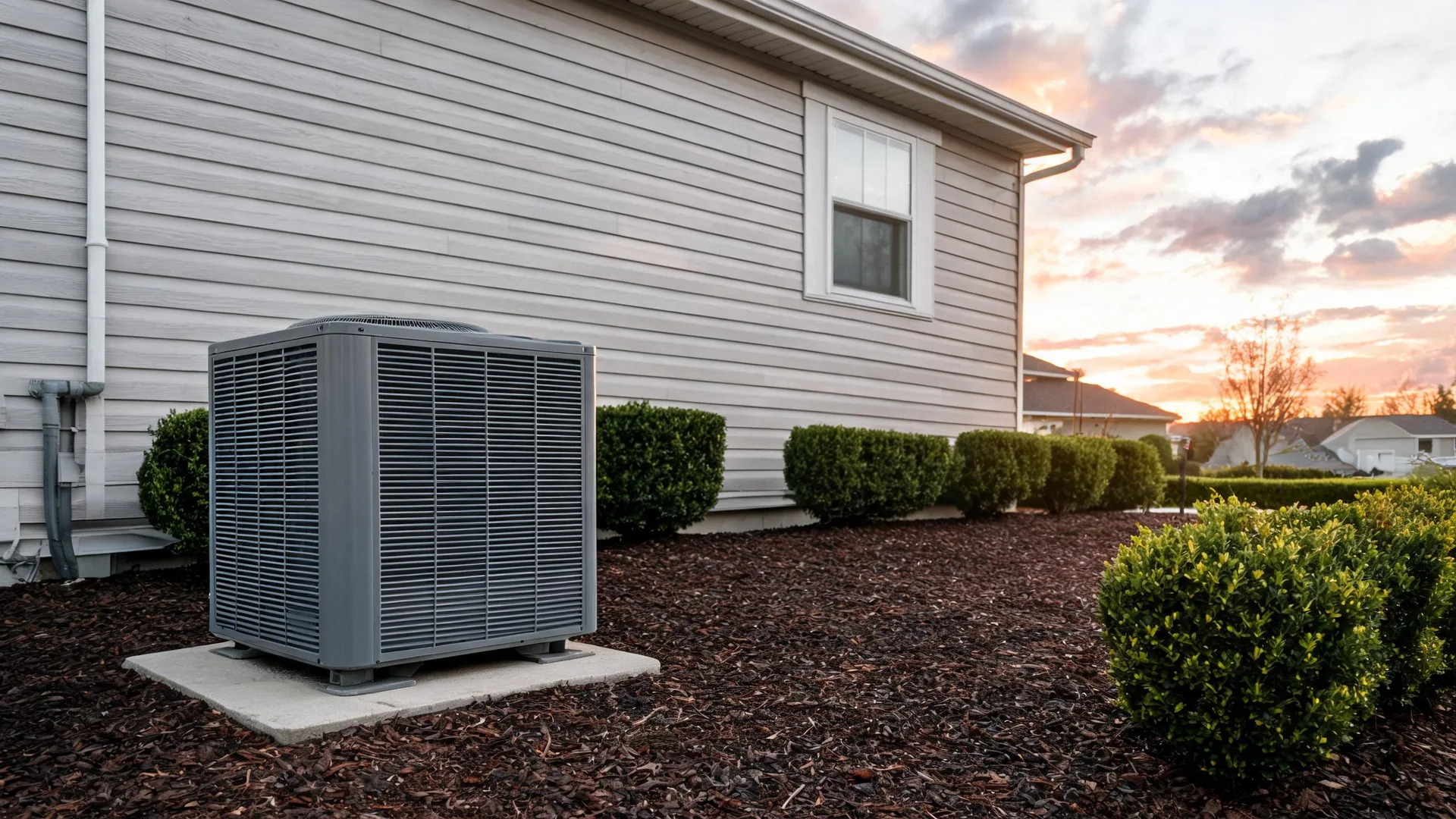
A gray heat pump outdoor unit mounted on a concrete pad next to the stone-accented exterior wall of a house.

It runs in both directions, most of the year

A furnace works hard for part of the year and rests the other part. A heat pump runs in both directions, heating in the cold months and cooling in the hot ones, so it rarely gets the long break a furnace gets. Ask what that means for the compressor and the outdoor coil over the life of the system, not just how it performs new. Ask about the reversing valve too. That's the part that switches the system between heating and cooling, and it only has to stick once to leave you without either. A contractor who installs a lot of these can tell you how that valve tends to hold up, and what a sticking one sounds or feels like before it fails outright.

The outdoor unit and the indoor coil are sold as a pair

A heat pump's outdoor unit has to be matched to the indoor coil for the system to run at its rated efficiency. Mixing a new outdoor unit with an old coil might still cool the house, but the compressor works harder than it should, and that shows up in the power bill and in how long the compressor lasts.

The ductwork decides what the install actually involves

A heat pump runs longer at a lower output rather than blasting in short bursts, so it depends on ducts that can move that air without a fight. If the existing ducts are undersized or leaky, a contractor has to address that as part of the job, not after. Sealing or resizing ductwork is real labor, and it's often the difference between quotes that otherwise list the same equipment.

Sizing a heat pump isn't about matching the old unit's number or guessing based on square footage. A contractor works out the heat loss and heat gain for the house, room by room, looking at window area, insulation, and how the rooms are laid out. That calculation points to a capacity, and the equipment gets picked to match it. Too big and the system short cycles, reaching the set temperature fast and shutting off before it's dehumidified the air or settled into a steady run. Too small and it never catches up on the coldest or hottest days, running constantly and still losing ground. Either mistake wears on the compressor, and neither one shows up on paper until the system is already in the wall.

Install day starts with the old equipment coming out, indoor and outdoor both, since the new coil and outdoor unit are matched and the old parts have no place in that pairing. The line set usually gets replaced rather than reused, because contamination or the wrong diameter left over from the old system can undercut how the new one runs. Setting the outdoor unit means a level pad and enough clearance around it for air to move through the coil freely. Inside, the air handler or coil gets tied into the existing ductwork, and this is where problems in the ducts that went unnoticed for years finally get addressed, since a heat pump depends on that ductwork more than most systems do. Once everything is connected, the refrigerant gets weighed in to the charge the manufacturer specifies, not just topped off until the gauges look right. Before anyone leaves, the system should get run in both directions, heating and cooling, so any problem with the reversing valve shows up on install day instead of the first cold night.