




How cold is too cold for a heat pump in Louisiana

New system or replacementHeat PumpLouisiana
Step 1 of 2

What ZIP code is the job in?

How cold is too cold for a heat pump in Louisiana?

Louisiana winters don't get brutal, but there are still cold snaps, and most homes here run on electric heat. When the temperature drops hard for a night or two, you want to know if your heat pump is actually keeping up or just running without doing much. You're not trying to understand the whole system, just whether this is normal or something's wrong.

Most heat pumps start losing efficiency below 40 degrees and need backup heat below freezing

A heat pump pulls warmth from the outside air, so the colder it gets, the harder that job becomes. Below about 40 degrees it starts working noticeably harder, and once temperatures drop into the 30s or lower, most units switch on a backup heat strip to make up the difference. Louisiana rarely sees stretches of hard freeze, but it does get nights in the 20s and 30s most winters, and that's when your system leans on backup heat the most. If your house feels cooler than usual on those nights, or the air coming out doesn't feel as warm, that's expected. It's worth having someone check the system if it struggles on nights that aren't unusually cold for here.

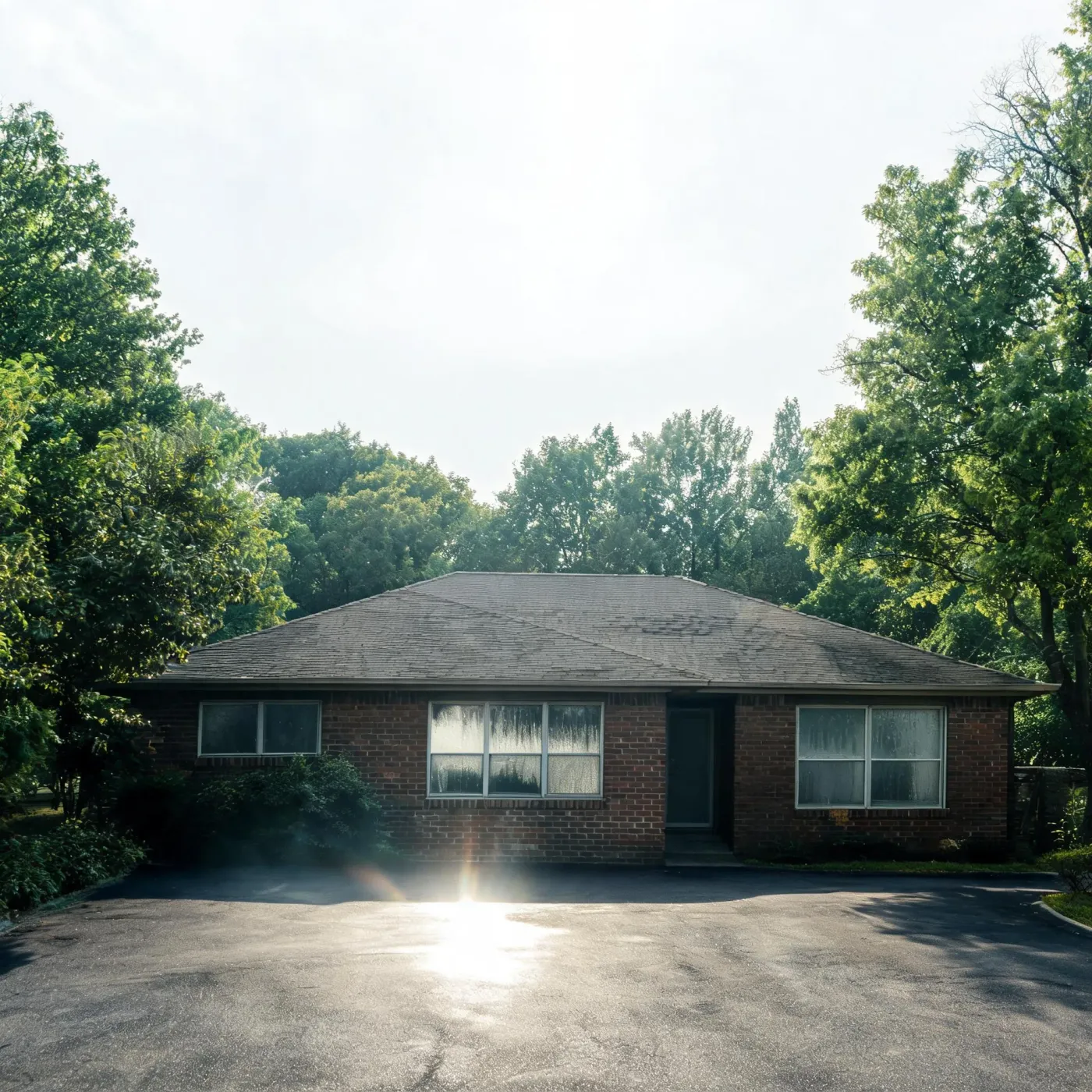
A single-story brick house with a hipped shingle roof, large front windows and a central door, fronted by a wide paved driveway with sun flare, surrounded by green deciduous trees.

Summer here runs heavy. Averaged across June, July and August, the dew point sits at 73°F, which is the number that tells you how much moisture your heat pump has to pull out of the air before the house feels dry, not just cool. That's according to NOAA climate data for Louisiana. A heat pump set to cooling spends a lot of those months wringing out humidity as much as lowering the temperature, and in a stretch like that you'll notice the air inside feeling damp even when the thermostat says it hit the mark. Your heat pump works the same way for cooling as any central AC does, so that load falls on it all summer, every summer, long before the first cold snap ever shows up.

NASA POWER T2MDEW county cells weighted by homes

Heat Pump Alone or With Backup

Heat Pump Alone

  • Most heat pumps here keep up fine down into the 30s and even high 20s without help.
  • Below that, the outdoor unit has to work harder, and it pulls more electricity to put out the same warmth.
  • Some units ice over in a hard cold snap and run a defrost cycle, which feels like the heat shuts off for a few minutes.
  • Recovery after a defrost cycle takes a little while, so the house can feel cool until it catches back up.
  • A heat pump sized right for your house still loses ground once it's straining in a stretch of nights near freezing.

Heat Pump Plus Backup

  • Auxiliary or emergency heat kicks in automatically when the outdoor unit can't keep pace on its own.
  • It closes the gap during the coldest nights so the house holds its temperature without the heat pump overworking.
  • Electric backup costs more to run than the heat pump by itself, since it's resistance heat rather than a transferred one.
  • A thermostat set wrong can lock the system into backup heat longer than the weather actually calls for.
  • Having backup heat set up correctly matters more here than in colder states, since cold snaps are short but still show up most winters.
A gray outdoor air conditioning condenser unit on a concrete pad beside a house with horizontal siding, next to a green lawn and a plain light-colored wall.

What happens at low temperatures

A heat pump moves heat from outside air into your house. As the outdoor temperature falls, there's less heat out there to grab, so the system has to run longer to deliver the same warmth. Most units have a backup heat strip built in for exactly this reason. It kicks on automatically when the outdoor unit can't keep pace alone, and it uses more electricity to do it. That's not a malfunction. It's the system doing what it was built to do on a cold night.

A white outdoor heat pump unit on a concrete pad beside a plain light wall, with gravel and mowed grass in front.

Why the outdoor unit frosts up

On a cold, damp night, the outdoor coil can collect frost the same way a cold glass sweats in summer. A heat pump handles this with a defrost cycle: it briefly reverses itself, sends warm refrigerant through the outside coil to melt the frost, and switches back to heating. You might notice what looks like steam rising off the unit during this cycle. That's normal. If frost keeps building back faster than the unit can clear it, that's when a contractor needs to look at it.

A smiling man in a denim shirt and white t-shirt stands in an open dark doorway of a stucco house, facing a woman with long brown hair and a green jacket seen from behind in the foreground.

What a hard freeze means at your house

When a cold snap hits and your heat pump leans on backup heat strips to keep up, you'll see it on your bill before you see it anywhere else. Electric heat is the norm in Louisiana and the rate is kind, but strip heat still pulls a lot more than the compressor does on its own. One bad night won't hurt you. A week of hard cold with a system that's already struggling will.

The bigger risk is the unit icing over and not keeping the house warm enough while people are counting on it, overnight or with someone elderly or very young at home. If your heat pump has needed backup heat more than a night or two this winter, or it's not holding the temperature you set, that's worth having looked at by someone local who services heat pumps in this climate and knows what tends to give out first when a system here gets pushed. A contractor matched to your specific setup can tell you whether it's running the way it should or working harder than it needs to.

Interior corner of a room with a window and sheer curtain at left, a gray upholstered sofa with a cushion at right, and a round wooden table holding stacked books and a round vase with an olive branch.
A dark gray outdoor condenser unit on a concrete pad beside a house with beige horizontal siding, with a gray electrical disconnect box and conduit on the wall, mulch beds, a hosta plant, a shrub, and mowed lawn in front.

Running right

This is what a heat pump handling a cold snap looks like: clean fins, clear airflow, the fan turning without strain. Air moves through it the way it's supposed to, and it pulls what heat there is from the outdoor air without a fight. A unit kept clear like this holds up through most Louisiana winters on its own.


An outdoor air conditioning condenser unit on a concrete pad beside a house with light horizontal siding and a concrete block foundation, with bare soil and small green plants around it.

Struggling to keep up

Dust and grime on the fins block the airflow the unit needs to pull heat out of cold air. When a cold snap hits, a unit in this shape has to lean on the backup heat strips sooner, and that shows up on your electric bill. It's also more likely to ice over before the defrost cycle can clear it.

A woman with dark hair in a bun wearing a cream knit sweater sits on a gray sofa in a bright living room, looking off to the side.
A woman wrapped in a knit blanket sits on a gray sofa in a living room, looking toward a bright window with houseplants and an armchair in the background.
A woman in a gray cowl-neck sweater sits on a light sofa with cushions, smiling and looking to the side, with a kitchen and window visible behind her.
A woman with dark hair in a bun, wearing a light linen shirt, sits on a sofa and looks to the side, with a window, houseplants and a kitchen with pendant lights blurred behind her.

A heat pump pro near you

A heat pump that's sized right and in good shape will ride out a Louisiana cold snap on its own or with just a little help from the backup strips. One that's been losing capacity for a year or two, or was never quite right for the house, leans on those strips every time the temperature drops, and that shows up on the bill before it shows up anywhere else. The difference usually comes down to installation, how the unit was sized for your house, how the refrigerant charge was set, whether the ductwork was matched to it. That's not something you can see from the thermostat. A contractor local to your area who installs these year-round knows what tends to get missed on the units running here, and can tell you whether yours is set up to handle the next hard night or just getting by on backup heat. If a cold snap already has you watching the bill, that's worth knowing before the next one hits.

An old unit in a cold snap

A heat pump that's twelve or fifteen years old loses capacity slowly, and you don't notice most of the year because Louisiana doesn't ask much of it. Then a cold snap hits and the compressor that used to keep the house at 70 now struggles to hold 65. The backup strips kick in sooner and stay on longer than they would in a newer system, because the heat pump side is carrying less of the load than it used to. You feel it as a house that's never quite warm enough and a bill that jumps for those few days. The unit isn't broken. It's just worn down to the point where cold weather, even mild cold, finds the weak spot.

A new unit in a cold snap

A heat pump installed to match the house starts from a different place. Full capacity means it covers more of the load itself before the backup strips have to help at all, so less of that cold snap gets paid for at electric resistance rates. Sizing matters as much as age here. A unit picked for your square footage and your ductwork holds the setpoint with less strain than one that was undersized from the start or chosen without much thought. If you're weighing whether to repair an aging system or replace it, a contractor who installs these year-round in Louisiana homes can tell you which side of that line yours is on.

A weathered gray outdoor condenser unit on a concrete pad beside a house with horizontal vinyl siding, with conduit, refrigerant lines, and an electrical disconnect box on the wall behind it.
Before you get your heat pump installation
A gray outdoor condenser unit on a raised pad beside a house with horizontal lap siding, with refrigerant lines, conduit and an electrical disconnect box on the wall, and shrubs on a mulch bed to the left.
After you get your heat pump installation

Before you get your heat pump installation

You're watching the forecast every time a cold snap is coming, wondering if the unit will keep up or if you'll wake up to a cold house and a backup strip running nonstop. You don't know if the system is sized right for your house, or if it's just old enough that it quietly lost capacity somewhere along the way. Every hard freeze is a guess about what the next power bill will look like, and whether the people counting on you to keep the house warm are going to feel it.

After you get your heat pump installation

A licensed, local contractor who works on this equipment all year, in homes like yours, looks at what your house actually needs and installs a unit sized for it. You stop guessing what a cold snap will do to your system or your bill, because the unit installed is built to handle what Louisiana winters bring. You're matched with one contractor, not several competing for the job, so the person who shows up already knows the kind of system going in and what it takes to get it running right.

Power costs 12.52 cents per kilowatt-hour statewide

At 12.52 cents a kilowatt-hour, running the backup strips during a cold snap won't wreck your bill the way it might somewhere else. A new heat pump that's sized right just means you lean on those strips less often.

EIA-861 2025 statewide residential average

A gray outdoor heat pump unit with a large fan grille sits on a concrete pad beside a house with horizontal lap siding, next to a green shrub, mulch bed, and lawn.

Clean coil, steady run

This is a heat pump that can handle a cold snap. The fins are clear, the fan turns without strain, and air moves through the coil the way it's built to. A unit like this pulls what heat it can from the cold air and keeps the house warm without leaning hard on the backup strips.

An outdoor air conditioning condenser unit with a top fan grille sits on a concrete pad beside a house with horizontal siding and a concrete step.

A coil that's lost its edge

Dirt and dust packed into the fins block airflow before the refrigerant ever gets a chance to work. A heat pump running on a coil this dirty loses capacity right when a cold snap asks the most of it, and backup heat picks up the slack more than it should.

A heat pump isn't too cold until it's icing over, running constant, or leaning so hard on the backup strips that your bill tells the story before the thermostat does. Most units here handle a Louisiana cold snap fine on their own, and the ones that struggle are usually older or were never sized right for the house. If yours has been coming on strong and running long every time the temperature drops, that's worth a look before the next freeze, not after. A local contractor who installs and services heat pumps in this climate all year knows which brands and sizes hold up through a hard night and which ones start leaning on strip heat too soon. Getting matched with one contractor, licensed and working near you, means you're talking to someone who already knows what tends to go wrong here, not fielding calls from a handful of companies that don't. You'll know where your system stands, and whether it's built to ride out what Louisiana winters actually bring.

A gray outdoor air conditioner condenser unit on a concrete pad beside a house with horizontal lap siding, with an electrical disconnect box and conduit on the wall, a downspout, gravel edging and a green lawn with trees to the right.

A local pro for your heat pump installation

Find a licensed heat pump pro

Your request goes to one pro, not a list of companies.

No fee to send it, and nothing to sign.







