

White plantation-style houses with wraparound porches lit at night, surrounded by Spanish moss-draped live oak trees.

Heat Pump Repair in Belle Chasse, LA

Tell us about the job

Takes about a minute. No obligation.

RepairHeat PumpPlaquemines Parish, LA
Step 1 of 2

What ZIP code is the job in?

April is when the cooling load hits your heat pump hard, and that's when a weak part gives out. Something that was borderline in March, a tired capacitor or a contactor with pitted points, can get through mild days without trouble. Ask it to run flat out for the first real heat wave and it quits. December works the same way on the heating side, after a slow November. If your heat pump has been short cycling or blowing warm when it should be cold, don't wait on it. The sooner it's looked at, the less likely one bad part takes out another.

3 months
December through February, your system heats
7 months
April through October, it cools
49°F
the average winter night it heats against
89°F
the average summer afternoon it cools against
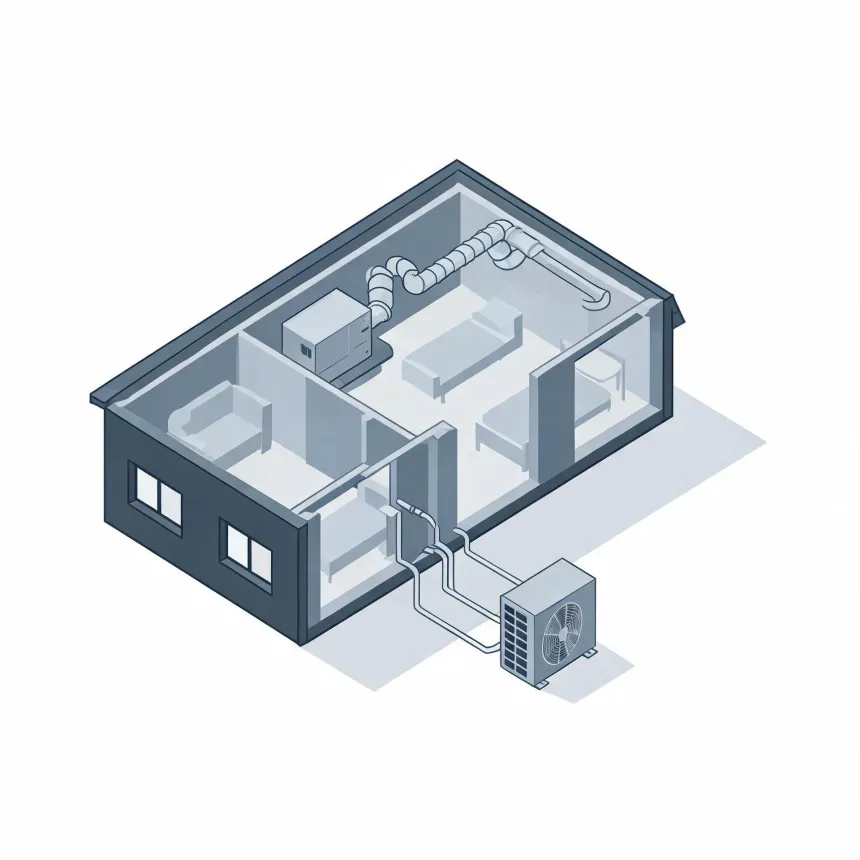
Isometric cutaway illustration of a small house showing interior rooms with furniture, an indoor air handler with flexible ducting, and refrigerant lines running to an outdoor condenser unit beside the building.
Your system heats December through February and cools April through October.

NOAA nClimDiv, 1991–2020 normals

Plaquemines Parish saw 10 tropical storms or hurricanes and 8 damaging wind events in the past ten years.

A heat pump that lost power and came back on wrong, or took a surge, acts a lot like one with a worn-out part.

Half the homes in Plaquemines Parish were built in 1997 or later. If yours is one of them, the heat pump giving you trouble probably isn't old enough to be worn out on its own. A unit that age failing usually means one part went bad. A capacitor, a contactor, a board. That's a repair, not a replacement. Mobile homes make up a good share of the housing here too, and those often run a heat pump matched to the home's own ductwork, so whoever looks at it should know that setup specifically.

Get it looked at early

Problems tend to show up in the first weeks of the season, when the load hits a part that was already weak.

Find a contractor
A gray air-source heat pump mounted on a concrete pad next to a house with gray vinyl siding, surrounded by gravel and flanked by green shrubs and white hydrangea flowers.

What a failing heat pump sounds and feels like before it quits

A heat pump usually tells you something is wrong before it quits for good. Listen for a hum that doesn't turn into a start. A clicking that repeats instead of catching. A buzz from the outdoor unit that wasn't there before. Short cycling is another sign. The system kicks on, runs a couple minutes, shuts off, then starts again on its own. That's not normal wear. That's a part telling you it can't hold the load. Ice on the outdoor coil while it's cooling means airflow or refrigerant trouble, not the weather doing what it's supposed to do. Warm air from the vents when it's set to cool, or cool air when it's set to heat, points at the reversing valve. None of these get better by running the system less. The parts around the weak one start compensating, and they wear faster doing it.

A failing part pulls others down with it

A heat pump is a loop. When one part can't do its job, the parts next to it try to make up the difference. A weak capacitor makes the compressor struggle to start. Every hard start heats the windings a little more than the last one. A low charge makes the compressor work harder to move the same heat, and it runs hotter than it was built to run. None of that damage undoes itself. It stacks, run after run, until one bad part takes another part down with it.
The compressor is what pays for waiting

Shut a heat pump off at the first bad sign and most problems stay what they are. A bad capacitor. A stuck contactor. A dirty coil. Keep running it past that point and the compressor is usually what gives out, because it has no backup part to lean on. A system that's short cycling or icing and still gets run every day is being pushed toward a compressor failure instead of the smaller problem that started it.

Before anyone comes out, a few things are worth checking yourself. Look at the thermostat first. Make sure it's set to the mode you want and the temperature is actually past where the room sits, since a setting bumped by accident looks exactly like a broken system. Check the breaker for both the indoor air handler and the outdoor unit. A tripped breaker will shut the whole thing down with no warning sound at all. Look at the outdoor unit itself. Leaves, a fallen branch, or anything packed against the coil blocks airflow and can make the system struggle or ice up. Check the air filter too. A filter clogged with dust starves the system of airflow and can cause the same warm-air or short-cycling symptoms as a failing part. None of this fixes a bad capacitor or a stuck reversing valve, but it rules out the simple stuff before you pay someone to find it.

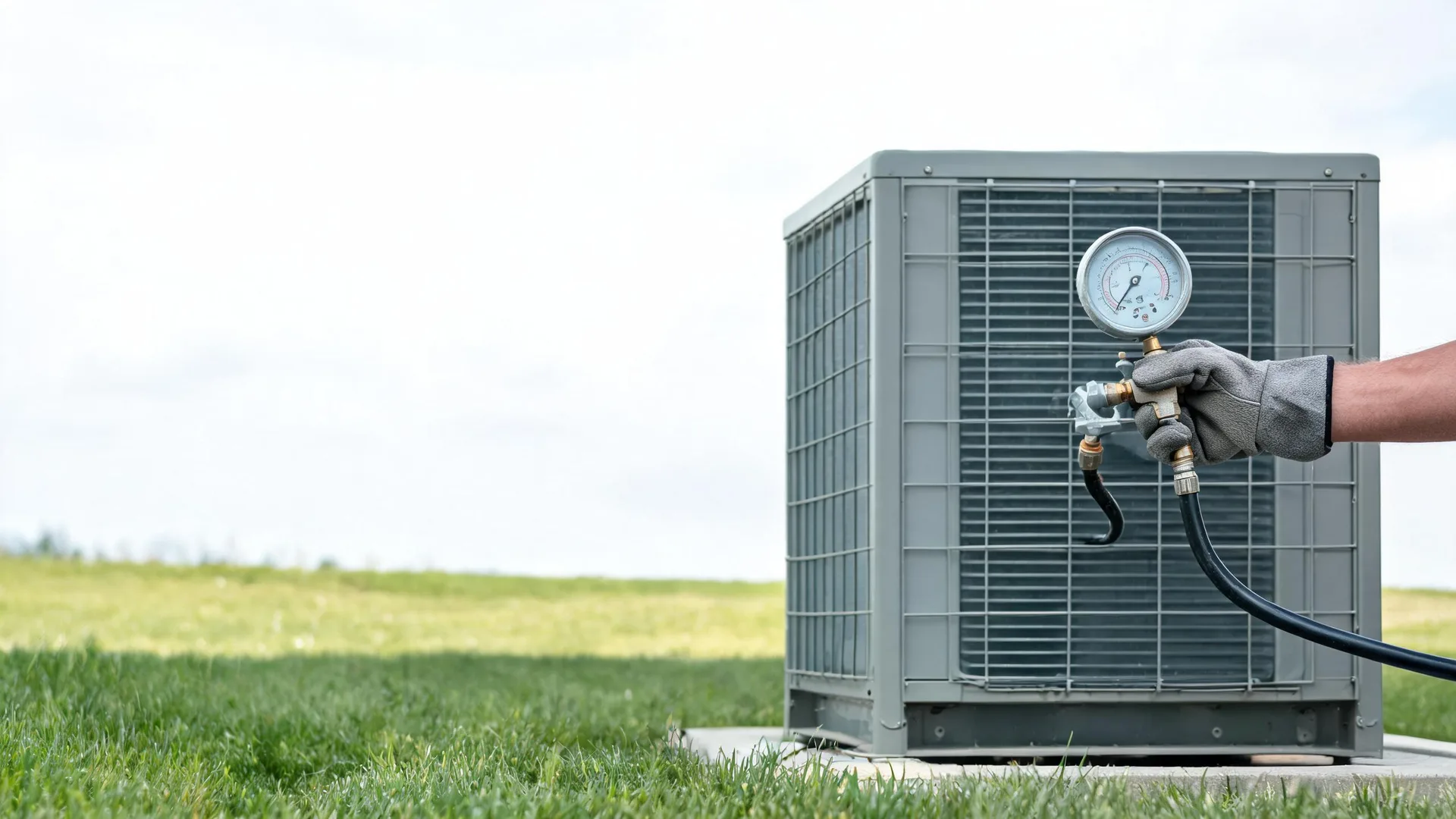
A diagnostic visit starts outside at the unit itself, not with a guess. A tech will check the capacitor and contactor first, since those fail often and are quick to test. From there it's refrigerant pressure, checked with gauges at the service ports, because too little charge or too much both point at different problems. The reversing valve gets checked by watching whether it actually switches when it's told to. Airflow gets checked too, at the coil and at the return, since a system that can't move air gets blamed for problems it doesn't actually have. Expect the panel to come off and the wiring to get a look, because a loose or burnt connection causes symptoms that look exactly like a bad part until someone traces it back.