



Low-angle view along a red brick wall with trimmed shrubs and a mulch bed beside a mown lawn, with a single-story house with a garage door and tall pine trees under an overcast sky in the background.

Heat Pump Repair in Slidell, LA

Tell us about the job

Takes about a minute. No obligation.

RepairHeat PumpSt. Tammany Parish, LA
Step 1 of 2

What ZIP code is the job in?

Slidell sits in St. Tammany Parish, where 146 severe weather events hit between 2015 and 2024. Wind did most of that damage, but hail and tornadoes came through too. A heat pump's outdoor unit has no cover from any of it, the coil and fan sitting right out in the open. It can take a hit from hail or flying debris and keep running for weeks before the damage shows up as a problem. If your unit has been through a storm recently, that is worth knowing regardless of what brought you here today.

5 months
November through March, your system heats
7 months
April through October, it cools
43°F
the average winter night it heats against
91°F
the average summer afternoon it cools against
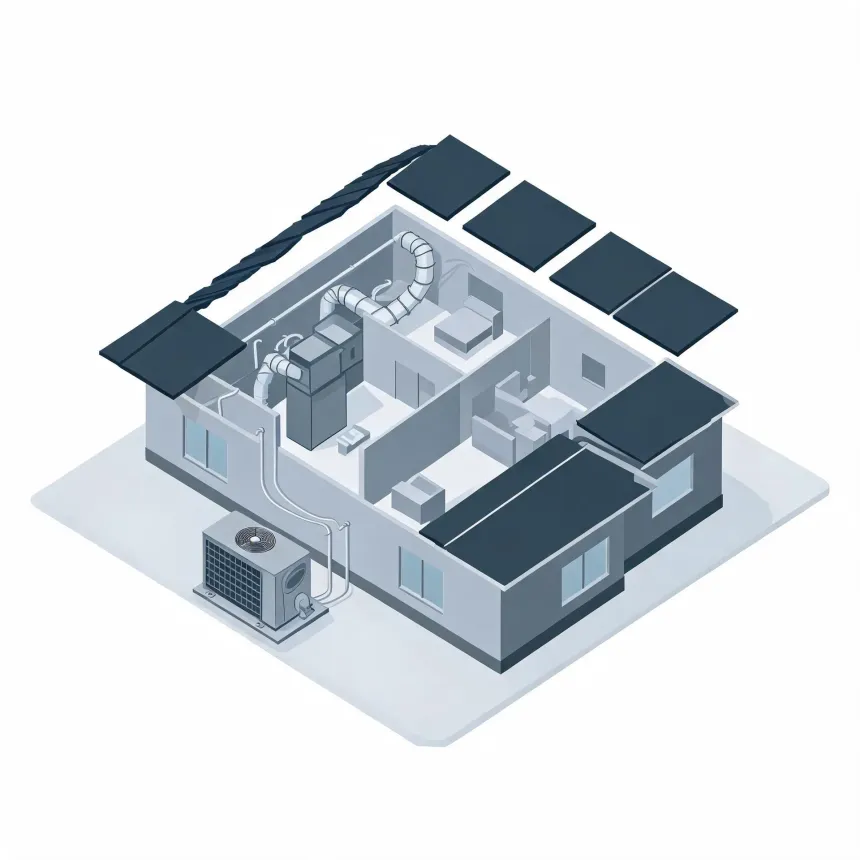
Isometric grayscale illustration of a cutaway single-story house showing interior rooms, ductwork and an air handler, an exterior condenser unit connected by lines, and dark solar panels on the roof.
Your system heats November through March and cools April through October.

NOAA nClimDiv, 1991–2020 normals

Half the homes in St. Tammany Parish were built in 1995 or later.

A heat pump that came with a newer house still has years in it, and that favors repair over replacement.

November is when a weak heat pump quits on you

Cooling runs April through October
Heat runs November through March
Power costs 11.73 cents a kWh statewide

A bent fin or a cracked fan blade will not always stop a heat pump from running. It just makes the unit work harder to move the same air, and that shows up later as a system that runs longer or a coil that ices up for no clear reason. A technician can check the coil, the fan blade, and the refrigerant charge in one visit and tell you whether storm damage is behind what you're seeing now. Worth asking for that check if you can't remember the last time anyone looked at the outdoor unit after a bad storm.

Get the heat pump looked at, not replaced

If your heat pump came with the house, there's a good chance it's not as old as you think. A technician can check it out and tell you what's actually wrong, and in most of these cases that means a repair, not a new system.

Find a contractor
A dark gray heat pump unit mounted on a concrete pad next to a house with gray siding and a stone veneer wall.

What you can rule out before the truck shows up

Before anyone comes out, there are a few things worth checking yourself. Look at the thermostat first. Make sure it's set to heat and the temperature is actually above room temperature, not just sitting where it always sits. Check the breaker panel for a tripped breaker on either the indoor or outdoor unit. If the outdoor fan isn't spinning, cut power at the disconnect and look for ice on the coil or anything blocking the fan blade, a branch, a buildup of leaves, anything caught in the cage around it. Check the air filter. A filter clogged with dust chokes airflow and can cause the coil to ice over even when nothing else is wrong. Walk around the outdoor unit and see if it's sitting level, and clear any grass or mulch built up against the sides. If the system is running but the air coming out doesn't feel warm, that's not something to chase yourself. It usually means the reversing valve isn't switching the system into heat mode, or the refrigerant charge is low, and both need a gauge set and some training to sort out safely.

Short cycling wears parts out faster

A heat pump that shuts off a couple minutes after starting is struggling to satisfy the thermostat, or a safety switch is cutting it short. Every start draws a surge through the compressor, so a unit doing this all day is aging faster than one that runs a normal cycle and shuts off on its own.
Noise usually means something is loose or failing

A grinding or squealing sound points to a motor bearing going bad. A clanking points to something loose in the fan or compressor. These don't fix themselves, and running the unit while you wait can turn a motor replacement into a compressor replacement.

Most heat pump failures trace back to a handful of parts, and they fail for ordinary reasons. The capacitor that kicks the compressor and fan motors on weakens over years of starts and stops, and when it goes, the unit hums but won't start, or the fan won't spin. The reversing valve, the part that switches the system between heat and cool, can stick in one position after enough cycles, so you get blowing air that's the wrong temperature. Refrigerant doesn't get used up, so if the charge is low, it's leaking out somewhere, usually at a fitting or a worn coil, and that loss drags down heating capacity and can ice the coil over. Contactors pit and burn from years of making and breaking that same electrical connection, and a bad one leaves the unit dead or stuttering. None of this means the system is done. Most of these are single-part repairs, not reasons to replace the whole unit.

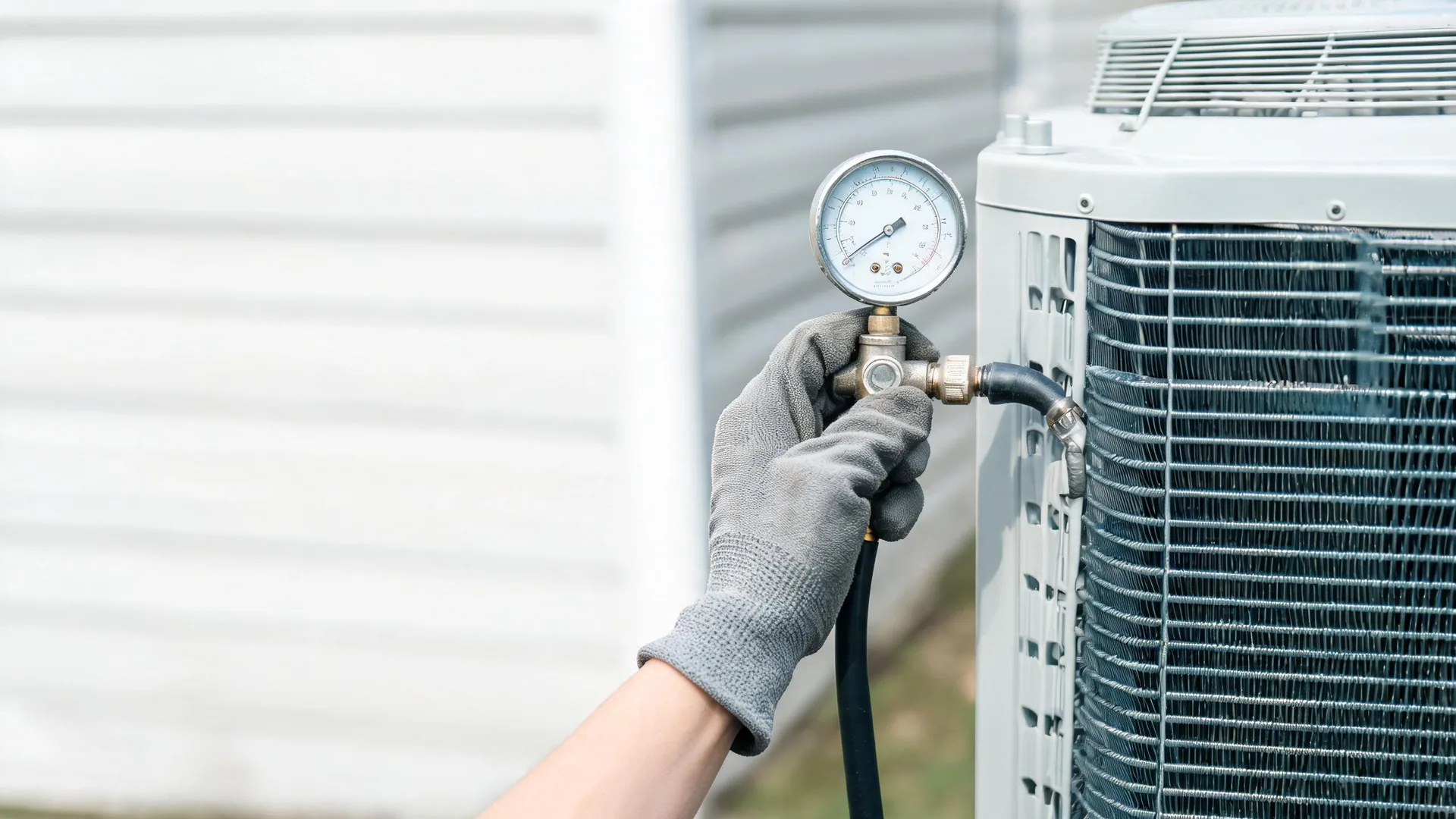
A diagnostic visit starts before the panels come off. A technician checks the thermostat settings, then watches the unit run a cycle, indoor and outdoor, listening for the point where something changes. Gauges go on the refrigerant lines to check the charge, since too little or too much both cause real problems. Electrical readings on the capacitor and contactor show whether they're holding up or starting to fail. The coil gets a visual check for ice, dirt, or bent fins, and the fan blade gets checked for cracks or wobble. All of that points to a part, not a guess. A heat pump has a limited number of ways to fail, and a trained eye can usually narrow it down in one visit without replacing anything that still works.