A illuminated white antebellum-style house with a wraparound porch, white columns, and Spanish-moss-draped oak trees, photographed at dusk.

Heat Pump Repair in Lake Charles, LA

Tell us about the job

Takes about a minute. No obligation.

RepairHeat PumpCalcasieu Parish, LA
Step 1 of 2

What ZIP code is the job in?

The age of the compressor decides more than the age of the system

A heat pump can run fine on an old air handler but struggle once the compressor itself is wearing out. Repairs to the reversing valve, the fan motor or a run capacitor are usually worth doing no matter how old the unit is. Once the compressor is failing, replacing just that part often costs close to replacing the outdoor unit, since the compressor is the most expensive part in it.

A unit that's been repeatedly repaired is telling you something

One repair means little on its own. A heat pump that needs a service call every season, for different reasons each time, is wearing out across the board rather than failing in one spot. At that point another repair might fix the immediate problem but won't stop the next one from showing up a few months later.

5 months
November through March, your system heats
7 months
April through October, it cools
44°F
the average winter night it heats against
91°F
the average summer afternoon it cools against
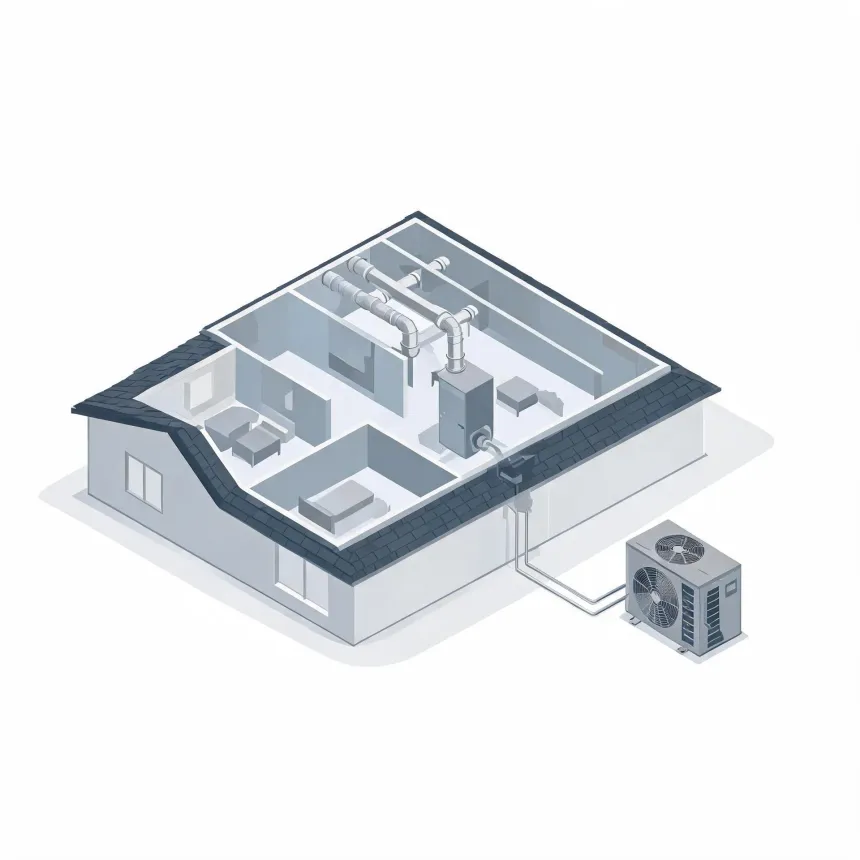
Isometric cutaway illustration of a single-story house showing interior rooms with ductwork, a furnace or air handler, and refrigerant lines running outside to a condenser unit on a pad.
Your system heats November through March and cools April through October.

NOAA nClimDiv, 1991–2020 normals

Heat pumps here switch over to cooling in April and back to heat in November.

A weak compressor or a low charge tends to show up in the first cold snap or the first hot stretch, right when the system first leans on it.

Half the homes in Calcasieu Parish were built in 1989 or later, so a lot of heat pumps here are still within their working life

Half the homes here were built by 1989
Power costs 11.73 cents a kWh statewide
Climate zone 2A

Get it looked at early

Problems tend to show up in the first weeks of the season, when the load hits a part that was already weak.

Find a contractor
A gray heat pump outdoor unit mounted on a concrete pad next to a residential house with lap siding and stone accents.

What to check before the service call

Before anyone comes out, check the thermostat first. Make sure it's set to heat or cool as needed and the batteries aren't dead. Go to the air handler and look at the filter. A filter clogged with dust chokes airflow and can shut the whole system down as a safety measure. Walk outside to the unit and look at the outdoor coil. If it's covered in ice, even in warm weather, that points to low refrigerant or a failing component, and running the system more will only make it worse. Clear away any leaves, grass clippings or debris piled against the outdoor unit, since it needs open airflow on all sides. Check that the outdoor fan is actually spinning when the system is running. If it's silent or the unit is making a humming noise without the fan turning, that's worth telling the tech before they arrive. Last, check any breaker or disconnect box near the outdoor unit to see if it's tripped. None of this fixes a bad compressor or a refrigerant leak, but it rules out the simple stuff first.

Warm air in the winter, weak cold air in the summer

A heat pump that blows air you can feel is lukewarm instead of hot, or cool instead of cold, is usually losing refrigerant or struggling to reverse between heating and cooling modes. It may still run for a while like this, but the reversing valve or the charge needs attention before the system stops keeping up at all.

Short cycling or a system that won't stop running

A heat pump that shuts off a few minutes after starting is usually overheating, icing up or sensing a problem through its safety controls. One that runs constantly without hitting the set temperature is losing the fight against a bad component, a duct problem or a refrigerant leak. Either pattern means the system is struggling, not pacing itself.

A heat pump that's icing up or low on charge and keeps running is working harder for less heat or cooling, not more. The compressor pulls amperage trying to meet a load it can't reach, and that strain is what burns it out early. Ice on the outdoor coil blocks the airflow the system needs to defrost itself, so the ice builds further and the coil stays blocked. A reversing valve stuck partway doesn't fix itself by cycling more. It's better to shut the system off and call for service than to let it run and hope it catches up, since the parts most likely to fail are the ones already under the most strain.

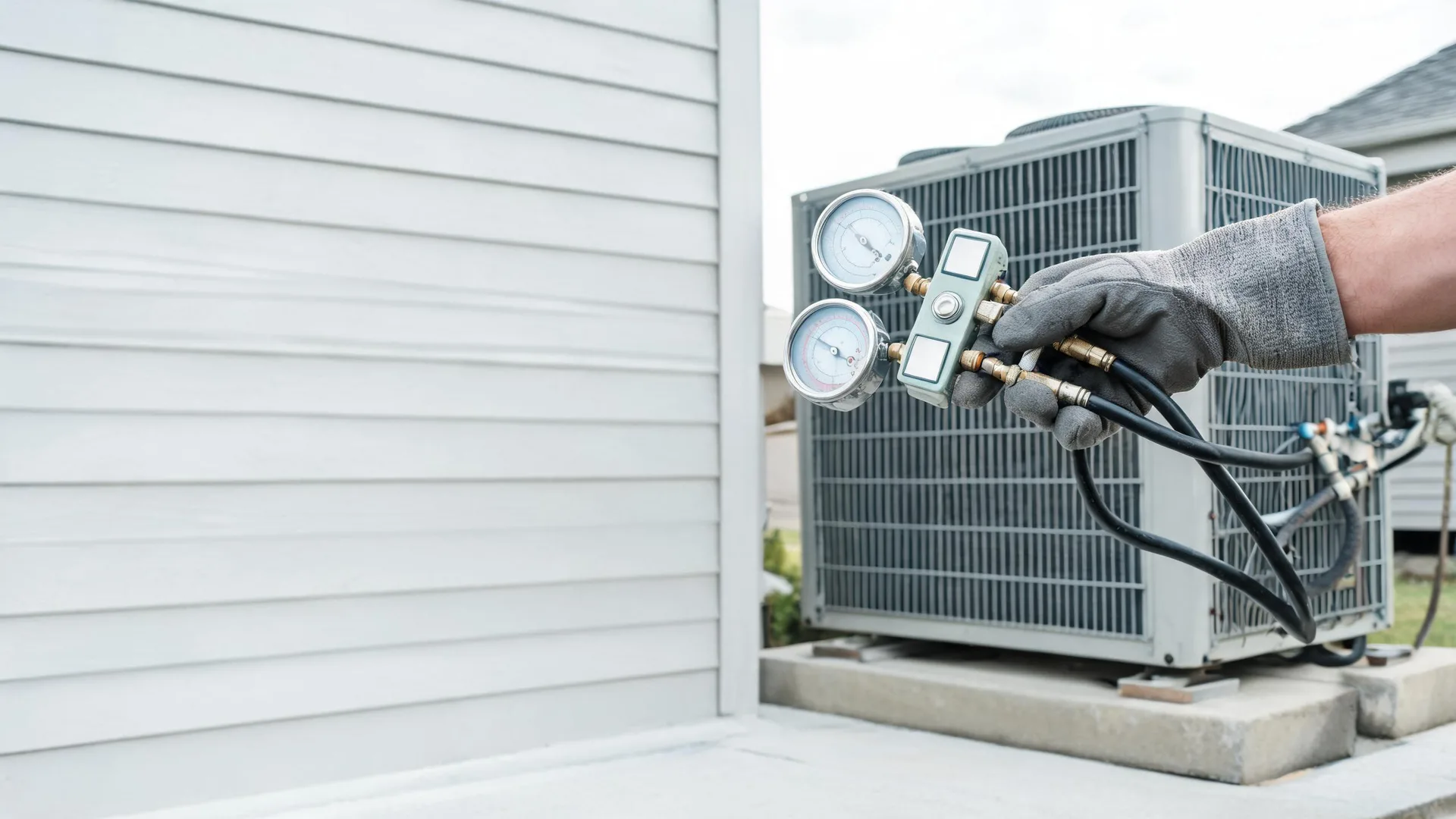
A diagnostic visit starts with the tech running the system in whatever mode is failing. They check static pressure. They check the temperature split across the coil. They check amp draw on the compressor and fan motors. Gauges go on to read refrigerant pressure on both sides, since that shows whether the charge is right and whether the reversing valve is actually moving refrigerant where it should. If the coil was iced over, that has to melt off first, and that can hold up the rest of the visit. A bad capacitor or a failed contactor shows up fast on a meter. A slow leak or a valve sticking partway takes longer to confirm. The tech should be able to point to what they found and explain why it matches what you've been seeing, not just name a part they want to replace.