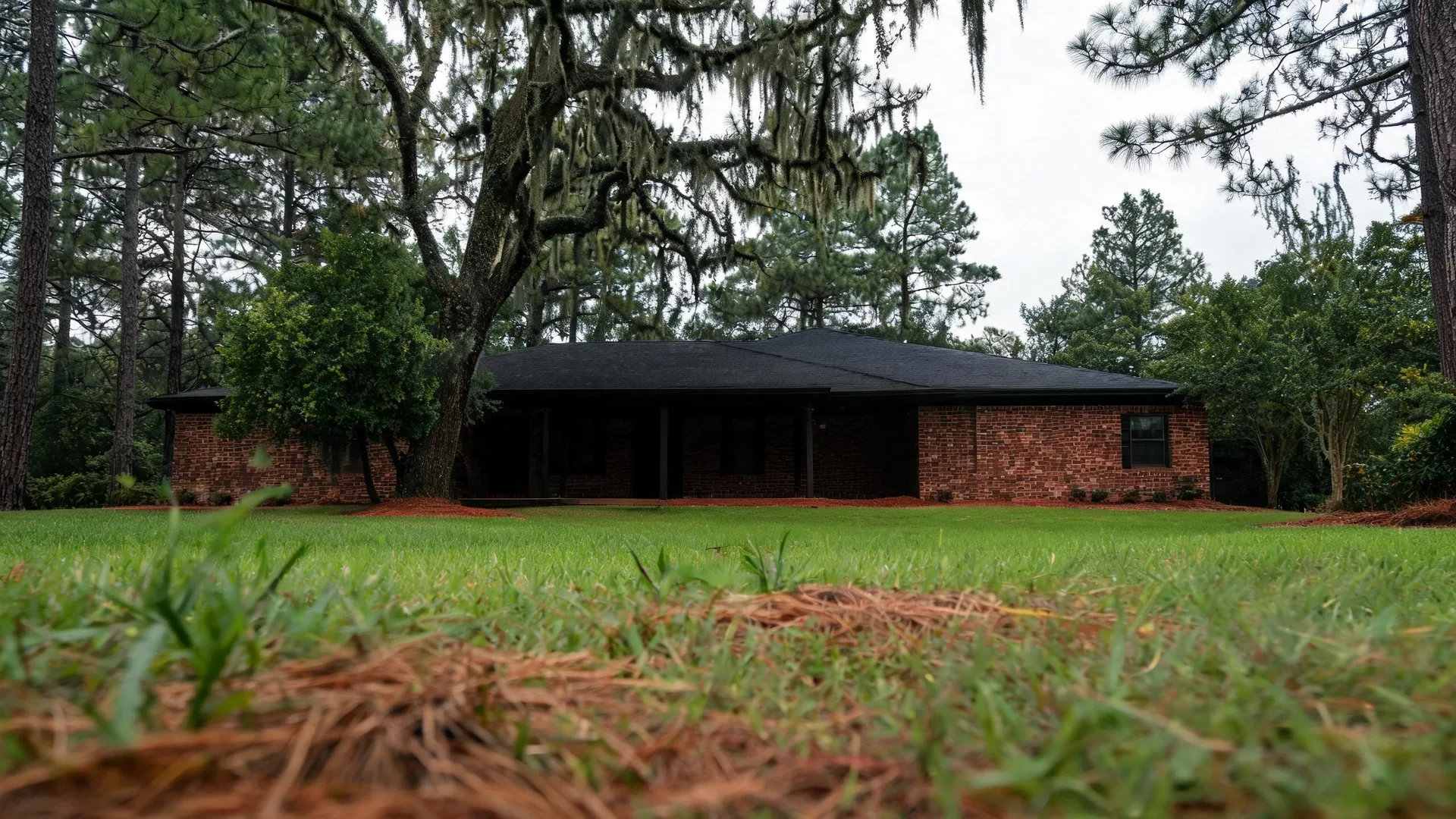
Single-story brick house with a dark shingled roof set behind a lawn and tall pine and moss-draped trees, photographed low to the ground with pine straw in the foreground.

Heat Pump Repair in Baton Rouge, LA

Tell us about the job

Takes about a minute. No obligation.

RepairHeat PumpEast Baton Rouge Parish, LA
Step 1 of 2

What ZIP code is the job in?

How old the system is matters less than how it's aged

A heat pump that's been serviced regularly and kept clean can be worth repairing well into its later years. One that's been neglected, with a coil caked in dirt or refrigerant levels never checked, tends to fail in one place and then another. If this is the second or third repair in a short stretch, that pattern says more than the age on the nameplate.


The compressor changes the math

Most parts on a heat pump, a capacitor, a contactor, a fan motor, are straightforward to replace and worth fixing on their own. The compressor is different. It sits at the center of the system, and when it fails, the cost of replacing it often runs close to a new unit. If a technician traces the problem there, that's the point to ask seriously about replacement instead of repair.

5 months
November through March, your system heats
7 months
April through October, it cools
42°F
the average winter night it heats against
91°F
the average summer afternoon it cools against
Isometric line illustration of a cutaway house showing interior rooms with furniture, ceiling ductwork under a dark shingled roof, and an outdoor condenser unit connected by lines on the right.
Your system heats November through March and cools April through October.

NOAA nClimDiv, 1991–2020 normals

Heat here starts up in November, after the heat pump has sat idle since March.

A weak part that made it through last winter can give out in the first cold snap.

East Baton Rouge Parish saw 100 damaging wind events between 2015 and 2024, and hail on top of that. The outdoor unit sits outside through all of it, with no wall between it and the weather. Hail dents fins and bends them shut, and wind-blown debris can crack a fan blade or dent the cabinet. A heat pump can keep running after that kind of hit, so the damage doesn't always show up as a breakdown right away. If you know a storm came through hard, it's worth having the unit checked, not just restarted. Power cuts matter too. A heat pump that cycles off hard in a surge can come back with a tripped breaker or a failed capacitor.

A newer home usually means a system with life left to repair

Half the homes in East Baton Rouge Parish were built in 1984 or later. If that includes yours, the heat pump itself may be newer than you'd guess, especially if it's been replaced once already since the house was built. A system with that much life left is usually worth repairing rather than swapping out.

Find a contractor
A man in a dark long-sleeved shirt and brown pants walks up concrete steps toward a dark blue front door, carrying a canvas tool bag with tools in it, beside a potted shrub.
A gray heat pump condenser unit mounted on a concrete pad against the gray lap-siding exterior wall of a house.

Running both directions wears different parts than you'd expect

A heat pump runs in both directions, and that's what wears it out faster than a furnace or an AC alone. The reversing valve is the part that's unique to this job, and it takes a beating every time the system switches between heating and cooling. Over years of switching back and forth, that valve can stick or fail to seat fully, and you'll notice it as weak heat or weak cooling rather than no heat at all. The outdoor coil works hard too, since it's doing double duty as condenser and evaporator depending on the season, and it collects dirt and debris either way. Low refrigerant shows up as ice building up on the outdoor unit, and it's rarely a one-time event. Refrigerant doesn't get used up on its own, so if the level is low, there's a leak somewhere in the lines or the coil, and topping it off without finding the leak just means doing it again later. The defrost board and sensors fail too, and when they do, the unit can't tell when to clear frost off the outdoor coil, so ice builds up and chokes airflow.

What you'll actually notice first

Air coming out of the vents that's warm but not hot, or a room that never quite catches up to the thermostat. The outdoor unit running long stretches without shutting off, or short-cycling on and off. A hissing or buzzing from the outdoor unit, or ice on it in weather that shouldn't cause ice. Any of these is worth a call before the system quits outright.

The difference between a nuisance and a warning

A breaker that trips once might be a fluke. One that keeps tripping is the system telling you a part is failing, usually the compressor or a motor drawing too much current. Same with a burning smell or a breaker that won't reset at all. Those aren't wait and see signs. Shut the system off and get it looked at before it tries to run on a part that's already going.

Before you call, there's a few things worth looking at yourself. Check the thermostat first. Make sure it's set to heat, not cool, and the temperature is actually set above room temperature. A dead thermostat battery can shut the whole system down and look like a much bigger problem. Next, look at the outdoor unit. If it's packed with leaves, grass clippings or ice, that alone can choke it enough to stop working right, and clearing debris away is safe to do yourself. Check the air filter too. A filter clogged with dust restricts airflow on both the heating and cooling side, and a heat pump will struggle or trip off trying to push air through it. Last, find the breaker. If it's tripped, reset it once. If it trips again right away, stop there. That's not a job for you, that's a part failing, and running it again can make the failure worse.

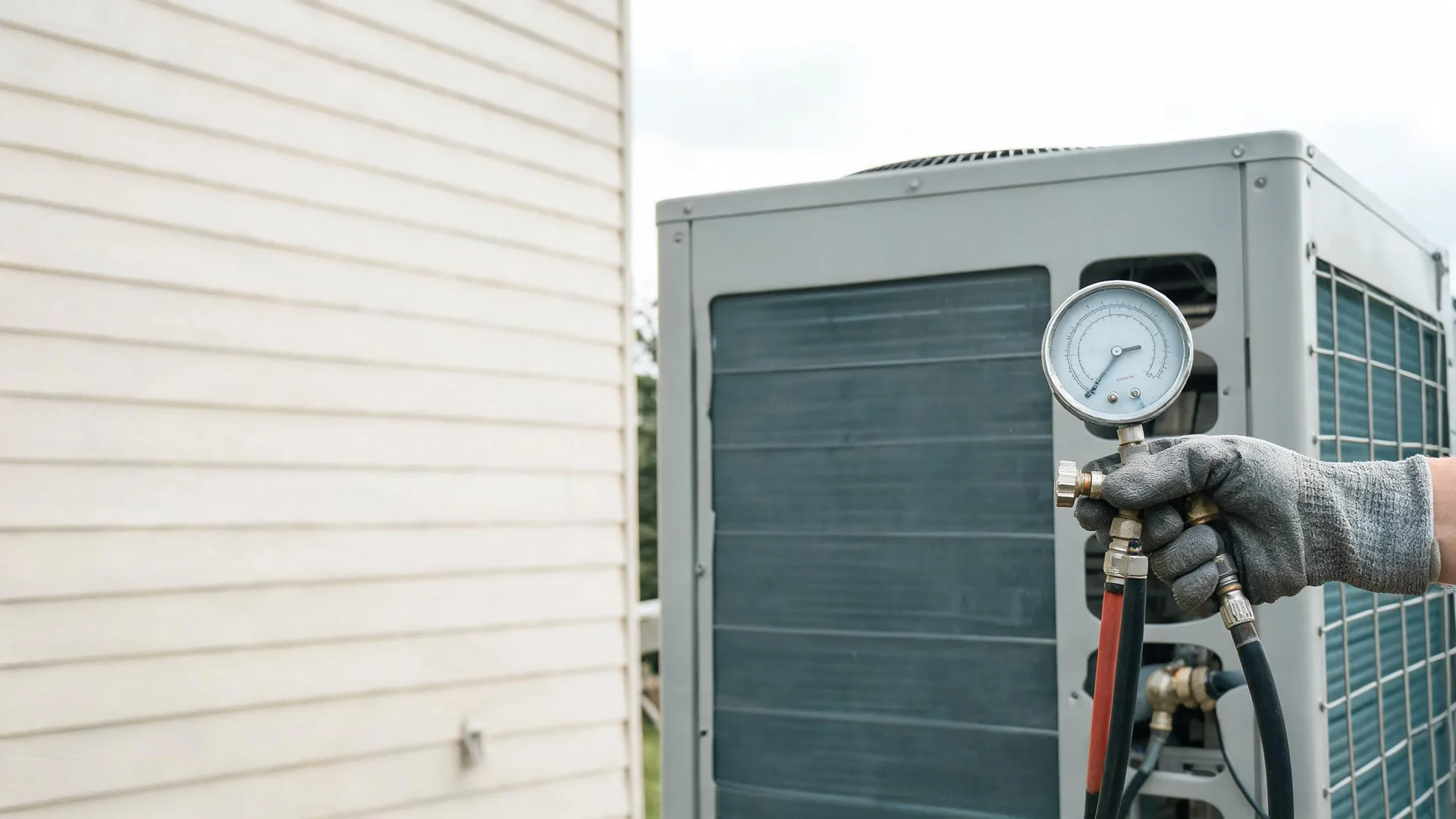
A diagnostic visit starts outside, at the unit itself. A technician checks the refrigerant pressures, the amp draw on the compressor and fan motor, and whether the reversing valve is actually switching when it's told to. Inside, they'll check airflow at the vents and look at the coil for ice or dirt. Electrical readings catch a lot that you can't see or hear, a capacitor can test weak before it fails outright, and a contactor can be pitted enough to cause trouble without having failed yet. Most of this is done with the system running, since a part that reads fine sitting still can act up under load. By the end, the goal is to point at one part and say that's what's causing it, not just that something in the system is off.