Two illuminated white Southern-style houses with wraparound porches and staircases, framed by a Spanish moss-draped tree on a quiet street at night.

Heat Pump Repair in Bogalusa, LA

Tell us about the job

Takes about a minute. No obligation.

RepairHeat PumpWashington Parish, LA
Step 1 of 2

What ZIP code is the job in?

Weather here is ordinary for a heat pump

Washington Parish logged 38 severe weather events between 2015 and 2024, mostly wind, with a handful of hail, tornado and tropical storm days mixed in. That is not a heavy load for a heat pump. It points to normal wear rather than storm damage.


So look for the common failure first

A heat pump that trips off, blows warm air, or short cycles is usually down to a worn capacitor, a low refrigerant charge, or a dirty coil. Those are the things a repair call should check before anything else gets blamed.

5 months
November through March, your system heats
6 months
May through October, it cools
41°F
the average winter night it heats against
91°F
the average summer afternoon it cools against
Isometric cutaway illustration of a single-story house showing interior ductwork, an indoor air handler, and an outdoor condenser unit connected by lines along the exterior wall.
Your system heats November through March and cools May through October.

NOAA nClimDiv, 1991–2020 normals

A reversing valve that sticks is one of the most common reasons a heat pump gets stuck in one mode.

If yours blows cold air when it should be heating, that valve is the first thing worth checking.

A heat pump in Washington Parish works through November to March for heat and May to October for cooling, which leaves April and October as the two changeover months. That is when a weak capacitor or a reversing valve that has been sticking all along finally gets caught, because the system is asked to do something it has not done in months. If your heat pump is struggling right now, check which changeover you are closest to. A unit that ran fine on light duty can still fail in the first real cold snap or the first real heat, not because anything new broke, but because the part that was already going finally got tested.

Get the usual fix

Nothing about this area is especially hard on it. It's most likely the usual problem with the usual fix.

Find a contractor
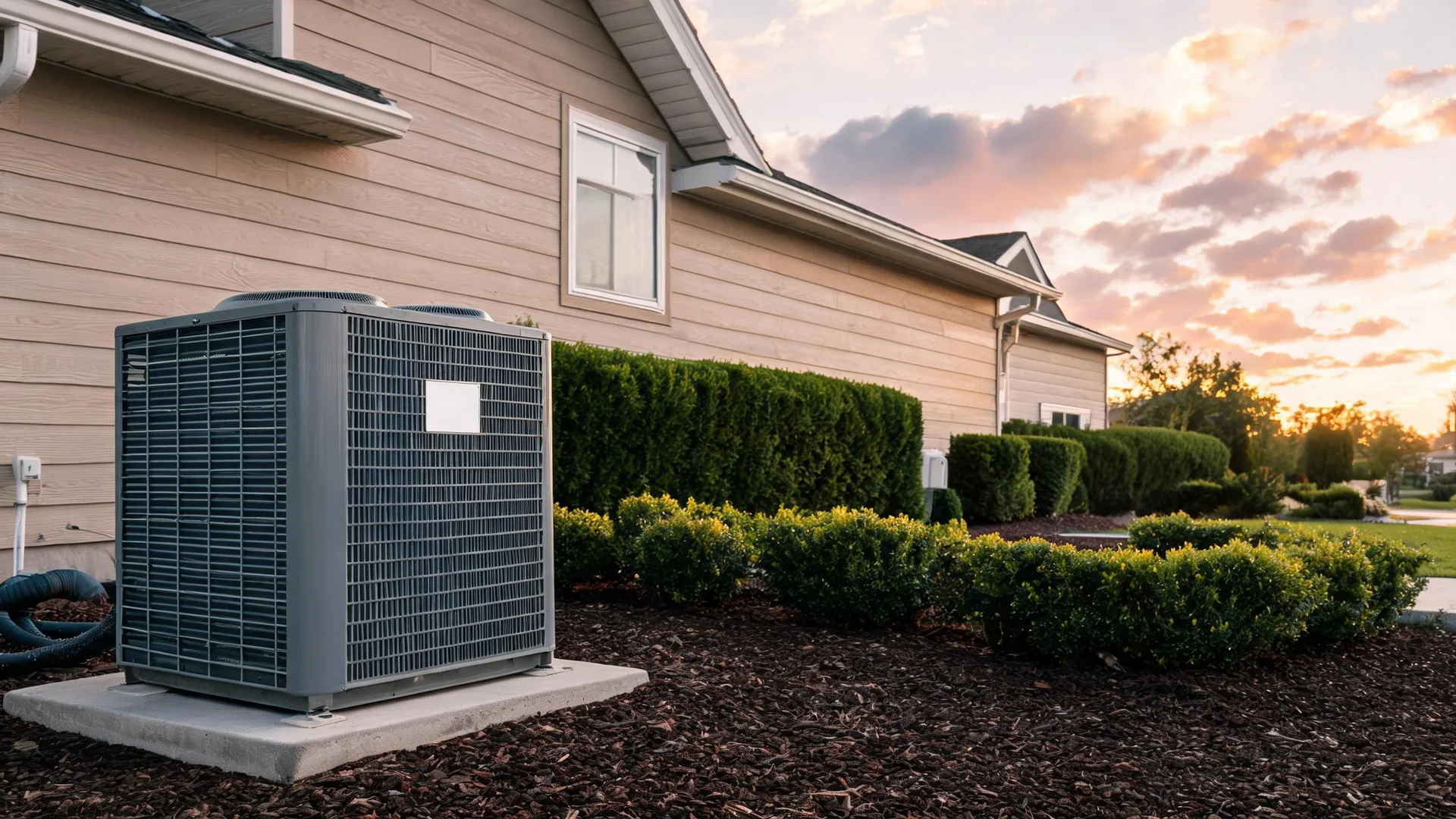
A gray air-source heat pump mounted on a concrete pad next to a house with gray vinyl siding, surrounded by gravel and flanked by green shrubs and white hydrangea flowers.

Running it longer does not buy you time

A refrigerant leak is the clearest case. Run a heat pump low on charge and the compressor works harder to move heat that is not there to move. It draws more current, runs hotter, and the oil circulating with the refrigerant stops lubricating the way it should. Keep that up long enough and you move from a repair that tops off the charge and seals a fitting to a compressor that has to be replaced. A failing capacitor follows the same pattern. It starts by making the compressor or the outdoor fan hesitate on startup. Let it go and that hard start puts a strain on the motor windings every single cycle until something gives for good. A coil caked with dirt chokes the airflow a heat pump depends on, so the system runs longer to do the same job and the extra runtime wears on everything else in the circuit. None of these start as emergencies. They start as a sound or a hesitation that is easy to ignore because the system still comes on. The ones that stand still, like a stuck reversing valve, do not get worse by running. The ones tied to airflow, pressure, or electrical load almost always do.

What you can check yourself

Look at the outdoor unit first. Leaves, grass clippings or ice built up around the coil will choke it, and clearing that away is safe to do. Check that the filter inside is not packed with dust, since a blocked filter starves the system the same way a dirty outdoor coil does. Check the thermostat batteries and the breaker for both the indoor and outdoor unit before assuming the worst. Those are the limits of what is safe to check yourself.

What to leave alone

Do not open the outdoor unit's cabinet or touch anything inside it. Refrigerant lines, capacitors and the compressor itself can hold a charge or carry voltage even with the power off. If the system is short cycling, blowing the wrong temperature of air, or making a new sound, that is a diagnosis for someone with gauges and meters, not a guess made from the outside of the cabinet.

A heat pump usually tells you something is wrong before it quits outright. Warm air coming out of the vents when it should be hot, or a system that turns on and off every few minutes instead of running a normal cycle, both point to trouble rather than a fluke. Ice forming on the outdoor coil when it is not supposed to be there is another one, and so is a unit that runs constantly but never quite gets the house to temperature. Listen for it too. A hum with no startup, a click that repeats without the compressor catching, or a new rattle from the outdoor unit are all worth paying attention to. None of these mean you have to guess what is wrong. They just mean it is time to get someone out before the part that is struggling now fails completely.

A diagnostic visit starts outside, with gauges on the service ports to check refrigerant pressure against what the system is supposed to be running. Low pressure points toward a leak. A good tech wants to find where it is losing charge rather than just filling it back up. From there it is a meter on the electrical side. That means testing the capacitor under load, checking the contactor, and looking at amp draw on the compressor and both fans to see if something is pulling harder than it should. The reversing valve gets checked by watching whether it actually switches when commanded, since a valve stuck partway causes the same symptoms as a bad sensor. Airflow gets checked last, because a choked filter or a dirty coil can mimic a refrigerant problem without being one. Going through it in that order rules things out instead of guessing, so the fix matches what is actually wrong.