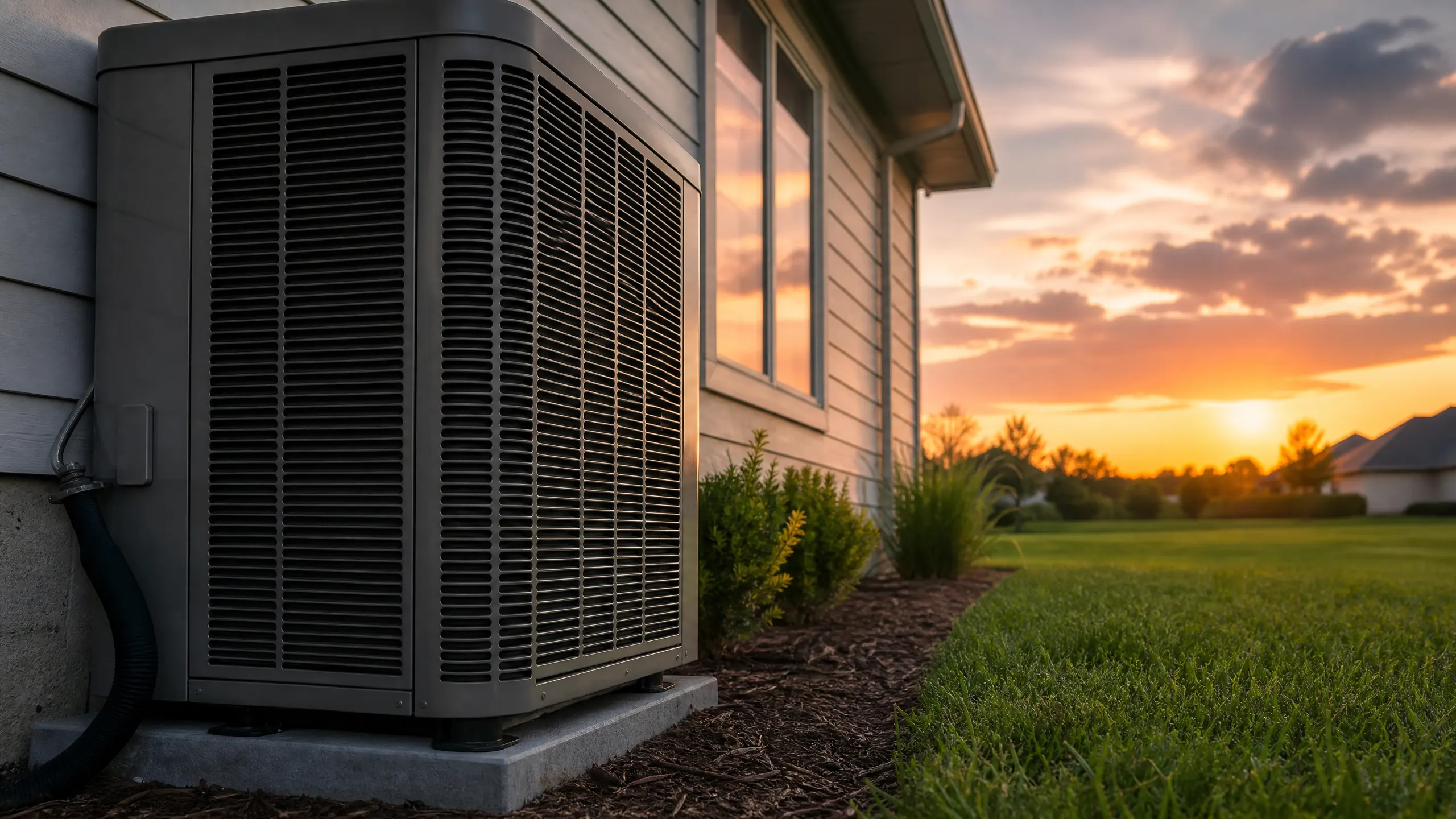





An outdoor air conditioning condenser unit mounted on a concrete pad beside a house at sunset.

Heat Pump Repair in Ville Platte, LA

Tell us about the job

Takes about a minute. No obligation.

RepairHeat PumpEvangeline Parish, LA
Step 1 of 2

What ZIP code is the job in?

April is when cooling starts here, and a heat pump that limps through March often quits in the first warm stretch. The jump in load finds whatever was already weak, a low charge or a contactor on its way out. Same thing in reverse come November, right after a run of five months of heat starting that month. If yours is struggling now, get it looked at before the season fully turns rather than after it fails on the first hot or cold night.

5 months
November through March, your system heats
7 months
April through October, it cools
42°F
the average winter night it heats against
92°F
the average summer afternoon it cools against
Isometric cutaway illustration of a two-room house showing an indoor air handler with ductwork connected by lines to an outdoor condenser unit on a pad.
Your system heats November through March and cools April through October.

NOAA nClimDiv, 1991–2020 normals

A diagnostic starts with the thermostat call and works back to the unit, not the other way around.

Checking the simple stuff first rules out a bad part before anyone decides it needs replacing.

A heat pump here fails for the same reasons it fails anywhere else

Half the homes here were built by 1980
Power costs 11.73 cents a kWh statewide
Climate zone 2A

Evangeline Parish logged 37 severe weather events between 2015 and 2024, mostly wind and a handful of tornadoes. That's not unusual for this part of Louisiana, and it doesn't point to a different failure than you'd see anywhere else. What it does mean is that your heat pump sometimes loses power outright, not just runs hard. Most units come back on their own once power is restored, so if yours stays dead after an outage, that points to something that failed on the way down rather than a unit that simply needs to be told to start again.

Get it looked at early

Problems tend to show up in the first weeks of the season, when the load hits a part that was already weak.

Find a contractor
A gray air-source heat pump mounted on a concrete pad next to a house with gray vinyl siding, surrounded by gravel and flanked by green shrubs and white hydrangea flowers.

What to listen for and look at before it quits

Watch the air coming out of the vents. If it's not as warm or as cool as it used to be, the system is running longer to make up for it. That extra runtime is what turns a small problem into a breakdown. Short-cycling is another one to catch early. The unit kicks on, runs a few minutes, shuts off, then starts again. That's hard on the compressor every time it happens. Ice on the outdoor unit when it shouldn't be there, especially if it's not melting off during the defrost cycle, usually means refrigerant is low or the reversing valve isn't doing its job. A clicking sound at startup that doesn't turn into a running hum points to a contactor or capacitor failing to carry the load. None of these fix themselves, and all of them get harder on the system the longer it keeps running that way.

A weak part carries the load until it can't

A low charge makes the compressor work harder on every cycle just to move the same amount of heat it used to move with ease. A failing capacitor makes the motor strain on every start instead of spinning up clean. The machine doesn't shut itself off over this. It keeps compensating, and that extra strain is what turns a part that was failing slowly into one that fails all at once.
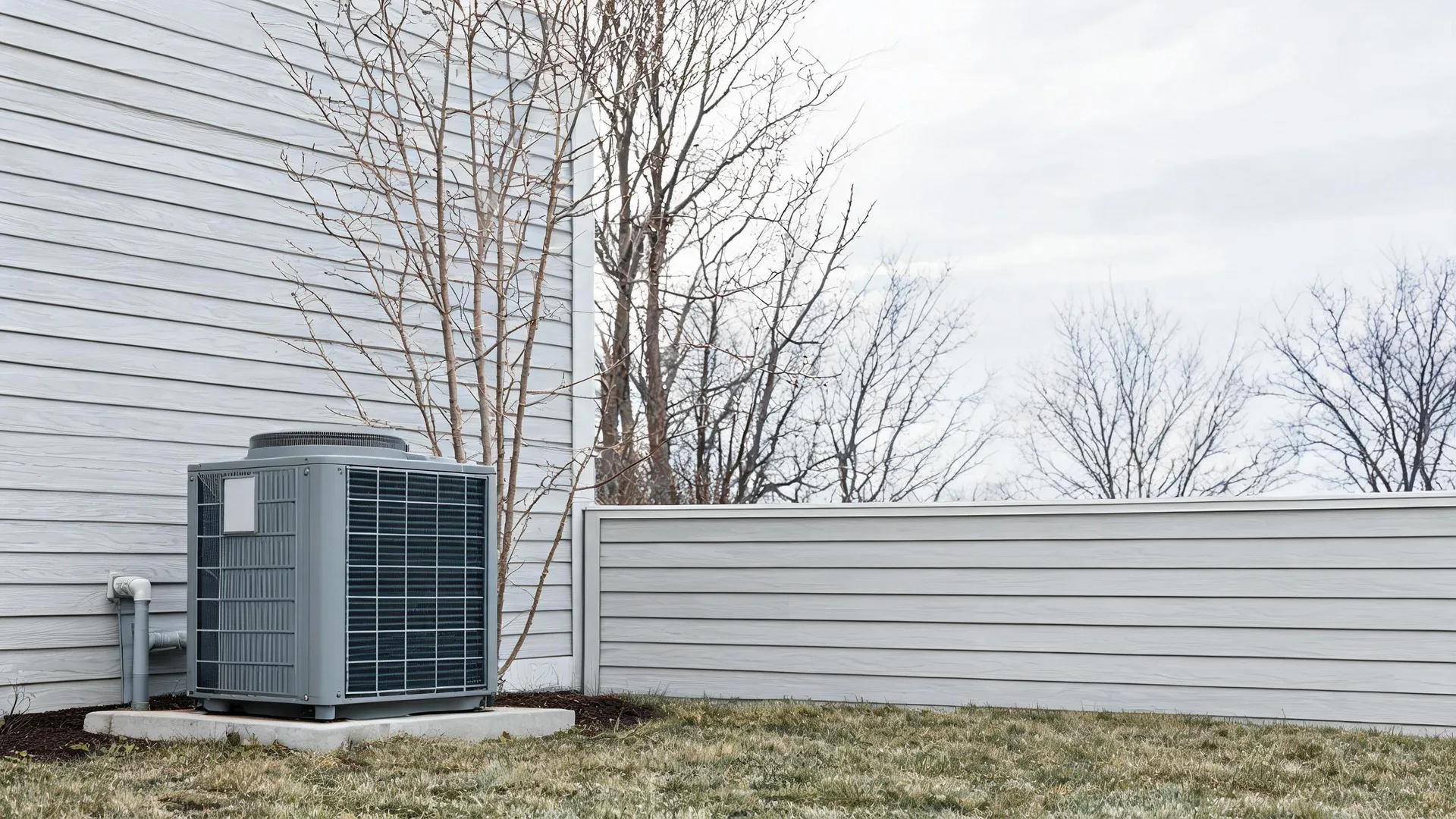
Ice on the coil feeds on itself

Ice on the outdoor coil blocks airflow, and a unit running iced over pulls liquid refrigerant back into the compressor instead of vapor. The compressor isn't built to handle liquid, and that's what scores a piston or bends a valve that would have lasted years otherwise. Every cycle it runs iced over makes the next cycle worse, which is why a defrost cycle that isn't working right needs attention before the ice becomes the whole problem.

Before anyone comes out, check a few things yourself. Look at the outdoor unit and clear away leaves, grass clippings or anything blocking the sides. Check the air filter, since one that's clogged chokes airflow and makes the whole system work harder than it should. Walk around inside and make sure no vents are closed or blocked by furniture. Check the thermostat batteries if it uses them, and confirm it's set to the right mode and a temperature that should actually call for heating or cooling. Look at the breaker panel too. A tripped breaker will stop the outdoor unit cold while the indoor fan still runs, which can look like a bigger problem than it is. None of this fixes a bad capacitor or a low charge, but it rules out the easy stuff first.

A reversing valve is one part most other systems don't have, and it's a common point of failure because it works every cycle, all year, switching direction between heating and cooling. When it sticks, the unit keeps running but stops doing what the thermostat is asking for. The compressor itself usually dies from something else wearing it down first, not from age on its own. Bearings wear, a start capacitor weakens, or refrigerant has been low for a while, and the compressor absorbs that strain until it finally seizes or burns out internally. Outdoor fan motors fail from the same exposure that makes them necessary in the first place, sitting outside through wind and debris, and a motor that's starting to go will often run slower or hotter before it quits for good. None of these parts fail without a reason behind them.