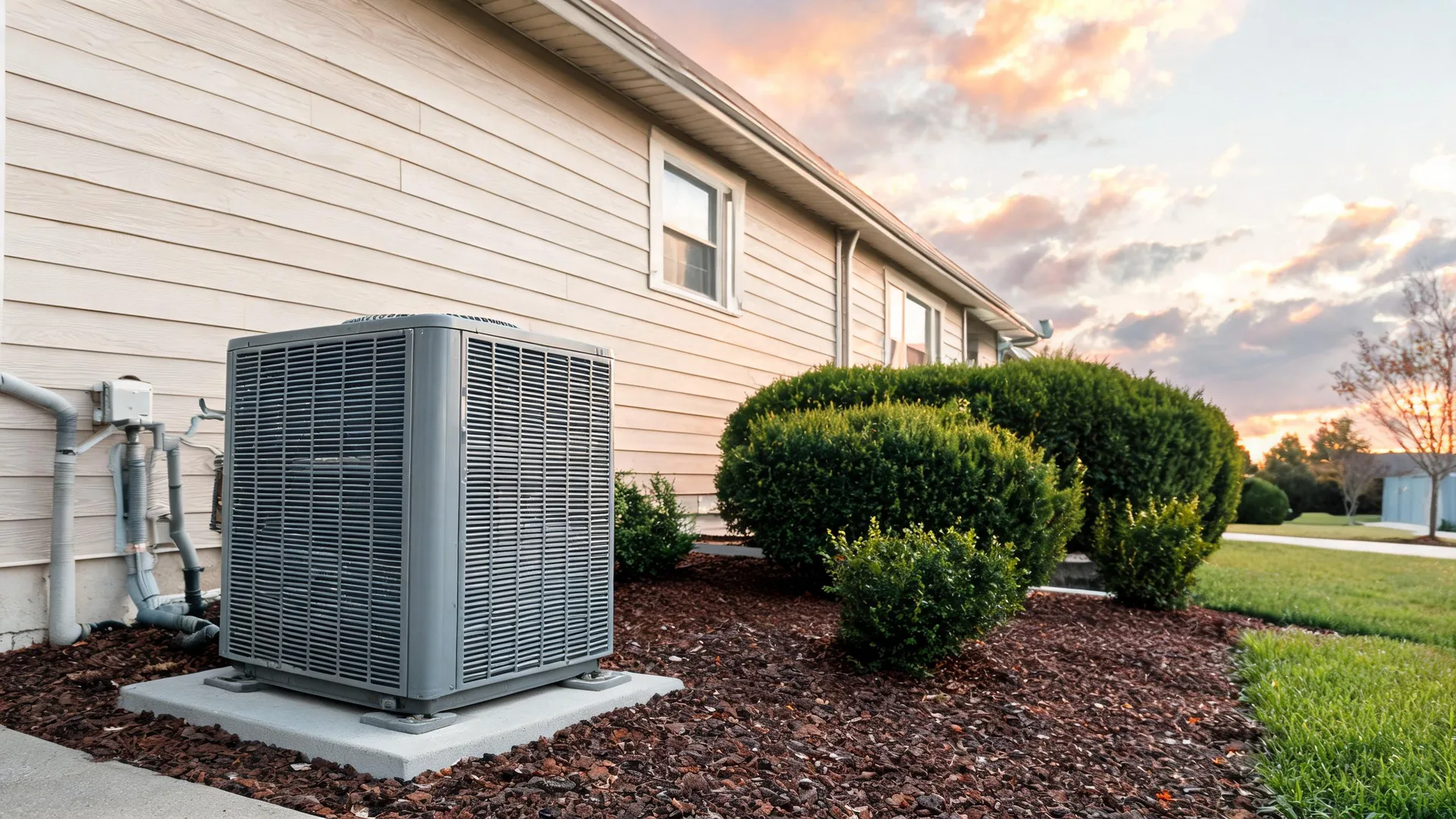
An outdoor heat pump unit mounted on a concrete pad beside a house with beige siding and a landscaped garden bed.

Heat Pump Repair in Mansfield, LA

Tell us about the job

Takes about a minute. No obligation.

RepairHeat PumpDe Soto Parish, LA
Step 1 of 2

What ZIP code is the job in?

What the repair history tells you

A heat pump that's needed a few different repairs over the years, for a few different reasons, is wearing out in general rather than suffering one bad part. Patching the latest issue on a system like that tends to just buy time until the next thing fails. A unit that's been reliable and is now facing its first real problem is a different case. That's usually worth fixing outright.

What a compressor failure means

The compressor is what makes a heat pump a heat pump. It's sealed, expensive to replace on its own, and when it fails the honest answer is usually to replace the whole system rather than put a new compressor into an old one. If a contractor tells you the compressor is the problem, that conversation is going to turn into a replacement conversation fast.

5 months
November through March, your system heats
6 months
May through October, it cools
38°F
the average winter night it heats against
92°F
the average summer afternoon it cools against
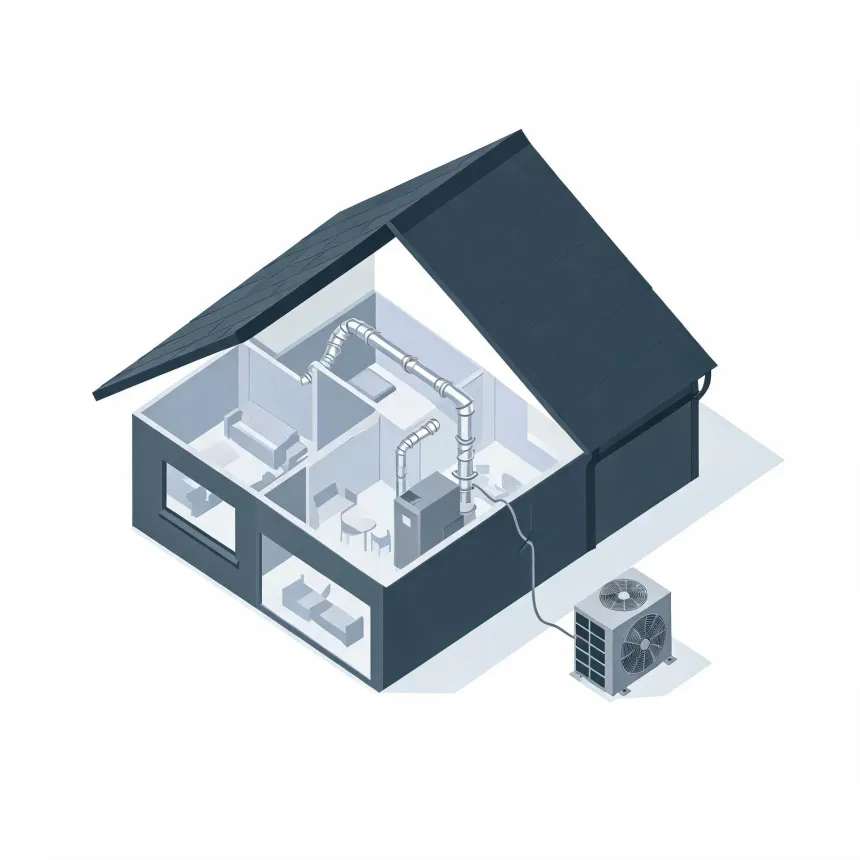
Isometric illustration of a cutaway house showing interior rooms with furniture, a furnace and ductwork, connected by a line to an outdoor condenser unit on the ground outside.
Your system heats November through March and cools May through October.

NOAA nClimDiv, 1991–2020 normals

Check the outdoor unit before you call anyone. Flip the breaker, wait a minute, and see if it starts.

If the outdoor fan won't turn or the unit stays dead after a reset, that's a repair call, not a breaker problem.

Mansfield heat pumps earn their keep in November, and that's when a weak one quits

Cooling runs May through October
Heat runs November through March
Power costs 11.73 cents a kWh statewide
Mansfield heat pumps get a routine problem, not a strange oneHalf the homes in De Soto Parish were built in 1990 or earlier, and that age doesn't change what's likely wrong with yours

De Soto Parish has logged 118 severe weather events over the past decade, and most of those were wind. That matters for a heat pump because the outdoor unit sits outside taking the hit, not tucked away in a closet. Hail has come through here too, and it dents coils and bends fan blades without always stopping the unit from running. If yours took a hit and kept working, it's still worth having someone look at the coil and the fan before the next storm finds the weak spot. A lot of Louisiana households lost power for a day or more last year, so when the outage ends, check that the unit actually comes back on and isn't just sitting there waiting on a tripped breaker or a part the storm already damaged.

Get it looked at early

Problems tend to show up in the first weeks of the season, when the load hits a part that was already weak.

Find a contractor
A residential heat pump outdoor unit mounted on a concrete pad next to a house with gray vinyl siding.

It runs both ways, all year, and the wear shows before the failure does

A heat pump runs in both directions, all year. It never gets the long rest a furnace gets in summer or an AC gets in winter, and that nonstop duty wears on specific parts before it ever adds up to a full breakdown. Listen for a change in the sound the outdoor unit makes. A new rattle, a hum with the fan not turning, a clicking that repeats instead of settling into a start, all mean something is wearing out. Watch the outdoor coil too. Ice building up when the unit isn't in a defrost cycle, or frost that never clears, points to a problem with the reversing valve or the defrost control. Notice if one room runs warmer or colder than the rest, or if the system runs long stretches without ever shutting off. Air that feels only room temperature instead of warm, or barely moves at all, usually means the compressor or the airflow needs a look. Any of these is worth a call before the part fails outright.

The reversing valve is the part that's unique to this machine

A heat pump switches between heating and cooling by shifting a valve that routes refrigerant one way or the other. That valve is the one part a furnace or straight AC doesn't have, and it's a common failure point. When it sticks, the system gets stuck in one mode, blows the wrong temperature air, or hangs between cycles not doing much of anything.

Capacitors and contactors wear out from the work, not from age alone

The outdoor fan motor and the compressor both rely on a capacitor to start, and a contactor to switch power to them each cycle. Every start and stop puts a small amount of wear on these parts, and a heat pump cycles on and off far more over a year than a furnace or AC that only runs part of it. A failed capacitor shows up as a fan that hums but doesn't spin, or a compressor that tries to start and can't.

A heat pump that's struggling still moves heat, just worse, so it's easy to let it ride instead of calling someone. That's usually the wrong call. A compressor working against a low charge or a failing capacitor runs hotter and draws more current than it should, and that strain shortens its life every time it happens. A reversing valve that's starting to stick will get worse each time it's forced through a cycle, until it sticks for good in one position. Ice on the outdoor coil that isn't clearing on its own means the defrost cycle isn't doing its job, and running the system through more cycles like that just packs more ice on before anything melts off. None of these fix themselves by waiting. The part that's struggling now is doing the same job under worse conditions next week, and it's the kind of wear that ends in a part failing outright instead of one that gets fixed along the way.

A diagnostic visit starts outside at the unit itself, not with a clipboard. A tech checks refrigerant pressure, because a low charge shows up as weak heating or cooling long before it shows up as anything else. They'll test the capacitor and contactor, since those are the parts most likely to be the actual cause of a fan that hums or a compressor that won't start. They'll run the system in both directions if they can, because a reversing valve that sticks only shows itself when you ask it to switch modes. If there's ice on the outdoor coil, they'll want to see whether the defrost cycle kicks in on its own or needs help. Most of this gets answered by watching the unit run, not by guesswork.