A nighttime street scene featuring a row of lit white colonial-style houses with wrap-around porches, flanked by oak trees draped in Spanish moss.

Heat Pump Repair in Houma, LA

Tell us about the job

Takes about a minute. No obligation.

RepairHeat PumpTerrebonne Parish, LA
Step 1 of 2

What ZIP code is the job in?

Terrebonne Parish sees serious weather

53 severe weather events hit this parish between 2015 and 2024, including damaging wind, hail and tropical storms. A heat pump's outdoor unit sits outside through all of it, exposed to wind-blown debris and hail.


Power loss hits heating and cooling both

Close to half of Louisiana households went at least 24 hours without power in 2024. A heat pump needs power to run in either direction, so an outage means no heat and no cooling until it's back.

4 months
November through February, your system heats
7 months
April through October, it cools
48°F
the average winter night it heats against
90°F
the average summer afternoon it cools against
Isometric illustration of a cutaway single-family house showing interior ductwork and an air handler, with an outdoor condenser unit connected by lines along the exterior wall.
Your system heats November through February and cools April through October.

NOAA nClimDiv, 1991–2020 normals

Half the homes in Terrebonne Parish were built in 1983 or later.

A heat pump installed with a newer house still has a lot of working life in it, which usually makes repair the right call.

October through heat pump repair in Houma, LA

Cooling runs April through October
Heat runs November through February
Climate zone 2A

If your heat pump came with the house and the house is newer, that's worth checking before anyone talks about replacing it. A breaker, a capacitor, a low charge, these are the kind of repairs that make sense on a unit that still has years in it. Pull the model and install date off the outdoor unit's nameplate if you're not sure when it went in. A tech can confirm it fast once they're on site.

After a storm, get the outdoor unit looked at even if it's still running

Hail and wind-blown debris can bend fins or damage the coil without stopping the unit. If it's run through a hailstorm or a bad wind event this year, have a tech check it before the next cold snap finds the problem for you.

Find a contractor
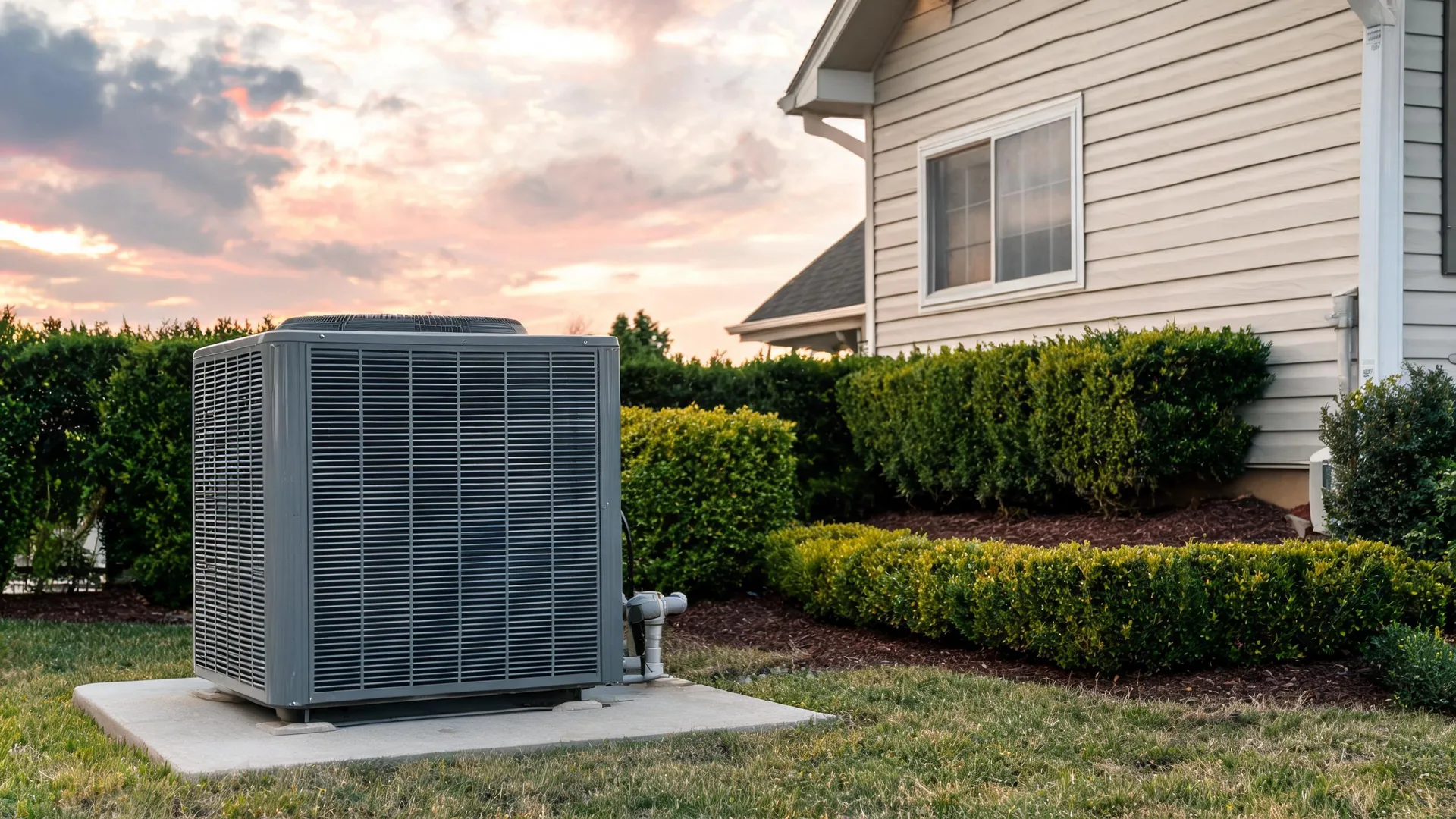
A gray heat pump condenser unit mounted on a concrete pad against the gray lap-siding exterior wall of a house.

A heat pump works through every season, not just one

A heat pump doesn't get the winter off the way a furnace does. It runs backward to heat the house, so the same compressor and the same outdoor coil that worked all summer keep working straight through the cold months. There's no offseason where it sits idle and rests. That shows up as wear in specific places. The reversing valve, which is what switches the system between heating and cooling, can start sticking so the unit gets stuck in one mode or makes a hard clunk when it shifts. The defrost cycle runs more in cold, damp weather, and if the defrost board or the sensor that triggers it is failing, frost builds up on the outdoor coil and chokes off airflow until the unit can't pull heat from the air at all. Hearing the outdoor fan run while the air coming out of the vents turns lukewarm or cold is a sign worth calling in, not watching for a few more days. A unit that short cycles, turning on and off in quick bursts instead of running a full cycle, is also telling you something is already wearing out underneath it.

A sticking part gets worse every cycle it's asked to work

A reversing valve that's starting to stick still forces its way into position most of the time. Each time it does, it wears the same spot a little more. Left alone, it eventually sticks for good and leaves the system stuck heating when you need cooling or the other way around.

Frost on the coil doesn't stay a small problem

A little frost on the outdoor coil blocks a little airflow, so the unit runs longer to make up for it. That extra runtime feeds more frost, and the coil can ice over completely. At that point the compressor is working against a coil that can't pull in any heat at all, which is a harder failure than the one you started with.

Before calling anyone, there are a few things worth a look. Check the outdoor unit for anything blocking it, leaves, a fallen branch, ice built up around the base. Go inside and check the thermostat batteries if it has any, and make sure it's actually set to heat and not just fan. Check your breaker panel for a tripped breaker on the unit, and if you've got a disconnect box next to the outdoor unit, make sure it's pushed in all the way. Look at your air filter while you're at it. A filter clogged with dust chokes off airflow the same way a frosted coil does, and it's the one thing on this list you can fix yourself. None of this tells you what's wrong inside the system, but it rules out the easy stuff before a tech has to.

Repair makes sense right up until the same part keeps failing or the compressor itself is the problem. A capacitor, a contactor, a bad sensor, a stuck reversing valve, these get fixed on their own and the unit goes back to working like it should. The compressor is different. It's the one part that isn't really replaced on its own, since the cost and labor of swapping it usually puts you in the same range as a new system, and a compressor rarely fails alone anyway. If a tech tells you the compressor is going, that's the point where repair stops making sense regardless of how old the rest of the unit is. Short of that, most heat pump failures are single parts doing one job badly, and fixing that one part is the right call.