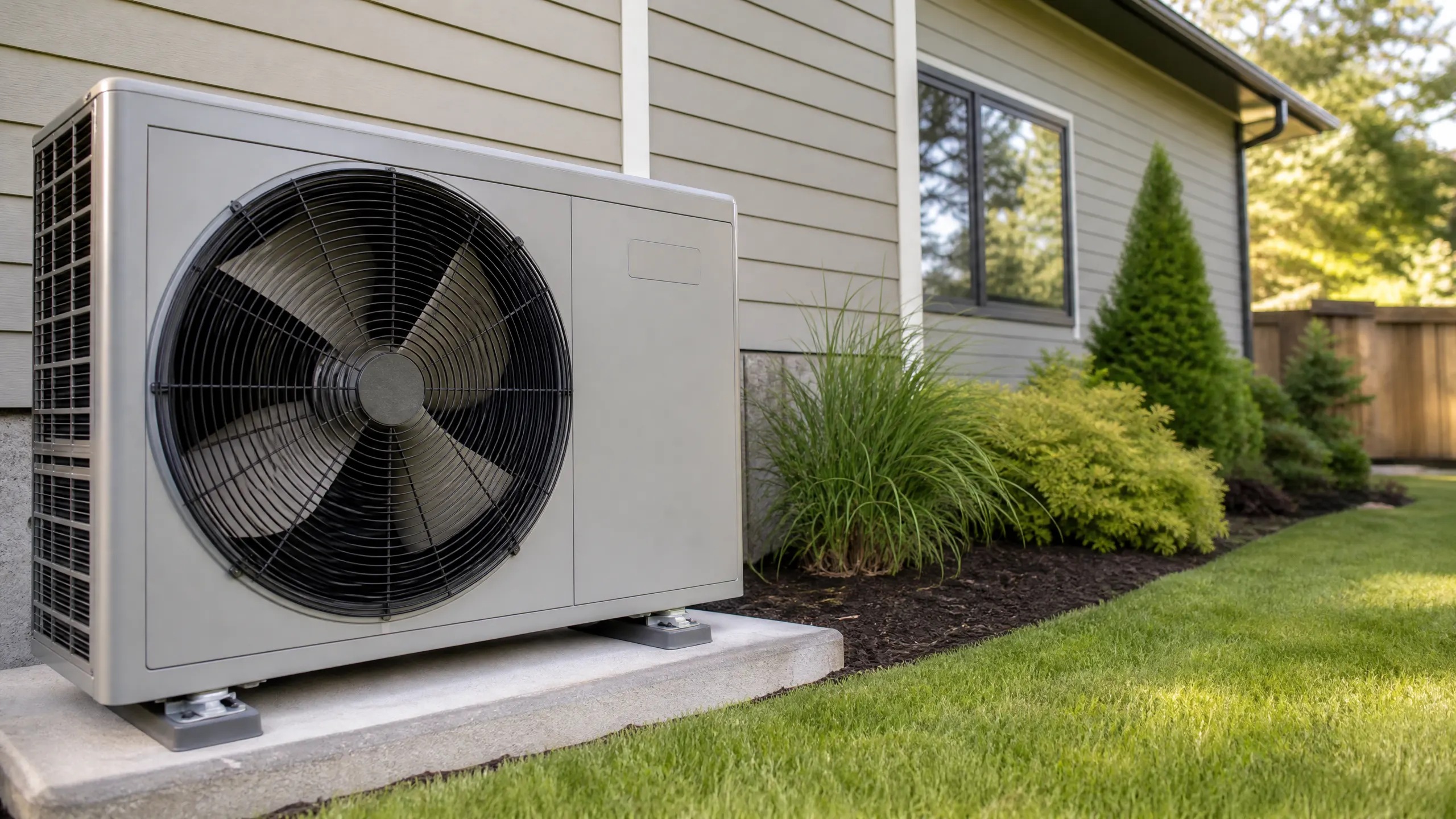





An outdoor heat pump unit mounted on a concrete pad beside a house with beige siding and a landscaped garden bed.

Heat Pump Repair in Many, LA

Tell us about the job

Takes about a minute. No obligation.

RepairHeat PumpSabine Parish, LA
Step 1 of 2

What ZIP code is the job in?

A diagnostic visit starts with the tech asking what the system is doing, or not doing, and when it started. From there they check refrigerant pressure, look at the reversing valve, test the capacitor and contactor, and see whether the outdoor fan and compressor are both running when they should be. They'll check the thermostat call against what the unit is actually doing, since a heat pump stuck in cooling mode or not switching over is one of the more common complaints. If ice is building up on the outdoor coil, they'll look at the defrost board and sensor next. Most of this gets diagnosed with gauges and a multimeter, not guesswork, and the tech should be able to tell you what part failed and why before they start the repair.

5 months
November through March, your system heats
6 months
May through October, it cools
39°F
the average winter night it heats against
92°F
the average summer afternoon it cools against
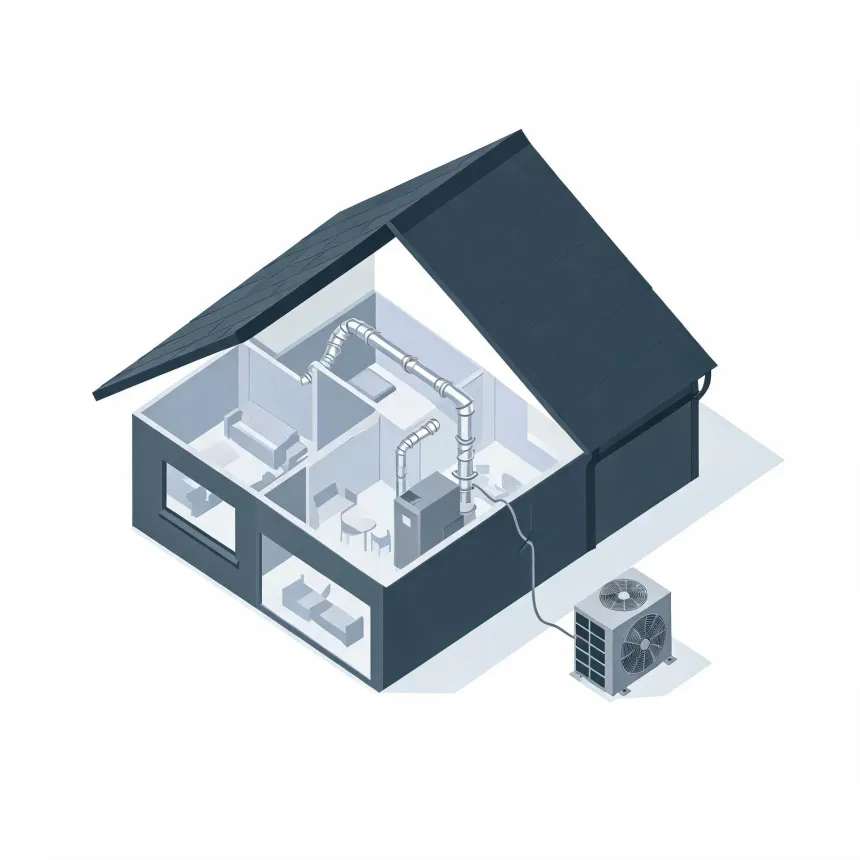
Isometric illustration of a cutaway house showing interior rooms with furniture, a furnace and ductwork, connected by a line to an outdoor condenser unit on the ground outside.
Your system heats November through March and cools May through October.

NOAA nClimDiv, 1991–2020 normals

The reversing valve is what lets a heat pump heat and cool, and it's also the part most likely to stick or fail.

When a heat pump blows cold air in heating mode, the valve and its solenoid are the first things worth checking.

Sabine Parish sees this kind of weather often, and the outdoor unit takes the hit

90 severe weather events from 2015 to 2024
49% of homes statewide lost power a day or more in 2024
38 damaging wind events from 2015 to 2024
Nothing unusual here, just the ordinary wearHalf the homes here were built in 1986 or earlier, and mobile homes make up 44.8% of the parish.

If your heat pump's outdoor unit has been through a hailstorm or a bad wind event, it's worth having it looked at even if it's still running. Hail dents fins and bends them over, and that blocks airflow across the coil. Wind-blown debris does the same thing, or it can hit the fan blade enough to throw it off balance. None of that always stops the unit cold. Sometimes it just means the compressor runs harder and the coil loses efficiency a little at a time. A tech can check the fins, the fan, and the coil in the same visit and tell you whether anything needs straightening or replacing before it turns into a bigger repair.

Get it checked after a storm

Storms hit hard here. If the outdoor unit took hail or debris, have it checked even if it still runs.

Find a contractor
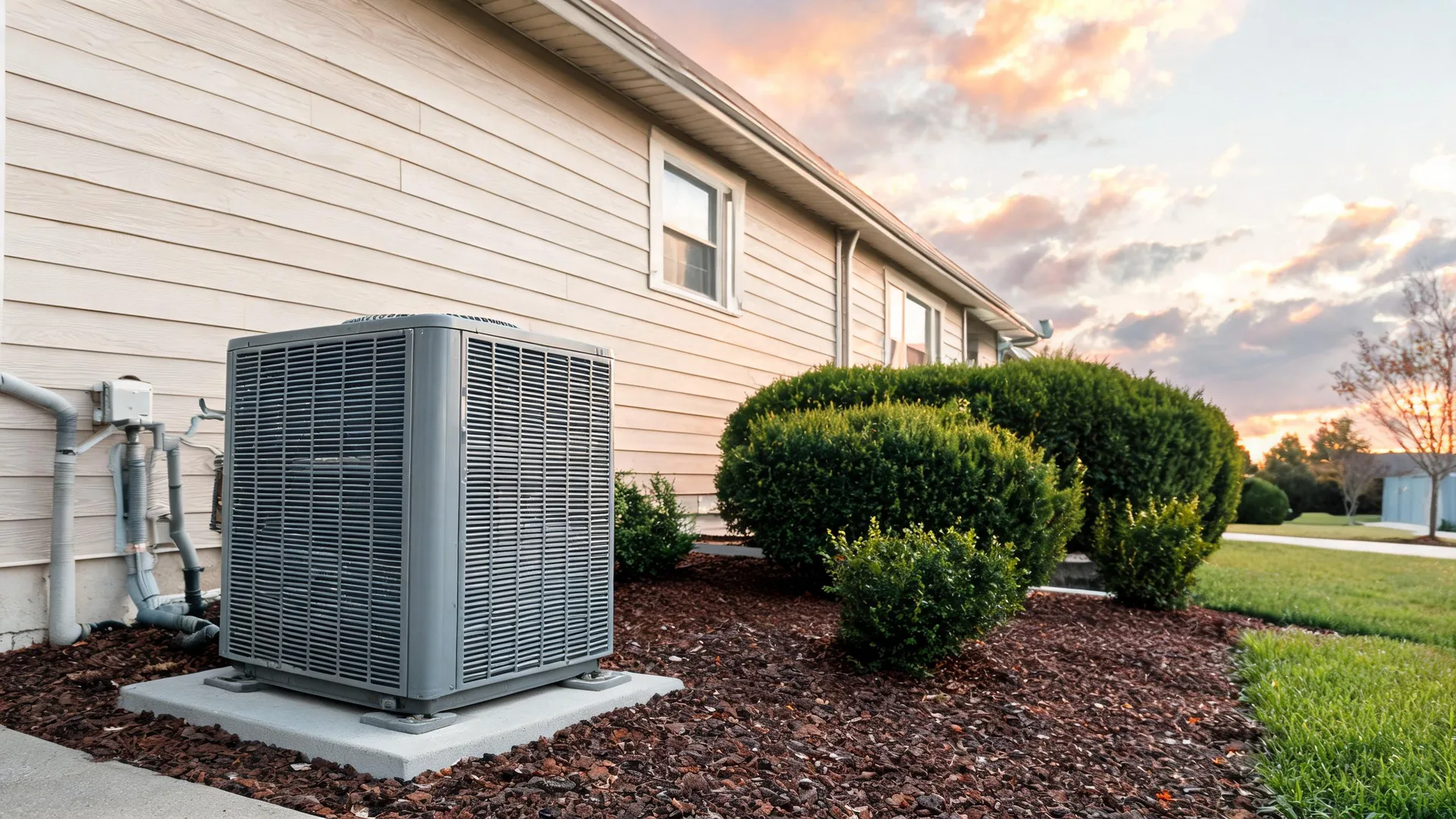
A residential heat pump outdoor unit mounted on a concrete pad next to a house with gray vinyl siding.

What you can check yourself first

Before you call anyone, go outside and look at the unit. The outdoor fan should be spinning freely, with nothing leaning against the cabinet and no branches or leaves packed into the fins. Check the breaker, both the one for the outdoor unit and the one for the air handler, since a tripped breaker will shut the whole system down and look like a bigger problem than it is. Inside, check the thermostat batteries if it has any, and look at the air filter. A filter packed with dust chokes airflow and can ice the coil or trip the system on high limit. If you see ice on the outdoor coil, don't chip at it. Switch the system off and let it thaw, then call. Running a heat pump with a frozen coil can push the compressor past what it's built for. None of this tells you what's actually wrong, but it rules out the easy stuff before a tech has to.

A frozen coil gets worse, not better

Once ice starts building on the outdoor coil, airflow across it drops, so more moisture freezes and the ice spreads. The compressor keeps trying to move refrigerant through a coil that can't do its job, and that's load it isn't built to carry for long. Left running, it can push liquid refrigerant back toward the compressor instead of vapor, and that's what takes compressors out.
A sticking valve doesn't fix itself

When a reversing valve starts to stick, it might still shift most of the time and only hang up occasionally. Each time it sticks, the system fights itself, trying to heat and cool at once, and that strain is what turns a valve that sticks sometimes into one that stops shifting at all.

A heat pump that keeps running but can't keep up is usually what people notice first, not a unit that quits outright. It runs long cycles, blows air that doesn't feel hot enough or cold enough, or it short cycles on and off without settling in. Some of this shows up as sound before anything else. A clicking from the outdoor unit when it should be switching modes. A hum with no fan movement. A buzz that wasn't there before. Hissing usually means refrigerant escaping somewhere it shouldn't. If the system puts out the right temperature air some days and the wrong one on others, that's often the reversing valve starting to hang up rather than fail outright. Any of these is worth having a tech look at before the part that's struggling takes something bigger down with it.

Whether a heat pump is worth repairing usually comes down to what failed and what it's connected to. A capacitor, contactor, or defrost sensor is a contained job. The part owes nothing to the rest of the system, so replacing it brings the unit back to where it was. A compressor or a reversing valve is a different question, because both sit at the center of how the system moves refrigerant, and replacing either one is closer to the cost of the equipment itself. Age matters less on its own than how the system has been running up to this point. A unit that's been short cycling or icing for a while has usually been straining the compressor the whole time, even before anything failed outright. If a tech finds one failed part on a system that's otherwise been running clean, that's a repair. If they're looking at a second major failure in a short stretch, that pattern is the thing to weigh, not just what's broken this time.