Single-story brick and white-sided buildings with covered porches behind a trimmed hedge and lawn, framed by overhanging oak branches draped with Spanish moss.

Furnace Repair in Shreveport, LA

Tell us about the job

Takes about a minute. No obligation.

RepairFurnace or heatingCaddo Parish, LA
Step 1 of 2

What ZIP code is the job in?

The igniter wears out first

A furnace's igniter heats up and cools down every time the burners cycle on, and that stress is what ends its life. It gets brittle over years of use and eventually cracks or stops glowing hot enough to light the gas. A furnace that tries to start, clicks, and shuts down without ever producing flame is usually telling you the igniter is done.

A dirty flame sensor mimics a bigger problem

The flame sensor checks that gas is actually burning once the igniter lights it, and it only works if it can see the flame clearly. Soot builds up on it over time and blocks that signal, so the furnace shuts the gas valve off thinking nothing lit. It looks like a serious failure but it's often just a sensor that needs cleaning.

5 months
November through March, your furnace is on duty
38°F
the average winter night it heats against
7 winter storms
in ten years, the nights a failure hurts most
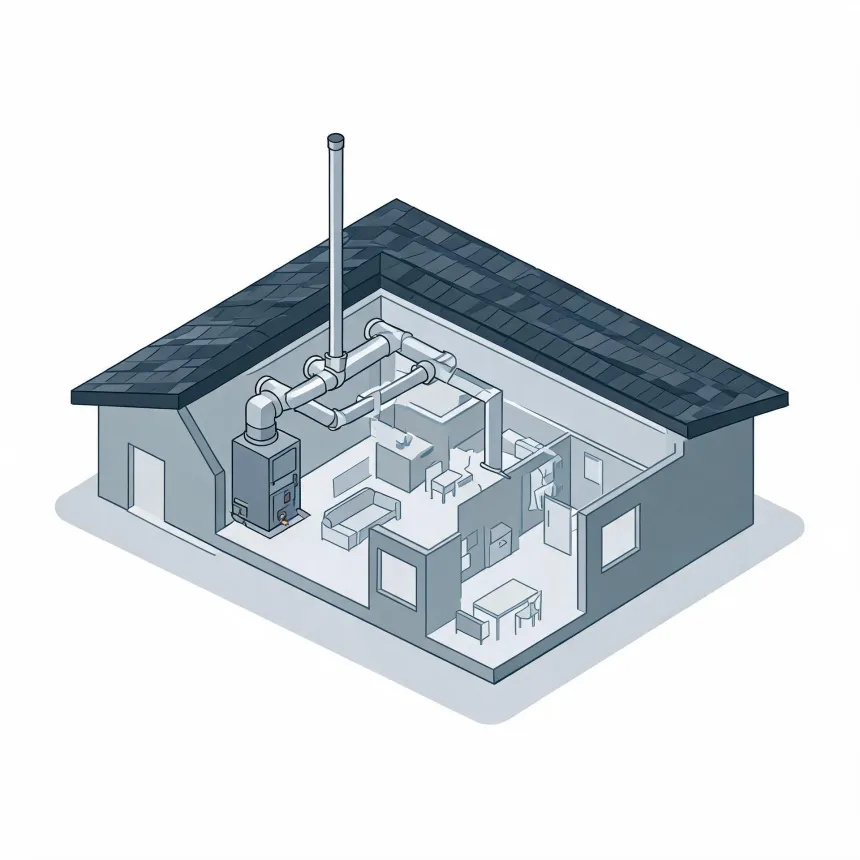
Isometric cutaway illustration of a single-story house showing interior rooms with furniture, a furnace unit with connected ductwork and a tall vertical flue pipe extending above the dark shingled roof.
Your furnace works hardest from November through February.

NOAA nClimDiv, 1991–2020 normals

Furnaces in Shreveport sit unused from March through October.

November is when a weak igniter or a dirty sensor finally gets found out.

Five months of work a year is not much to ask of a furnace

Heat runs November through March
Winter nights average 38°F
7 winter storms from 2015 to 2024

Half the homes in Caddo Parish were built in 1975 or earlier, half in 1975 or later. Age alone does not put more strain on a furnace. What matters is whether the unit has sat through a few winters already, and whether anyone has had it checked since it last ran. An older house can have a furnace installed last year. A newer house can have the original one still running. The igniter and flame sensor wear the same way either way, on their own schedule, not the house's.

Get it looked at early

Problems tend to show up in the first weeks of the season, when the load hits a part that was already weak.

Find a contractor
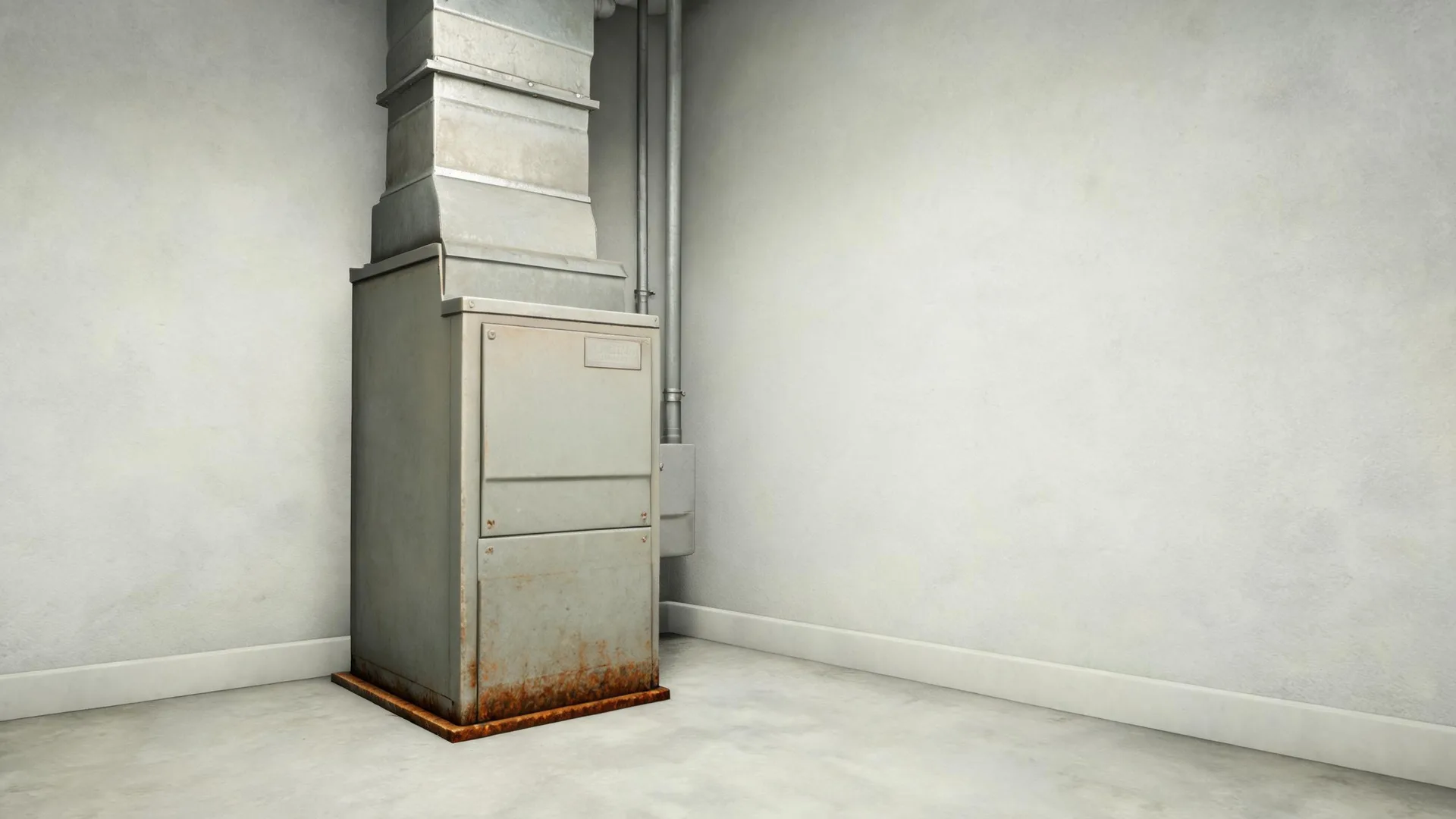
A gray residential gas furnace installed in an unfinished basement, surrounded by ductwork, a metal flue pipe, and a gas supply line.

A repair is usually the right call

Five months of light work most years, with a cold snap or an ice storm mixed in. That combination is easy on a furnace in the long run, which is why a repair almost always makes more sense than a replacement. If yours is acting up now, a tech is more likely to find one worn part than a unit on its last leg.

Short cycling means something is cutting it off early

A furnace that fires up, runs a few minutes, and shuts off before the house warms up is being stopped by something. A clogged filter choking airflow, a cracked heat exchanger, or a limit switch tripping on overheat can all cause this. It's worth having someone look at it soon, since a furnace doing this over and over is usually telling you one part has already failed, not that the whole unit is wearing out.

Strange smells and sounds mean something shifted

A furnace that's been running fine has a normal sound and smell to it, and a change is the first thing most homeowners notice. A burning dust smell at the start of a cycle is normal and fades. A scraping, grinding, or booming sound is not, and usually points to a blower wheel, a motor bearing, or delayed ignition letting gas build up before it lights. Either way, it's worth having someone listen to it before it gets worse.

Before calling anyone, check the thermostat is set to heat and the temperature is actually set above room temperature, since a bumped setting is an easy thing to miss. Go to the furnace and make sure the power switch, the one that looks like a light switch on or near the unit, is flipped on. Check the filter. If you can't see light through it, airflow is choked enough to cause real problems, and swapping it might solve things on its own. Look at the breaker panel for a tripped breaker if the furnace won't start at all. If you smell gas, don't keep flipping switches or checking anything else. Leave the house and call the gas company from outside. None of these checks require opening the furnace itself, and if the problem isn't one of these, it's time for someone who works on these for a living.

A diagnostic visit starts before any panel comes off. A tech will ask what the furnace was doing, whether it tried to start, how it sounded, how long ago it last ran fine. Then the cover comes off and they watch it try to fire, since most problems only show themselves during a start cycle, not while it sits off. They'll check for a spark or glow at the igniter, confirm the flame sensor is reading properly once lit, and look at the flame itself. A flame that's steady and blue is burning right. One that's yellow, lifting off the burner, or uneven points to a different problem, often airflow or a dirty burner. From there it's a process of ruling things out until the actual cause is confirmed, not guessed at.