






An unfinished basement containing a forced-air furnace with metal ductwork, exposed wooden ceiling joists, a hanging Edison bulb, and bare concrete floors.

Furnace Repair in New Orleans, LA

Tell us about the job

Takes about a minute. No obligation.

RepairFurnace or heatingOrleans Parish, LA
Step 1 of 2

What ZIP code is the job in?

Most furnace calls come down to a handful of usual suspects. The igniter wears out from heating and cooling every cycle until it just stops glowing hot enough to light the gas. A flame sensor coated in a thin layer of residue tells the control board no flame is present even when there is one, so the system shuts itself down as a safety measure. Dirty filters choke airflow, and that makes the heat exchanger run hotter than it should, which can trip a limit switch or crack the exchanger over time. Loose or corroded wiring at the control board causes intermittent faults that look random but almost always trace back to one bad connection. A clogged condensate line on a high-efficiency furnace will shut the whole unit down rather than let water back up into the cabinet.

5 months
November through March, your furnace is on duty
46°F
the average winter night it heats against
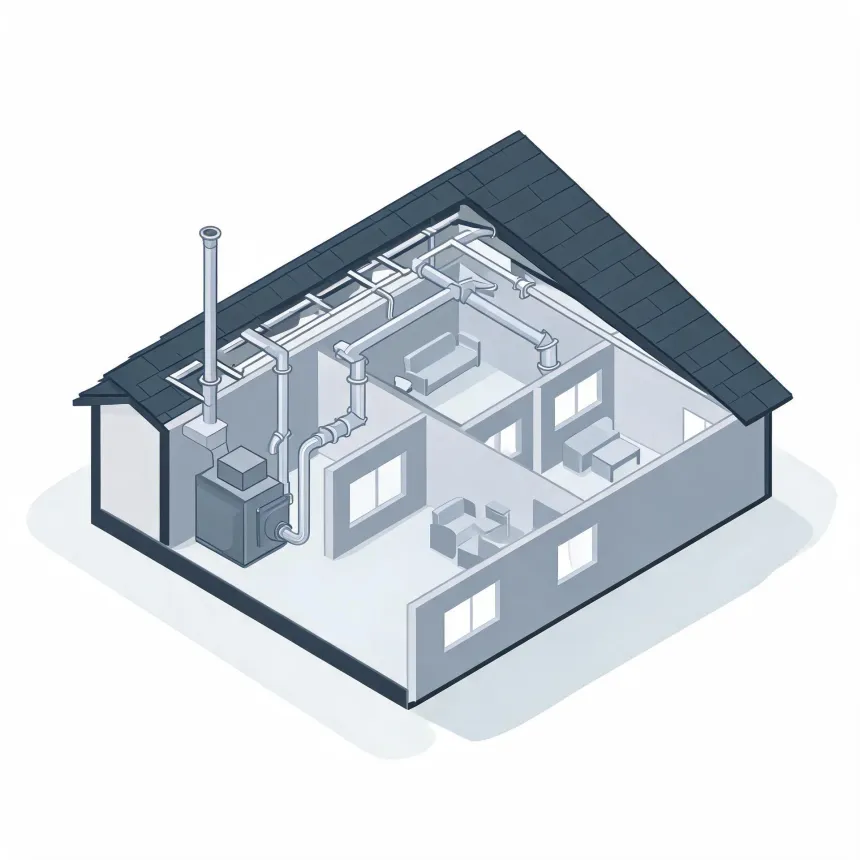
Isometric cutaway illustration of a single-story house showing interior rooms, a furnace unit with flue pipe, and branching ductwork running through the ceiling space under a dark shingled roof.
Your furnace works hardest from December through February.

NOAA nClimDiv, 1991–2020 normals

A furnace here only has to work about five months a year, November through March.

A furnace that gets months of rest most years usually has less wear built up, so fixing what broke is usually the right call.

Half the furnaces here are in homes built in 1960 or earlier

Half the homes here were built by 1960
Heat runs November through March
Winter nights average 46°F
Furnace trouble in New Orleans shows up fastHeat goes on in November, and a weak part usually fails in the first cold snap.

The part that failed tells you most of what you need to know. An igniter, a flame sensor, a control board, these fail on their own and get replaced on their own, without raising any question about the rest of the furnace. The heat exchanger is different. Once it's cracked, that's not a repair, because a cracked exchanger can let combustion gases mix into the air moving through the house, and the only honest fix is a new furnace. Short of that, age alone doesn't rule out a repair. An older furnace with a sound cabinet and a clean burner is still worth fixing when the failure is a single part. What changes the math is a furnace that keeps finding a new way to fail, one season after the next. At that point the repair in front of you is rarely the last one.

Worth fixing more often than not

Get the failed part looked at before you plan on replacing the whole furnace. Five months of work a year is a light load, and a furnace that's been resting most of the year usually has the wear to show for it, not against it.

Find a contractor
A man in a dark cap, gray T-shirt and brown work pants walks up porch steps toward a dark front door, carrying a canvas tool bag filled with tools, with a potted shrub beside the entry.
A gray residential gas furnace installed in an unfinished basement, connected to sheet-metal ductwork and PVC pipes.

The first sign rarely waits for the hard freeze

A furnace doesn't fail the moment something breaks. Most parts get weaker a little at a time, and the furnace keeps running until the weak part finally can't do its job under load. That's why trouble tends to show up at the start of a heating cycle, right when the igniter has to get hot enough to light the gas or the flame sensor has to prove a flame is there. A furnace that short cycles, turning off a few minutes after it starts, is usually protecting itself from heat or airflow it doesn't like, not malfunctioning for no reason. One that runs but never gets the house warm is often moving air past a heat exchanger that isn't firing the way it should. A burner that used to light with a soft whoosh and now bangs or delays before catching is burning dirty or getting gas unevenly. None of these are things to wait out. A furnace that struggles to start is more likely to fail completely the next time it's asked to run, not less.

A cracked exchanger gets worse with every cycle

Heat makes metal expand, and a hairline crack opens a little more each time the burner fires and shuts off. Running the furnace on a cracked exchanger doesn't just risk fumes mixing into the house air, it also turns a small crack into a bigger one.
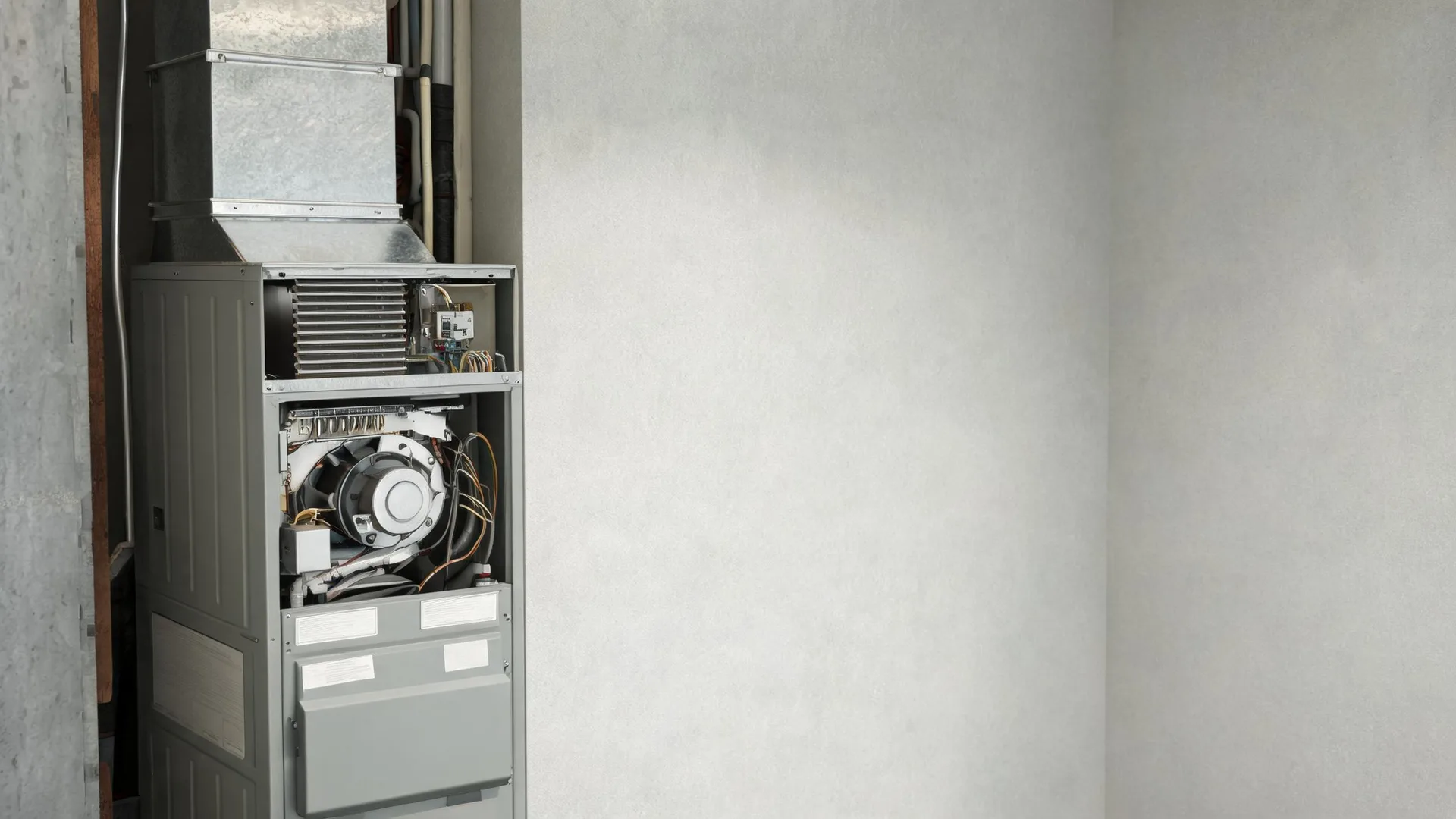
A dirty filter overworks the exchanger before anything else fails

A clogged filter starves the system of return air, so the exchanger runs hotter than it was built to run. Left alone, that heat can trip the limit switch over and over, or warp the exchanger itself. Changing the filter is the simplest way to keep that from happening.

Before calling anyone, check the thermostat first. Make sure it's set to heat, not just fan, and that the temperature is set above room temperature. Look at the filter next. Hold it up to a light, and if you can't see through it, swap it for a new one, because a clogged filter can starve the burner of air and trip the furnace on its own safety switch. Check the switch on the furnace itself, the one that looks like a light switch on the side of the cabinet, and make sure it hasn't been bumped off. If the furnace is high-efficiency, follow the PVC pipe out to where it exits the house and make sure nothing is blocking the opening. Then check the breaker. None of this fixes a cracked exchanger or a dead control board, but it rules out the causes that have nothing to do with a worn part.

A diagnostic visit starts before the panels come off. The contractor asks what the furnace was doing right before it quit, since a furnace that shut off mid-cycle points somewhere different than one that never fired at all. Next comes a look at the flame itself, if it lights, checking the color and shape, then a check of the safety switches that would keep it from running even with a good igniter and a clean sensor. Wiring at the control board gets tested under power, because a loose connection often looks fine sitting still and only drops out once things warm up. The filter and return air get checked too, since weak airflow can mimic a failing part when nothing is actually broken. Most of this is ruling things out one at a time until only one explanation is left standing.