





A low-angle view along a red brick wall with shrubs at its base, facing a mown grass lawn with a single-story light-colored house and pine trees under an overcast sky.

Furnace Repair in Morgan City, LA

Tell us about the job

Takes about a minute. No obligation.

RepairFurnace or heatingSt. Mary Parish, LA
Step 1 of 2

What ZIP code is the job in?

Furnaces in Morgan City sit unused most of the year, then get asked to run every night starting in November. That first cold snap in late October or early November is when a weak part finally gives out. A furnace that's had an igniter or a flame sensor on its way out all year will usually make it through, right up until it has to run for hours at a time. If yours is short cycling, not firing, or blowing cold air in the first weeks it's on, that's not bad luck. That's the one soft spot in the system meeting the first real load of the season.

5 months
November through March, your furnace is on duty
47°F
the average winter night it heats against
Isometric cutaway illustration of a small house showing a furnace unit connected to ductwork and a vertical flue pipe extending through the dark shingled roof, with sparse furniture in the rooms.
Your furnace works hardest from December through February.

NOAA nClimDiv, 1991–2020 normals

Furnaces in Morgan City only have to work about five months a year.

A furnace that isn't badly worn going in has a good shot at a clean repair.

St. Mary Parish gets its share of storms. That's not why your furnace quit.

29 severe weather events from 2015 to 2024
49% of homes statewide lost power a day or more in 2024
16 damaging wind events from 2015 to 2024

Half the homes in St. Mary Parish were built in 1976 or earlier, half after. Age like that doesn't wear out a furnace by itself. What matters is whether the furnace in the house now is the original or a replacement, and a lot of houses this old have had at least one by now. Mobile homes make up close to a fifth of the housing here, and if yours is one, the furnace is usually a different setup than what's in a slab or pier house, built and sized for that space. Either way, the fix comes down to what's actually failing, not what kind of house it's in.

Five months a year is light work. Repair it.

Five months of real work a year is not much to ask of a furnace. One with an igniter or flame sensor on its way out usually still has a furnace underneath it worth fixing. Get the actual problem found and most repairs here are straightforward.

Find a contractor
A man in a dark long-sleeve shirt, tan work pants and a cap climbs porch steps toward a gray door, carrying a canvas tool bag in his right hand, with a potted shrub to the right.
A gas furnace with attached ductwork, gas piping, and condensate lines installed in a concrete-block basement.

Running it while it's failing is what turns a part into a breakdown

A cracked heat exchanger stays a cracked heat exchanger whether the furnace runs another hour or not, but a lot of what fails doesn't work that way. A flame sensor coated in a little residue still signals weakly, and every cycle adds another pass of carbon to it until it stops signaling at all. A blower motor bearing that's starting to dry out gets hotter with every hour it spins, right up until it seizes. An inducer motor that struggles to start on a cold morning is drawing more current than it should, and that heat has to go somewhere. None of these announce themselves. The furnace keeps firing, keeps heating the house, right up until the part that was failing finishes failing, usually on the coldest night it's had to work yet. Short cycling is the clearest warning sign there is, because it means something is already cutting the furnace off before it finishes a normal run, and every short cycle is wear the furnace wasn't built to take that many times over. Catching it while it's still just short cycling is a different job than catching it after the part lets go entirely.

Listen for the start-up, not just the heat

A furnace that bangs, rattles, or hums loudly when it kicks on is telling you something before it ever fails to heat. A delayed boom usually means gas is building up before it lights instead of catching right away. A squeal points to a belt or bearing. A furnace that heats fine but sounds wrong getting there is still worth a call, because the noise is usually the early stage of something that later stops it from heating at all.
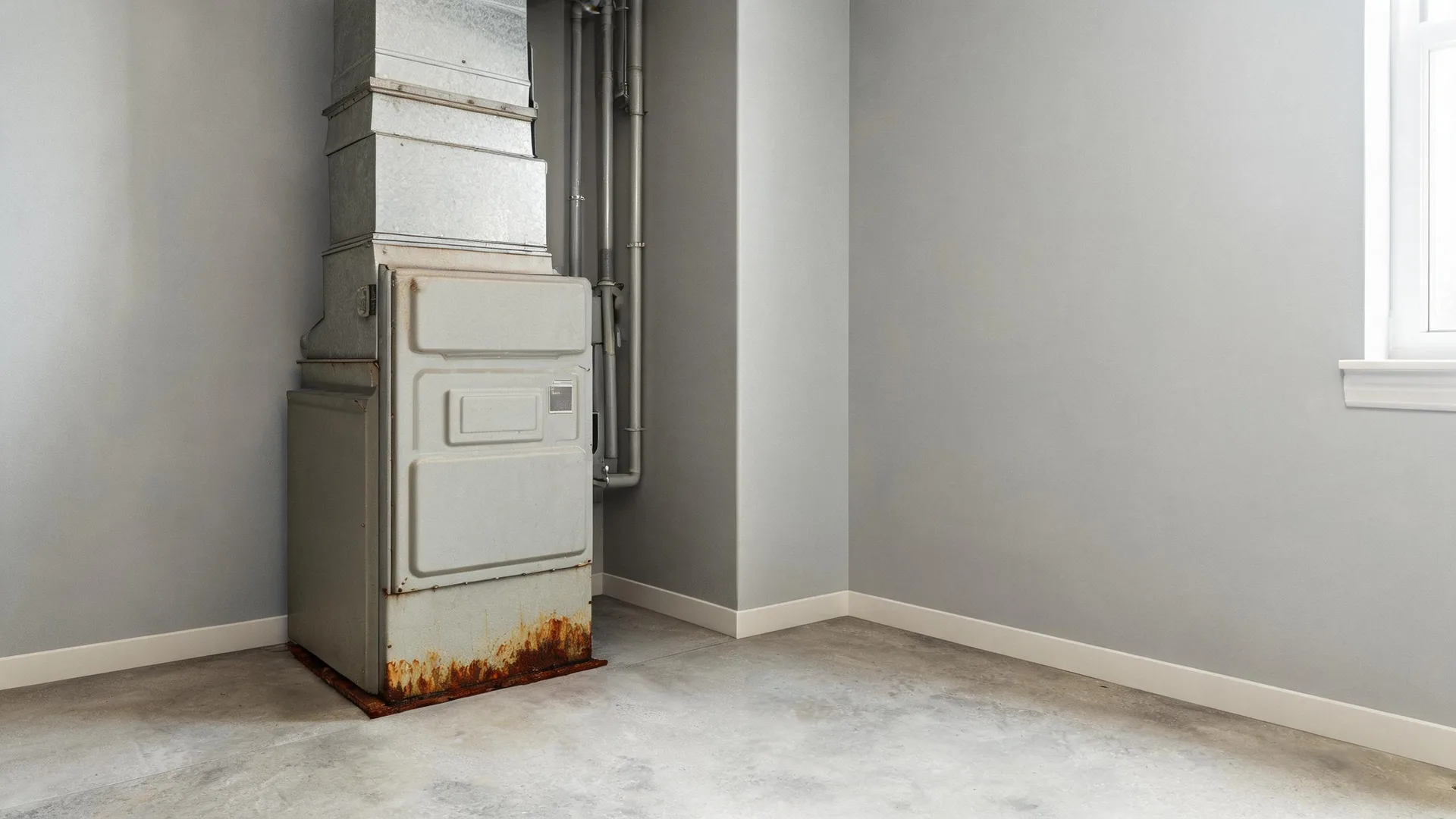
Uneven heat is a working clue, not just a comfort problem

One room warm and another cold can mean a duct problem, but it can also mean the blower isn't moving enough air or the furnace is cycling off before it finishes a run. If every room used to heat evenly and now doesn't, something in the system has changed, and that change is worth finding before it gets to the point where no room heats well.

Most furnace failures trace back to the same handful of parts. The igniter usually goes first. It heats up and cools down every cycle, and that stress cracks it over time. The flame sensor tends to go next, not because it wears out but because it sits right in the flame path and picks up a coating of carbon until it can't sense the flame anymore, even with the flame right there. Inducer motors and blower motors fail the way any motor does. The bearings dry out, the windings give out, and it happens after years of running, not all at once. A cracked heat exchanger is the one that matters most. It's a safety issue, not just a comfort one, and it's usually caught on inspection rather than through anything the house felt. Thermostats and control boards fail less often, but when they do, the furnace usually stops responding altogether instead of just running poorly.

Most of what fails in a furnace is a single part, not the whole machine, and that's the case for fixing it. An igniter, a flame sensor, a blower motor, even an inducer motor, all of those get replaced on their own without touching anything else in the furnace. The cabinet, the gas valve, the heat exchanger itself usually outlast any of those smaller parts. The one exception is the heat exchanger. If that's cracked, the furnace isn't safe to run regardless of what else is fine, and that's a replacement conversation, not a repair one. Everything else is a question of what broke, not how old the furnace is.