Heat pump vs furnace in St. Mary Parish, Louisiana

Get an Installer's Quote

Match with a pro in St. Mary Parish

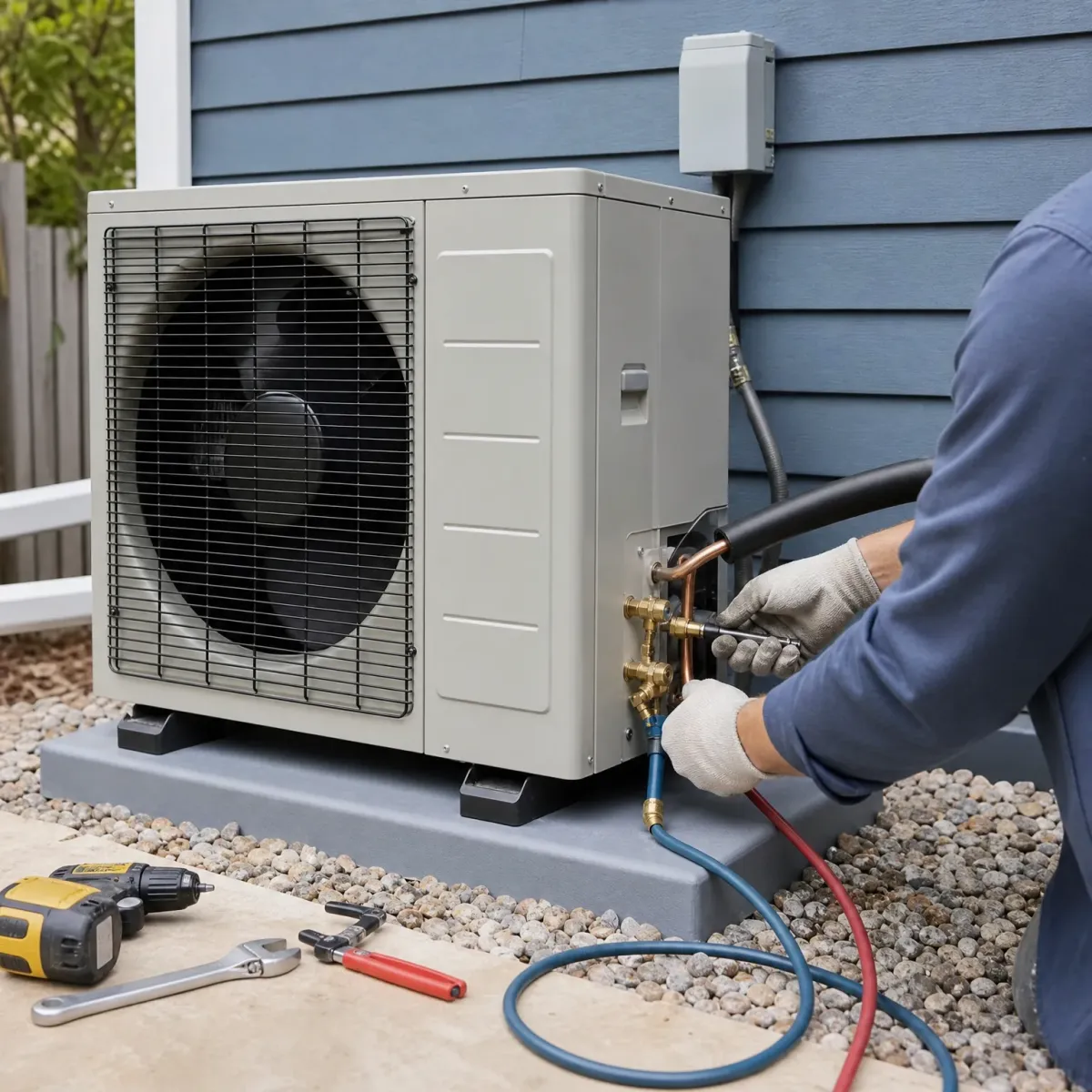
A person in a blue long-sleeved shirt and white gloves works on copper refrigerant lines with blue and red gauge hoses at an outdoor condenser unit on a gray pad beside a blue-sided house, with a drill and wrenches on the concrete in the foreground.

Tell us about the job

Takes about a minute. No obligation.

New system or replacementSt. Mary Parish, LA
Step 1 of 3

What kind of equipment?

Which costs less to run in St. Mary Parish?

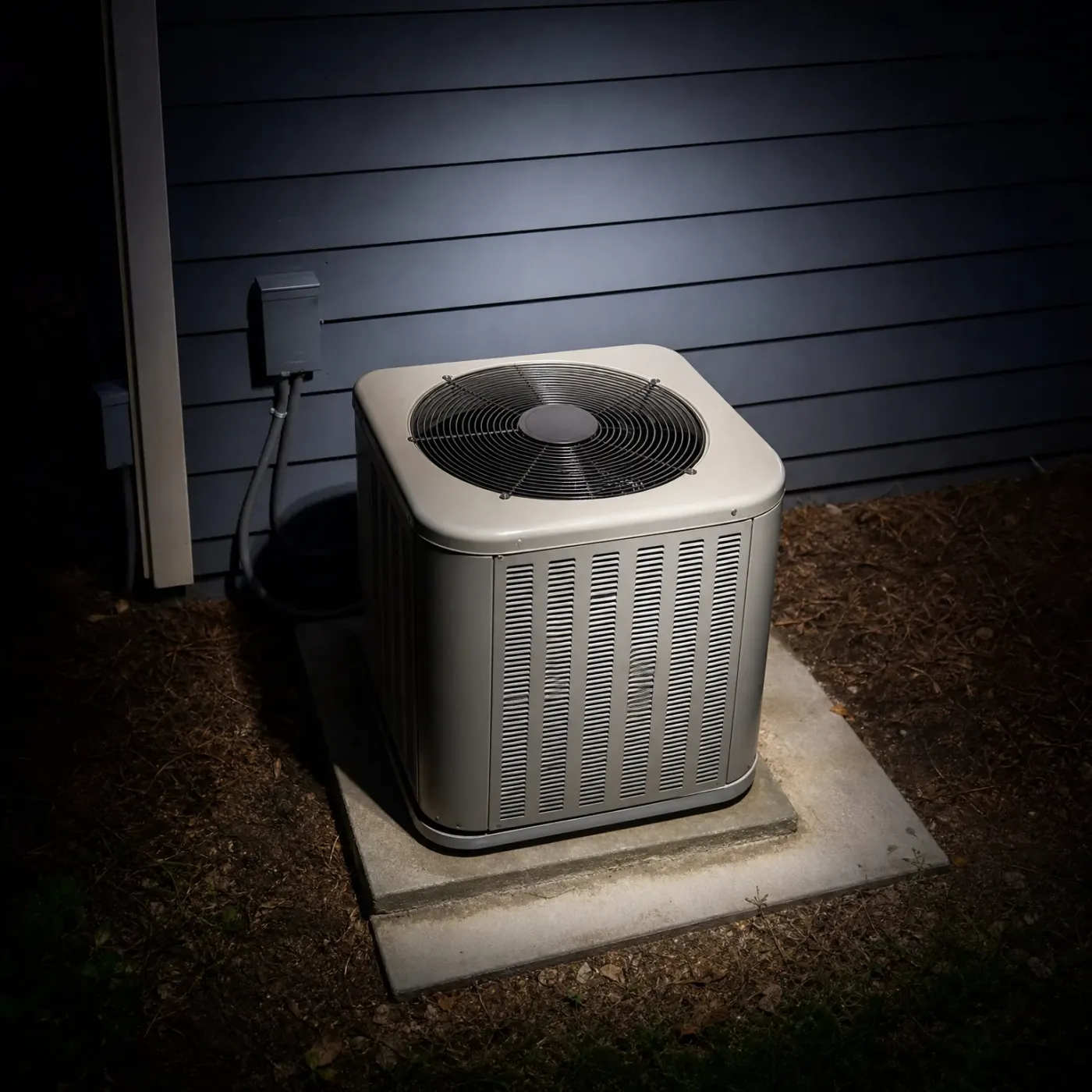
An outdoor air conditioner condenser unit on a concrete pad beside a house with dark horizontal lap siding, with an electrical disconnect box and conduit on the wall behind it.

Heat pump

To heat your home here$1.56per 100,000 Btu

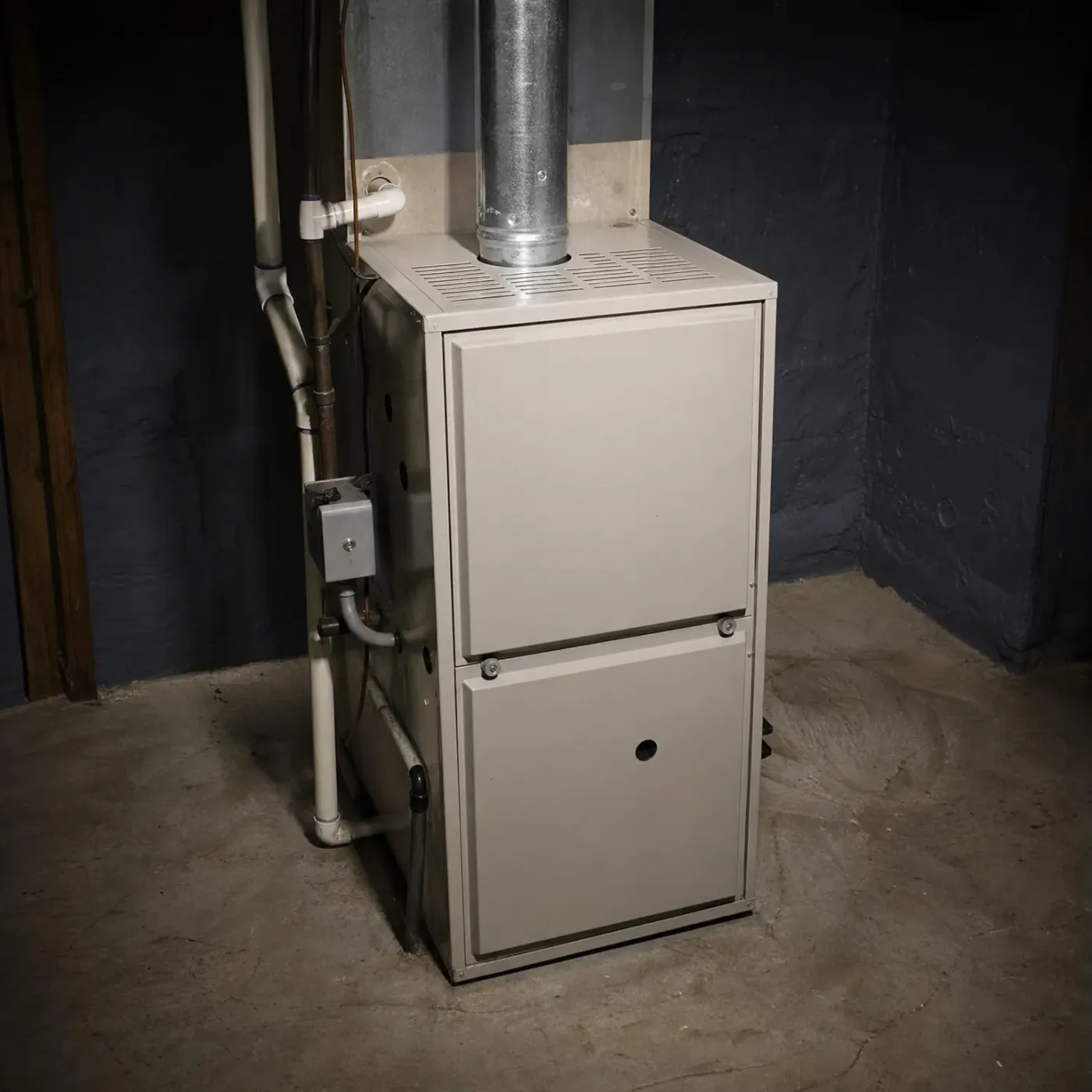
A beige gas furnace with two access panels stands on a concrete basement floor beside a dark painted wall, with a metal flue pipe rising from its top and pipes and an electrical box along its left side.

Furnace

To heat your home here$2.00per 100,000 Btu

At Louisiana's gas and electricity prices, a heat pump makes the same heat as a gas furnace for about 22% less.

Btu stands for British thermal unit, the standard measure of heat energy.

Where does a heat pump shine?

  • Made for mild winters

    Winter nights here average 47°F, which is well within the range a heat pump handles without strain. It can pull heat from that air all season instead of switching to backup heat strips.

    Covered porch of a gray clapboard house with a blue paneled front door, a dark Adirondack chair draped with a blanket, a potted evergreen, a pair of boots on a doormat, and weathered wooden steps beside frost-dusted shrubs.
  • Heats and cools in one system

    A heat pump runs the same way all year. It pulls heat into the house in winter and pushes it out in summer.

    A living room with dark blue panelled walls, a grey sofa with cushions and a knitted throw, a wooden coffee table holding a mug and a glass vase of white hydrangeas, a side table with a lamp and small plant, and a large white-framed window overlooking a green garden.
  • No gas line, nothing burning in the house

    A heat pump runs on electricity alone. Nothing burns inside the house.

    A kitchen with a dark navy island holding a white countertop, black induction hob and stainless steel kettle, grey perimeter cabinets, two glass pendant lights, an open wooden shelf with plants and boards, and a navy panelled door.

Where does a furnace shine?

  • Proven, simple, easy to get serviced

    Parts are easy to find and most repairs are routine. Getting one fixed rarely means waiting on a specialist.

    A gloved hand holds a white pleated air filter in front of a blue shelving unit and a gray furnace with venting pipes.
  • Fast, strong heat on demand

    The air coming from the vents feels genuinely hot. That's welcome on a freezing morning.

    A mudroom entry with a dark door, a sheer linen curtain over a window, snow-dusted black winter boots on a woven mat, a floor vent, and a wooden bench with a blue knit throw and a steaming gray mug beneath hanging coats.
  • Pairs with any central AC

    Most central air systems are built around a furnace. The two share the blower, the ducts and the thermostat.

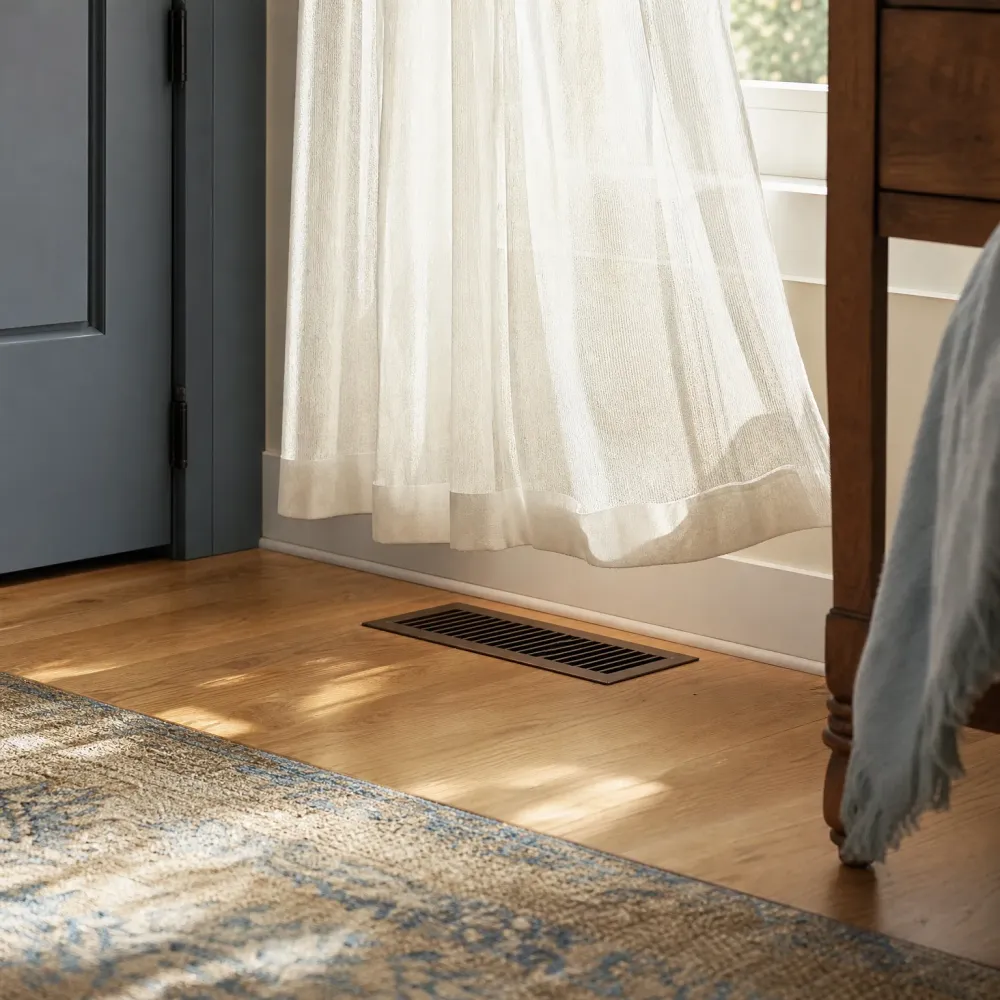
    A dark metal floor register vent set into a hardwood floor near a white baseboard, with sheer curtains, a gray door, a patterned rug, and a wooden bed post with draped blanket.

Winters here are too mild to favor a furnace

Heat runs about five months in St. Mary Parish, November through March, and the overnight low across December, January and February averages 47°F. That is not furnace weather. A furnace earns its keep when nights sit near freezing for months straight, forcing long burns and backup heat. Here, nights at or below freezing number about 9 a year, out of roughly 150 nights in the heating season. That is a small part of the season, not the shape of it.

A heat pump moves heat instead of burning fuel for it, and it does that well in the range where this parish's winter nights sit. The 9 nights that drop to freezing are cold snaps, not the season.

Cost follows the climate. A heat pump here runs $1.56 per 100,000 Btu of heat against $2.00 for a gas furnace, both at Louisiana's own fuel prices. A heat pump makes the same heat for about 22% less. That gap is the mild winter speaking: a machine that moves heat instead of burning it does not have to work hard when the cold itself is not hard.
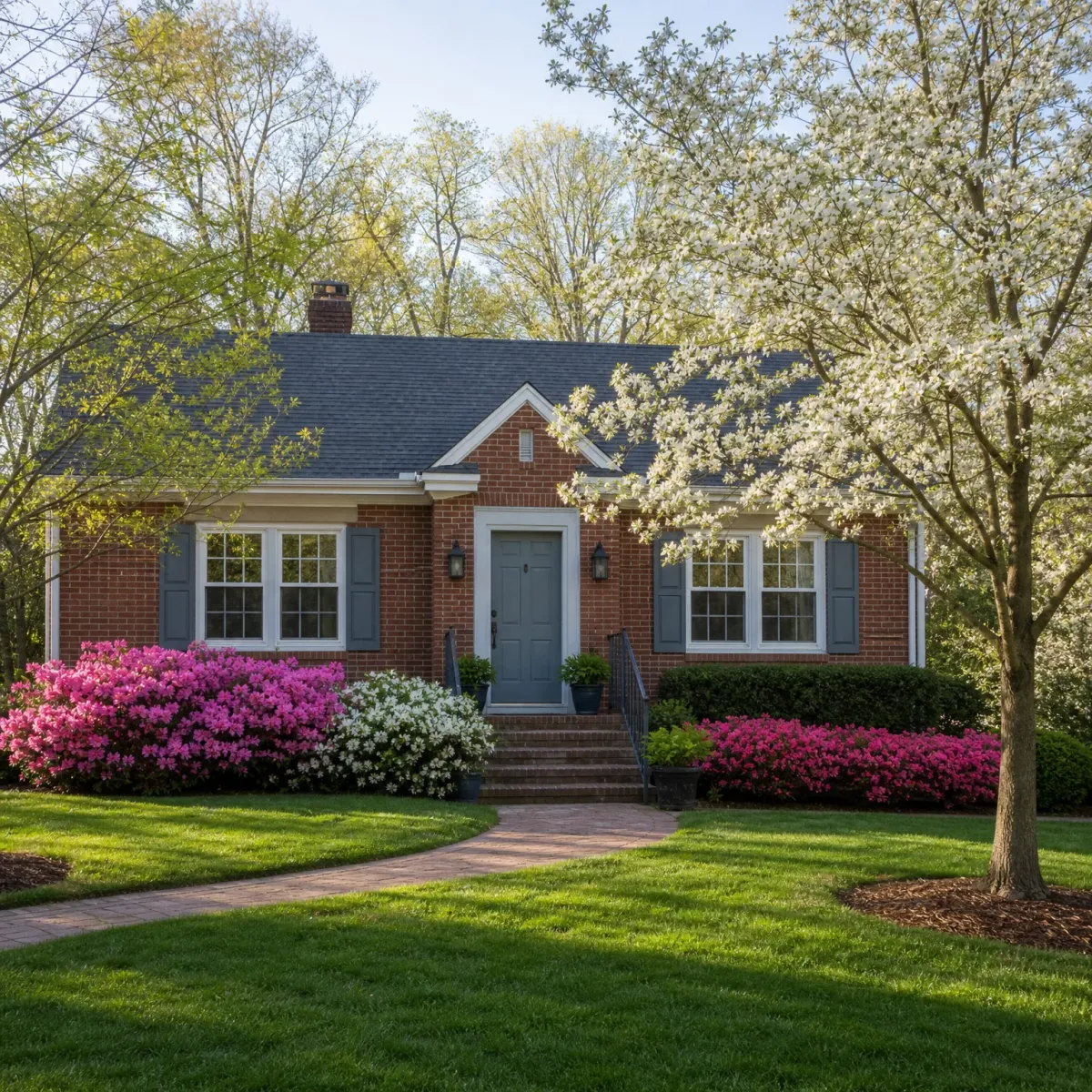
A single-story red brick house with gray shutters, a gray front door, and a gray shingled roof, fronted by pink and white flowering shrubs, a brick walkway, a mowed lawn, and a white-blossomed tree at right.

The furnace only works five months, the heat pump works twelve

Cooling is the long season here, not heating. Homes run cooling about seven months, April through October, and the afternoon high reaches 90°F or above on about 55 days a year. A furnace has no part in any of that. It heats, and for the other seven months it sits unused while a separate air conditioner does the work.

A heat pump is both machines. It makes the five months of heat and all seven months of cooling, with one system to maintain instead of two. Choose a furnace and you are also choosing, and later servicing, a central air conditioner alongside it.

Electricity already heats about two in three homes here, 64.6%, against about one in three on utility gas, 34.6%. A furnace still suits a house built around a gas line and ductwork for it, wanting fast, strong heat on demand for those five months. But it means running two systems where the heat pump is one, and paying more per unit of heat to do it.

Sources: NOAA nClimDiv · NOAA 1991–2020 seasonal normals · Census ACS 2020–2024 · EIA SEDS 2024 · 10 CFR 430.32

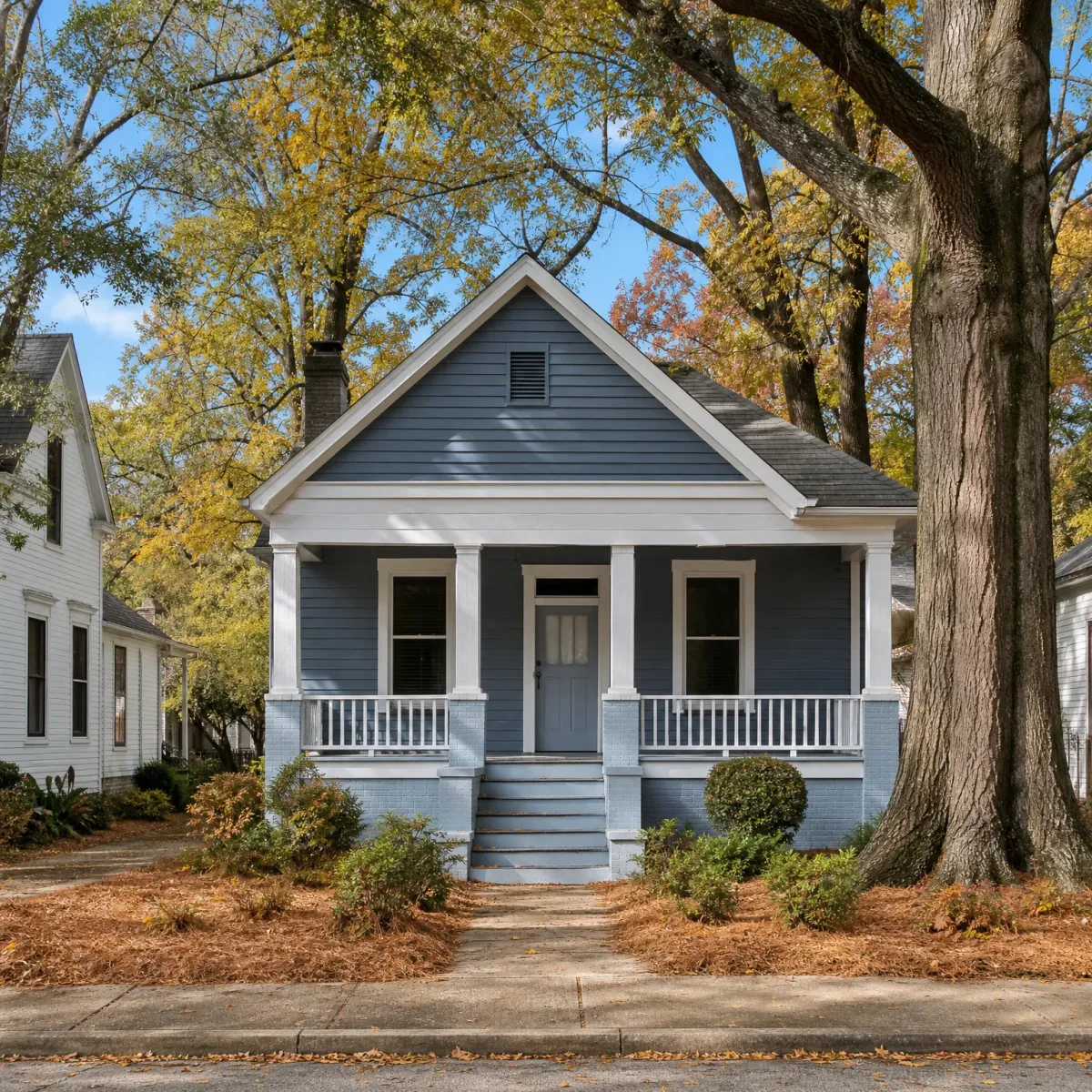
A small blue single-story house with a white-columned front porch, gabled roof and central steps, set behind a lawn covered in brown pine needles with a large tree trunk at right and a neighboring white house at left.

Common questions about heat pumps and furnaces

  • Will a heat pump keep my house cool enough here?

    Yes. A heat pump is a central air conditioner for seven months a year, from April through October, and the afternoon high only hits 90°F or above on about 55 days a year here. It's the same equipment doing the cooling as any central AC, just also wired to run in reverse for winter.

  • Can I keep my furnace and add a heat pump?

    Yes, and it's a common setup. The heat pump handles the mild stretches, which is most of the winter here, and the furnace kicks in on the cold nights, the kind that only show up about 9 times a year. That way the furnace isn't carrying a five-month season on its own.

  • What if my house doesn't have a gas line?

    A heat pump still works. Without a gas line the choice is a heat pump, electric resistance heat, or a furnace burning propane or oil, and of those a heat pump is the only one that also cools the house come summer. It runs on electricity, which already heats about two in three homes in St. Mary Parish.

  • Is a heat pump cheaper to run than a furnace in St. Mary Parish?

    Yes. A heat pump makes the same heat here for about $1.56 per 100,000 Btu, against $2.00 for a gas furnace. That's Louisiana's electricity and gas prices doing the work, not anything special about either machine.