




White plantation-style houses with wraparound porches lit at night, surrounded by Spanish moss-draped live oak trees.

Heat Pump Maintenance in Morgan City, LA

Tell us about the job

Takes about a minute. No obligation.

Tune-up, service, or cleaningHeat PumpSt. Mary Parish, LA
Step 1 of 2

What ZIP code is the job in?

A heat pump in Morgan City works both sides of the year. It pulls heat out of the house from April through October, then reverses and pulls heat in from November through March. That is seven months of cooling and five of heat, with barely a break between them. March and October are the two months it gets to rest, and they're also the best months to have it checked. Book the check in March before cooling starts, or in October before it has to reverse and start pulling heat in again. A weak capacitor or low charge found in March beats one found on the first hot week in April.

A dirty outdoor coil can't give up heat in summer or pull it in during winter, so the heat pump stops moving heat the way it should.

The compressor has to run longer and work harder to make up for that lost transfer, and the extra strain is what wears it out early.

One visit a year, timed right, is enough

Half the homes here were built by 1976
Climate zone 2A
Power costs 11.73 cents a kWh statewide

A technician checks refrigerant charge with gauges, not a guess. Too little and the system can't move heat the way it should, too much and the compressor works against itself. The reversing valve gets tested both directions, because a valve that sticks means the system keeps heating when it should cool, or the other way around. Electrical connections get checked for looseness and corrosion, since a loose wire can run hot and fail the part it feeds. The condensate drain gets cleared too, before it backs up and the system shuts itself down to protect against water damage. None of this shows up from looking at the unit from across the yard.

Book it before the season

It starts running hard in the first month of the season here. Book the check the month before.

Find a contractor
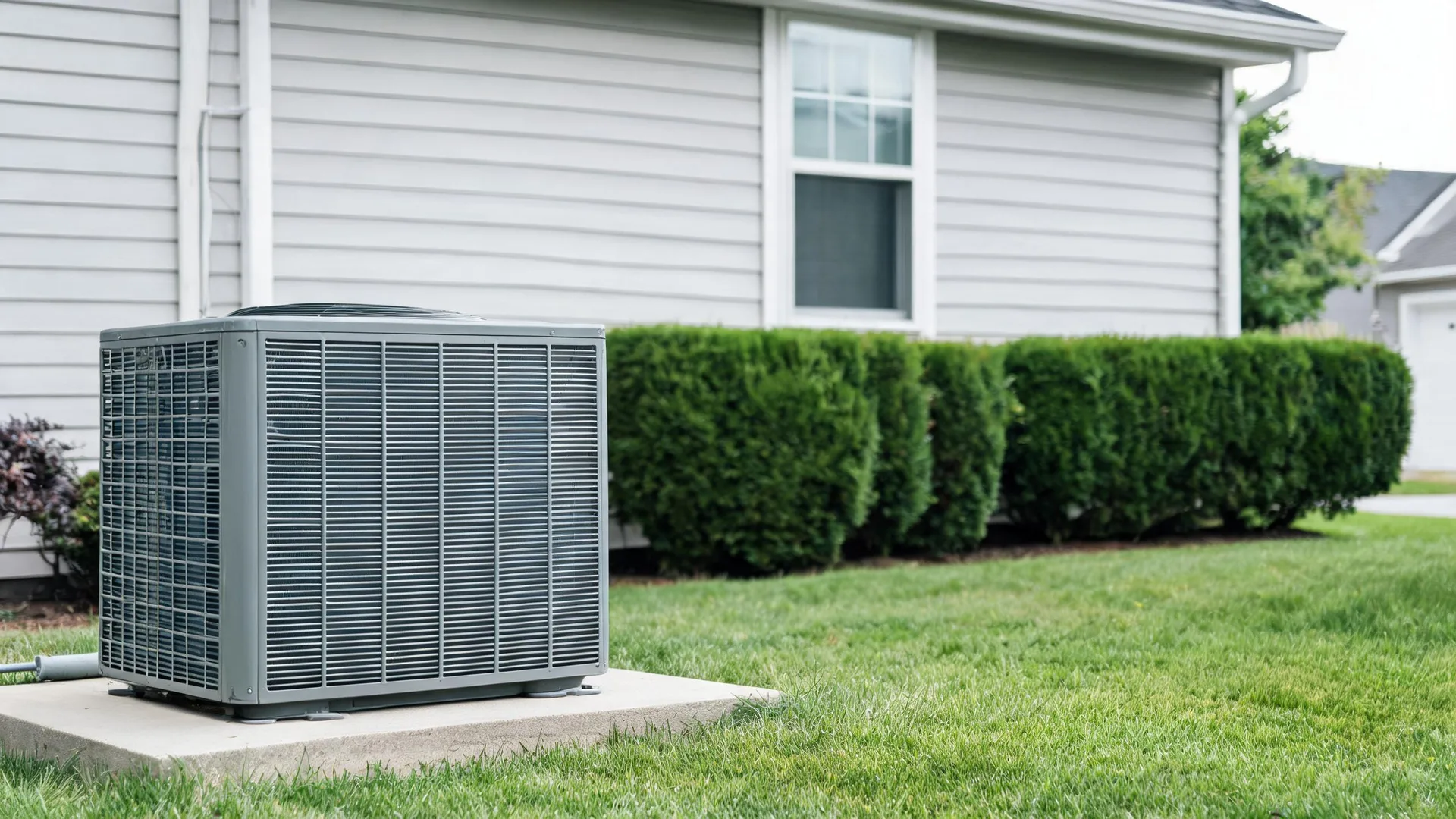
A dark gray heat pump unit mounted on a concrete pad next to a house with gray siding and a stone veneer wall.

What the system can't work around

The filter is the cheapest part to deal with and the one most often ignored. Air has to pass through it every time the system runs, and once it loads up with dust, airflow across the indoor coil drops. Less airflow means the coil can ice over in cooling mode or can't pull in enough heat in winter mode. The outdoor coil has the same job from the other side, and it can't be swapped out the way a filter can. Dirt, grass clippings and leaves sit in those fins and block the airflow the system depends on to move heat in either direction. The condensate drain is easy to forget because it only matters when it fails. Algae and dirt build up inside that line over time, and when it clogs, water backs up into the pan under the coil until a float switch shuts the whole system down. A system that breathes freely and drains freely isn't fighting itself to do its job.

The sounds that mean something is wrong

A heat pump that clicks on and off more than it used to is short cycling, and that usually traces back to a dirty sensor or a failing capacitor. A hissing sound points to a refrigerant leak. A grinding or squealing from the outdoor unit means a motor bearing is going. None of these fix themselves, and all of them get worse the longer the system keeps running that way.
What to watch between checkups

Rooms that used to heat or cool evenly and now don't are telling you airflow has dropped somewhere in the system. Ice on the outdoor coil in winter, when there shouldn't be any, means the defrost cycle isn't working right. A system that runs long stretches without ever seeming to catch up is losing the fight against something, whether that's low charge, a dirty coil, or a part on its way out.

A thorough tune-up means the panels come off. A technician pulls the blower wheel and checks it for dust buildup, since a caked wheel moves less air even at full speed. Amp draw gets measured on the compressor and the fan motor, because a motor pulling more current than it should is wearing out even if it still runs fine today. The refrigerant lines get checked for oil residue, which is how a slow leak shows itself before it becomes a system that's lost its charge. A quick visit skips most of that. The technician looks at the outdoor unit, checks that air is blowing cold or warm, and calls it done. That tells you the system is running right now. It doesn't tell you the capacitor is weak or the coil is starting to corrode, and those are the things that turn into a breakdown in the middle of the season.

A tune-up worth paying for follows a checklist, not a feeling. The technician checks the defrost cycle itself, forcing it into defrost and watching it clear the coil and switch back on its own. The contactor gets checked for pitting, since a pitted contactor can weld shut or fail to close at all. Refrigerant pressures get compared against what the system is supposed to run at for the outdoor temperature that day, not just checked for being present. The thermostat gets tested too, confirming it calls for heat and cooling correctly and that the heat pump responds within a few degrees of the setting. Anyone can open the cabinet and look. The checklist is what tells you whether the parts inside are still doing their job or just still turning on.