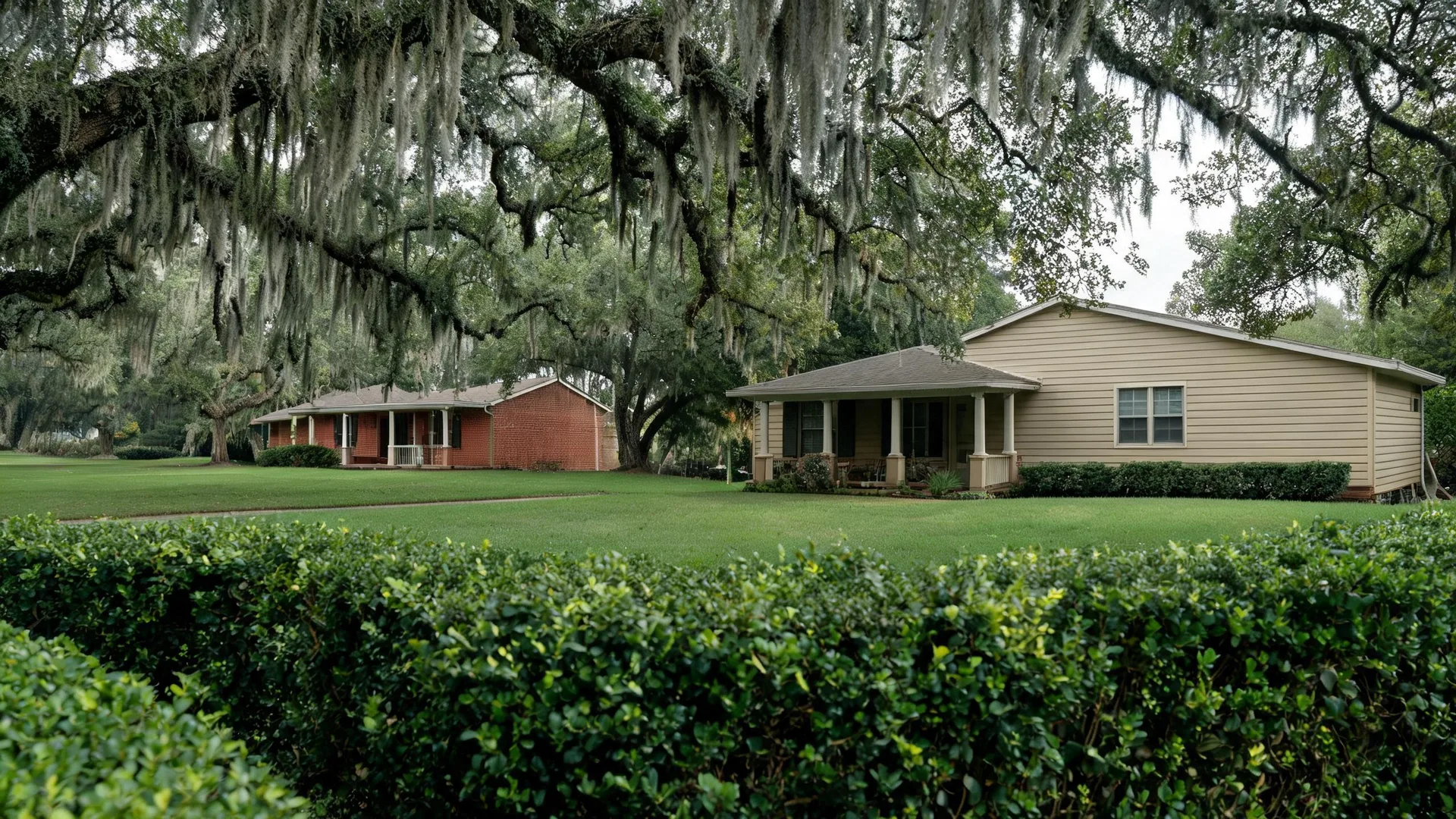




Single-story houses with beige siding and a brick building set on a mown lawn behind a trimmed hedge, framed by large oak branches draped with Spanish moss.

Furnace Repair in Leesville, LA

Tell us about the job

Takes about a minute. No obligation.

RepairFurnace or heatingVernon Parish, LA
Step 1 of 2

What ZIP code is the job in?

Most furnace trouble traces back to a handful of parts. The igniter fails most often. It's a thin strip that heats up to light the gas, and that cycle of heating and cooling wears it out until it cracks. A dirty flame sensor can look like the same problem from the outside. The furnace lights, then shuts off a few seconds later because the sensor can't sense the flame through the film built up on it. The inducer motor is another common point of failure. When it won't start or spins too slowly, the furnace won't fire at all because it can't prove the vent is clear. A cracked heat exchanger matters more than any of these. If that's the problem, the furnace shouldn't run again until it's replaced.

5 months
November through March, your furnace is on duty
40°F
the average winter night it heats against
2 winter storms
in ten years, the nights a failure hurts most
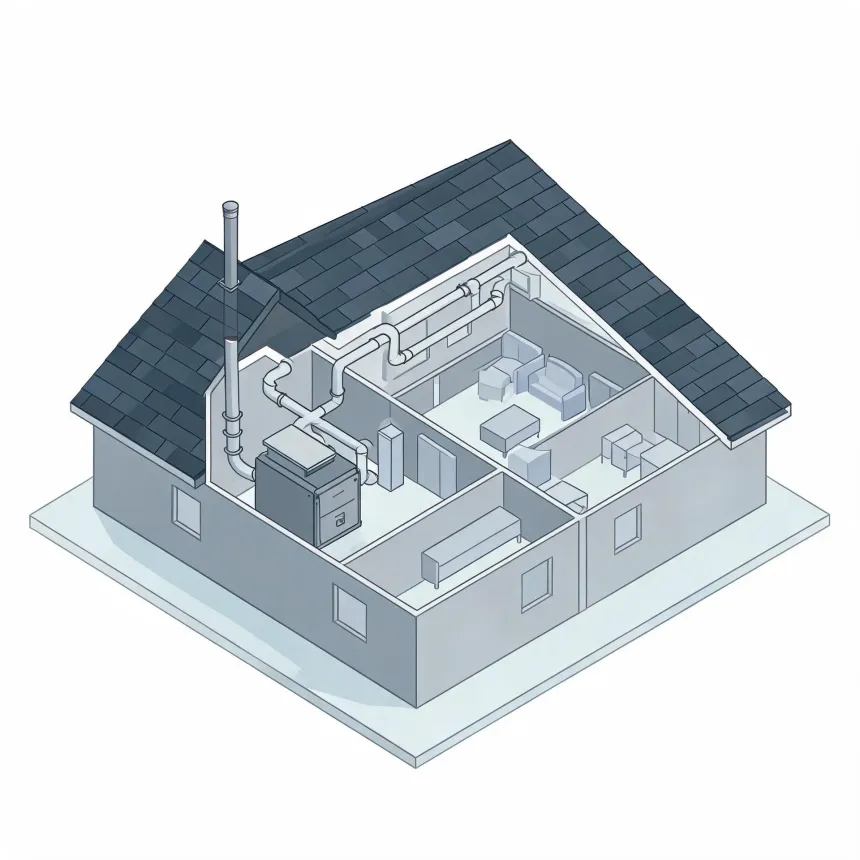
Isometric cutaway illustration of a single-story house with a dark shingled roof, showing interior rooms with furniture, ductwork, a flue pipe, and a furnace unit.
Your furnace works hardest from December through February.

NOAA nClimDiv, 1991–2020 normals

Furnaces in Vernon Parish only run about five months a year, November through March.

A furnace that sits idle most of the year usually has less wear on it, so a repair is more often worth doing than a replacement.

An older furnace here isn't the problem either

Half the homes here were built by 1988
Heat runs November through March
Winter nights average 40°F

October is worth a call before November gets here. A furnace that sat quiet since March doesn't show what's wrong with it until it's asked to run, and the first cold nights are exactly when that happens. An igniter that cracked months ago, a flame sensor that built up a film while it sat, none of that shows up until the furnace tries to light. Getting it checked in October means finding that out on your schedule, not on the first cold night of the year. With outages more common here, you want the furnace proven out before you're counting on it.

If the outdoor unit took a hit this year, don't wait for it to fail

Vernon Parish sees more than its share of hail and damaging wind, and nearly half of Louisiana households lost power for a day or more last year. A furnace that still runs isn't the same as one that's been checked. If yours took hail or flying debris in a recent storm, have it looked at before the cold settles in.

Find a contractor
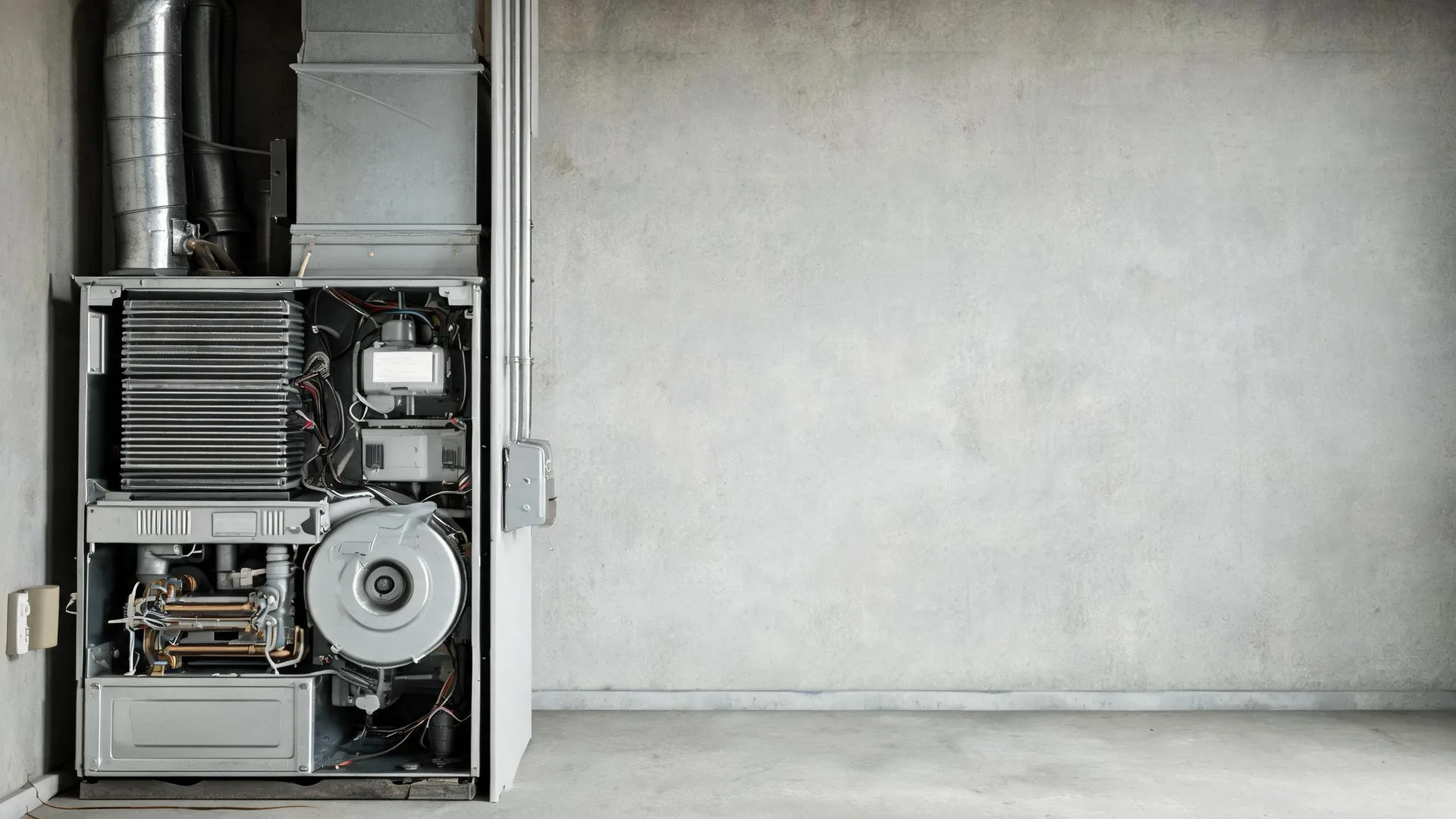
A gray gas furnace with attached ductwork and piping installed in an unfinished concrete basement.

Five months a year isn't much to ask of it

Five months of real cold, and even then the overnight low only averages 40 degrees across December, January and February. That's a light load for a furnace to carry. If yours is acting up now, the parts inside have usually had an easier run than the same furnace would get further north. That's a reason to have it looked at rather than swapped out.

Check the thermostat before the furnace

Make sure it's set to heat, not just fan, and that the set temperature is above room temperature. Check the batteries if it uses them. A thermostat with a blank screen or one stuck on a schedule can look exactly like a dead furnace.
Check the power and the filter

Find the furnace's breaker and make sure it hasn't tripped. Check that the switch on or near the furnace, it looks like a light switch, is flipped on. Pull the filter and hold it up to a light. If you can't see light through it, swap it. A blocked filter can starve the furnace of airflow until it shuts itself down.

Short cycling is one you'll notice without trying. The furnace fires, runs for a short while, then quits before the house warms up. That's usually airflow or a safety switch cutting power before the heat exchanger overheats. A furnace blowing cool or lukewarm air is another one worth acting on. It might be a dying igniter that's lighting the gas late, or it might mean the burners aren't getting enough gas to begin with. Rattling, scraping or a new grinding sound usually means something is loose or a bearing is wearing out, and it won't fix itself by running more. A burning smell the first time it runs each season is normal dust burning off. If that smell doesn't clear, or it smells sharp instead of dusty, shut it down and get it looked at.

A diagnostic visit starts before any panel comes off. A tech asks what the furnace was doing, whether it quit outright or started acting up gradually, and what you've noticed about sound or smell or airflow. Then the cover comes off and the burners, igniter and flame sensor get a look, since that's where most trouble lives. A multimeter checks whether the parts that look fine are actually getting the power or signal they need, because a part can look clean and still have failed. Gas pressure and flame color get checked too, since a weak flame or one that's the wrong color points to a problem upstream of the parts you can see. The goal is to find the one thing that's actually wrong, not to start swapping parts and see what helps.