A row of single-story houses with porches, one brick and others with pale siding, behind a trimmed hedge and lawn, under oak branches draped with Spanish moss.

Furnace Repair in Houma, LA

Tell us about the job

Takes about a minute. No obligation.

RepairFurnace or heatingTerrebonne Parish, LA
Step 1 of 2

What ZIP code is the job in?

Four months of work a year

Furnaces in Houma run from November through February and sit idle the rest of the year. Overnight lows average 48°F in December, January and February, not the deep cold a furnace further north has to push against. That's a short, mild season for the equipment to handle.


So a repair usually makes sense

A furnace that only works four easy months a year doesn't wear out from the job. When one here needs a repair, age or neglect is the usual reason, not a system that's been run into the ground. That's a good sign for fixing it instead of replacing it.

4 months
November through February, your furnace is on duty
48°F
the average winter night it heats against
Isometric cutaway illustration of a house showing interior rooms with furniture, a furnace unit with a tall flue pipe outside, and ductwork running through the attic.
Your furnace works hardest from December through February.

NOAA nClimDiv, 1991–2020 normals

Half the homes in Terrebonne Parish were built in 1983 or later.

A furnace that came with a newer house still has years left in it, which is why repair is usually the right call here.

November is when a weak furnace in Houma shows it

Heat runs November through February
Climate zone 2A
Winter nights average 48°F
Houma sees its share of hard weather53 severe weather events hit Terrebonne Parish between 2015 and 2024

If your furnace is giving you trouble, get someone out to look at it rather than writing it off. A furnace that only runs four mild months a year has had little reason to break down from use. When a repair call comes in, it's usually a part that failed or something that got skipped, not a system worn past saving. Have the technician check when it was last serviced before anyone talks replacement.

Get the furnace looked at, not replaced

If yours came with a newer house, it still has years in it. A repair is worth doing before anyone talks about swapping it out.

Find a contractor
A man in a cap, dark shirt and tan pants, seen from behind carrying a canvas bag, climbs wooden porch steps toward a blue front door beside a potted evergreen.
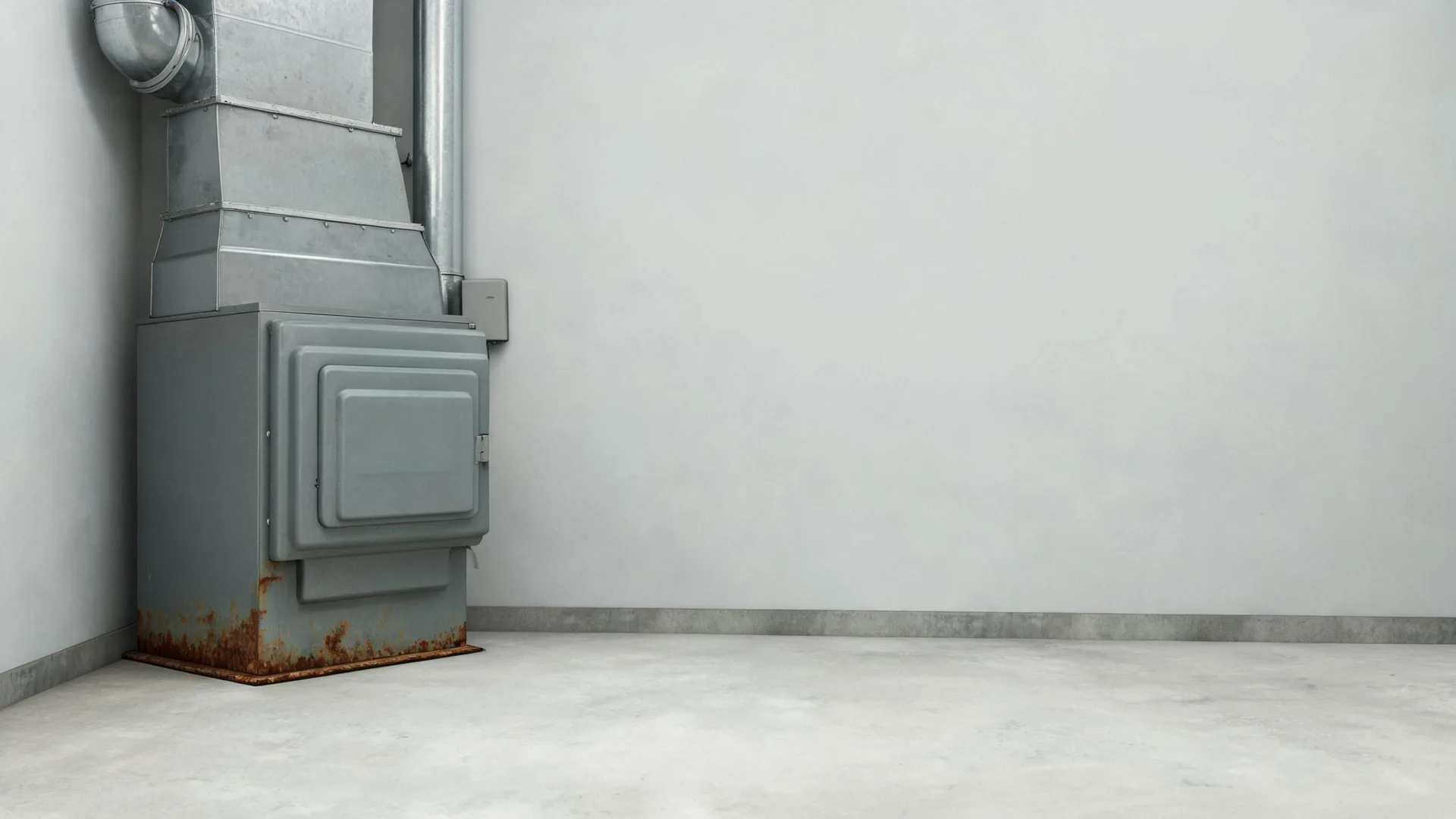
A gray residential gas furnace installed in an unfinished basement, surrounded by ductwork, a metal flue pipe, and a gas supply line.

What actually fails in a furnace that barely runs

A furnace that sits unused most of the year fails for different reasons than one that runs hard all winter. Sitting idle is its own problem. Dust settles on the igniter and the flame sensor during the off months, and a thin layer is enough to keep either one from doing its job. The first cold snap pushes current through an igniter that hasn't fired in months, and if it was already going to crack, that's when it happens. A flame sensor coated in dust reads a weak signal and shuts the burners down even though the flame is lit. Belts aren't the issue here. Furnace blowers are almost always direct drive, so it's the motor bearings and the capacitor that run it worth checking, not a belt. Capacitors lose their charge with age whether the furnace ran or not, and a weak one shows up as a blower that hums but won't start. The other common failure is the ignition control board, which can fail from a bad connection or a power surge and has nothing to do with how many hours the furnace logged. None of this points to a furnace worn out from the work. It points to parts that fail on their own schedule, found the moment the furnace is asked to start.

Checks that are safe to make yourself

Check that the thermostat is set to heat and the set temperature is above room temperature. Check the furnace switch, the one that looks like a light switch on or near the unit, and make sure it's on. Check the circuit breaker it runs on. Check the air filter and replace it if it's gray or clogged, since a blocked filter can starve the system for air and trip a safety switch.

What to leave alone

Don't open the burner compartment or go near the gas valve. If you smell gas, leave the house and call the gas company before anyone touches the furnace. Don't reset a switch or breaker more than once if it trips again right away. That's a sign something downstream is wrong, and repeated resets can make a failing part worse.

A furnace that's starting to fail will usually tell you before it quits outright. A flame sensor coated in dust might still light the burners most tries and miss on others, and each failed attempt is a small jolt to the igniter behind it. Keep running it that way and the igniter is the next thing to go. A cracked heat exchanger is worse to ignore. It might run fine for weeks, but the crack doesn't heal itself, and a damaged heat exchanger can let combustion gases into the air the blower pushes through the house. A blower motor with worn bearings will keep turning right up until it seizes, and it usually takes the capacitor or the control board down with it when it does. None of these get better with time. The furnace running normally in between the bad moments isn't a sign it's fine. It's a sign the failing part hasn't been asked to work hard enough yet to fail completely.

A diagnostic visit starts before any panel comes off. The technician asks what the furnace was doing right before it quit. A furnace that tries to start and shuts down points to something different than one that never attempts ignition at all. From there it's a sequence of checks in order. Power to the unit. The thermostat call. The igniter glowing. The flame sensor reading the flame. The pressure switch confirming the inducer is moving air. Each step either passes or points to the next thing to test. A multimeter does most of the real work here, checking resistance on a sensor or continuity on a switch rather than guessing from how a part looks. The goal is finding the one thing actually causing the problem, not replacing parts until something works.