Half the homes in Ascension Parish were built in 2002 or later
Gonzales sits in Ascension Parish, where half the housing stock dates to 2002 or later. A furnace that came with a house that age hasn't had decades of wear to work through yet.
Takes about a minute. No obligation.
Gonzales sits in Ascension Parish, where half the housing stock dates to 2002 or later. A furnace that came with a house that age hasn't had decades of wear to work through yet.
A furnace with a newer house behind it usually still has plenty of working life left. Fixing what's wrong is the call that makes sense before anything else.

NOAA nClimDiv, 1991–2020 normals
Furnaces in Gonzales only run about five months a year, November through March.
A furnace with a light winter like that usually has a fixable problem, not a worn-out one.



Five light months a year is not much to ask of a furnace. If yours is acting up now, get it looked at before the cold nights in January and February put it to the test.
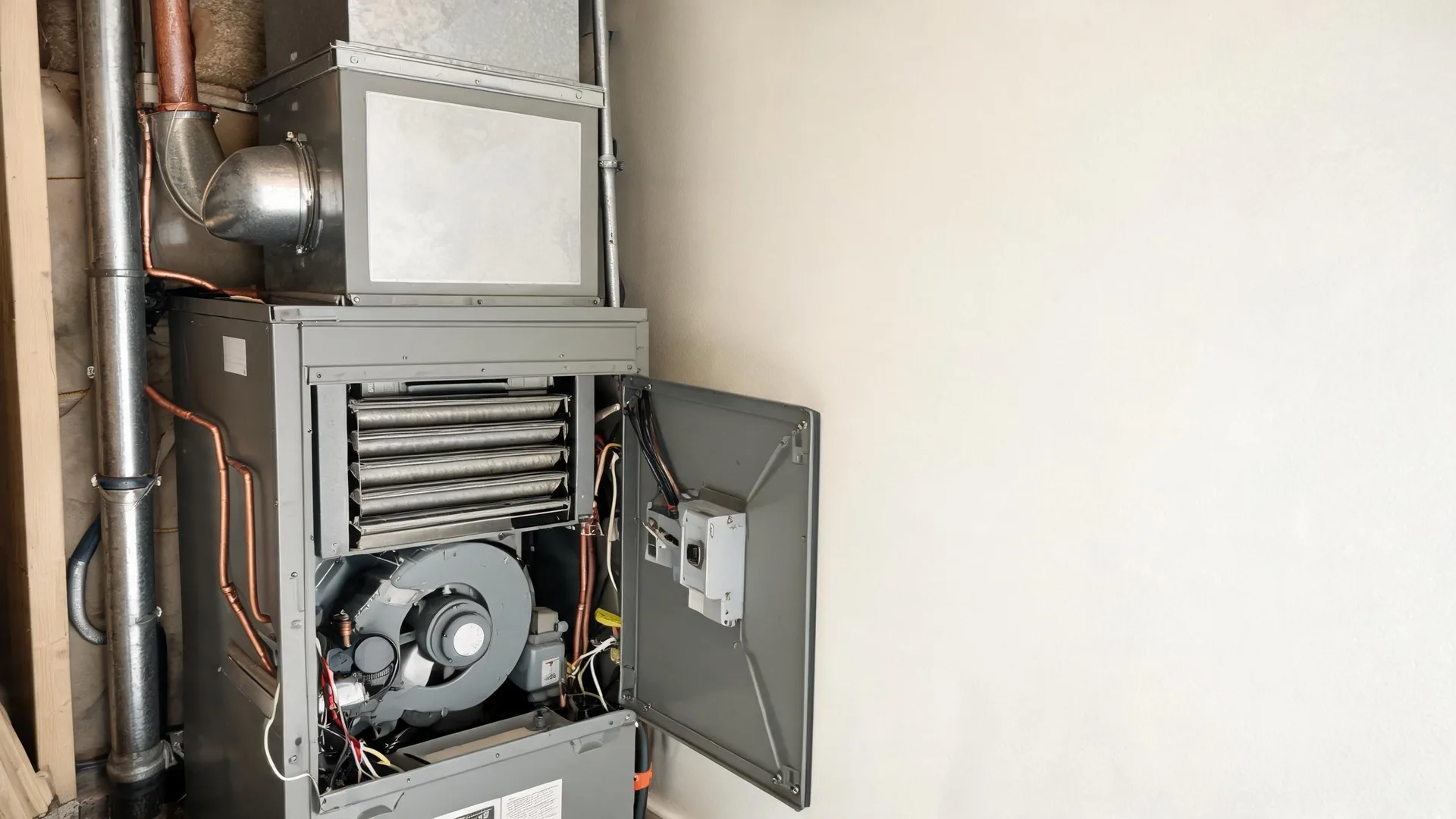
Find a contractorShort-cycling is the one most people notice first. The furnace fires up, runs for a couple minutes, shuts off, then starts again before the house even warms up. That usually points to a flame sensor that needs cleaning or a clogged filter choking airflow. A furnace blowing cool or lukewarm air has a different cause, often an igniter on its way out or a gas valve not opening fully. Listen for sounds that weren't there before too. A bang at startup means gas is building up before it lights. A grinding or screeching points to the blower motor or its bearings. If the burners look yellow instead of blue, that's a sign of incomplete combustion, and it's not something to wait on. A thermostat that seems to be doing its job but the house still won't hold temperature often means the problem isn't the thermostat at all. It's the furnace struggling to keep up.
Make sure the thermostat is set to heat and the temperature set point is actually above room temperature. Check that the furnace switch, the one that looks like a light switch near the unit, is flipped on. Look at the filter and swap it if it's gray or caked with dust. A clogged filter alone can cause short-cycling or weak airflow.
If you smell gas, don't flip switches or go looking for the source. Leave the house and call the gas company from outside. Don't take apart the burner assembly or reach into the blower compartment. Flame color, burner condition and the gas valve are for a licensed tech to look at. Checking the filter and the thermostat is safe. Opening the cabinet isn't.
A furnace that's short-cycling or burning yellow instead of blue doesn't fix itself by staying on. Incomplete combustion gets worse under continued load, and it puts more carbon monoxide into the air with every cycle. A cracked heat exchanger works the same way. It might pass air fine for a while, but heat and vibration make a small crack bigger, not smaller. Running a blower motor with bad bearings has the same problem. The grinding you hear is metal wearing on metal, and that wear doesn't slow down because the house needs heat. Left alone, a failing part usually takes something else down with it, like a motor that burns out or a gas valve that sticks. Shutting the furnace off and getting it looked at stops that chain before it starts.
Most of what goes wrong in a furnace is one part failing, not the whole system wearing out together. A flame sensor, an igniter, a blower motor, a pressure switch. Each one can be swapped on its own, and swapping it brings the furnace back to running the way it did before. That's why repair is usually the right call first. The exceptions are the heat exchanger and the cabinet itself. A cracked heat exchanger isn't a part you replace on its own, since the cost of doing that work on an old furnace competes with just putting in a new one. Rust or scorch marks on the cabinet tell you heat has been building up somewhere it shouldn't, and that's a sign the furnace has been struggling for a while, not a one-time glitch. A tech can tell you within a few minutes which kind of problem you've got.