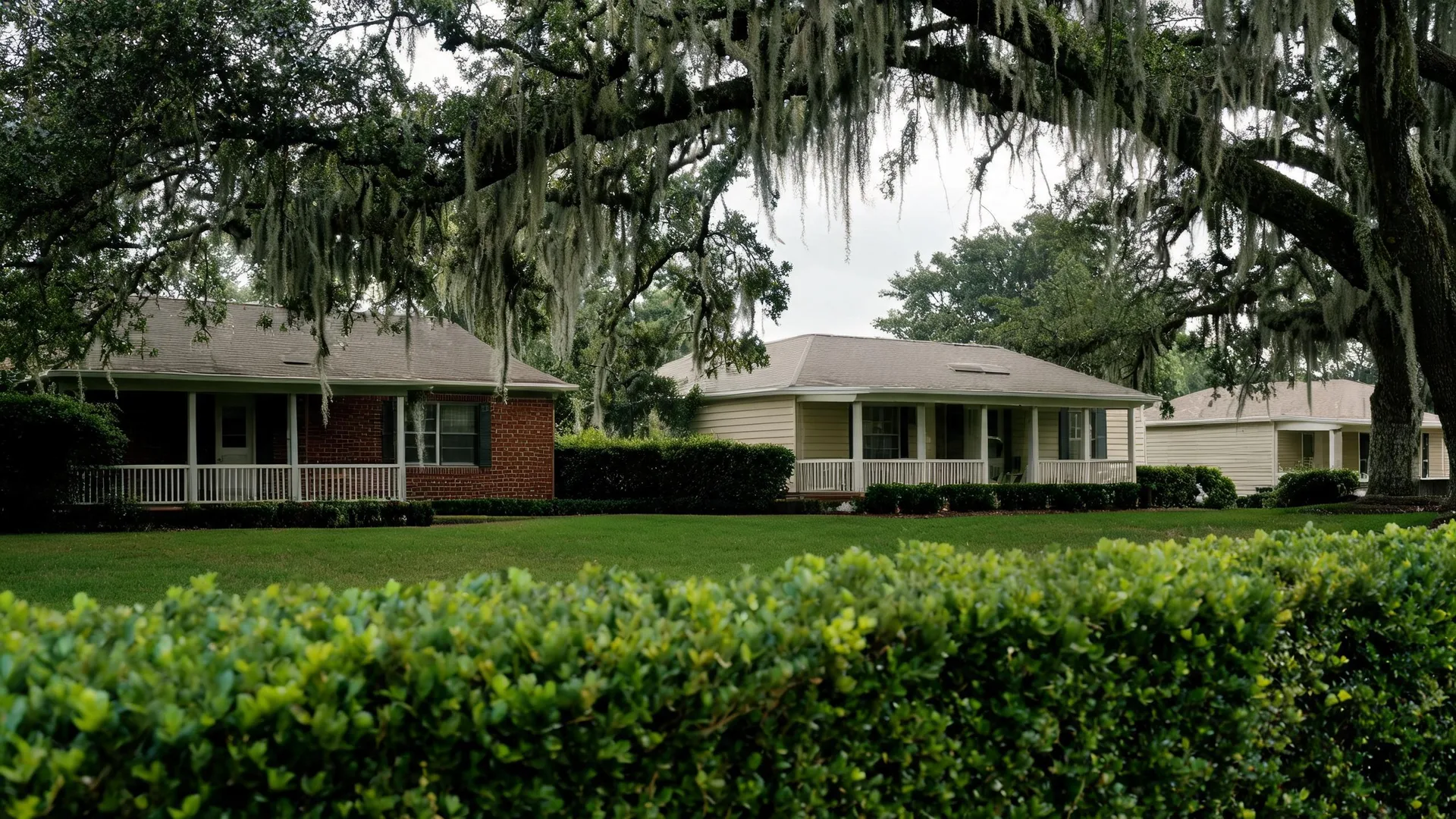







Single-story houses, one brick and one with light siding, both with covered porches, behind a mowed lawn and trimmed hedge, under large moss-draped oak branches.

Furnace Repair in Crowley, LA

Tell us about the job

Takes about a minute. No obligation.

RepairFurnace or heatingAcadia Parish, LA
Step 1 of 2

What ZIP code is the job in?

Acadia Parish has logged 81 severe weather events in the past ten years, with damaging wind behind 48 of them. That kind of wind throws branches and debris into whatever sits outside, including the vent and intake a furnace depends on. Hail and tornadoes have come through here too, and either one can leave a mark on equipment that still seems to run fine afterward. Power is its own risk. A furnace that cuts out mid-cycle during an outage doesn't always restart the way it should, and it's worth having someone check it rather than assume it rode out the storm clean.

5 months
November through March, your furnace is on duty
44°F
the average winter night it heats against
Isometric line illustration of a cutaway house showing interior rooms with furniture and a furnace with ducting and a flue pipe extending through the roof.
Your furnace works hardest from December through February.

NOAA nClimDiv, 1991–2020 normals

Furnaces in Crowley start their first cold-weather run in November.

October is when a weak igniter or a cracked heat exchanger gets found before it fails on the season's first cold night.

Five months of heat a year is not much to ask of a furnace

Heat runs November through March
Winter nights average 44°F
Climate zone 2A
Nothing unusual here, just the usual wearHalf the homes in Acadia Parish were built in 1980 or earlier, and 17.5% are mobile homes

After wind or hail comes through, look at the furnace's outdoor vent and intake pipe before you look at anything inside. Branches and debris land there first, and a blocked vent is what keeps a furnace from running safe even when the burner still lights. If the power went out during the storm, check that the furnace came back on and is holding a steady cycle, not just firing and stopping. None of this shows up as a strange noise or a smell. It shows up as a furnace that seems fine until the first real cold snap finds the problem for you.

A furnace with this little strain on it is usually worth fixing

Five months of real work a year, with overnight lows only down around 44, is not a hard life for a furnace. If storm damage or an outage is the reason yours is acting up now, that's usually something a repair can fix rather than a reason to replace it.

Find a contractor
A man in a cap, gray long-sleeve shirt and brown pants carries a canvas tool bag up porch steps toward a dark front door, beside a potted shrub.
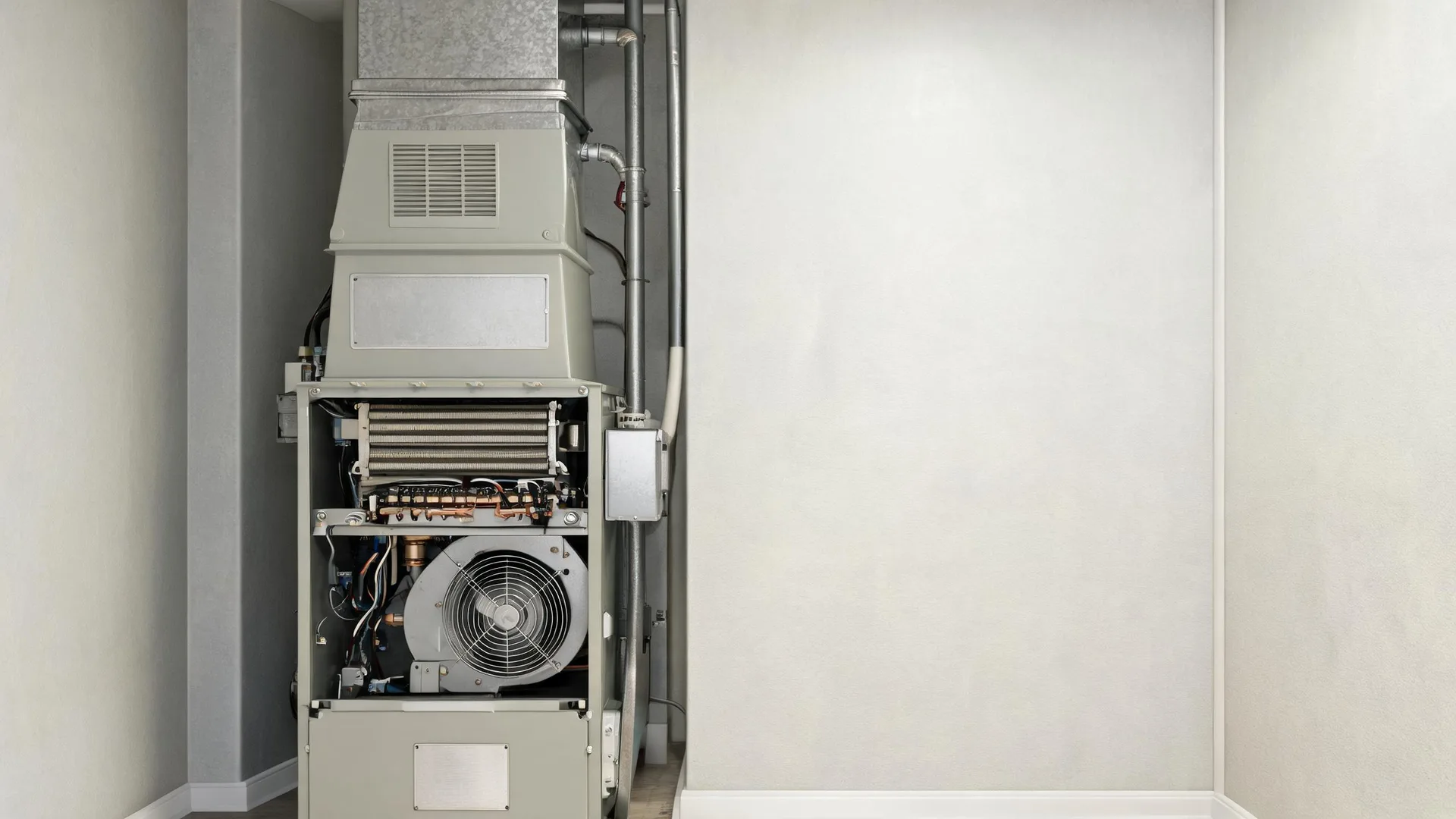
A gray gas furnace with attached ductwork and piping installed in an unfinished concrete basement.

What you can rule out yourself

Before anyone comes out, check the thermostat is set to heat and the temperature set above room temperature, not just sitting there. Look at the filter next. A filter packed with dust and lint chokes airflow, and a furnace that can't breathe will shut itself off as a safety measure. Check the breaker, and check for a switch that looks like a light switch near the furnace itself, since that shuts the whole unit down if it gets bumped. If the furnace has a standing pilot, look through the little window and see if the flame is lit. If it uses an igniter instead, you won't be able to check that part yourself, but you can listen for the sequence. The air mover starts, there's a click or a hum, then a whoosh as the burner catches. If you hear it try to start and fail, or it fires and shuts off again a few seconds later, tell the tech that before they arrive. Don't take the burner cover off. Don't go past the filter and thermostat. The gas valve, the flame sensor and the heat exchanger are not a homeowner job, and opening the cabinet on a gas furnace isn't worth the risk.

A furnace that short cycles is telling you something specific

A furnace that fires up and shuts off again within a minute, over and over, is usually tripping on its own safety switch. A flame sensor coated in residue will do this. So will a limit switch reacting to a cabinet that's running hotter than it should. Either way the furnace is protecting itself from a problem, not causing one, and running it through more short cycles won't clear it.
Weak heat can show up before the furnace ever fails to start

A furnace blowing air that never feels quite warm enough, or a house that takes longer than it used to reach the temperature on the thermostat, often means the burner is struggling before it quits outright. A dirty burner, a failing igniter, or a blower running at the wrong speed can all look like this. It's worth having someone check it while the furnace is still running rather than waiting for the morning it doesn't.

A furnace that's struggling doesn't fix itself by keeping on with the burner lit. A cracked heat exchanger is the clearest case. Heat makes the metal expand, and a crack that's barely open on a cool start can pull wider every time the burner fires. Keep running it and what began as a hairline gap can let combustion gases leak into the air the blower pushes through the house. A flame sensor coated in residue works the same way on a smaller scale. Each cycle leaves a little more residue behind, so the sensor reads weaker until it stops seeing flame at all. Airflow problems compound too. A blower forcing air past a clogged filter runs longer and hotter to do the same job, and that extra heat is what wears out a limit switch or strains a part that was never built to run that hot for that long. None of this is a reason to shut the furnace off and wait. It's a reason to get the actual problem found before the next cold night asks more of it.

A diagnostic starts before any panel comes off. The tech will run the furnace through a full cycle, start to finish, and watch how it behaves rather than taking your word for the symptom. That means listening for the ignition sequence, checking that the flame is steady and the right color, and tracking whether the burner stays lit or trips off early. They'll pull the filter and check airflow, since a lot of what looks like a bad part is really the furnace choking on restricted air. If the symptom points that way, they'll check the flame sensor for residue and test the limit switch rather than guessing which one failed. Anything involving the heat exchanger gets a closer look with a camera or a mirror, because a crack isn't something you find by ear.