





Two white Southern-style homes with wraparound porches lit by landscape lighting at night, flanked by live oak trees hung with Spanish moss.

Furnace Repair in Breaux Bridge, LA

Tell us about the job

Takes about a minute. No obligation.

RepairFurnace or heatingSt. Martin Parish, LA
Step 1 of 2

What ZIP code is the job in?

Before you call, check the thermostat first. Make sure it's set to heat and the temperature is set above room temperature, not just holding steady. Next look at the air filter. A filter clogged with dust can choke the airflow enough to make the furnace shut itself off partway through a cycle. Check the furnace switch too, the one that looks like a light switch near the unit itself, and make sure nothing bumped it off. If the furnace has a standing pilot, see if the flame is lit and burning steady. None of this fixes a cracked heat exchanger or a failed igniter, but it rules out the simple stuff before you pay someone to find it.

5 months
November through March, your furnace is on duty
44°F
the average winter night it heats against
2 winter storms
in ten years, the nights a failure hurts most
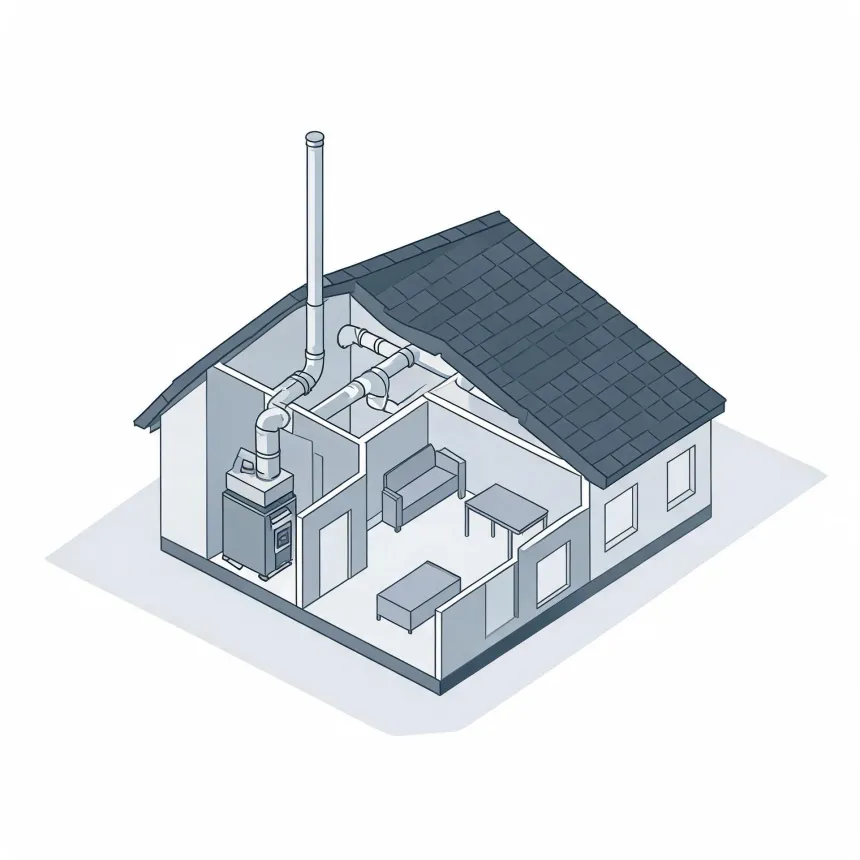
Isometric line illustration of a cutaway single-story house with a shingled roof, showing an interior furnace connected to ductwork and a tall vertical flue pipe, plus simple furniture in the adjacent room.
Your furnace works hardest from December through February.

NOAA nClimDiv, 1991–2020 normals

Half the homes in St. Martin Parish were built in 1986 or earlier.

A furnace that age is due for a worn part, not a sign something's wrong with the house.

October is when to catch a weak part, before November asks more of it

Heat runs November through March
Winter nights average 44°F
Climate zone 2A
A furnace that barely worksHeat runs five months here, November through March, with lows near 44°F

St. Martin Parish sees serious weather, 55 severe weather events between 2015 and 2024. Damaging wind, hail, tornadoes, tropical storms all show up in that count. Any of that can reach the outdoor unit, denting the cabinet or knocking debris into it without stopping it from running. A furnace that still fires after a storm isn't necessarily one that came through clean.

A furnace with an easy job is usually worth repairing

Five months of heat a year, with lows near 44°F, doesn't put much strain on a furnace. Most of what goes wrong is a part worn down by age, not a system beaten up by overwork, and that kind of problem is usually worth fixing. If yours is acting up, get it looked at.

Find a contractor
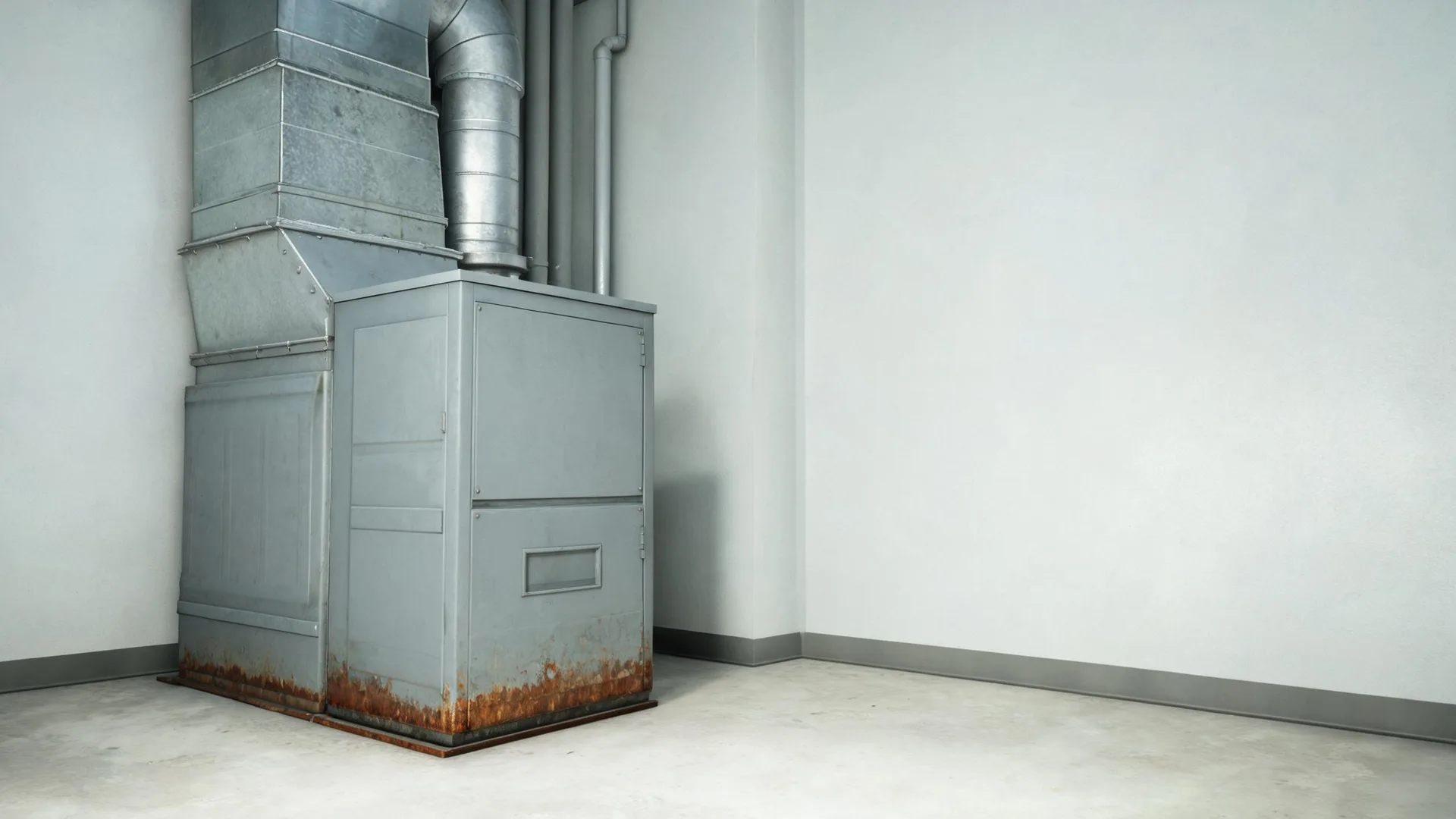
A gas furnace with attached ductwork, gas piping, and condensate lines installed in a concrete-block basement.

What a struggling furnace sounds and feels like before it fails

A furnace usually tells you something's wrong before it quits outright. Short cycling is one of the clearest signs, where it fires up, runs a few minutes, and shuts off before the house warms. That can be a flame sensor too coated to hold a signal, or a limit switch tripping because airflow is restricted somewhere. A burner flame that's flickering or yellow instead of steady and blue points at a combustion problem worth having checked, not ignored. Banging or scraping when it starts usually means a part has come loose or worn against something it shouldn't touch. And if the air coming out feels weaker than it used to, or some rooms stay cold while others heat fine, a blower or duct issue is probably behind it. None of these fix themselves. A furnace that's struggling and left alone usually ends up failing at the part that was already weak.

A cracked heat exchanger gets worse with every cycle

Heat makes metal expand, and a hairline crack opens a little more each time the burner fires and the furnace cools back down. Left alone, a small crack that only leaked a trace of exhaust can open enough to push combustion gas into the air the blower moves through the house.
A dirty flame sensor turns into a dead furnace

A flame sensor coated in residue reads the flame as weaker than it is, so the control board cuts fuel early to be safe. Run it long enough in that state and the furnace stops completing a cycle at all, going from an annoying short cycle to no heat on the coldest morning of the stretch.

Most furnace failures trace back to one of a handful of parts wearing out, not some sudden breakdown. The igniter is a common one. It heats up to light the burners every single cycle, and that constant heating and cooling eventually cracks it until it stops glowing hot enough to catch the gas. Blower motor bearings wear the same way, drying out after years of spinning, which shows up as a grinding or squealing sound before the motor seizes for good. Draft inducer motors fail for the same reason, and when one goes, the furnace won't start at all since it needs that draft proven before gas is allowed to flow. Flame sensors and limit switches tend to fail from buildup rather than age, residue or dust throwing off the reading they depend on. Most of this is ordinary wear on parts that were never meant to last the life of the furnace.

A repair call usually comes down to how many parts are already worn versus how much life is left in the rest of the furnace. One failed igniter or one bad flame sensor is a straightforward fix, and the rest of the furnace keeps going like nothing happened. The harder case is when a tech opens the cabinet and finds the heat exchanger cracked on top of whatever brought them out that day. A cracked exchanger isn't something to patch, since it puts combustion gas where the house air moves, and at that point the question stops being about the one part that failed and starts being about whether the whole furnace is worth putting money into. Age on its own doesn't decide that. A furnace that's been running fine for years with only routine parts replaced is usually still worth fixing. One that's already had the blower motor, the inducer, and now the exchanger go is telling you something different.