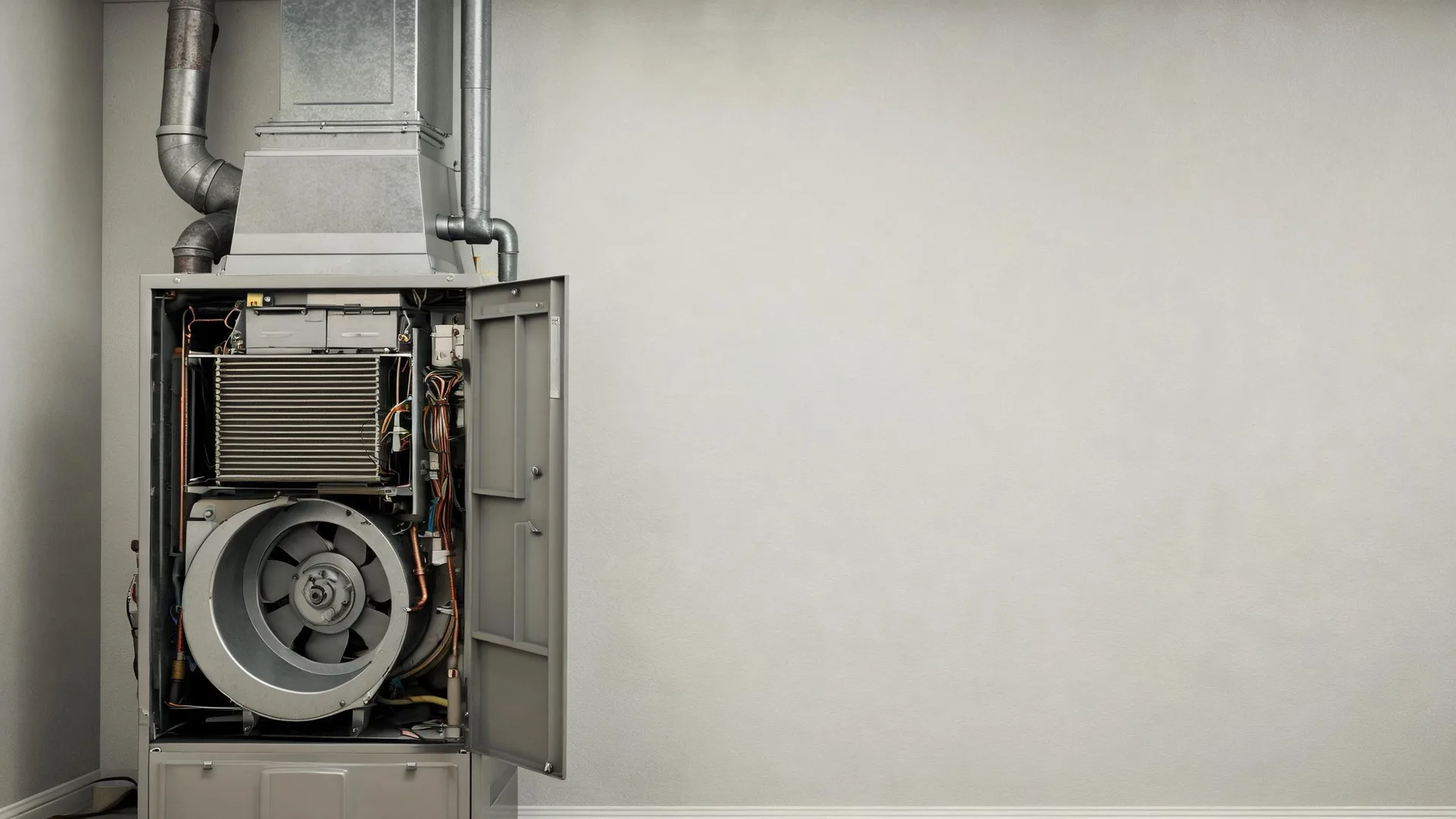
A gray forced-air furnace with sheet-metal ductwork stands in an unfinished basement with exposed wooden joists, concrete walls, and a hanging incandescent bulb.

Furnace Repair in Addis, LA

Tell us about the job

Takes about a minute. No obligation.

RepairFurnace or heatingWest Baton Rouge Parish, LA
Step 1 of 2

What ZIP code is the job in?

What the repair history tells you

A furnace that keeps bringing a tech back out is telling you something. One repair on its own might be cheap and reasonable, a new igniter or a stuck flame sensor. But a furnace that keeps finding new ways to fail is usually working against a cracked heat exchanger or a control board on its way out, and the next part to go is rarely the last.


What the furnace is asking of itself

Watch how hard it has to work to do the job. Short cycling, weak airflow out of the vents, or a burner that won't stay lit all point to a furnace straining to keep up. A unit still in good shape heats evenly and shuts off on its own schedule. One that's struggling is burning more fuel and wearing out its own parts faster to make up the difference.

5 months
November through March, your furnace is on duty
43°F
the average winter night it heats against
2 winter storms
in ten years, the nights a failure hurts most
Isometric cutaway illustration of a single-story house showing interior rooms, furniture, a dark furnace unit with a tall vertical flue pipe, and ductwork running under the pitched shingle roof.
Your furnace works hardest from December through February.

NOAA nClimDiv, 1991–2020 normals

A furnace in Addis only runs about five months a year, November through March.

A furnace with that light a workload is usually in better shape than its age alone would suggest.

Addis sees nothing extreme, and that's what the data shows

25 severe weather events from 2015 to 2024
49% of homes statewide lost power a day or more in 2024
11 damaging wind events from 2015 to 2024
October is when to get it looked atHeat goes on in November. A weak igniter or a cracked exchanger shows up fast once it does.

Half the homes in West Baton Rouge Parish were built in 1993 or later. If yours is one of them, the furnace inside it has likely had an easier road than the number of years on the calendar suggests, especially paired with a five-month season. That makes repair the right first call for most problems, not replacement. About one in five homes in the parish is a mobile home, and those furnaces run on different venting and clearance rules than a standard system. If that's your setup, mention it when you describe the problem. It changes what a tech checks first.

A light workload means repair is usually the right call

Five months of real work a year is a light load. Most of what goes wrong on a furnace like that is a part worth fixing, not a reason to replace it. Get it looked at before it has to prove that on the first cold night.

Find a contractor
A gray residential gas furnace installed in an unfinished basement, surrounded by ductwork, a metal flue pipe, and a gas supply line.

Most failures start as one small part, not the whole system

Most furnace failures start as one worn part, not a system falling apart. An igniter weakens and stops getting hot enough to catch the gas. A flame sensor coats with residue and stops telling the control board a flame is there, so the board shuts the gas off on purpose, as a safety step. A pressure switch sticks and the furnace won't start at all. Those are wear parts, and they fail on their own schedule. The ones worth worrying about come from heat and stress instead. A heat exchanger expands and contracts every time it cycles, and over enough cycles it can crack. Once it's cracked, it doesn't get better on its own. A control board can fail from a power surge, or just from years of heat inside the cabinet. Both tend to run fine for a long while and then stop, with little warning first. The parts that move wear out fastest. A blower motor bearing dries out and gets noisy before it seizes. A capacitor weakens and the motor struggles to start, drawing more current each time until it gives out. None of this tracks with how old the furnace is on paper. It tracks with how many cycles it's run and whether the small failures got caught before they turned into bigger ones.

What you'll hear before you see anything

A furnace losing its fight usually says so first. A boom or bang at startup means gas built up before the igniter caught it, so it lights with a delay instead of right away. A rattle that comes and goes with the blower points to a loose panel or a motor mount working itself free. A high pitched squeal is a motor bearing drying out, and it gets worse, not better, until the motor seizes. A furnace that used to run quiet and now doesn't is already telling you where to look.

What your nose and your hand can tell you

Some signs don't wait for a tech to find them. A burning dust smell the first few times it runs each season is normal and clears on its own. A smell that lingers, or anything sharp and chemical, is not. Warm air that doesn't feel as warm as it used to, even with the thermostat set the same, often means the heat exchanger or burners aren't transferring heat the way they should. And if a room runs cold while the vent is blowing, the air is moving but it isn't being heated enough to matter.

There's a few things worth checking yourself before a tech ever shows up. Start with the air filter. A filter clogged with dust chokes airflow, and a furnace starved for air can overheat and shut itself off as a safety step, which looks like a bigger problem than it is. Check the thermostat batteries if it has a screen that's gone dim or blank. Make sure the switch on the furnace itself, the one that looks like a light switch on the side of the unit, hasn't been bumped off. If the furnace is in a closet or utility room, look for a door or vent that's been blocked, since these units need airflow around them to breathe. None of this fixes a cracked heat exchanger or a failing control board, but it rules out the simple stuff first, and it gives a tech a clearer picture of what's actually wrong when they do come out.

A diagnostic visit starts with questions, not tools. A tech wants to know what the furnace was doing right before it acted up. Blowing cold, not starting, shutting off early, making a noise, each one points somewhere different. From there the order is simple. Check that the thermostat is calling for heat. Check that power and gas are both reaching the unit. Then open the cabinet and watch it try to run a full cycle start to finish. A flame sensor gets checked with a meter, not by eye, because a coated sensor can look clean and still fail to signal the control board. If the furnace short cycles or won't stay lit, the pressure switch and the heat exchanger both get a look, since either one can cause that same symptom for a different reason. The visit ends when the one part actually causing the trouble gets found, not when parts have been swapped until something works.