





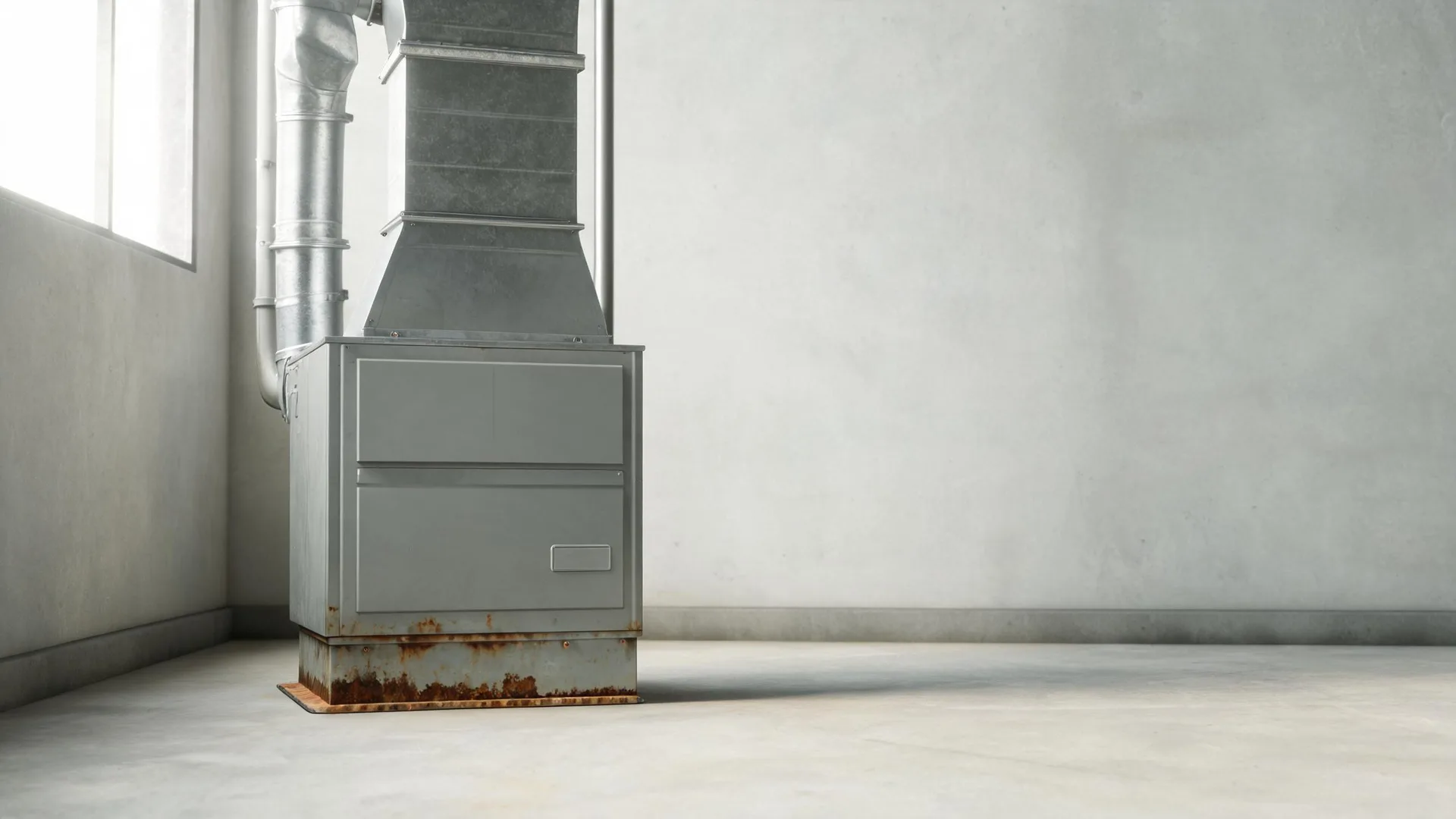
An unfinished basement featuring concrete block walls, exposed floor joists, a bare concrete floor, and a forced-air furnace with a large metal exhaust duct in the corner.

Furnace Repair in Ville Platte, LA

Tell us about the job

Takes about a minute. No obligation.

RepairFurnace or heatingEvangeline Parish, LA
Step 1 of 2

What ZIP code is the job in?

Furnaces in Ville Platte sit unused most of the year, then get asked to run every night starting in November. October is when to get one looked at, before that happens. A weak igniter or a clogged flame sensor usually makes it through summer fine, since nothing is asking the system to fire. The first cold snap is what finds the part that was already failing. Once heat season starts here it runs through March, so a problem in November does not go away on its own. Get it caught before the first hard freeze and it is a simple fix. Get it caught after and you are without heat until someone can come out.

5 months
November through March, your furnace is on duty
42°F
the average winter night it heats against
2 winter storms
in ten years, the nights a failure hurts most
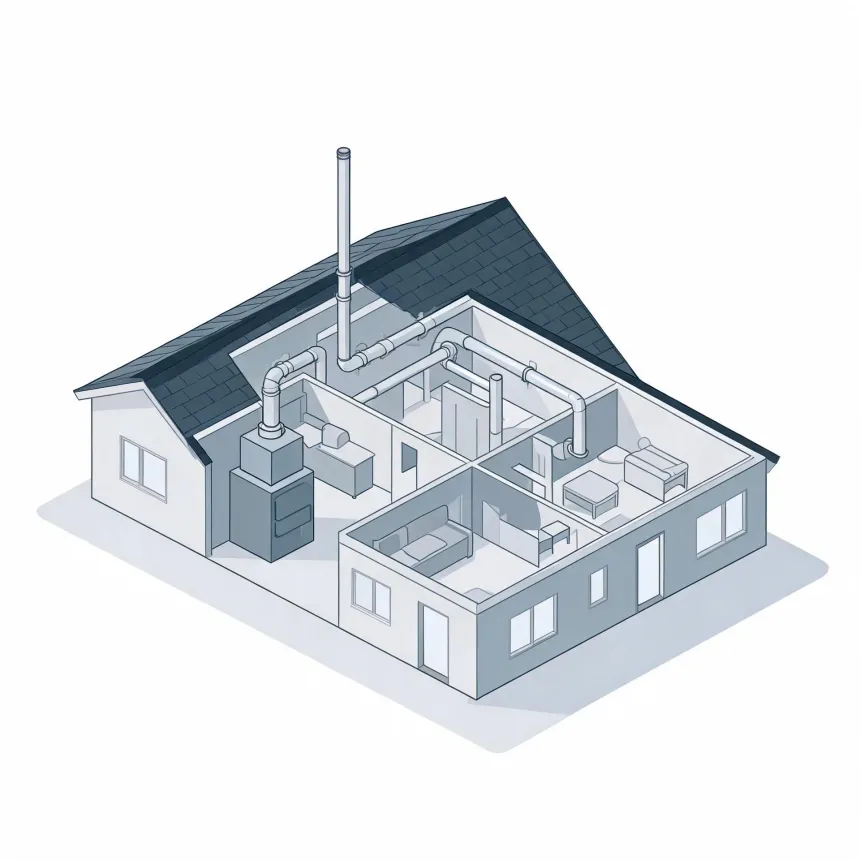
Isometric cutaway illustration of a single-story house showing interior rooms with furniture, a furnace unit connected to ductwork and a tall flue pipe extending through the roof.
Your furnace works hardest from December through February.

NOAA nClimDiv, 1991–2020 normals

Furnaces here only run about five months a year, November through March.

A furnace that gets a break most of the year is usually in decent shape underneath, so fixing it is almost always worth it.

An older house here doesn't mean an unusual furnace problem

Half the homes here were built by 1980
Heat runs November through March
Winter nights average 42°F
Weather here is a power problem, not a furnace problemEvangeline Parish saw 18 damaging wind events and 11 tornadoes in the past decade, the kind of weather that cuts power, not the kind that wears out a furnace.

That five month season also tends to be mild here, with overnight lows averaging 42°F through December, January and February. The furnace is not being asked to fight single digit nights or run flat out for days at a time. So when a repair tech opens one up, they are usually looking at a part that failed on its own, not a system that got worked past what it could handle. Worth knowing if you are deciding whether to fix it or replace it. A furnace that has had an easy life is a good candidate for repair even if it is older, because the rest of the unit underneath is likely fine.

Get it looked at early

Problems tend to show up in the first weeks of the season, when the load hits a part that was already weak.

Find a contractor
A man in a dark shirt and brown pants carries a worn canvas tool bag up concrete steps toward a gray-blue front door of a house with horizontal siding and a potted shrub.
A gas furnace with attached ductwork, gas piping, and condensate lines installed in a concrete-block basement.

What it sounds like before it quits

A furnace usually tells you something is wrong before it quits outright. It might take a few tries to light, clicking over and over before it catches. It might start up, blow cold air for a minute, then kick into heat. It might cycle on and off more than it used to, never quite settling into a steady run. Listen for a boom at startup, that's gas building up before it finally lights, and it means the igniter or the burners need a look. A burning smell the first few times you run it each season is normal dust burning off. A burning smell that lingers is not. If the blower runs but no heat comes out, or if one room never gets warm while the rest of the house does, the problem has usually been building for a while before you notice it. None of these mean the whole furnace is done. Most of them are one part failing, and catching it at the clicking or short-cycling stage is a lot easier than catching it after the thing won't start at all.

Check these before you call

Make sure the thermostat is set to heat and the setting is above room temperature, not just on. Check the breaker for the furnace and the switch that looks like a light switch near the unit, it's an off switch, not a wall decoration. If you have a gas furnace, make sure the gas valve is open. Change the filter if it's gray or packed with dust, a blocked filter can cause a lot of the symptoms that feel like bigger problems.
What a tech still needs to see

If the furnace trips the breaker again after you reset it, stop and leave it off, that's not something to keep testing yourself. Same with a gas smell that doesn't fade, don't relight anything, just shut the gas valve and air out the house. A clean filter and a confirmed thermostat setting rule out the easy stuff, but the igniter, the flame sensor and the pressure switch all need a meter and some training to test safely.

A cracked heat exchanger is the clearest case. Run it a little longer and the crack is still there. Run it with the blower pulling air across that crack and it's pushing exhaust into the duct instead of outside. A flame sensor coated in residue is another one. It still catches most cycles, so the furnace keeps running, but each misfire leaves a little more residue behind, and that residue is what fouled it in the first place. A pressure switch that's barely making contact will keep firing the furnace right up until the one cycle it doesn't. None of these announce themselves early. They sit quietly until the furnace is asked to cycle again, and each cycle is another chance for the weak part to finally give out.

Age is a bad way to decide this on its own. What matters is which part failed and whether it took anything else with it. A cracked heat exchanger, a split in the cabinet, or scorching around the burners means the damage sits in the furnace itself, and that's a replace conversation no matter how new the thing is. An igniter, a flame sensor, a pressure switch or a blower motor are all parts that fail on their own, without the rest of the furnace being any worse for it. Swap the part and the furnace runs like it did before, because the heat exchanger and the burners underneath aged the same amount either way. The other thing worth asking is whether this is the first repair or the third one this season. One failed part is a repair. A string of different parts failing a few months apart usually means the whole system is wearing out at once, and that's worth a second opinion before you spend money on the next part that quits.