October is checkup month
Furnaces here sit unused most of the year and start running again in November. October is when a weak igniter or a failing flame sensor still shows itself quietly, before the first cold morning forces the system to work.
Takes about a minute. No obligation.
Furnaces here sit unused most of the year and start running again in November. October is when a weak igniter or a failing flame sensor still shows itself quietly, before the first cold morning forces the system to work.
A furnace that runs five months a year, November through March, tends to fail in its first weeks of real use. If yours is acting up now, it's likely a part that was already going and just met its first real load.
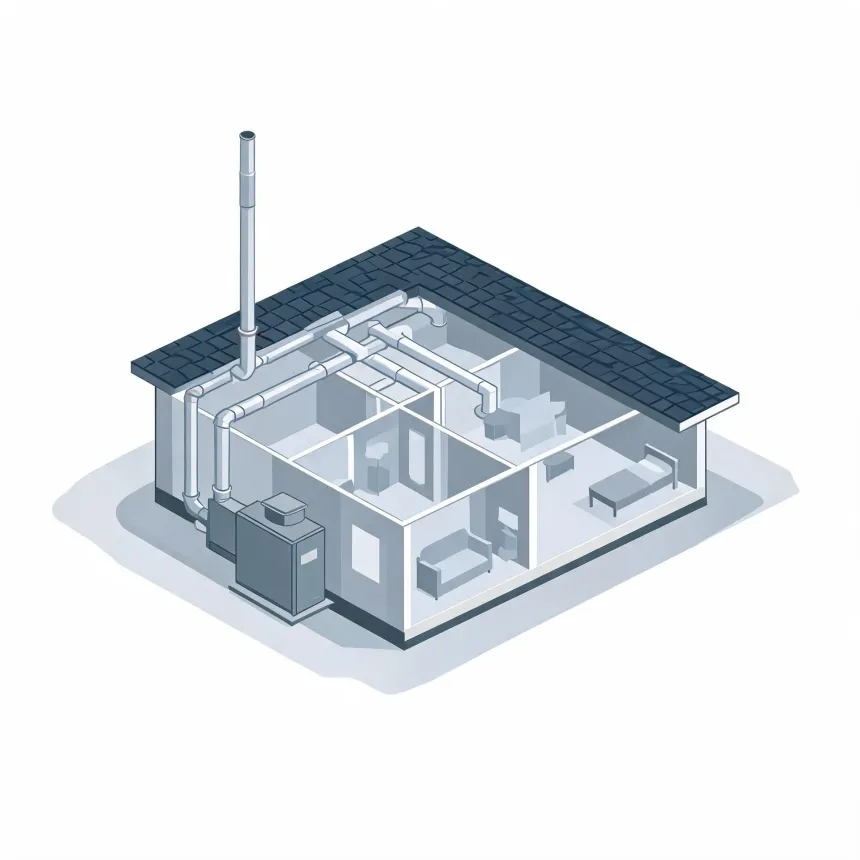
NOAA nClimDiv, 1991–2020 normals
A furnace in Iberville Parish only has to work five months a year, November through March.
A furnace that sits idle most of the year rarely wears out. When one here starts acting up, it's usually one worn part, not a system on its last leg.



A diagnostic visit starts before the panel comes off. The tech asks what you noticed, whether it's a smell, a noise, short cycling, or the system not firing at all, because that points to a different part of the furnace than a quiet one that just stopped. With the cover off, they'll check for a flame and watch its color, test the igniter for resistance, and check the flame sensor for a buildup that can make a good igniter look like a bad one. They'll also check that the inducer motor is clearing exhaust properly and that the limit switch isn't tripping from restricted airflow. Most of this is testing one part at a time until the bad one shows itself, not guessing.
A furnace that only runs five months a year doesn't rack up the wear that causes real breakdowns. So when yours is acting up, the odds favor a repair over a replacement. Worth getting it looked at before a 44°F night finds the weak part first.
Find a contractor
Before anything else, check the thermostat. Make sure it's set to heat, not just fan, and that the set temperature is actually above room temperature. Dead batteries in the thermostat cause more no-heat calls than people expect. Next, go to the breaker box and look for a tripped breaker on the furnace circuit. If it's tripped, reset it once. If it trips again, stop and call someone, because that's the system telling you not to force it. Check the filter while you're at it. A filter clogged with dust can starve the furnace of airflow and trip the limit switch, which shuts the whole system down as a safety measure. If you can see daylight through it, it's fine. If you can't, swap it. Last, check that the switch on or near the furnace, it looks like a light switch, hasn't been bumped off. People mistake it for a wall switch all the time. If you've checked all of this and it still won't run, or it runs and shuts off again on its own, that's the point to stop troubleshooting and get a tech out.
A furnace in trouble usually says so before it quits outright. It might struggle to light, catching late or not catching at all on the first try. It might blow air that never feels warm. It might cycle off on its own a few minutes after starting. Some start making a sound they didn't make before, a rattle from the blower, a screech from the inducer motor, a soft boom when the burners finally catch. Any of these is worth paying attention to. The part causing it does not fix itself.
A furnace that struggles to light or shuts itself off early is already working harder to do the same job. Left alone, a weak igniter or a dirty flame sensor does not improve on its own. It gets slower to fire, or it stops firing. That usually happens on the morning you first notice the house is cold, not before. Catching the problem while the furnace is still limping along is easier than catching it after it stops for good.
Most furnace failures trace back to one of a few parts. The igniter is the most common. It glows to light the gas and weakens a little every time it heats up and cools down, until one day it doesn't get hot enough to catch. The flame sensor fails differently. It doesn't burn out so much as get coated with a film that stops it from sensing the flame, so the furnace shuts the gas off thinking nothing lit. Both wear mostly from the number of times they cycle, not from hours of steady running, so a furnace used lightly can still reach the same worn igniter or dirty sensor as one run hard. A blower motor or inducer motor wears differently, at the bearings, and that kind of wear does track with hours run. Either way, it's almost always a single part giving out, not the whole system failing at once.
A repair is almost always the right first move, because most furnace failures come down to one part, not the whole system. An igniter or flame sensor can be replaced on its own, and the rest of the furnace, the heat exchanger, the blower, the gas valve, keeps running the same as before. Replacement starts to make sense when the heat exchanger is cracked, since that part isn't sold on its own and isn't safe to patch. It's also worth a harder look when the same furnace keeps coming back with a different part failing every season, because that's a sign of a unit wearing out across the board, not one bad component. Age by itself doesn't decide it. A furnace that's been maintained and only needs one part now is still worth fixing.