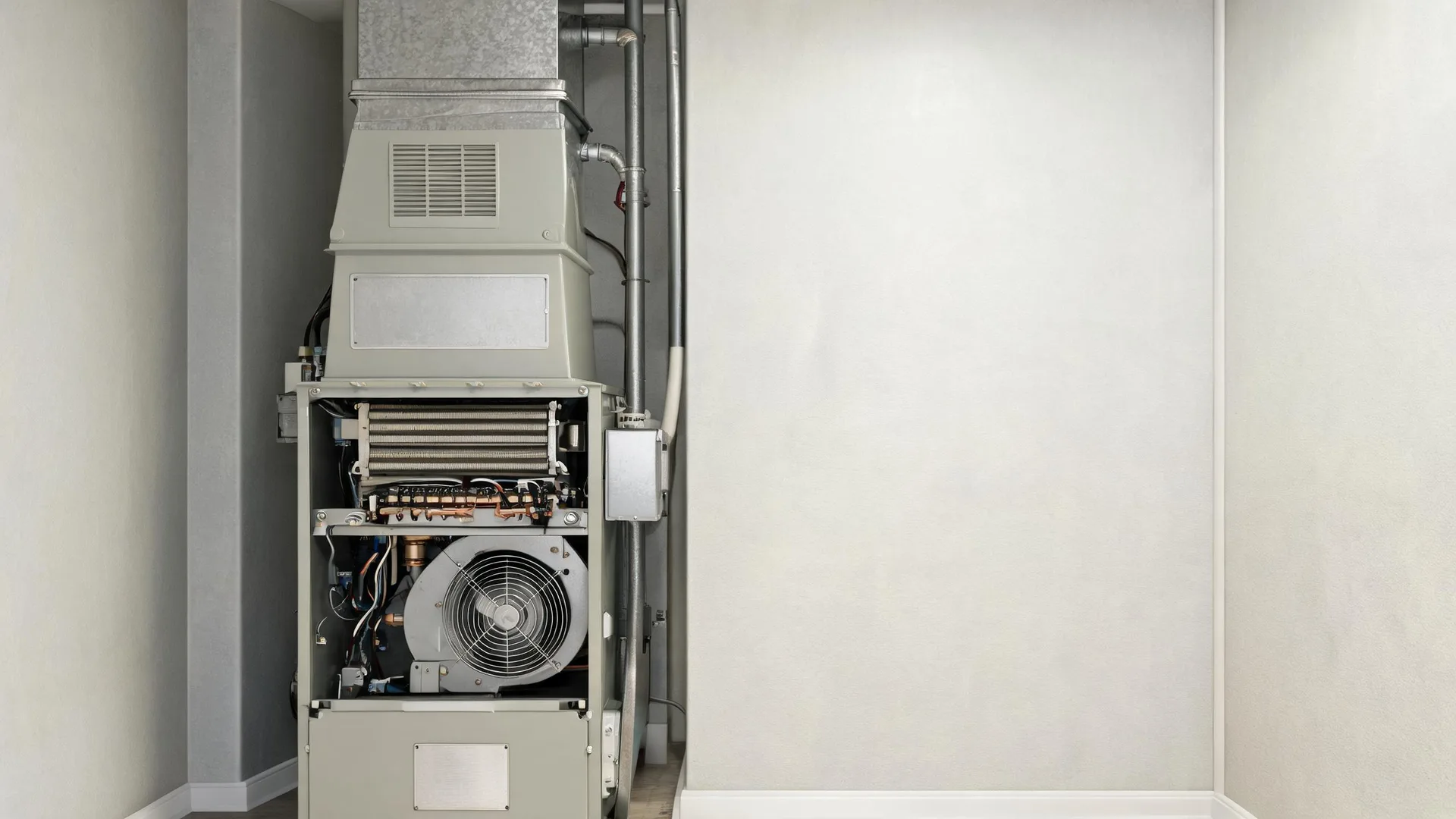
October is when to get it looked at
Furnaces in Pointe Coupee Parish sit unused most of the year and start back up in November. A quick check in October catches a weak igniter or a bad flame sensor before it has to carry a full day's worth of heat.
Takes about a minute. No obligation.
Furnaces in Pointe Coupee Parish sit unused most of the year and start back up in November. A quick check in October catches a weak igniter or a bad flame sensor before it has to carry a full day's worth of heat.
A furnace that struggled last March doesn't fix itself over the summer. The first cold snap in November is usually when a worn part finally gives out, so a furnace acting up early in the season is often a problem that was already there.
NOAA nClimDiv, 1991–2020 normals
Furnaces in Pointe Coupee Parish run about five months a year, November through March.
A furnace that only works five months a year usually still has good parts in it, so a repair is worth doing.




A mild winter helps here too. Overnight lows average 42°F through December, January and February, so the furnace isn't fighting single-digit cold like systems up north have to. That's a short run at a moderate load, not the kind of season that wears parts out early. When a repair tech opens this one up, they're usually looking at an isolated failure, a cracked flame sensor or a relay that gave out, not a system worn thin from years of hard use. Fixing that one part is usually the right call.
Problems tend to show up in the first weeks of the season, when the load hits a part that was already weak.
Find a contractorA furnace that sits idle for months doesn't announce a problem until it has to work. Listen for a boom at startup instead of a quiet whoosh, that's gas building up before the igniter catches it. Watch the flame through the viewing window. It should burn steady blue. Yellow or flickering means it's not getting clean combustion. Short cycling, where it fires up and shuts off before the room warms, usually points to a dirty flame sensor or a clogged filter choking airflow. If the blower keeps running after the heat shuts off, the limit switch may be bad. Cold air out of the vents when it should be hot often means the igniter is failing partway. None of these fix themselves by running longer.
Start with the filter. Pull it out and hold it up to a light. If you can't see through it, swap it, a clogged filter chokes airflow and can cause the short cycling or weak heat people call in about. Check the thermostat batteries if it uses them, and make sure it's set to heat, not just fan. Walk around and look at every vent and return. If furniture or a rug is blocking one, clear it. Last, check the breaker for the furnace and the switch on the unit itself, sometimes it looks like a power switch and gets bumped off by accident.
Don't take the burner compartment apart or go near the gas valve. If you smell gas, leave the house and call the gas company before anyone calls a repair tech. Don't keep resetting a furnace that shuts itself off, that shutdown is usually a safety switch doing its job, and forcing it back on can let it run in a condition it wasn't meant to. If the flame looks yellow instead of steady blue, that's a combustion problem a tech needs to look at, not something to wait out.
Most furnace failures trace back to a small set of parts, and each one fails in its own way. The igniter heats up and cools down every cycle it runs, and that repeated stress is what eventually cracks it, so it's often the first thing to go. A flame sensor doesn't break so much as get coated, a thin layer of carbon builds up until it can't detect the flame anymore and the furnace shuts itself off rather than run unsafely. Blower motor bearings wear slowly over years, and you'll usually hear that coming as a grinding or squealing sound before the motor quits for good. A limit switch can fail on its own too, from age and years of cycling, the same as any other part. None of these need a hard winter to wear out. They fail from the ordinary work of turning on and off, season after season.
A diagnostic visit starts before any panel comes off. A tech asks what you noticed, when it happens, whether it's every cycle or just sometimes. Then they'll run the furnace through a cycle themselves and watch it start, catch the flame, and shut down, since a lot of problems only show up at one of those points. They'll pull the flame sensor and check it for that carbon film, test the igniter for continuity rather than guessing from how it looks, and check static pressure to see if something downstream is restricting airflow. Wiring and connections get checked too, since a loose connection can look exactly like a failed part until someone tests it. The goal is to find the part actually causing the problem, not just the one that happened to fail last.